Why satellites stay in place without burning through all their precious fuel reserves
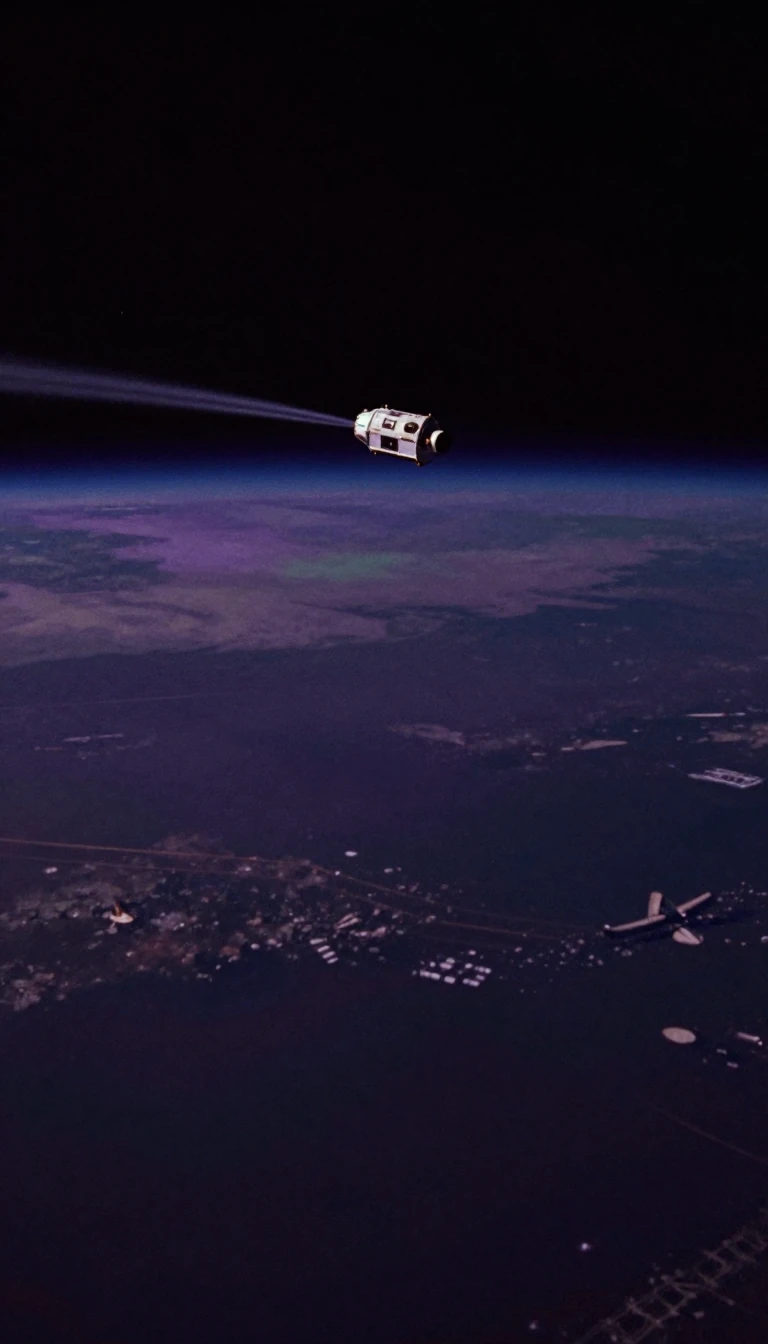
In short: Space is not a static void. Gravity from the Sun, Moon, and the Earth's own uneven shape constantly tug at satellites, threatening to drift them off course. To survive, engineers use frozen orbits—a clever mathematical trick that balances these chaotic forces to keep a spacecraft stable for years.
A frozen orbit is a specific configuration where orbital parameters are carefully selected so that natural perturbations cancel each other out. By choosing initial values for inclination, eccentricity, and the position of the apsis, engineers can create a long-term stable path. This minimizes the need for station-keeping propellant, which is essential for missions that require constant, predictable conditions, such as Earth observation.
The concept relies on complex gravitational modeling. For Earth-orbiting satellites, forces like atmospheric drag, solar radiation pressure, and the Earth's oblateness—and even its slight pear-shaped asymmetry—must be accounted for. The classical theory, established by Dirk Brouwer in 1959, provides the analytical foundation for these calculations. Modern refinements, such as the 1989 algorithm by Mats Rosengren, allow for iterative updates that compensate for additional perturbations, including solar radiation pressure.
The challenge is even more pronounced around the Moon. Lunar mascons—regions of high density—create uneven gravitational tugs that make most low lunar orbits unstable. Without periodic rocket boosts, satellites below 100 km often crash. However, scientists have identified four specific inclinations—27°, 50°, 76°, and 86°—where frozen orbits exist, allowing a spacecraft to remain in a low lunar orbit indefinitely. These stable zones are critical for long-term lunar exploration, as demonstrated by the survival of the Apollo 15 subsatellite PFS-1, which occupied a stable inclination, unlike its ill-fated counterpart, PFS-2.
Opens the Intellect+ feed with this card first. Swipe up for the next one.
Sources
- Summary by Intellect · source: Frozen orbit
To cite this card, link to https://intellectplus.co.uk/app/space-frozen-orbit.
How we source, check and correct cards: Editorial standards.
General information, not professional advice. Spotted an error? Flag the card or see corrections and complaints.
Intellect Plus is a visual educational discovery platform for exploring fascinating facts and ideas. Brain Food, Not Brain Rot. What is Intellect Plus?
Related
More in Celestial mechanics · More in Space · Latest · A–Z · All topics
