 Intellect Plus
Literature
698 cards. Each one is a 40-second story with a five-minute read behind it. Page 5 of 12.
 The Great Chronicle: How one epic poem defined the history of an entire nationThe Mahāvaṃsa is more than a 5th-century epic poem. As Sri Lanka’s foundational historical chronicle, it bridges the gap between myth and record, detailing everything from the Bud…
 The Hammer of Witches: A 15th-century manual that defined the era of witch trialsPublished in 1486 by Heinrich Kramer, the Malleus Maleficarum became the definitive guide for secular courts to prosecute witchcraft. While often mistaken for an official Church d…
 Can finding purpose in extreme suffering truly be the key to human survival?Viktor Frankl argued that even in the darkest conditions of Nazi concentration camps, prisoners could endure by anchoring themselves to a sense of meaning. His 1946 memoir, which …
 Is Argentina’s national epic a masterpiece of literature or a violent outlaw’s ballad?Martín Fierro is a 2,316-line poem that defined Argentine identity, yet its protagonist is a deserter and a murderer. While critics have elevated it to the status of a national ep…
 Roald Dahl's Matilda was originally a dark story about a wicked, manipulative child.The beloved, bookish Matilda Wormwood we know today was not Roald Dahl's first vision. His initial draft featured a malicious girl who used telekinesis to help an unethical teache…
 Why did Euripides’ Medea, a masterpiece of revenge, initially fail to win first prize?Performed in 431 BCE, Euripides’ Medea is a chilling study of betrayal and ruthless vengeance. Despite its status as a cornerstone of Western drama, the play was not an immediate …
 Are humans born with an innate moral compass, or is virtue merely a social construct?The Mencius, an ancient Chinese classic, argues that morality is as natural to humans as having four limbs. By exploring the concept of innate sprouts of virtue, this text challen…
 Samuel Beckett’s Molloy is a masterpiece that strips the novel down to its bones.Published in 1951, Molloy is the first installment of a legendary trilogy that redefined modern fiction. By discarding traditional plot, scenes, and characters, Beckett created an…
 Why Shakespeare’s most famous comedy is built on a clever, triple-layered linguistic punMuch Ado About Nothing is a masterclass in deception, where the title itself is a complex wordplay. In Elizabethan English, noting and nothing were near-homophones, and the play h…
 How a real-life tragedy and a stalled train inspired a classic mystery masterpieceAgatha Christie’s 1934 novel, Murder on the Orient Express, remains a hallmark of detective fiction. By blending her own experiences of being stranded on the luxury train with the…
 How an escaped slave’s 1845 memoir shattered the myth of the happy slave.Frederick Douglass’s first autobiography did more than recount the horrors of bondage; it forced a skeptical public to confront the humanity of the enslaved. By mastering the writ…
 Richard Wright’s Native Son exposes the systemic forces shaping a young man’s violent decline.Published in 1940, Richard Wright’s novel Native Son charts the tragic trajectory of Bigger Thomas, a young African American man in Chicago. The story serves as a searing social c…
 How an Eighth-Century Imperial Project Defined the Historical Identity of Ancient JapanCompleted in 720, the Nihon Shoki serves as the most comprehensive record of ancient Japan. Commissioned by the imperial court to mirror the prestige of Chinese annals, this monum…
 Why a 1948 Japanese novel about a social outcast became a modern viral sensation.Osamu Dazai’s masterpiece, No Longer Human, chronicles the life of a man who masks his profound alienation with a hollow, clownish façade. Published just after the author’s suicid…
 Why did a 19th-century medical term become the title of a revolutionary novel?José Rizal titled his masterpiece after a phrase meaning touch me not. While it references a biblical encounter, the author, a trained ophthalmologist, chose it for its medical co…
- A nostalgic journey through 1960s Tokyo, defined by loss, music, and emotional complexity.Haruki Murakami’s 1987 novel, Norwegian Wood, is a poignant exploration of grief and memory. Narrated by Toru Watanabe, the story revisits his college years in Tokyo, where he nav…
 Why F. Scott Fitzgerald wished he had written this masterpiece of political corruptionJoseph Conrad’s 1904 novel Nostromo is a haunting study of idealism, greed, and the corrupting power of wealth. Set in the fictional South American republic of Costaguana, it foll…
 Francis Bacon’s 1620 masterpiece aimed to replace ancient logic with a new, empirical path.Published in 1620, Novum Organum challenged the Aristotelian reliance on syllogisms. Francis Bacon proposed a revolutionary system of eliminative induction, urging thinkers to aba…
 Why Walt Whitman’s most famous poem was actually a stylistic outlier for the poetO Captain! My Captain! is arguably Walt Whitman’s best-known work, yet it remains an anomaly in his canon. While the poet is celebrated for pioneering free verse, this elegy for A…
 Can a life of total inaction become a profound critique of an entire society?Ilya Ilyich Oblomov, the hero of Ivan Goncharov’s 1859 novel, is a nobleman who elevates sloth to an art form. Rarely leaving his bed, he embodies a paralysis that reflects the de…
 Can a silent stone vessel truly hold the secrets of beauty and truth?John Keats composed his famous ode in May 1819, transforming the ancient Greek urn into a profound meditation on art, eternity, and human desire. By freezing fleeting moments in s…
 Why Somerset Maugham’s 1915 masterpiece remains a profound meditation on the human conditionWidely considered his greatest work, W. Somerset Maugham’s Of Human Bondage is a semi-autobiographical journey through the life of Philip Carey. Born with a club foot and orphaned…
 Why John Steinbeck named his 1937 masterpiece after a poem about a ruined nestJohn Steinbeck’s classic novella follows two migrant laborers, George and Lennie, as they chase a fragile dream of independence. The title, however, points to a deeper, darker rea…
 Is the soul a separate substance, or simply the essence of a living body?Aristotle’s De Anima, written around 350 BC, remains a foundational inquiry into the nature of life. He defines the soul not as a distinct entity, but as the essential form of any…
 Isaac Newton’s Opticks proved that white light is not simple, but a complex mixture.Before 1704, scholars believed white light was pure and color was merely a distortion caused by darkness. Isaac Newton shattered this dogma by using prisms to reveal that white li…
 Why the greatest epic of the Italian Renaissance ends with a trip to the Moon.Ludovico Ariosto’s Orlando Furioso is a masterpiece of irony and fantasy. It follows the paladin Orlando, whose unrequited love for a princess drives him into a destructive madnes…
- Why G.K. Chesterton argued that a Christian worldview is the ultimate adventure for humanity.In his 1908 spiritual autobiography, Orthodoxy, G.K. Chesterton defends the Christian faith not as a rigid set of external rules, but as the only framework that satisfies the comp…
- How a sixteenth-century epic poem turned Portuguese maritime exploration into a cosmic mythLuís Vaz de Camões transformed the historical voyages of Vasco da Gama into a grand, ten-canto epic. By blending the gritty reality of scurvy and political intrigue with the inter…
 Why did the 1985 film Out of Africa win seven Academy Awards?Sydney Pollack’s sweeping adaptation of Karen Blixen’s life in Kenya captured the imagination of the Academy, securing Best Picture and six other Oscars. Beyond its lush cinematog…
 Can a single novel define the brutal social climb of post-revolutionary Paris?Honoré de Balzac’s 1835 masterpiece, Le Père Goriot, captures the desperate ambition of a society in flux. Set against the backdrop of the Bourbon Restoration, the novel explores …
- Is Vladimir Nabokov’s Pale Fire a masterpiece of literature or a grand, unsolvable puzzle?Published in 1962, Pale Fire is a 999-line poem encased in a sprawling, unreliable commentary by a self-appointed editor. It is a masterpiece of metafiction that invites readers t…
 A ghost town of memories: the haunting legacy of Juan Rulfo's Pedro PáramoJuan Preciado travels to the town of Comala to find his father, only to discover a landscape populated by the restless dead. This 1955 masterpiece by Juan Rulfo blends indigenous …
- Is the ultimate Norwegian folk hero actually a cautionary tale about avoiding oneself?Henrik Ibsen’s 1867 verse drama follows a braggart who flees his responsibilities to wander the world. While Edvard Grieg’s iconic score turned the play into a cultural staple, th…
 A collection of unfinished notes that became one of history's most influential philosophical works.Blaise Pascal died in 1662, leaving behind a chaotic pile of draft notes for a book he never finished. These fragments, published as Pensées, evolved into a monumental defense of …
 Jane Austen’s final completed novel explores the painful, enduring power of a second chancePublished posthumously in 1817, Persuasion follows Anne Elliot, a woman who once broke her engagement to a naval officer under social pressure. Years later, he returns wealthy and…
 In his final hours, Socrates debated the immortality of the soul with his closest followers.Plato’s Phaedo captures the philosopher’s last day in an Athenian prison. While awaiting execution by hemlock, Socrates engaged in a rigorous philosophical inquiry into the afterl…
- Is the art of persuasion possible without a deep, foundational grasp of the truth?Plato's Phaedrus explores the tension between rhetoric and reality. Through a series of speeches on love, Socrates argues that true mastery of speech requires more than just persu…
- Can a man be forced to do the right thing for the greater good?Sophocles' tragedy Philoctetes explores the agonizing friction between individual morality and collective necessity. Abandoned on a desert island for nine years due to a festering…
- The 18th-century anthology that transformed Eastern Orthodox spirituality for millions of modern readersCompiled by two monks in 1782, the Philokalia is a massive collection of mystical texts focused on inner asceticism. While originally intended for hermits, it escaped monastery wa…
- Why the most important philosophy book of the 20th century rejects definitionsLudwig Wittgenstein’s Philosophical Investigations argues that we do not need rigid definitions to understand language. Instead, he suggests that meaning is found in how we use wo…
 Aristotle’s physics was not about atoms or gravity, but the study of all nature.Aristotle defined physics as the study of nature itself, a broad field encompassing biology, meteorology, and psychology. While his specific scientific claims—like the four elemen…
- Astrid Lindgren’s Pippi Longstocking began as a bedtime story for her sick daughter.Born from a mother’s desire to comfort her seven-year-old daughter during a bout of pneumonia in 1941, Pippi Longstocking became a global icon of independence. This redheaded, sup…
 Why Aristotle believed the state is a natural creation, not a human inventionAristotle argued that humans are political animals, and the polis is the ultimate community for achieving a virtuous life. While he famously tutored Alexander the Great, his own p…
 Why does poverty persist even as technology and national wealth soar to new heights?In 1879, Henry George published an inquiry into the paradox of modern progress. He argued that as cities grow and technology advances, the value of land rises, siphoning wealth aw…
 Is the most famous tragedy of the ancient world actually a forgery?Prometheus Bound has been attributed to Aeschylus for millennia, yet modern scholars increasingly question its authenticity. By analyzing linguistic patterns and stylistic choices…
 The Prose Edda: A 13th-century textbook that preserved the myths of the North.Written in Iceland around 1220, the Prose Edda is our most detailed window into Norse mythology. Far from a simple storybook, this medieval text functioned as a technical manual f…
- Can virtue be taught, or are we born with it?In Plato's dialogue Protagoras, Socrates and the famous Sophist Protagoras engage in a high-stakes intellectual duel. They debate whether civic virtue is a skill that can be impar…
 The clever cat who conquered kingdoms was once a fox, a jackal, or an ape.Puss in Boots is famous for his cunning, but he is just one version of a global archetype. While the French version solidified the cat as the hero, oral traditions across Asia, Af…
 How a Polish historical epic about Nero’s Rome captivated the entire worldHenryk Sienkiewicz’s Quo Vadis became a global phenomenon, blending Roman history with a powerful pro-Christian narrative. Published in the late 1890s, the novel follows a Roman p…
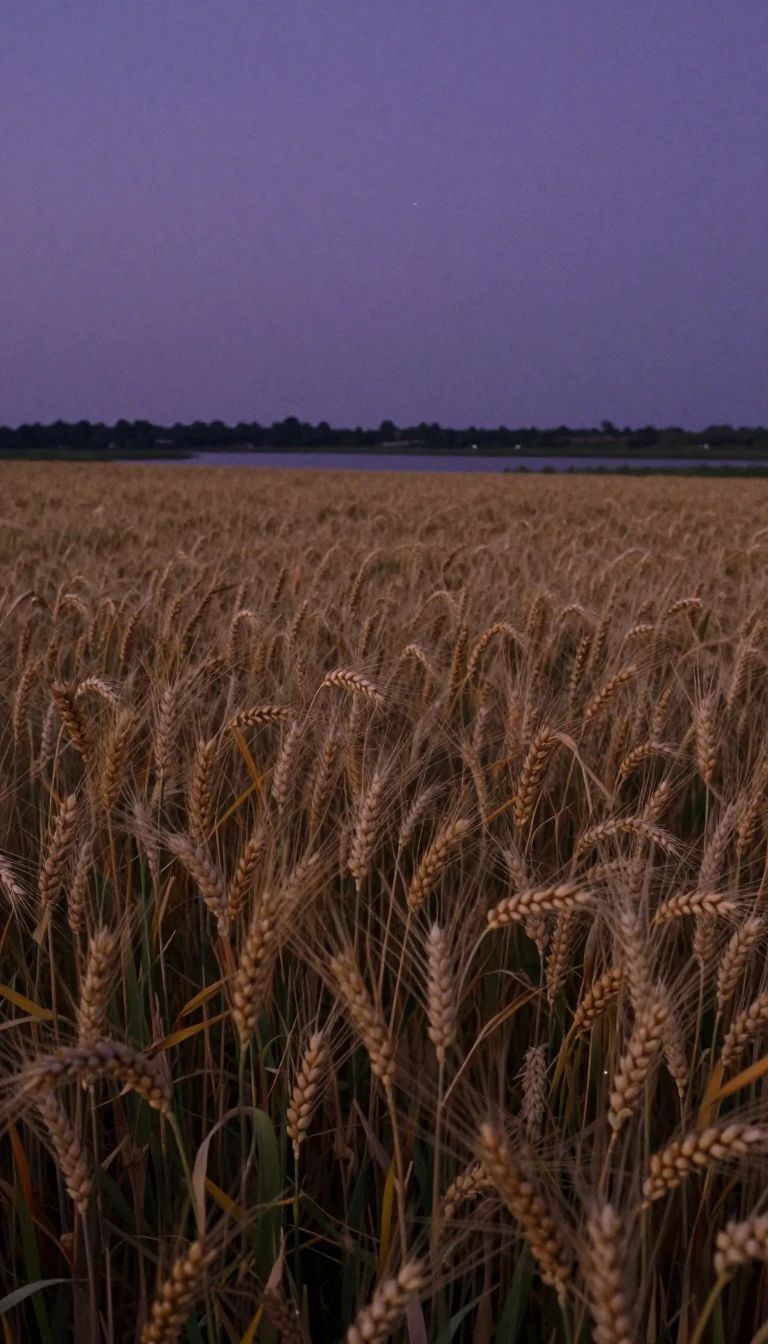 How a humble crop became the symbol of a family's survival through Chinese historyMo Yan's debut novel, Red Sorghum, weaves a multi-generational saga of a Shandong family through the turbulent twentieth century. By blending folk-tale, myth, and magic realism, t…
 Is persuasion a dangerous manipulation or a scientific tool for human affairs?Aristotle transformed rhetoric from a suspicious art of deception into a systematic discipline. While critics once feared it as a tool for emotional manipulation, Aristotle argued…
 The ancient Egyptian scroll that promised to reveal the mysteries of the universeKnown as the Rhind Mathematical Papyrus, this remarkable document was intended to provide accurate reckoning for all things. Beyond its practical mathematical tables and puzzles, …
- Is Shakespeare’s Richard II a tragic masterpiece or a biting political satire?Shakespeare’s history play chronicles the downfall of a king who believes his authority is divinely ordained. Yet, beneath the poetic verse lies a complex study of power, where a …
- Shakespeare’s Richard III invites the audience to participate in a calculated moral holiday.In this classic history play, Richard of Gloucester transforms from a disgruntled, physically deformed outcast into a ruthless architect of his own ascent. By inviting the audienc…
 Why the world’s most famous imp has dozens of names and ancient rootsThe story of a mysterious creature spinning straw into gold is a global phenomenon. While the Brothers Grimm popularized the German version, this narrative of a supernatural helpe…
 Why a 12th-century Korean historian felt his contemporaries were dangerously ignorant of their roots.In 1146, Kim Pu-Shik completed the Samguk sagi, the first government-compiled history of Korea. Distressed that elite scholars knew Chinese philosophy but nothing of their own nat…
 How a 13th-century monk’s collection of legends became the soul of Korean national identity.Compiled during the devastation of the Mongol invasions, the Samguk yusa preserved the folklore and myths of ancient Korea. By documenting the Dangun legend, the monk Il-yeon help…
 Did a migraine condition inspire the visionary art of Hildegard von Bingen?Hildegard von Bingen’s Scivias, completed around 1152, chronicles 26 divine visions through text and 35 intricate illustrations. While she believed these were the voice of heaven,…
 How a Sudanese masterpiece exposes the lingering, violent shadows of the colonial encounterAl-Tayyib Salih’s 1966 novel, Season of Migration to the North, remains a defining work of postcolonial literature. Through the story of an unnamed narrator and the enigmatic Must…
- Jane Austen’s first published novel began as a private experiment in letter-writingBefore it became a literary classic, Sense and Sensibility was a draft written in letters. Jane Austen began the project around 1795, titling it Elinor and Marianne. It was not un…