 Intellect Plus
Literature
698 cards. Each one is a 40-second story with a five-minute read behind it. Page 2 of 12.
 Why the modern textbook market is considered a broken economic systemTextbooks are a staple of education, yet their market defies standard supply and demand. Driven by agency problems and aggressive bundling of supplemental materials, prices have s…
 How a simple childhood game became a powerful metaphor for guilt and redemptionKhaled Hosseini’s debut novel explores the fractured history of Afghanistan through the eyes of two boys in Kabul. Beyond the kite-fighting tournaments lies a haunting story of be…
 A medieval Georgian epic uses a mysterious panther-clad knight to explore love and chivalry.Shota Rustaveli’s 13th-century masterpiece, The Knight in the Panther’s Skin, remains the definitive pillar of Georgian literature. This epic poem blends Persian-inspired romance …
 Norman Mailer’s debut novel exposed the hollow, chaotic reality of military command during wartime.Published in 1948, The Naked and the Dead remains a definitive account of the Pacific theater. Drawing from his own service as a military cook, Mailer crafted a brutal narrative t…
 Why the greatest Japanese epic begins with the tolling of a temple bellThe Tale of the Heike is to Japan what the Iliad is to the West. This medieval epic chronicles the rise and tragic fall of the Taira clan, blending martial heroism with Buddhist p…
 From royal lions to man-eating tigers, the global myth of the werecat persists.While werewolves dominate modern pop culture, the werecat—or ailuranthrope—has haunted human imagination for centuries. From the jaguar warriors of Mesoamerica to the tiger-shifti…
 How a planned horror manga became a global phenomenon about games and friendship.Kazuki Takahashi originally intended to draw a horror series, but struggled to find an original angle for a battle manga. He pivoted to games, creating a story where a timid boy t…
 A 2001 medieval film used 1970s rock to mirror the spirit of the past.A Knight's Tale reimagined the 14th-century jousting tournament as a high-stakes, modern-feeling spectacle. By blending historical settings with anachronistic pop culture and clas…
 Anne Brontë’s Agnes Grey: A quiet, biting critique of the Victorian governess experiencePublished in 1847, Anne Brontë’s debut novel offers a stark, autobiographical look at the isolation and oppression faced by governesses. Far from a simple romance, the story uses …
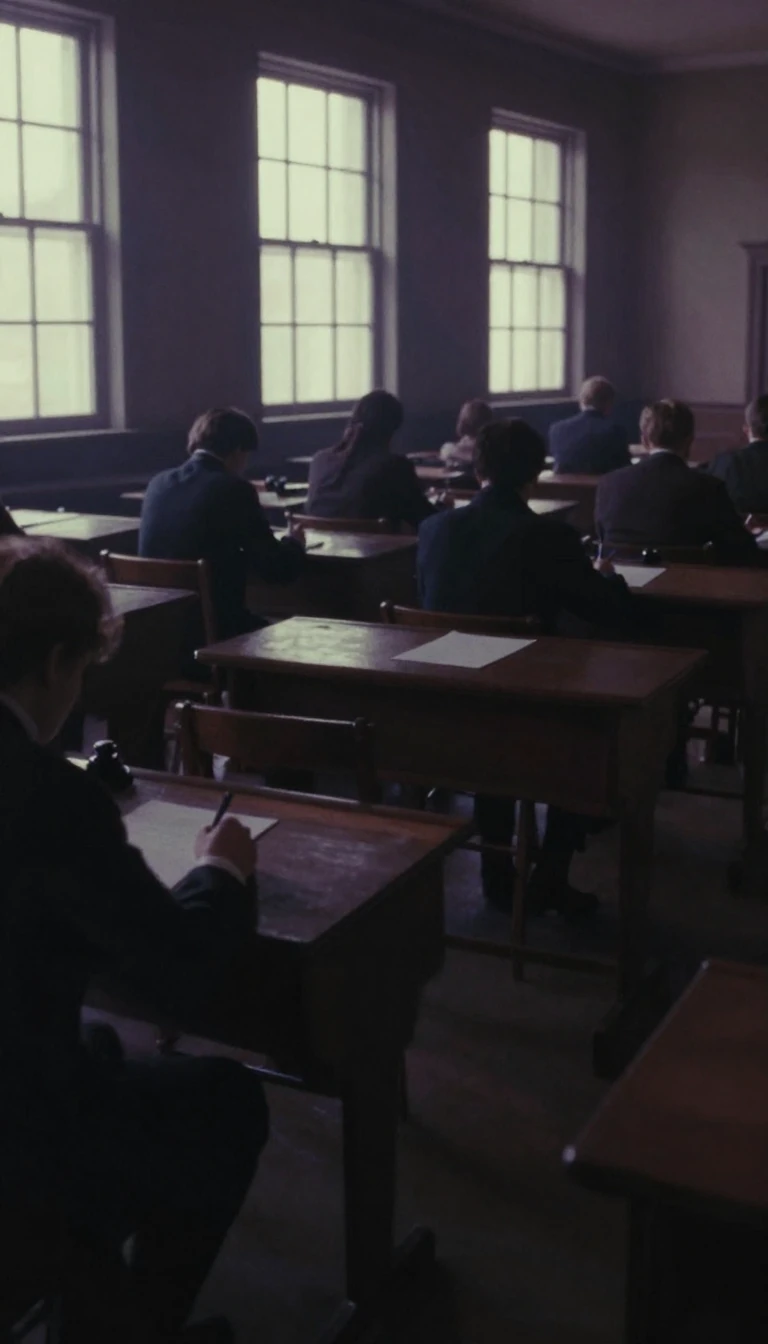 Why does a nineteenth-century clerk who refuses to work still haunt our modern imagination?Herman Melville’s 1853 story introduces a scrivener who responds to every request with the haunting phrase, I would prefer not to. As he descends into total passivity, starvation,…
 How a small North Carolina town became a global hub for research and artChapel Hill is more than just the home of the nation's first public university. From its origins as a colonial chapel site to its status as a modern research powerhouse, the town …
- Why do some embryos fail to separate into two distinct, individual human beings?Conjoined twins emerge when an embryo splits late, leaving two individuals physically tethered. While the exact trigger remains a mystery, the result is a unique anatomical config…
 How a 1960s Pulp Fiction Magazine Title Defined an Indie Rock IconDeath Cab for Cutie emerged from a small college town to define the sound of the 2000s. Before the platinum records and Grammy nominations, the band was a DIY project born in a Be…
 A desperate financial crisis turned a Hollywood star into a frontier medical pioneer.Jane Seymour accepted the lead role in Dr. Quinn, Medicine Woman only after discovering her manager had lost her fortune and left her nine million dollars in debt. She signed a fi…
- Can you choose your own life, or are you merely drifting through existence?Søren Kierkegaard’s 1843 masterpiece Either/Or challenges the reader to confront the fundamental question of how to live. Through two distinct, pseudonymous life views—the pleasur…
 Why the most profound portrayals of scarcity often emerge from the artist's own povertyFrugality is more than just saving pennies; it is a complex tension between necessity and virtue. While history frames it as a moral duty or a survival strategy, artists like Pabl…
- How a radio storyteller built a fictional empire from the heart of MinnesotaGarrison Keillor transformed public radio with a homespun variety show that became a cultural institution. By blending live music, sound effects, and his signature monologues abou…
- The Victorian governess lived in a social limbo between family and household staff.Neither a servant nor a family member, the Victorian governess occupied a lonely, precarious position. Often a middle-class woman forced into work by financial ruin, she faced str…
- Why the Greek term for the common people now often insults the eliteOriginally a neutral Ancient Greek phrase for the masses, hoi polloi has undergone a strange linguistic evolution. While it traditionally signifies the common people, it is freque…
 In a Dystopian City, Thirteen Sinners Seek Golden Boughs Aboard a Mysterious BusLimbus Company is a dark, hyper-capitalist role-playing game set in a sprawling city of twenty-six districts. Players manage a team of thirteen Sinners, led by an amnesiac named D…
 Why eating goose on September 29 was once a strategy for financial securityMichaelmas, the feast of St. Michael the Archangel, was once a cornerstone of the medieval calendar. Beyond its religious roots, this day synchronized the harvest, legal contracts…
- Are monsters born or made? The origin story of cinema's most infamous asylum nurse.Before she became the cold-hearted antagonist of One Flew Over the Cuckoo's Nest, Mildred Ratched was a woman navigating a dark, experimental psychiatric system. This stylish preq…
 From D-Day Paratrooper to Hollywood Star: The Extraordinary Life of Richard ToddRichard Todd was a decorated British officer who parachuted into Normandy on D-Day, only to become one of the 1950s most prominent leading men. His life was defined by both high-s…
 Why the French New Wave critics failed to understand Robert Hossein’s cinematic visionRobert Hossein was a master of film space and psychological tension, yet he faced relentless criticism from the French New Wave. While they dismissed his work as mere melodrama, H…
 Why do we feel secret joy when others suffer, and what does it reveal?Schadenfreude, the German term for taking pleasure in another's misfortune, is a universal human experience. While often dismissed as mere malice, psychologists suggest it is a co…
 How a Siberian prison camp transformed Fyodor Dostoyevsky from a dreamer into a literary giant.Stripped of his status and sent to a brutal Siberian labor camp, Fyodor Dostoyevsky witnessed the darkest depths of the human condition. This harrowing experience purged his early…
 The United States district courts are not constitutionally required to exist at allWhile the Supreme Court is a constitutional fixture, the federal district court system was created by Congress through the Judiciary Act of 1789. These ninety-four trial courts ha…
 Writer's block is not just a creative struggle; it is a complex neurological phenomenon.Often dismissed as a lack of inspiration, writer's block is a multifaceted condition rooted in cognitive, motivational, and physiological factors. Far from being a modern inventio…
 Can a book about the universe's origin contain only one single mathematical equation?Stephen Hawking’s 1988 bestseller, A Brief History of Time, aimed to explain complex cosmology to the general public. Warned that every equation would halve his readership, Hawkin…
 A posthumous masterpiece: how a failed writer’s New Orleans satire conquered the literary worldJohn Kennedy Toole’s A Confederacy of Dunces was published eleven years after his suicide, thanks to his mother’s persistence and writer Walker Percy’s intervention. This picaresq…
- Mark Twain used a dream about heavy armor to satirize feudalism and modern industry.When a 19th-century Connecticut engineer wakes up in 6th-century England, he decides to modernize the past using his technical expertise. Mark Twain’s 1889 novel is more than a ti…
 Is life a choreographed performance or a series of meaningless, chaotic gyrations?Anthony Powell’s twelve-volume masterpiece, A Dance to the Music of Time, captures the intricate, often awkward rhythm of human existence. Inspired by a Nicolas Poussin painting, …
 How a sickly, impoverished scholar single-handedly redefined the English language in 1755Samuel Johnson, a man who survived childhood tuberculosis and lived in near-poverty, transformed English lexicography. While others failed to capture the language as it was actual…
 Why Ernest Hemingway Wrote Forty-Seven Different Endings for A Farewell to ArmsPublished in 1929, Hemingway’s masterpiece captures the existential disillusionment of the Lost Generation. Yet, the author famously struggled to find the right conclusion, obsess…
 Can a house truly define a man's identity, or is it just a dream?In V. S. Naipaul's 1961 masterpiece, Mohun Biswas battles a lifetime of alienation and an overbearing, traditional family. His desperate, lifelong quest to own a home becomes more…
 Why Jonathan Swift suggested eating children to solve Ireland's 18th-century economic crisis.In 1729, Jonathan Swift published a satirical essay proposing that the Irish poor sell their children as food to the wealthy. While shocking, the work was a calculated attack on t…
 A lost trunk of notebooks redefined the legacy of Ernest Hemingway's final memoirIn 1956, Hemingway recovered two forgotten steamer trunks from the basement of the Hôtel Ritz Paris. Inside lay the handwritten notebooks that would become A Moveable Feast. This …
 Can a novel bridge the divide between the British Empire and Indian independence?E. M. Forster’s 1924 masterpiece, A Passage to India, explores the fragile friendship between an Indian doctor and a British educator. Set against the backdrop of colonial tension…
- How James Joyce transformed his own religious crisis into a masterpiece of modern literatureJames Joyce turned his back on Ireland and the Catholic Church, forging a new identity as an artist. His debut novel, published in 1916, tracks this intellectual rebellion through…
 How a 1959 Broadway play forever changed the landscape of American theaterLorraine Hansberry’s A Raisin in the Sun was a risky, unprecedented production that defied industry expectations. By centering a Black family’s struggle against systemic housing d…
- E. M. Forster’s 1908 novel explores the tension between Edwardian restraint and personal freedom.In A Room with a View, a young woman’s Italian holiday becomes a catalyst for self-discovery. Caught between the rigid expectations of her social class and the unconventional hone…
- Arthur Rimbaud’s A Season in Hell: A Poet’s Final, Failed Attempt at Spiritual AlchemyPublished in 1873, A Season in Hell is the only work Arthur Rimbaud ever personally released. It serves as a spiritual autobiography, documenting his attempt to reach the unknown …
 Arthur Conan Doyle’s first Sherlock Holmes novel was a commercial failure that sold for £25Published in 1887, A Study in Scarlet introduced the world to Sherlock Holmes and Dr. Watson. Despite launching the most famous detective duo in literature, the book initially att…
 Can the rise and fall of entire civilizations be predicted by a single cycle?Arnold J. Toynbee spent decades writing a 12-volume, 3-million-word history of human civilization. He argued that societies do not collapse due to external attacks, but through th…
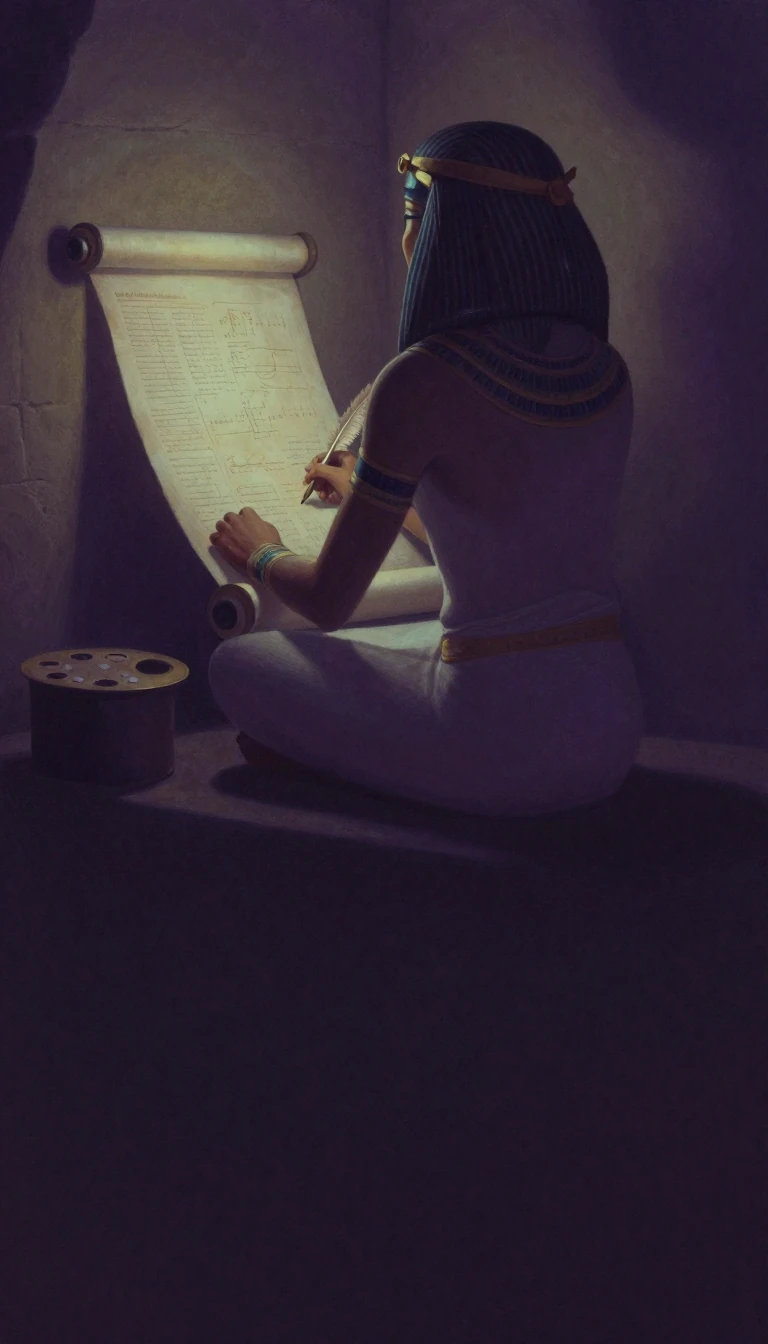 The second-century novel that invented science fiction by admitting it was a total lieWritten in the second century AD, Lucian of Samosata’s A True Story is a satirical masterpiece that features alien life, interplanetary warfare, and space travel. By explicitly de…
 William Faulkner’s masterpiece explores the tragic, crumbling legacy of a Southern dynasty’s failed ambition.Published in 1936, Absalom, Absalom! stands as a pillar of Southern gothic literature. Through a complex, non-linear narrative, Faulkner examines the rise and fall of Thomas Sutpe…
 Sophocles' Ajax: A timeless exploration of honor, madness, and the changing face of war.Written in the 5th century BCE, Sophocles' tragedy depicts the legendary warrior Ajax after he is denied the armor of the fallen Achilles. Driven to madness by the goddess Athena,…
 A Byzantine princess wrote a history of her father's reign, and critics still argue.Written around 1148, the Alexiad is a detailed account of the Byzantine Empire under Emperor Alexios I. Its author, Anna Komnene, broke the norms of her era by weaving her own voi…
 Robert Penn Warren’s masterpiece reveals how democracy can invite its own doom through populist fervor.Winner of the 1947 Pulitzer Prize, All the King's Men is more than a political novel. It is a profound exploration of human responsibility, where the rise of a charismatic governo…
 How a misunderstood Greek title became the definitive guide to the ancient cosmosWritten by Ptolemy around 150 CE, the Almagest dominated astronomy for over 1,400 years. Originally titled The Mathematical Arrangement, its common name is actually an Arabic corr…
 Are your senses lying to you about the true nature of the world?John Locke’s 1689 masterpiece, An Essay Concerning Human Understanding, dismantled the idea that we are born with innate knowledge. Instead, he argued that our minds are blank sla…
 Why did Thomas Malthus believe human population growth would inevitably lead to widespread poverty?In 1798, Thomas Malthus published a provocative thesis: population grows geometrically, while food production only increases arithmetically. He argued this imbalance forces humani…
 How a Soviet Epic Survived War, Plagiarism Accusations, and a Lost ManuscriptMikhail Sholokhov’s And Quiet Flows the Don is a monumental 20th-century epic capturing the brutal transformation of Cossack life during the Russian Revolution. Beyond its literar…
 How a dream of a dying friend birthed a definitive American theatrical masterpieceTony Kushner’s Angels in America began as a haunting vision: a friend dying of AIDS, interrupted by an angel crashing through the ceiling. This surreal image evolved into an eight…
 A Swedish Nobel laureate's space epic became a modern myth about human extinctionHarry Martinson’s 1956 poem Aniara depicts a passenger spacecraft drifting off course into the void. This haunting epic, born from Cold War anxieties, explores the fragility of hu…
- Tacitus did not name his own masterpiece, yet it defined Roman imperial history forever.The Annals, a definitive account of the Roman Empire from Tiberius to Nero, was never titled by its author. Tacitus, a Roman senator, used his access to official senate records to…
- How a red-haired orphan from a clerical error became a global literary iconWhen Lucy Maud Montgomery published her 1908 novel, she expected little more than a modest success. Instead, the story of Anne Shirley—a spirited orphan mistakenly sent to a farm …
- Why does Antigone return to bury her brother a second time in Sophocles' tragedy?In Sophocles' ancient play, Antigone defies King Creon to bury her traitorous brother, Polynices. Yet, after successfully performing the rites, she returns to the site, ensuring h…
 A Roman-Jewish general turned historian wrote the definitive account of ancient Jewish life.Flavius Josephus lived a life of paradox: a Jewish priest who commanded troops against Rome, only to defect and become a favored historian of the imperial court. His massive work,…
- How a fictional wager sparked a global obsession with racing against the clockJules Verne’s 1872 novel about a gentleman circumnavigating the globe in eighty days was more than a literary success. It captured a new era of rapid transit, inspiring real-world…