 Intellect Plus
Cultures
14,790 cards. Each one is a 40-second story with a five-minute read behind it. Page 246 of 247.
Subtopics: African cultures · Ancient peoples · Anthropology · Arab & Persian culture · Asian folklore · Australian & Pacific cultures · Calendars & new year · Celtic mythology · Chinese culture · Clothing and fashion · Communication · Culture · Culture of Korea; Culture of South Korea · Education · Egyptian mythology · Endangered languages · Ethnology · Ethnology and anthropology · Etiquette & manners · Fairy tales & folk tales · Fashion through the ages · Festivals & celebrations · Folk dance · French & Italian culture · Hairstyles & jewellery · Handicrafts · Indian culture · Indigenous cultures of the Americas · Japanese culture · Journalism and mass media · Language · Language families · Language learning · Languages · Latin American culture · Legendary creatures · Nordic culture · Norse mythology · Peoples & civilisations · Pilgrimage & sacred journeys · Proverbs & idioms · Public holidays · Russian & Eastern European culture · Sign languages · Superstitions · Traditional dress · Traditional games · Traditions & customs · UK & Irish culture · US culture · Weddings · Writing systems
 The many faces of the Lord of FrenzyHe is the one-eyed wanderer, the patron of poets, and the leader of the slain. From the Roman frontiers to the Viking Age, the deity known as Odin has left an indelible mark on th…
 The 20th-century invention of a centuries-old identityFor much of history, the people of the Tarim Basin had no common name. They identified by their home oases or their faith. It was only through a 1921 Soviet-led conference that a …
 The ancient art of steering the stateThe word government comes from the Greek 'kubernáo', meaning to steer with a rudder. From the first city-states 5,000 years ago to modern federal republics, the fundamental challe…
 Are the Basques the last living fossils of Neolithic Europe?Often called the 'living fossils' of the continent, the Basques possess a genetic and linguistic heritage that predates many modern European populations. But how much of this anci…
 Why doctors removed the word 'nuclear' from MRI scansWhen you undergo an MRI, you aren't being exposed to X-rays or radiation. While the technology relies on the magnetic properties of atomic nuclei, the name was changed to avoid th…
 The next word is just a mathematical predictionLarge language models don't actually understand meaning; they are sophisticated engines of probability. By analyzing billions of parameters, these neural networks learn to predict…
 The traumatized Kaiser whose birth injury shaped a century of global conflictA difficult breech birth, heavy doses of chloroform, and a fractured arm left the last German Emperor with a lifelong physical disability. This trauma, combined with a clash betwe…
 The massive engine of discovery that once built the atomic bombFrom the invention of the cyclotron to the discovery of sixteen chemical elements, UC Berkeley has been a primary architect of modern science. But this legacy of high-stakes resea…
 Is the soul an eternal essence or merely a convenient label?Across history, humanity has struggled to define the immaterial self. While many religions promise an immortal spirit that survives death, others, like Buddhism, suggest the 'soul…
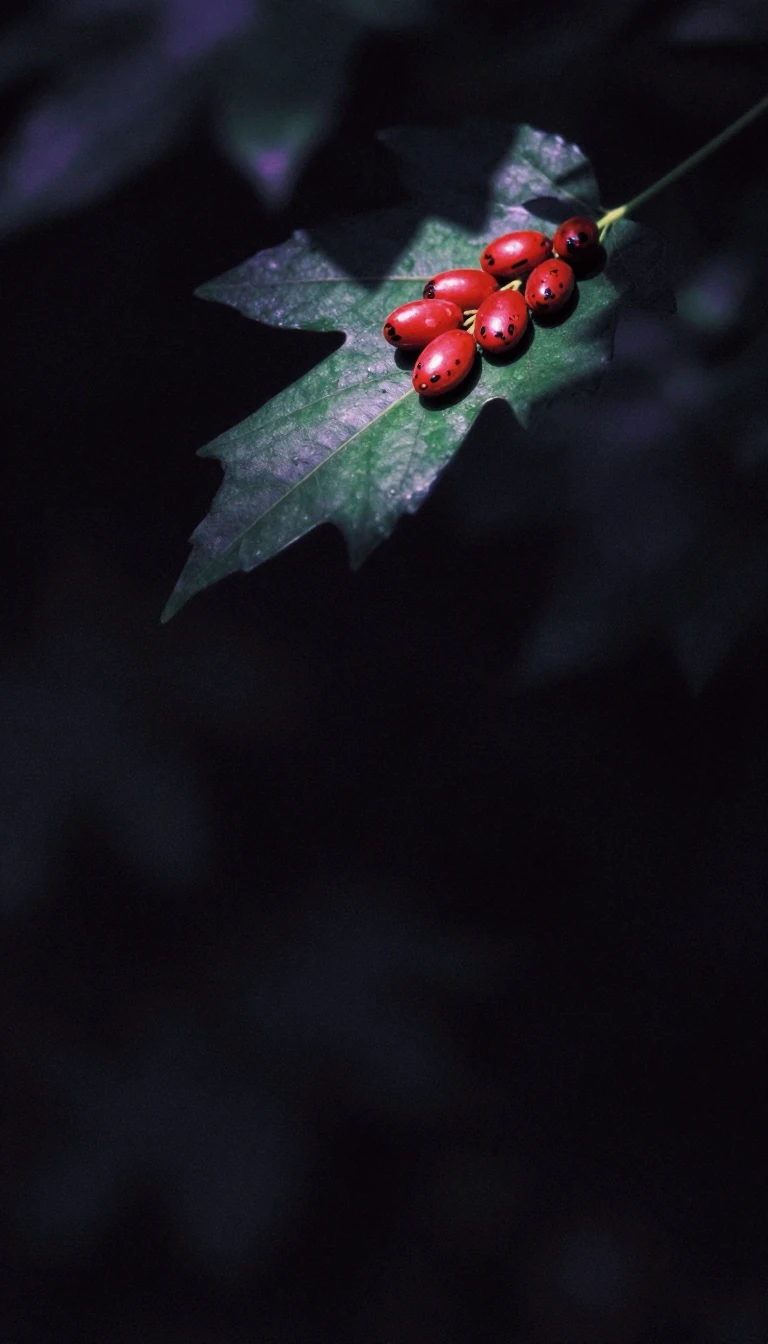 The poisonous beauty of the Narcissus: from ancient medicine to modern scienceOften celebrated as the cheerful herald of spring, the Narcissus genus hides a complex history. Beyond their iconic yellow and white petals lies a biological mechanism of toxicity…
 How a group of disciplined Oxford students transformed the Church of EnglandThey were nicknamed Methodists for their rigorous, systematic devotion to faith. What began as a small student club at Oxford University, focused on visiting prisoners and the poo…
 The enduring mystery of the Kurds: a nation without a stateSpanning the mountains of Turkey, Iran, Iraq, and Syria, the Kurds represent one of the Middle East's largest ethnic groups. Yet, despite a history stretching back to ancient Meso…
 The fractured legacy of the First Fitna and the origins of Islamic branchesBeyond the familiar distinction between Sunni and Shia lies a complex web of jurisprudence, theology, and historical schisms. From the radical Kharijites to the rationalist Mu'taz…
 Was sexual orientation always a fixed identity or a cultural invention?From ancient Egyptian lovers to the 1970s psychiatric manuals, the way we label same-sex attraction has shifted radically. While some see biological roots, others argue our modern…
 The ancient guild of stonemasons that became the world's largest secret societyTracing its lineage to medieval guilds, Freemasonry has evolved from practical trade organizations into a complex global fraternity. While often shrouded in mystery, its true foun…
 Why the 'Sugar Feast' begins with a sighting of the moonAfter a month of dawn-to-dusk fasting, the arrival of Eid al-Fitr is marked not by a clock, but by the sky. This global celebration, often called the 'Sweet Eid,' transforms commu…
 The golden flower that symbolizes both imperial power and mourningFrom the Japanese Chrysanthemum Throne to the funeral rites of Europe, this autumn bloom carries immense cultural weight. Known as the 'golden flower,' its history spans millennia…
 The holiday we celebrate today was once a forbidden, even illegal, eventWhile we now associate Christmas with warmth and family, for much of history, it was a site of intense political conflict. From Puritan bans in England and Boston to the radical s…
- The Great Law of Peace: How a longhouse shaped North American diplomacyLong before modern democracy, a sophisticated confederacy of Iroquoian-speaking peoples mastered the art of political unity. By uniting five—and later six—distinct nations under a…
 Is the global evangelical movement a single unified force or a diverse collection of beliefs?With an estimated 600 million believers, evangelicalism is a massive, interdenominational movement. Yet, scholars struggle to define it. From its 16th-century Reformation roots to…
 Did the Cherokee migrate from the Great Lakes or were they always in Appalachia?For decades, oral traditions and ethnographers believed the Cherokee migrated south from the Great Lakes. But new linguistic and archaeological evidence suggests a much deeper con…
 The world is not made of objects, but of personsWe often view nature as a collection of inert resources. But for many indigenous cultures, the world is populated by agents—rivers, animals, and even rocks—that possess their own …
 The billion-dollar myth of the dinner party origin storyWe often imagine YouTube was born from a shared meal in San Francisco. But while a viral dinner party story makes for great marketing, the true origins of the platform were far mo…
 The high-stakes marriage market of Jane Austen's Longbourn estateIn 1813, a single man with a good fortune was considered a universal target for marriage. But for the Bennet sisters, finding a husband wasn't just about romance—it was a desperat…
 Why the most profound scientific truths are never actually provenIn the natural sciences, an impossibility is never truly unchallengeable. While we rely on peer review and reproducibility to validate discoveries, even the most established theor…
 The man who mastered the universe was once a child who could fit in a mugBefore he was the architect of modern physics, Isaac Newton was a premature infant in Lincolnshire, so small his mother claimed he could fit inside a quart mug. His journey from a…
 Was Halloween originally a Christian vigil or a pagan harvest festival?Modern Halloween is synonymous with horror and mischief, but its origins are a complex tug-of-war between ancient Celtic rituals and the Christian liturgical calendar. From Roman …
 The ancient Greek myths were not just stories, but a shifting cosmic historyFar from being static fables, Greek mythology evolved from animistic spirits into a complex, violent hierarchy of gods. Through oral traditions and pottery, we see a world transit…
 Was the legendary Sir Francis Drake a national hero or a ruthless pirate?To the English, he was a celebrated explorer and naval commander. To the Spanish, he was 'El Draque'—the Dragon. Behind the tales of circumnavigation lies a complex legacy of priv…
 The imposing king who transformed English law through conquest and conflictHe was a towering, intimidating figure known as 'Longshanks,' a man whose reign was defined by both brilliant administrative reform and brutal military campaigns. From the conques…
 The Doctrine of the Elders: Buddhism’s oldest surviving traditionWhile many Buddhist branches evolved through new sutras, Theravāda has spent over two millennia preserving a singular, ancient vision. Known as the 'Doctrine of the Elders,' this …
 From medicinal bitter herbs to a global ritual of social connectionLong before it was a fashionable afternoon luxury, tea was a medicinal concoction. Once chewed as a raw leaf or boiled into bitter soups, this aromatic infusion has evolved from a…
 The enduring shadow of the Slavic gods and the era of double faithLong after the official adoption of Christianity, the ancient Slavic world refused to let go. From the forests of Russia to the banks of the Elbe, a resilient system of animism an…
 Folklore is far more than just old stories and dusty legendsWhile we often associate folklore with ancient myths, it is actually a living, breathing part of our modern identities. From the way we celebrate birthdays to the unique slang of …
 Is it bread, or something more? The enduring mystery of the Eucharist.For two millennia, the Christian Eucharist has centered on a profound question: what happens to the bread and wine? While denominations agree on the ritual's origins at the Last S…
 Is ethnicity a biological reality or a social invention?We often treat ethnic identity as an ancient, unchangeable truth. Yet, historians and anthropologists suggest it may be far more fluid. From ancient Greek definitions to modern ce…
 The reluctant monk who shaped the Renaissance from the middle groundHe entered the monastery not by divine calling, but by the necessity of poverty. Yet, this orphaned Dutch scholar would become the most influential mind of the Northern Renaissanc…
 The ancient agricultural roots of our modern concept of cultureWe often think of culture as art or tradition, but its linguistic origins are far more grounded. The word itself stems from the Latin for tilling the soil, suggesting that human c…
 How the death of shared knowledge helped build modern empiresBefore copyright, knowledge was a collective resource. In the 15th century, the printing press turned ideas into commodities, but it also sparked a legal revolution. From the rise…
 The ancient Egyptian church that survived empires and theological schismsTracing its roots to the 1st century, the Coptic Orthodox Church is one of the world's oldest Christian institutions. From the halls of the Catechetical School of Alexandria to th…
 Is conservatism a philosophy of preservation or a defense of inequality?While often viewed as a simple preference for the familiar, conservatism is a complex web of competing ideas. From the organic stability of Edmund Burke to modern debates over soc…
 Is your mind a library of facts or a complex web of maps?We often think of beliefs as active thoughts, but most of what we 'know' sits quietly in the background. From the way we navigate the world to how we predict a chess move, the tru…
 How Did 'Ancient History' Become a Scientific Discipline?The study of the past, derived from the Greek for 'ancient things' and 'science,' has a complex lineage. It evolved from earlier pursuits, moving from mere description to rigorous…
 Is beauty an objective reality or just a trick of the mind?We often claim beauty is in the eye of the beholder, but philosophers have spent centuries debating if aesthetic value exists independently of us. From the 18th-century origins of…
- The West is not a place, but a shifting cultural ideaWe often think of the West as a fixed map of nations. In reality, it is an evolving concept of synergy, moving from a simple directional term for the sunset to a complex socio-pol…
 How a 14th-century plague unintentionally protected an indigenous way of lifeWhen the Black Death devastated northern Norway in 1349, the Sámi people faced a different fate than their Scandinavian neighbors. While trade routes brought devastation to coasta…
 The political protest that accidentally renamed a global religious movementIn 1529, a group of German princes and free cities issued a formal dissent against an imperial edict. They didn't set out to create a new branch of Christianity; they simply chose…
 Was the first religion of humanity actually a belief in many gods?While we often view monotheism as a modern peak of religious evolution, scholars suggest a much more complex history. From ancient Egyptian solar cults to the Vedic traditions of …
 The ancient roots and modern complexities of the State of IsraelFrom prehistoric human traces to a high-tech global economy, the Levant has seen empires rise and fall. Discover how a region of shifting demographics and ancient kingdoms became …
 The global identity that defies a single definitionWith populations estimated between 250 and 600 million, Indigenous peoples inhabit every continent. Yet, despite their profound impact on global biodiversity, international law la…
 Were our ancestors actually more prosperous than we are today?We often imagine prehistoric life as a desperate struggle for survival. Yet, some anthropologists argue that hunter-gatherers lived in an 'affluent' state, working far fewer hours…
 The linguistic battle to reclaim a name from its pejorative rootsFor decades, the Hmong people were identified by outsiders using terms that translated to 'barbarian' or even 'cat.' Today, a global movement is reshaping how this ancient ethnic …
 The science of the household: why ecology is more than just natureDerived from the Greek word for 'house', ecology is the study of how life interacts with its environment. From the microscopic bacteria in our bodies to the global regulation of t…
 How a single religious institution shaped the foundations of Western civilizationWith over 1.3 billion members, the Catholic Church is more than a faith; it is a historical architect. From the creation of the first universities to the preservation of classical…
 The celestial dance of light is actually a collision of solar particles and our atmosphereBeyond the shimmering curtains and radiant spirals lies a high-stakes physical collision. When charged particles from the sun strike Earth's upper atmosphere, they excite oxygen a…
- The religious middle way: how a 16th-century schism created a global communionBorn from the English Reformation, Anglicanism famously occupies a theological middle ground. It blends Protestant theology with Catholic-style liturgy, creating a unique identity…
 The world's oldest continuous culture may have arrived 60,000 years agoWhile many view ancient migrations as simple treks, the arrival of Aboriginal Australians involved sophisticated seafaring across the Wallace Line. As sea levels rose, these popul…
 The global trade giant that was never supposed to existIn 1948, the GATT was only a provisional agreement, a temporary fix for a world rebuilding after war. Yet, this makeshift treaty survived for nearly half a century, eventually evo…
 The invisible meaning that connects different languages and shared beliefsWhen an English speaker says "Snow is white" and a German speaker says "Schnee ist weiß," they are using different words, but expressing the exact same idea. This underlying, lang…
 The accidental architect of modern politics and the Romantic soulHe was a stammering apprentice who never attended school, yet he reshaped the Western world. From the streets of Geneva to the salons of Paris, Jean-Jacques Rousseau’s life was a …