 Intellect Plus
Epidemiology
206 cards. Each one is a 40-second story with a five-minute read behind it. Page 3 of 4.
 How a 1910 land tax law aimed to break up Australian estatesLong before the modern digital era, Australia's federal tax system was forged from a desire to redistribute land. What began as a targeted strike against large, under-utilised col…
 The hidden health cost of winter warmth in regional AustraliaIn the highland city of Armidale, the cozy glow of a domestic wood heater carries a heavy price. While providing essential warmth during long, frosty winters, these heaters create…
 Beyond the headlines: the complex mechanisms of anti-Palestinian racismIt is often described as a cocktail of xenophobia, erasure, and identity denial. From the halls of German parliaments to university campuses in the United States, anti-Palestinian…
 Is your respect for children actually a form of systemic bias?We often view our authority over children as a protective necessity. However, scholars argue this power dynamic may be 'adultism'—a systematic prejudice that treats youth as inher…
 Ukraine's administrative architecture: A three-tiered system of governanceUkraine operates as a unitary state with a structured hierarchy of territorial organization. From the broad oversight of regions to the granular level of local communities, this s…
 The Gender Gap in HPV-Related Oropharyngeal Cancer in Northern NevadaIn Northern Nevada, a specific type of throat cancer—oropharyngeal squamous cell carcinoma (OPSCC)—shows a striking biological disparity. While the disease is increasingly linked …
 The snake responsible for the most snakebite fatalities in the United StatesWhile many fear its rattle, the western diamondback rattlesnake is defined by a sophisticated biological arsenal. It uses infrared-sensing pits to hunt in total darkness and posse…
- How automated debt recovery became a national public policy tragedyAustralia's Robodebt scheme turned a cost-saving administrative goal into a devastating human rights failure. By automating debt collection without human oversight, the government…
 The repetitive motions of captive animals are more than just bad habitsPacing, rocking, and chewing cage bars are often dismissed as mere boredom. Yet, these repetitive, goal-less behaviors—known as stereotypies—may actually signal profound neurologi…
 The butterfly whose wing size is a thermometer for the northIn the chilly northern reaches of the Palearctic, the speckled wood butterfly has evolved a specific physical strategy to survive. Its wings aren't just for show; they serve as es…
 Why the best way to fix a problem is to prevent it from happeningIn manufacturing, finding a defect after it is made is expensive and wasteful. Instead of inspecting finished goods, pioneers like Walter Shewhart developed a method to monitor th…
 The vending machine is the original smart contractLong before Ethereum and decentralized finance, the concept of self-executing agreements existed in physical form. While we often think of smart contracts as complex code, their f…
 The hidden human cost of the world's most sustainable metalRecycling steel saves enough energy to power 18 million homes annually, making it a cornerstone of the circular economy. Yet, behind this industrial triumph lies a grueling inform…
 Why Mexican music is currently capturing the global pop imaginationFrom Snoop Dogg to Bad Bunny, the world's biggest stars are suddenly reaching for cowboy hats and accordions. This isn't just a passing trend; it is a cultural renaissance of Regi…
 How do we know which uncertain variables actually drive a model's results?When scientists use complex mathematical models to predict climate change or economic shifts, they face a 'black box' problem. Hidden uncertainties in data can distort the truth. …
 The eight-year term and the high-stakes politics of the ECB presidencyLeading the European Central Bank is more than managing the euro. It is a role defined by non-renewable eight-year terms, intense negotiations between EU leaders, and the heavy bu…
 Why do we help others even when it costs us?Evolutionary biology faces a paradox: why would an individual sacrifice their own fitness for an unrelated stranger? The answer lies in reciprocal altruism, a strategy where helpi…
 Why a failed study might still be a success of logicIn science, a 'non-significant' result isn't always a dead end. It might just be a lack of power—the statistical ability to actually see what is there. Understanding power helps u…
 Why did millions of Zoroastrians flee Persia for India?For over a millennium, Zoroastrianism was the dominant faith of West Asia. But following the Muslim conquest of Persia in the 7th century, this ancient community faced a systemati…
 Why your plastic bottle might not actually be getting recycledMost people assume putting a bottle in a bin solves the waste problem. In reality, plastic recycling faces massive technical hurdles. From molecular degradation to complex contami…
 Why some females choose multiple mates to boost offspring survivalWhile polygyny is common, polyandry—where one female mates with several males—offers hidden evolutionary advantages. From honeybees to tortoises, this rare mating strategy can inc…
 How a standardized geocode helps map the spread of diseaseTo fight a health crisis, you first need to know exactly where it is happening. The Nomenclature of Territorial Units for Statistics (NUTS) provides a universal language for geogr…
- Was the medieval destruction of Hindu temples driven by religious zeal or political strategy?Historians debate whether the era of Islamic rule in India was defined by systematic religious persecution or calculated political maneuvers. While some texts describe a bloody co…
- The industrial evolution that earned a city a pungent nicknamePasadena, Texas, is a city defined by its heavy industrial footprint. While it serves as a hub for aerospace and healthcare, its economic identity is deeply rooted in petroleum re…
 The hidden chemical evolution within our city's discarded trashWhen we throw away household items, they don't just sit there; they undergo a complex biochemical transformation. In the short term, microbial metabolism and organic degradation t…
 Nine of the ten most obese countries on Earth are in the PacificA recent Lancet analysis reveals a staggering reality: Pacific island nations dominate the global rankings for obesity. This is not merely a health crisis, but a complex intersect…
- The invisible weight of misogynoir and its biological tollIt is more than just prejudice; it is a specific, intersectional force. While the term describes the unique overlap of anti-Black racism and misogyny, new research suggests this s…
 The hidden human cost of Namibia's industrial infrastructureLüderitz is a town defined by its harsh desert beauty and modern energy ambitions. Yet, beneath its colonial architecture lies a somber history: the railway that once connected it…
- The 100-Year Municipal Mystery of Mableton, GeorgiaMableton, Georgia, has a peculiar history of existence. It was incorporated as a town in 1912, only to be dissolved just four years later. It took over a century for the community…
 How machines distinguish between groups by stripping away the noiseImagine trying to identify a specific disease from a mountain of complex biological data. Most of that data is just noise. Linear Discriminant Analysis (LDA) acts as a statistical…
 Why global averages often fail to capture the true reality of local crisesWhen studying obesity in the US or COVID-19 in Jakarta, a single national average can be dangerously misleading. Global regression models often miss the critical, localized patter…
 The kob: a stocky antelope built for speed and social survivalWhile many antelopes rely on camouflage to hide in dense brush, the kob has evolved for the opposite strategy. This stocky African antelope thrives in open floodplains, trading co…
- The hidden architecture of litter: from deep-sea canyons to genetic loadsLitter is often viewed as a surface-level nuisance, but its reach extends far beyond discarded wrappers. From the massive accumulation of cigarette butts to the invisible genetic …
 When standard statistics fail, the Kruskal–Wallis test finds the hidden orderMost researchers rely on ANOVA to compare groups, but what happens when your data is messy, skewed, or full of outliers? In these cases, a non-parametric alternative can reveal pa…
- A deadly parasite found in a Texas city's drinking waterIn September 2020, a routine water check in Lake Jackson, Texas, turned into a public health crisis. The detection of brain-eating amoebae in the municipal supply led to a sudden …
 Measuring Order: The Mathematics of Concordance and DiscordanceHow do you mathematically prove that two different rankings are actually telling the same story? Instead of looking at raw values, statisticians use Kendall's tau to see if items …
 The invisible legacy of waste: why clearing surface trash isn't enoughWhen a local authority clears a fly-tipping site, the problem often remains hidden beneath the soil. While the visible eyesore is gone, toxic elements can linger deep underground,…
 The diplomat tasked with speaking for an entire continentHow does a single individual represent 27 nations on the global stage? The EU High Representative must navigate a complex web of responsibilities, from leading a massive diplomati…
 The Hidden History of Indiana's Most Populous Southern SuburbGreenwood, Indiana, is often defined by its modern suburban appeal and family-friendly parks. Yet, beneath its contemporary surface lies a complex legacy—from early industrial dom…
 The South Carolina town that grew from a therapeutic resort for plantation ownersBefore it became the famous Peach Capital of South Carolina, this Upstate region served as a specialized wellness destination. Plantation owners once traveled to these local limes…
 The global food system wastes enough to feed the world four times overNearly 40% of all food produced globally is discarded, creating a massive environmental footprint. This waste isn't just a logistical failure; it's a primary driver of biodiversit…
 The hidden architecture behind tracking billions in illicit moneyHow does a government track trillions in moving capital without seeing every transaction? Meet FinCEN, the bureau that acts as the nation's financial intelligence hub. It uses a m…
 The medicinal spring that built a North Carolina townLong before it was a bustling hub near Research Triangle Park, this community was a destination for travelers seeking healing. It all began with a single discovery in a tobacco fi…
- Why the cost of your empty packaging is shifting from taxpayers to producersFor decades, the financial burden of managing household waste has rested on local authorities and taxpayers. But a major UK regulatory shift is rewriting the rules, forcing large-…
 The social secrets of a bee that builds its own homeMost bees live in the dirt or in pre-existing holes, but the eastern carpenter bee is a master architect. Using powerful mandibles, it carves perfectly round tunnels into wood. Wh…
 Why 50% of e-government projects in developing countries failTechnology alone doesn't make a government efficient. While digital tools offer faster service delivery, many initiatives stall due to hidden cultural and organizational barriers.…
 The strict rules governing Europe's move toward a single currencyJoining the eurozone isn't just about signing a treaty; it requires meeting a rigorous set of economic benchmarks known as the Maastricht criteria. These rules ensure that member …
- How the European Union manages its global diplomatic presenceBeyond the borders of the bloc, the EU operates a vast network of over 140 delegations. But how does a single diplomatic service coordinate the foreign and security policies of an…
- War does not reduce emissions; it simply rearranges themWhen cities fall silent during conflict, the air can appear deceptively clean. But beneath the temporary clarity of a quiet sky, modern warfare operates as a massive, carbon-inten…
- The remarkable thermal strategy of newborn sidewinder rattlesnakesIn the scorching deserts of the American Southwest, newborn snakes face a lethal challenge. To survive, they employ a unique, collective behavior: huddling in a dynamic mass to re…
 Hidden health disparities in Venezuela's largest stateIn the heart of Bolívar State, a critical health gap exists between different communities. While the region is a powerhouse of mineral wealth and history, a recent study reveals t…
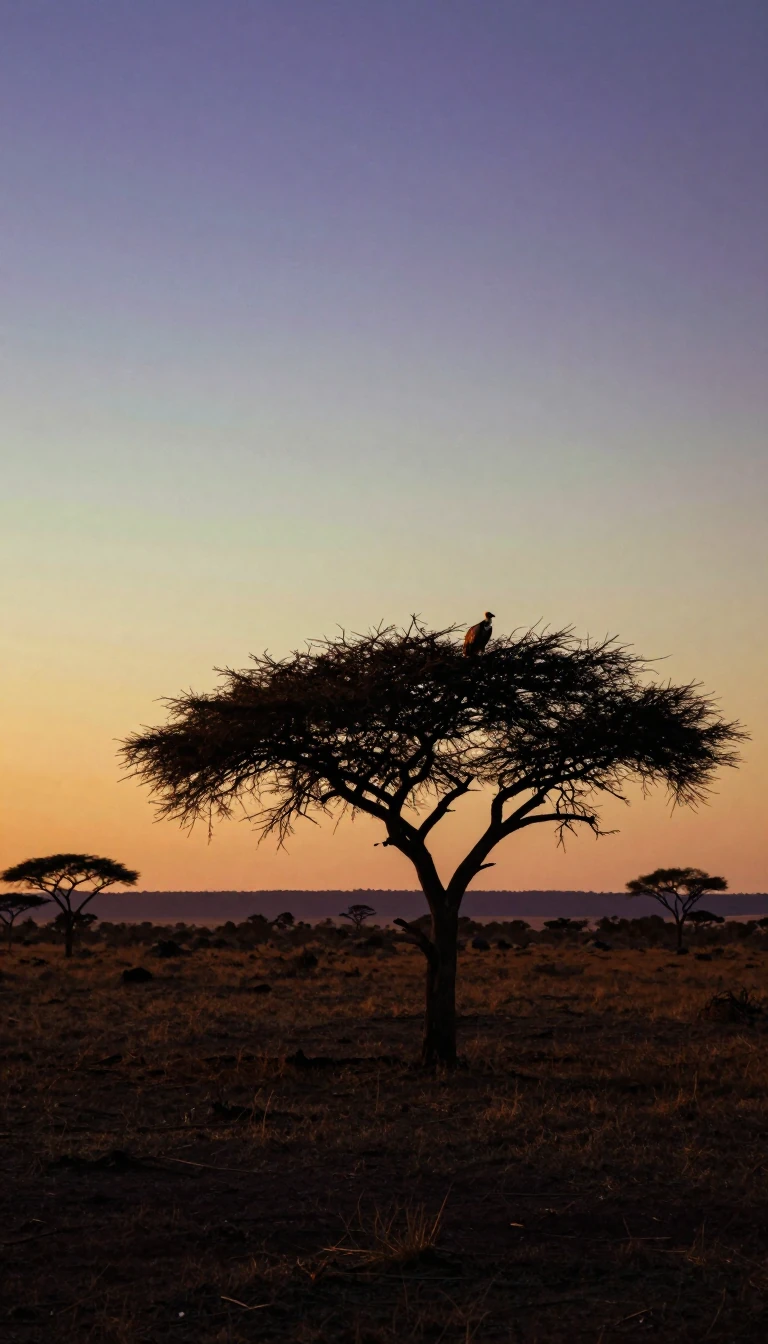 The rhinoceros viper: a massive predator with a surprisingly mild dispositionDespite its intimidating size and venomous fangs, the rhinoceros viper is rarely aggressive toward humans. This West African rainforest resident relies on cryptic patterns and amb…
 Can a tiny electric current reveal your true biological age?Beyond measuring body fat, a specialized electrical measurement called phase angle may act as a window into cellular health. By tracking how current flows through your tissues, sc…
- The 'Double Discrimination' of Bisexuality: Why Being 'Both' Can Mean Being 'Neither'Biphobia isn't just a lack of acceptance; it is a systematic erasure that leaves bisexual people in a social limbo. From being dismissed as 'closeted' by the gay community to bein…
- The ideological architecture of hatred: How anti-Shi'ism functions as a tool of powerHatred is rarely spontaneous; it is often engineered. In the history of Islam, anti-Shi'ism has functioned as a systematic framework of discrimination. By labeling a minority as h…
 Can a nation join the European Union without being recognized as a state?Kosovo's path to the EU is a diplomatic tightrope. While the territory has formally applied for membership, five EU member states do not recognize its sovereignty. This creates a …
 The hidden chemistry of urban air and the power of mediaFrom the invisible volatile organic compounds (VOCs) shaping city air to the media giants shaping cultural narratives, our urban environments are defined by complex systems. One i…
- Why these pit vipers choose specific frogs over general prey abundanceIn the tropical forests of northern Thailand, the distribution of Trimeresurus pit vipers is governed by a sophisticated ecological rule. While many predators simply follow the la…
 Why your waist size matters more than your weightForget the scale for a moment. A simple calculation involving your waist and height can reveal much more about your internal health than BMI alone. By measuring the ratio between …
 How researchers mimic the 'gold standard' of medical trials using mathIn medicine, a randomized controlled trial is the gold standard for proving a treatment works. But what happens when you can't randomize—like when it would be unethical to assign …