 Intellect Plus
Health, medicine and disease
991 cards. Each one is a 40-second story with a five-minute read behind it. Page 4 of 17.
 Are Munchkin cats a triumph of breeding or a case of genetic manipulation?The Munchkin cat is defined by its distinctively short legs, a trait born from a genetic mutation. While some registries celebrate the breed, others condemn it as an unethical man…
 When your immune system turns against your spinal cord, the results are often sudden.Transverse myelitis is a rare neurological condition where inflammation damages the spinal cord, often disrupting movement and sensation. Symptoms can appear in hours or weeks, le…
 Why your fingertips might be a silent warning sign of underlying health issuesNail clubbing, a physical deformity where fingers swell and nails curve, has been recognized as a medical sign since the time of Hippocrates. While sometimes hereditary, this chan…
 Why the NHS is shrinking its digital mental health toolkit despite rapid innovationThe UK's National Health Service once embraced dozens of digital mental health apps to expand care. Today, that number has plummeted. While the marketplace for digital health has …
 How modern machine learning identifies the lost legacy of a Roman generalNero Claudius Drusus was a pivotal Roman commander whose life was cut short by a riding accident in 9 BC. Today, his image survives on thousands of ancient coins. Researchers are …
 Why a simple breeze can trigger the most excruciating pain known to medicineTrigeminal neuralgia is a rare, long-term condition characterized by sudden, intense facial pain often likened to an electric shock. While typically caused by a blood vessel compr…
 The master switch of your immune system is a double-edged sword for healthNuclear factor-kappa B is a family of proteins that acts as a rapid-response team for your cells. By triggering genes involved in inflammation and immune defense, it protects you …
 Noonan syndrome: A complex genetic condition that disrupts the body's internal signaling pathwaysOccurring in roughly 1 in 2,500 births, Noonan syndrome is a genetic disorder that impacts development across the body. While it often presents with distinct facial features and h…
 A rare, reversible form of dementia often mistaken for Alzheimer's or Parkinson's disease.Normal pressure hydrocephalus is an uncommon condition where excess cerebrospinal fluid builds up in the brain, causing mobility issues, cognitive decline, and incontinence. Unlik…
 Beyond the reactor core: why nuclear accidents are more than just physical disastersNuclear accidents are often measured by reactor damage and radiation release, but the true toll is far more complex. Beyond immediate physical impacts, the mental health and psych…
- Can a common heartburn pill do more than just soothe your stomach acid?Omeprazole is a staple for treating acid reflux and ulcers, but its reach extends into complex clinical territory. While it effectively blocks stomach acid production, researchers…
 Ontologies are the hidden blueprints that allow computers to understand the complexity of reality.In information science, an ontology is not just a philosophical concept but a rigorous, formal specification of knowledge. By defining categories, properties, and relationships wi…
 Orexin is the brain's master switch for wakefulness, appetite, and energy balance.Discovered in 1998, these two neuropeptides orchestrate our sleep-wake cycles and metabolic health. While initially named for their role in stimulating hunger, we now know they ar…
 A potent cancer treatment once threatened the survival of an ancient forest speciesPaclitaxel is a cornerstone of modern chemotherapy, yet its discovery nearly triggered an ecological crisis. Initially harvested from the bark of the Pacific yew, the drug’s massi…
 How humanity finally touched the Sun to solve a sixty-year-old solar mysteryNASA's Parker Solar Probe is the first spacecraft to fly directly into the Sun's corona. By enduring extreme heat and radiation, this record-breaking mission is finally gathering …
 Parkinsonism is a broad clinical syndrome, not just the disease that shares its name.While Parkinson’s disease is the most famous cause, parkinsonism is an umbrella term for a collection of movement disorders. Characterized by slowed motion, tremors, and rigidity,…
 Beyond the garden trellis: the complex chemistry and surprising diversity of passion flowersPassion flowers are far more than ornamental climbers. While gardeners prize them for their exotic, jelly-fish-like blooms, researchers study them for their potent neuroactive com…
 How a Reality TV Star Humanized the AIDS Crisis for a GenerationPedro Zamora was a Cuban-American activist who transformed public perception of HIV/AIDS by becoming one of the first openly gay men with the virus to appear on television. His pa…
 Why your chest pain might feel better when you lean forwardPericarditis is the inflammation of the protective, fluid-filled sac surrounding your heart. While its symptoms often mimic a heart attack, the condition has a distinct tell: shar…
 A rare adrenal tumor can mimic anxiety while silently damaging your heart and kidneys.Pheochromocytoma is a rare, usually noncancerous tumor that forms in the adrenal glands. By releasing excess hormones like adrenaline, it triggers unpredictable spells of high blo…
 When your immune system turns against your muscles, movement becomes a daily struggle.Polymyositis is a rare autoimmune condition where the body mistakenly attacks its own skeletal muscle tissue. This inflammation causes progressive weakness, particularly in the hi…
- Why do symptoms of nerve damage often start in your feet and hands?Polyneuropathy is a complex condition where peripheral nerves across the body suffer simultaneous damage. Because it typically targets the longest nerve fibers first, patients oft…
- Beyond Parkinson's: The surprising, complex, and sometimes risky world of pramipexole.Pramipexole is a versatile dopamine agonist used for Parkinson's and restless legs syndrome. While it offers neuroprotective potential and relief for various conditions, it carrie…
 Why Roman Emperor Probus Forced His Soldiers to Become Farmers and Vineyard WorkersProbus was a celebrated Roman emperor who secured the frontiers and restored prosperity, yet he met a violent end at the hands of his own troops. His fatal mistake was a radical m…
 Is the common additive in your food and medicine actually a hidden health risk?Propylene glycol is a ubiquitous, generally safe solvent found in everything from ice cream to intravenous drugs. Yet, in specific clinical settings, this colorless liquid can tri…
- Why your skin condition might be the secret cause of your joint painPsoriatic arthritis is a chronic condition where the immune system mistakenly attacks healthy joints and skin. While often linked to psoriasis, it can manifest as joint stiffness,…
 When food or liquid goes down the wrong pipe, what actually happens inside?Pulmonary aspiration occurs when foreign material enters the trachea and lungs. While healthy individuals often clear small amounts without issue, those with impaired reflexes or …
 Pulmonary fibrosis: When the lungs lose their ability to breathePulmonary fibrosis is a progressive disease where lung tissue becomes scarred and stiff, making it increasingly difficult for oxygen to enter the bloodstream. While the condition …
- Why high blood pressure in your lungs is a silent, life-altering medical challengePulmonary hypertension is not just high blood pressure; it is a serious condition where the vessels supplying your lungs thicken and stiffen. This forces the right side of your he…
 Can an algorithm teach us to make better life choices through trial and error?Q-learning is a reinforcement algorithm that trains agents to maximize rewards by exploring different actions. By assigning values to specific states, it learns to favor long-term…
 How a 19th-century royal charter evolved into a global research powerhouse in BelfastFounded in 1845 to broaden access to higher education, Queen's University Belfast has transformed from a small college with 195 students into a Russell Group institution. Today, i…
- Why modern medicine is retreating from the once-miraculous fluoroquinolone class of antibioticsFluoroquinolones were once hailed as broad-spectrum powerhouses, but they now carry warnings for severe, disabling, and potentially permanent side effects. From tendon ruptures to…
 Rathlin Island reveals deep genetic continuity and a unique history of human settlementOff the coast of Northern Ireland, tiny Rathlin Island holds secrets of ancient populations and modern health. While known for its seabird colonies and shipwrecks, the island serv…
- Why some neglected children struggle to form bonds while others remain resilientReactive attachment disorder is a serious condition where infants fail to form healthy bonds with caregivers due to neglect. While early deprivation is a primary risk factor, most…
 Why your brain shuts down when you see blood or feel extreme stressReflex syncope is the most common cause of fainting, accounting for over half of all cases. Triggered by emotional stress, pain, or even simple acts like coughing, it occurs when …
 How the Reserve Officers' Training Corps shapes the future of the American militaryThe Reserve Officers' Training Corps (ROTC) is the primary engine for commissioning U.S. military officers, blending civilian university life with rigorous military preparation. F…
 When your muscles break down, they can poison your kidneys from the inside out.Rhabdomyolysis is the rapid dissolution of skeletal muscle, releasing toxic proteins and electrolytes into your bloodstream. While often associated with extreme physical exertion …
 Ricin is a potent cellular killer, yet it remains a poor choice for weaponry.Derived from the common castor-oil plant, ricin is one of the most lethal substances known. It functions by shutting down protein synthesis within cells, triggering programmed dea…
 Why this powerful antibiotic turns your sweat, tears, and urine a bright orange-red.Rifampicin is a potent antibiotic derived from soil bacteria that saves lives by halting bacterial protein production. While it is essential for treating tuberculosis and other se…
 Rosacea is more than just a blush: understanding the science of facial rednessRosacea is a chronic skin condition that causes persistent redness, bumps, and visible blood vessels, primarily on the face. While its exact cause remains unknown, researchers are…
 How the Royal Danish Air Force evolved from a post-war void to Arctic powerFormed in 1950 from the ashes of Nazi-occupied Denmark, the Royal Danish Air Force initially lacked aircraft entirely. Through decades of rapid expansion, international partnershi…
 How the Royal Malaysian Air Force evolved from colonial roots to modern air powerTracing its lineage to 1934, the Royal Malaysian Air Force has transformed from a small auxiliary unit into a sophisticated force. Today, it balances Western and Russian technolog…
 A lethal snake's venom is so potent it is used to diagnose blood disorders.Russell's viper is a formidable South Asian predator known for its painful bite and aggressive defense. While its venom can cause kidney failure and severe internal bleeding, medi…
 Why the medical standard for saline is based on a century-old scientific errorFor nearly 150 years, doctors have used normal saline as a go-to medical fluid. Yet, the 0.9% concentration we call normal is not actually equivalent to human blood. This common m…
- How ambient pressure changes in aircraft can increase pressure ulcer risk for wheelchair users.For individuals using air cell-based wheelchair cushions, the environment itself may pose a hidden health risk. New research reveals that changes in ambient pressure, such as thos…
 Is your sensitivity a disorder or a personality trait? The answer changes everything.Many people feel overwhelmed by loud noises or bright lights, but the underlying cause varies wildly. While some experience sensory processing differences that require clinical su…
 How SNRIs balance brain chemistry to treat depression and chronic physical painSerotonin–norepinephrine reuptake inhibitors, or SNRIs, are a class of medications that boost mood by increasing the availability of specific neurotransmitters in the brain. Beyon…
- How a Childhood Medical Condition Shaped the Literary Voice of Sherman AlexieBorn with hydrocephalus, Sherman Alexie faced severe health challenges that excluded him from traditional childhood rites of passage. These early experiences, coupled with the tra…
 Why tracking software versions is the secret to unlocking reliable medical and genomic researchIn fields like medicine and genomics, data is constantly evolving. Yet, researchers often rely on manual file naming, which hides critical changes. By adopting formal software ver…
- Why this common heart medication is known as a potassium-sparing diureticSpironolactone is a versatile medicine used to treat heart failure, hypertension, and fluid retention. While it helps the body shed excess water, it uniquely prevents the loss of …
 Is Malaysia a true federation or a centralized state with federal features?Malaysia operates as a federation of 13 states and 3 federal territories, yet its national government wields expansive power that often overshadows regional autonomy. While states…
- When a seizure refuses to stop: understanding the medical emergency of status epilepticusA seizure lasting over five minutes is not just a typical episode; it is a critical medical emergency known as status epilepticus. Because the brain remains in a state of continuo…
- Strychnine poisoning triggers some of the most dramatic and painful symptoms in human medicine.Strychnine is a lethal toxin that turns the body against itself, inducing violent, full-body muscle spasms while leaving the victim fully conscious. With no known antidote, surviv…
 Why do some people with dementia experience increased confusion as the sun sets?Sundowning is a phenomenon where individuals with dementia face heightened agitation, confusion, and restlessness as daylight fades. While the exact cause remains unproven, resear…
- Does switching to tapentadol reduce the risk of falls for older patients?Opioid medications are often linked to an increased risk of falls, a significant concern for older patients. Recent research comparing tapentadol to oxycodone suggests that tapent…
 Does the Tenth Amendment actually limit federal power or just state the obvious?Ratified in 1791, the Tenth Amendment was designed to soothe fears of an overreaching federal government. Yet, legal scholars have long debated whether this constitutional capston…
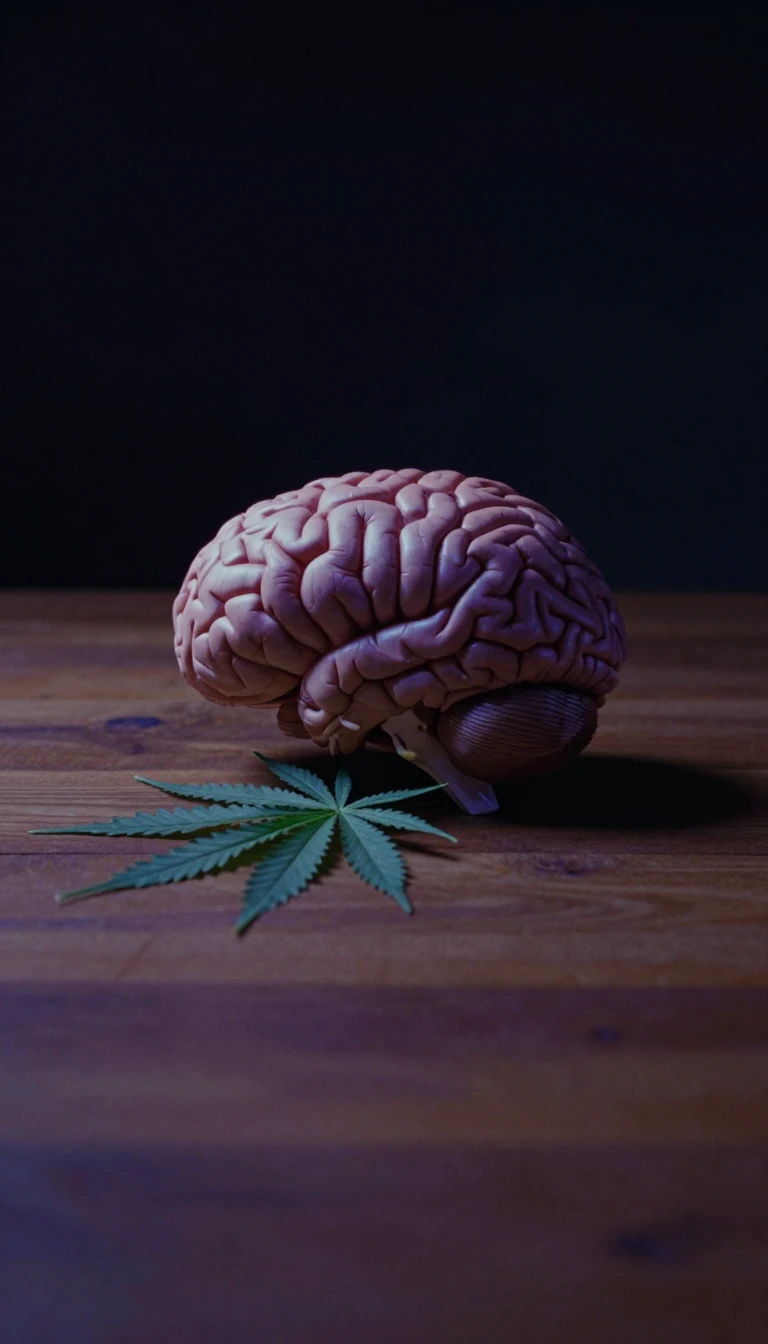 The brain produces its own version of the active ingredient found in cannabis plants.Tetrahydrocannabinol, or THC, is the primary psychoactive component of cannabis. While often associated with recreational use, its discovery in the 1960s revealed that humans poss…
 How a billion-dollar basket empire built a seven-story monument to its own successAt its peak, the Longaberger Company commanded a massive multi-level marketing empire, selling handcrafted maple wood baskets to millions. Its corporate headquarters became a glob…
 Is L-theanine the secret to calm focus, or just a well-marketed placebo?L-theanine is currently a darling of the supplement world, touted for everything from anxiety relief to sharper mental clarity. While it naturally occurs in tea leaves, the scienc…
- From Vocational Roots to Medical School: The Evolution of Toronto Metropolitan UniversityOnce a modest institute for returning veterans, Toronto Metropolitan University has transformed into a major urban research hub. Now, with the launch of its new School of Medicine…