 Intellect Plus
Philosophers
1,976 cards. Each one is a 40-second story with a five-minute read behind it. Page 21 of 33.
 Why requiring more than half the votes can actually undermine democratic ruleSupermajorities are designed to protect minorities and ensure stability, yet history and political theory suggest they often invite gridlock and corruption. By raising the thresho…
 Systems thinking is the art of seeing the whole rather than its individual parts.Instead of breaking complex problems into isolated fragments, systems thinking examines the interconnected relationships that define how a system behaves over time. By identifying…
 Why your past experiences are a dangerous guide to the unpredictable futureNassim Nicholas Taleb argues that we are blind to the impact of rare, high-stakes events. By relying on flawed models and simplistic narratives, we act like a turkey fed daily unt…
 Can you reach God by abandoning your own intellect and embracing a dark cloud?The Cloud of Unknowing, an anonymous 14th-century mystical guide, argues that God is beyond human reason. To truly connect with the divine, the author suggests we must shroud our …
 How a century-old magazine became the intellectual heartbeat of American political powerFounded in 1914 to bridge moral passion with scientific analysis, The New Republic evolved from a progressive beacon into a controversial, must-read powerhouse. From influencing R…
 Why was this ancient Christian bestseller excluded from the official New Testament canon?The Shepherd of Hermas was once a widely read, influential text in the early Church, even appearing in the Codex Sinaiticus. Yet, despite its popularity across the second to fourt…
 Why did Austria’s most celebrated writer try to ban his own work after death?Thomas Bernhard was a literary giant who treated his homeland with open contempt. A master of the relentless, musical monologue, he spent his career attacking Austrian cultural pr…
 Why the Pope’s power beyond the mountains once sparked a global ideological warUltramontanism began as a medieval insult for popes from beyond the Alps, but it evolved into a fierce 19th-century movement. It championed absolute papal authority over civil sta…
 Universalism: The philosophical quest to find one fundamental truth across all human boundaries.Universalism is the idea that certain truths, ethics, or spiritual paths apply to everyone, regardless of culture or history. From the promise of universal salvation in Christiani…
 How a Canadian research powerhouse grew from three distinct 19th-century agricultural and domestic collegesThe University of Guelph is a modern research giant, yet its roots lie in three separate institutions established between 1862 and 1922. Today, it manages Canada's largest residen…
 Aristotle’s unmoved mover is a divine, eternal intellect that inspires the universe through desire.Aristotle proposed the unmoved mover not as a physical pusher, but as a final cause—a source of constant inspiration. This immaterial, unchanging substance exists outside of space…
 Vernor Vinge: The Mathematician Who Predicted Cyberspace and the Technological SingularityVernor Vinge was a rare polymath who bridged the gap between rigorous mathematics and visionary science fiction. As a professor and author, he pioneered the concept of cyberspace …
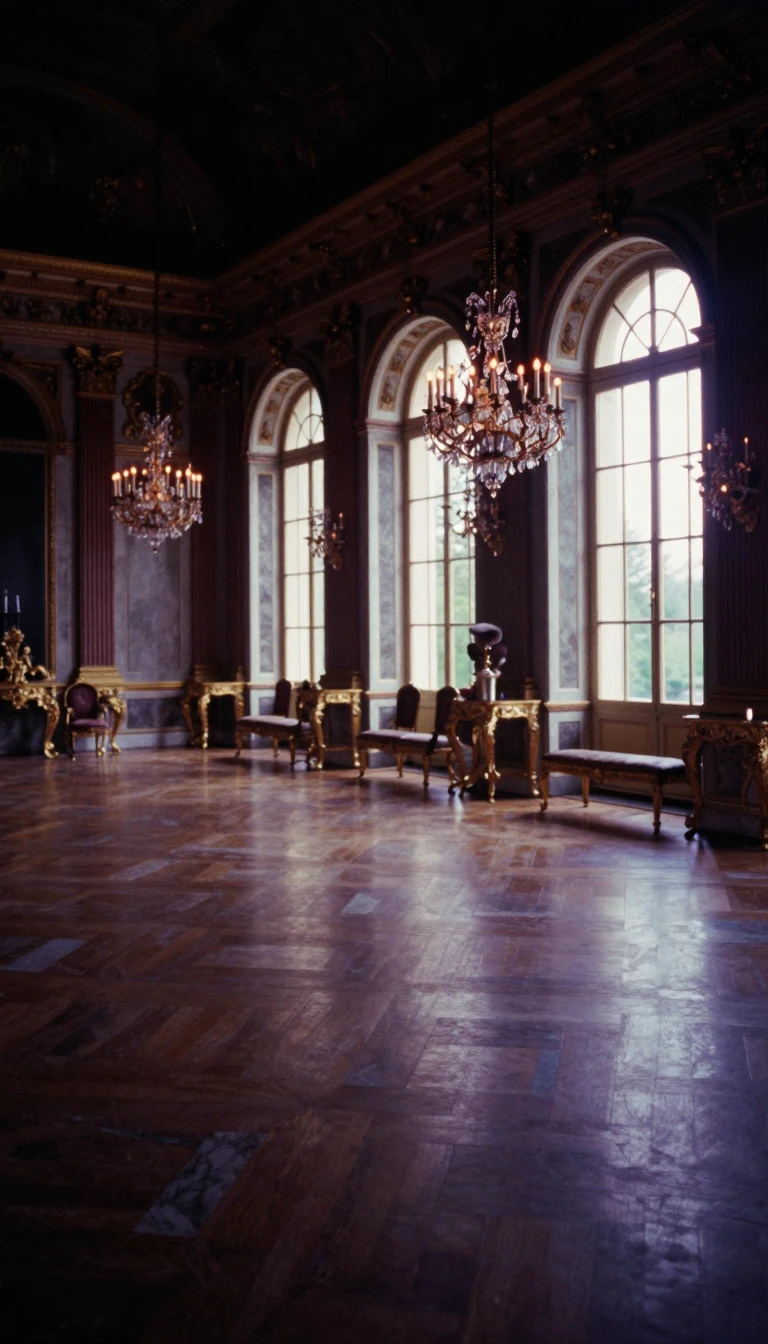 How Louis XIV weaponized architecture to force the French nobility into total submissionIn 1667, the French monarchy faced a rebellious nobility emboldened by the Fronde. King Louis XIV devised a radical strategy: force the elite to abandon their homes and live at a …
 Why Spain's Vox party defies the standard European radical-right electoral playbookVox has become a significant player in Spanish politics by blending traditional conservative economics with intense nationalist rhetoric. While European radical-right parties ofte…
 Can a 19th-century women's college redefine the future of higher education?Founded in 1870 to prepare women for vast social reforms, Wellesley College remains a powerhouse of female leadership. With a campus integrated into 500 acres of glaciated landsca…
 Is the fundamental drive of human existence survival, or something far more ambitious?While philosophers once argued that life is defined by a basic instinct to survive, Friedrich Nietzsche proposed a more potent alternative: the will to power. This drive for growt…
 Why was a temple priest struck dumb in the middle of his sacred duties?During a routine incense offering in Jerusalem, the priest Zechariah received a divine prophecy that his elderly, barren wife would conceive a son. Because he doubted the angel Ga…
 How a former rapper and housing counselor became New York City's first Muslim mayor.Zohran Mamdani’s rise from a little-known state assembly member to the mayor of New York City in 2025 stunned the political establishment. By defeating former governor Andrew Cuom…
- Albert of Saxony: The medieval scholar who bridged logic, physics, and high-stakes politicsAlbert of Saxony was a 14th-century intellectual who moved between the lecture halls of Paris and the courts of Europe. A master of logic and natural philosophy, he founded the Un…
 Can a society thrive on cooperation rather than the cold logic of individual competition?Aleksey Khomyakov, a 19th-century Russian intellectual, rejected both capitalism and socialism as Western failures. He proposed a radical alternative: sobornost, a concept of orga…
 Why the world's most famous atheist suddenly changed his mind about GodAntony Flew was a titan of analytic philosophy and a lifelong champion of atheism. Then, in 2004, he shocked the world by announcing his belief in an intelligent designer. Was thi…
- Can a single method unify human knowledge across science, philosophy, and theology?Bernard Lonergan, a 20th-century Jesuit philosopher, believed the splintered state of modern academia could be healed. By applying a generalized empirical method to the internal d…
 Can we reclaim our humanity from the digital machines that shape our desires?Bernard Stiegler, a French philosopher who discovered his calling while incarcerated for armed robbery, argued that technology is not neutral. He believed our digital tools are ac…
 Why Bernard Williams rejected the idea that ethics should be a systematic scienceBernard Williams was one of the 20th century's most influential philosophers, yet he famously resisted the urge to build systematic theories. He argued that ethics cannot be treat…
 How Cheng Hao transformed Neo-Confucianism through the power of pure, calm introspectionIn 11th-century China, Cheng Hao helped formalize Neo-Confucianism by blending traditional ethics with Buddhist and Daoist influences. While his brother favored rigorous investiga…
 Cornel West: The Philosopher Who Bridges the Gap Between Harvard Halls and Hip-Hop CultureCornel West is a singular American intellectual who navigates the worlds of high-level philosophy, Christian theology, and political activism. From teaching at Ivy League institut…
- Why this Qing dynasty philosopher argued that human desire is actually a moral virtueDai Zhen, a polymath of the Qing dynasty, challenged the dominant Neo-Confucian orthodoxy of his time. He rejected the idea that human desires were obstacles to be suppressed, pro…
- Are other worlds as real as our own? David Lewis argued they certainly are.David Lewis, a towering figure in 20th-century philosophy, proposed that our universe is merely one of infinitely many equally real worlds. By treating possible worlds as concrete…
 Did a Han dynasty philosopher accidentally predict the downfall of his own imperial state?Dong Zhongshu was the architect of Confucianism as China's state ideology, yet his cosmological theories nearly cost him his life. By linking the legitimacy of monarchs to heaven,…
 How a Scottish mathematician helped define the modern science of the human mindDugald Stewart, a central figure of the Scottish Enlightenment, bridged the gap between rigorous mathematics and moral philosophy. By applying the inductive methods of physical sc…
 Why F. H. Bradley’s search for absolute truth ended in a masterpiece of doubt.F. H. Bradley was the first English philosopher to receive the Order of Merit, yet his most ambitious work, Appearance and Reality, famously disappointed his followers. Instead of…
 Can a philosopher survive the total transformation of his nation's political soul?Feng Youlan was the architect of modern Chinese philosophy, blending Western logic with ancient Confucian thought. Yet, his life became a high-stakes struggle for intellectual sur…
- How a 14th-century Franciscan became the most influential intellectual in the Crown of Aragon.Francesc Eiximenis was a powerhouse of medieval thought, advising kings, queens, and popes while shaping the political and religious landscape of Valencia. His prolific writings w…
 Can science finally bridge the gap between objective biology and subjective human experience?Francisco Varela, a Chilean biologist and philosopher, challenged the traditional view of the mind as a mere computer. By pioneering the concept of autopoiesis and neurophenomenol…
 The ancient philosopher who dared to challenge the limits of reality and existenceGargi Vachaknavi was a formidable Vedic sage who famously interrogated the master Yajnavalkya during a royal debate. While many scholars retreated, she persisted, questioning the …
 How a French resistance doctor redefined the boundary between health and sicknessGeorges Canguilhem was a physician and philosopher who challenged the idea that living organisms are merely complex machines. By blending medical practice with rigorous historical…
 Why an ancient Chinese philosopher insisted that white horses are not horsesGongsun Long, a member of the School of Names during the Warring States period, famously baffled his contemporaries with logical paradoxes. By challenging the relationship between…
 Was the ancient master of persuasion a serious philosopher or a brilliant, ironic jester?Gorgias of Leontini was the ultimate Athenian influencer, teaching ambitious young men how to win public debates. Yet, beneath his reputation as a master rhetorician lies a frustr…
 Can a philosopher repent for supporting war by inventing a new way of thinking?Hajime Tanabe, a titan of the Kyoto School, spent his life bridging Western science and Eastern Buddhism. Yet, his legacy is haunted by his wartime support for Japanese militarism…
 Did a 14th-century Jewish philosopher anticipate the scientific revolution by dismantling Aristotelian physics?Hasdai Crescas, a Spanish Jewish thinker, challenged the dominant Aristotelian worldview of his era. By rejecting the impossibility of a vacuum and the limits of space, he propose…
 How a philosopher from the middle of nowhere challenged the dream of machine intelligenceHubert Dreyfus, a UC Berkeley professor born in Terre Haute, Indiana, became a formidable critic of artificial intelligence. By applying the insights of continental philosophers l…
- Can you reach the center of the world by traveling north of Yen?Hui Shi, a Warring States philosopher, challenged reality with paradoxes that blurred the lines between time, space, and identity. From claiming he arrived at his destination yest…
 How Jaakko Hintikka transformed our understanding of logic, knowledge, and the game of languageJaakko Hintikka was a titan of modern philosophy who pioneered formal epistemic logic and game semantics. By treating logical structures as interactive games, he challenged conven…
 Jalal Al-e-Ahmad: The Iranian Intellectual Who Diagnosed the West as a Contagious DiseaseJalal Al-e-Ahmad was a prolific Iranian writer and social critic who famously coined the term gharbzadegi, or westoxification. He argued that Western technology and civilization a…
 Why Jean-Luc Nancy argued that true community cannot be a finished work of artFrench philosopher Jean-Luc Nancy challenged modern political thought by redefining community. He argued that society is not a project to be manufactured or a singular identity to…
 How a nineteenth-century philosopher reconciled Darwinian evolution with the existence of GodJohn Fiske was a towering intellectual who bridged the gap between Victorian science and traditional faith. By popularizing Herbert Spencer’s evolutionary theories, he argued that…
 Can we prove the existence of an afterlife before we actually die?John Hick, a prominent 20th-century philosopher of religion, proposed a provocative solution to the problem of verifying faith. He argued that if a divinely governed universe exis…
- Can philosophy dissolve our deepest confusions without explaining the world away?John McDowell argues that philosophy should be therapeutic, not explanatory. By re-describing problematic cases, he aims to return us to intellectual clarity. His work challenges …
 Was the architect of modern Mexican identity a visionary or a dangerous reactionary?José Vasconcelos, the cultural caudillo of the Mexican Revolution, reshaped Mexico's education and arts. Yet, the man who championed a cosmic, unified race also drifted toward aut…
 How a Renaissance philosopher turned the concept of love into the universe's primary glue.Judah Leon Abravanel, a physician and philosopher in exile, authored the Dialoghi d'amore, a landmark Renaissance text. By framing love as a universal force connecting everything …
 Why modern history is just a secularized version of ancient Christian theologyModern thinkers view history through a fractured lens, blending faith and reason into a confused hybrid. Karl Löwith argued that our obsession with progress is not a rational disc…
 Kitarō Nishida bridged Eastern Zen and Western logic to redefine the nature of reality.Nishida Kitarō, the founder of the Kyoto School, sought to reconcile the spiritual depths of Zen Buddhism with the analytical rigor of Western philosophy. By developing a unique l…
- How a philosopher of identity bridges the gap between global ethics and local roots.Kwame Anthony Appiah is a polymath whose work spans the philosophy of language, African intellectual history, and the moral complexities of identity. Born into a family of diploma…
 Is Objectivism a closed system defined by its founder or an evolving intellectual tradition?As the designated heir to Ayn Rand’s estate, Leonard Peikoff has spent decades codifying her philosophy. He insists Objectivism is a closed system, rejecting any deviation from Ra…
 Is the universe merely a reflection of your own internal consciousness?Lu Jiuyuan, a pivotal Neo-Confucian thinker, argued that the cosmos and the individual mind are fundamentally identical. By rejecting the rigid separation between human nature and…
- Ludwig Büchner and the 19th-century quest to reduce the mind to mere matterLudwig Büchner was a leading voice in 19th-century scientific materialism, a philosophy asserting that all reality, including human consciousness, is fundamentally physical. His w…
 Did this ancient Vedic philosopher reject her husband's wealth to pursue true immortality?Maitreyi, a revered figure in ancient Indian philosophy, famously challenged her husband, the sage Yajnavalkya, when he offered to divide his assets before retiring. Instead of ac…
 Mario Bunge was the relentless philosopher who demanded science remain strictly rational and precise.An Argentine-Canadian polymath, Mario Bunge spent a century championing scientific realism and systemism. A fierce critic of postmodernism and pseudoscience, he authored over 80 b…
 Why a medieval master believed human reason hits a wall when studying GodMarsilius of Inghen was a titan of late medieval thought, bridging the gap between Paris and the birth of Heidelberg University. While he mastered Aristotelian logic and physics, …
 Why the most important philosopher of the 20th century was a plumber of conceptsMary Midgley did not publish her first book until age 59, yet she became the UK's fiercest critic of scientific pretension. She argued that philosophy is like plumbing: we only no…