 Intellect Plus
Philosophers
1,976 cards. Each one is a 40-second story with a five-minute read behind it. Page 22 of 33.
 Can a Confucian philosopher fix Kant’s greatest blind spot using ancient Buddhist wisdom?Mou Zongsan, a titan of 20th-century Chinese philosophy, argued that Kant’s moral system was incomplete. By blending Confucian ethics with Tiantai Buddhist metaphysics, Mou propos…
 Could humanity unite to defeat death and resurrect every ancestor who ever lived?Nikolai Fyodorov, the Socrates of Moscow, proposed a radical vision: the Common Task. He argued that science, religion, and art must converge to regulate nature, conquer mortality…
 Can we solve the mysteries of the human mind by studying the brain?Patricia Churchland argues that traditional philosophy is often a proto-science, best advanced by integrating empirical neuroscience. By bridging the gap between biological brain …
 Did this ancient Indian philosopher anticipate modern linguistic theory by over a millennium?Prabhākara, a sixth-century thinker, proposed that we understand language not by isolating individual words, but by grasping their connections within a sentence. This radical appr…
 Can a single philosophy bridge the gap between spiritual liberation and radical economic reform?Prabhat Ranjan Sarkar, a twentieth-century Indian philosopher, proposed a sweeping synthesis of Vedic and Tantric traditions. Beyond his spiritual teachings, he developed a unique…
 Was Russia’s most provocative philosopher silenced by the state for being a madman?Pyotr Chaadayev once argued that Russia had contributed nothing to human progress, existing only to teach the world a lesson through its own failures. When his critique reached th…
 Why the best way to study history is to re-enact the past in your mindR. G. Collingwood, a philosopher and archaeologist, argued that history is not just a collection of facts but a study of human thought. He believed historians must use their imagi…
 Can a moral philosophy survive the horrors of a prisoner of war camp?Richard Mervyn Hare sought a moral system that could guide life in the harshest conditions. After enduring years as a prisoner of war in Singapore, he developed universal prescrip…
 Why do we feel we matter? A philosopher explores our deepest, most divisive drive.Rebecca Goldstein argues that the human need to matter is not just a psychological quirk, but a fundamental biological drive to resist entropy. By mapping how we rationalize this …
 How a rejected manuscript about motorcycle repair became a landmark of American philosophyRobert M. Pirsig was a precocious child with a reported IQ of 170 who struggled to find a publisher for his debut book. After 121 rejections, his meditative inquiry into quality a…
 Was Shen Buhai the first political scientist to master the art of administrative technique?Long before modern bureaucracy, Shen Buhai transformed the Han state by prioritizing efficient management over raw punishment. By advocating for the delegation of power and the pr…
- Shen Dao: The ancient philosopher who argued that even bad laws are better than none.Long before modern political theory, Shen Dao proposed a radical, impartial administrative system. By stripping the ruler of personal judgment and relying on predictable, naturali…
 Why Indian philosophy challenges the inevitability of Western logical and metaphysical distinctionsSurendranath Dasgupta, author of the monumental five-volume A History of Indian Philosophy, argued that Indian thought offers more than just historical curiosity. By examining pro…
 Why T. H. Green believed the state exists to help you become yourselfT. H. Green was a Victorian philosopher who argued that true freedom is not the ability to do whatever you want, but the power to realize your potential. He believed that society …
- Can ancient Confucian values survive in a world obsessed with modern, abstract progress?Tang Chun-i, a pivotal figure in 20th-century New Confucianism, believed the answer lay in the heart-mind. By bridging traditional Chinese ethics with modern challenges, he sought…
- The ninth-century philosopher who mastered every major school of Indian thoughtVachaspati Misra was a polymath so intellectually versatile that later scholars dubbed him the master of all systems. Living around the 9th century, he authored authoritative comm…
 Why your camera is not a tool, but a programmed master of reality.Vilém Flusser argued that photography is not a neutral way to capture the world, but a technical apparatus that dictates how we see. By operating a camera, you are not the master …
 How a piano student became a titan of twentieth-century philosophy without a single classWilliam Alston entered graduate school having never formally studied philosophy. Yet, he became a defining figure in epistemology and the philosophy of religion. From his unlikely…
 How one Chinese philosopher synthesized ancient wisdom to navigate a century of national crisis.Xiong Shili transformed 20th-century Chinese thought by blending Buddhist metaphysics with Confucian ethics. Moving from revolutionary politics to deep ontological inquiry, he sou…
 Was Yang Xiong the Confucius of the West, or a critic of imperial excess?Yang Xiong was a towering intellectual of the Western Han dynasty, celebrated as a poet, linguist, and philosopher. While he served the imperial court, he grew disillusioned with …
- The ancient philosopher who argued that selfishness is the key to a stable societyYang Zhu, a forgotten giant of the Warring States period, proposed a radical ethical egoism. He argued that if every individual simply minded their own business and refused to har…
 The 17th-century Ethiopian hermit who championed rational inquiry before the European EnlightenmentLiving in a remote cave to escape religious persecution, Zera Yacob developed a radical philosophy of individual reason. He argued that truth is found through observation rather t…
 Everything in the universe is made of the same primordial substance called qiZhang Zai, an influential Song dynasty philosopher, proposed that all existence—from rocks to humans—shares a single, fundamental essence. By understanding this vital force, he ar…
 Was this ancient philosopher the true architect of all Chinese scientific thought?Zou Yan, a Warring States-era polymath, synthesized Yin-Yang and the Five Elements into a revolutionary framework. Though his original writings are lost, his influence on Chinese …
 The Soviet mathematician who persuaded Ludwig Wittgenstein to stay awayIn 1935, one of the most influential philosophers of the 20th century visited the Soviet Union. He considered relocating there, but a singular figure—Sofya Yanovskaya—convinced hi…
 Why solving a crossword puzzle might be the key to true knowledgeIn the battle between rigid foundations and endless circular logic, philosopher Susan Haack proposed a third way. By using the metaphor of a crossword, she sought to explain how w…
 The man who coined 'Zionism' before it became a political movementBefore Theodor Herzl became the face of Jewish nationalism, Nathan Birnbaum was already defining its vocabulary. But his intellectual journey was anything but linear. He moved fro…
 The myth of human progress is merely a secularized Christian prejudiceWe often believe that humanity is on an upward trajectory, refining our ethics and politics like we refine our technology. John Gray argues this is a delusion. He suggests that ou…
 How Joseph Nye redefined the mechanics of global influence and powerBeyond military might and economic sanctions lies a more subtle form of influence. Joseph Nye, the Harvard scholar who died at 88, revolutionized international relations by introd…
 The trailblazing philosopher who survived two arrests and a lost academic careerKsenija Atanasijević was a pioneer of Serbian thought, becoming the first female professor at Belgrade University. Yet, despite her brilliant intellect and groundbreaking research…
 The forgotten clergyman who predicted the existence of black holesLong before modern relativity, an 18th-century English priest theorized that some stars might be so massive that even light cannot escape them. Despite his pioneering work in seis…
 The philosopher who lived under a male alias to escape sexismHelene von Druskowitz was a pioneer, becoming only the second woman to earn a doctorate in philosophy. Yet, her intellectual journey was marked by intense struggle, from navigatin…
 The polymath who rewrote the grammar of a kingdomBorn in 1088, the scholar Chandradeva was so intellectually gifted that he eventually earned the title 'the knower of all knowledge.' From advising powerful kings to inventing new…
 The Victorian polymath who found the biological roots of the human mindHe was an actor, a critic, and an amateur physiologist who lived a scandalous life. George Henry Lewes bridged the gap between science and philosophy, proposing that our complex t…
 The scholar whose fierce loyalty to Aristotle nearly destroyed his reputationGeorge of Trebizond was a brilliant humanist who mastered Latin in just three years. Yet, his intense devotion to Aristotle led to a scholarly crusade so vitriolic that it earned …
 Why we do not perceive an objective reality, but construct our ownWe often assume our minds act like cameras, capturing a true image of the world. But according to the philosopher Ernst von Glasersfeld, our knowledge is not a reflection of an ex…
 How a single letter could cause more damage than a thousand horsemenIn the 14th century, Coluccio Salutati wielded a different kind of power. As the Chancellor of Florence, this master of Latin prose used diplomacy and rediscovered classical texts…
 Was art merely a mirror of shifting social hierarchies?For art historian Arnold Hauser, a masterpiece was never just an aesthetic triumph. He believed the evolution of style—from abstract symbols to naturalism—was driven by the fundam…
 Why seeking justice before establishing peace is like placing the cart before the horseFor many, peace is impossible without justice. But Indian scholar Wahiduddin Khan argued the opposite. By examining the historical treaty at Hudaybiya, he proposed a radical shift…
 To live fully, one must first master the art of dyingFor Yamamoto Tsunetomo, the ultimate state of focus was achieved by becoming one with death. He believed that a constant resolution to die infused life with a level of beauty and …
 He chose execution to spark a revolution that never cameIn 1898, Tan Sitong refused to flee for his life. As a leader of China's Hundred Days' Reform, he believed that true political change required a blood sacrifice. His death didn't …
 Why creators often make sequels in spirit rather than in nameWhen licensing battles or commercial failures block a direct sequel, creators find a workaround. By abandoning copyrighted characters and names but retaining the original's core t…
 The wolfsbane toxin that paralyzes cells by locking sodium gatesAconitine is one of the deadliest poisons known to humanity, derived from plants like monkshood and wolfsbane. It doesn't just kill; it fundamentally disrupts the electrical signa…
 Did a 2nd-century movement claim the Holy Spirit was speaking through them today?In the mid-to-late 2nd century, a movement known as the New Prophecy emerged from Phrygia. They believed the Holy Spirit provided direct, spontaneous revelation that could clarify…
 The lethal botanical legend behind the saliva of CerberusFrom the arrows of ancient hunters to the potential execution of Socrates, the Aconitum genus has shaped human history through its extreme toxicity. Known as monkshood or wolfsban…
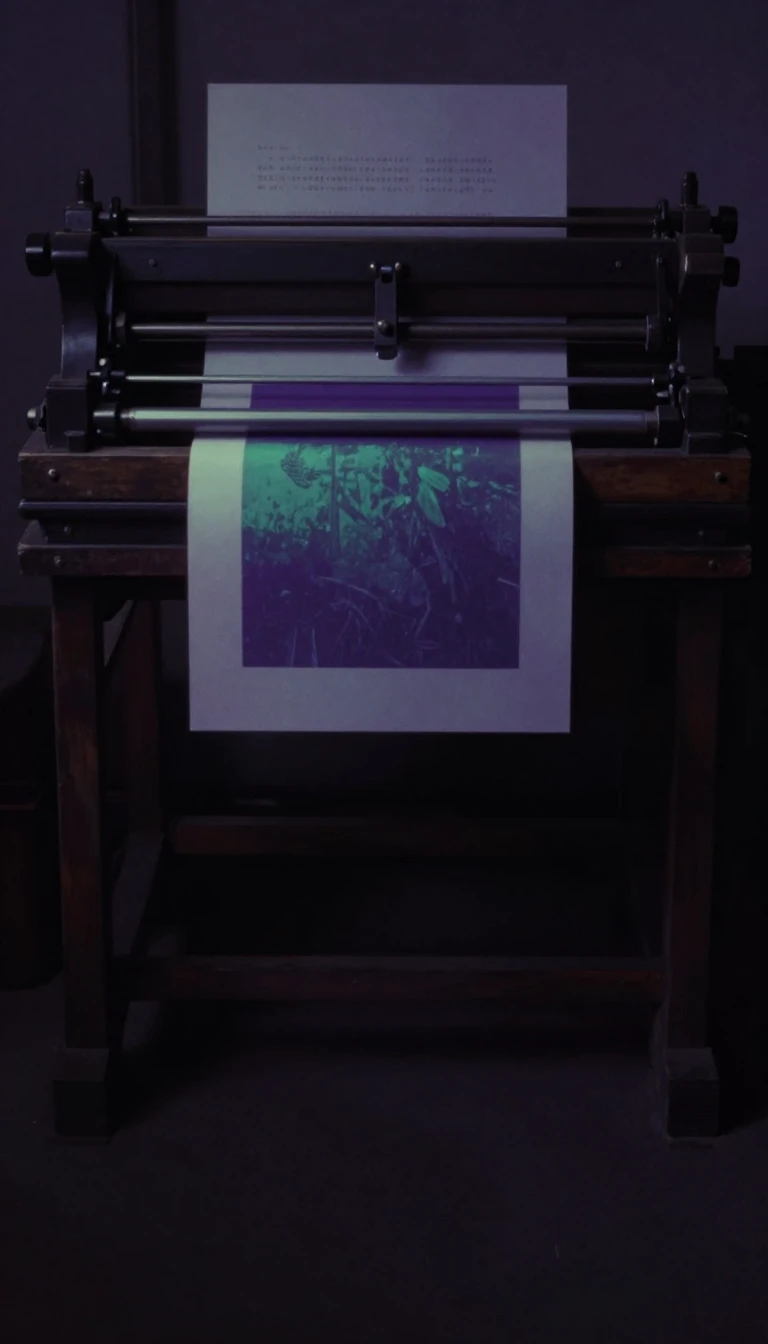 The underground art of self-publishing to evade the KGBIn the Soviet Union, a typewriter was a weapon of mass communication. To avoid detection, dissidents created 'samizdat'—hand-typed, blurry, and intentionally inconspicuous documen…
 Is the New York City mayoralty the most difficult job in America?Often called the 'second toughest job in America,' the New York City mayoralty carries a heavy burden. Managing a massive budget and a vast bureaucracy, the role is so demanding t…
 The unprepared monarch whose extravagant travels triggered a revolutionMozaffar ad-Din Shah ascended the throne in 1896, ill-equipped for the heavy burdens of state. While his predecessor left a legacy of debt, the Shah’s own pursuit of pleasure and …
 The emperor who watched Rome fall from behind marshland wallsWhile the Visigoths breached the gates of Rome in 410, Emperor Honorius was safely ensconced in the fortified coastal city of Ravenna. His reign was defined by chaos, barbarian in…
 A spiritual hierarchy designed to dissolve the ego through ritual and yogaIn 1907, Aleister Crowley and George Cecil Jones founded the A∴A∴, a magical order built on a rigorous, graded system of initiations. By blending Vedantic yoga, Theravada Buddhism…
 The centrist strategy to govern beyond the left-right divideIn 2007, François Bayrou attempted a political revolution in France. By rejecting traditional party allegiances, he sought to break the binary of left and right. This pursuit of a…
 From royal favors to diplomatic weapons: the evolution of 'honoris causa'An honorary degree is often seen as a simple trophy for lifetime achievement. However, its history reveals a more complex machinery of power, ranging from 16th-century royal gifts…
 The beautiful, branching patterns that reveal the hidden mechanics of electricityWhen high-voltage discharges strike an insulator, they leave behind intricate, fern-like scars known as Lichtenberg figures. These fractal patterns are more than just visual curio…
 How a five-dollar yard sale guitar birthed a modern blues legendAt just nine years old, Derek Trucks purchased his first instrument for a mere five dollars. This childhood curiosity evolved into a virtuosity so profound that blues icon B.B. Ki…
 Personhood isn't inherent; it's earned through ethical action.Traditional Akan thought suggests that being a person is not a biological given. Instead, it requires a demonstrable capacity for ethical consideration and free will. This framewo…
 The forgotten 6th-century thinker who predicted the laws of inertiaLong before Galileo’s famous experiments, a Byzantine scholar was already dismantling Aristotelian physics. By observing falling weights, John Philoponus proposed a revolutionary …
 How a desert revelation transformed a rebellious French philosopher into a global literary chameleonBorn in 1960, Eric-Emmanuel Schmitt transitioned from a rebellious teenager and academic philosopher to one of the world's most performed authors. His career was fundamentally alt…
 Why Latin America's most original Marxist thinker rejected copying European revolutionary modelsJosé Carlos Mariátegui, a self-taught Peruvian intellectual, transformed Latin American political thought by arguing that socialism must be adapted to local realities rather than …
 The 17th-century novelist who turned salon conversation into a sophisticated rhetorical art formMadeleine de Scudéry was the world's first true bluestocking, crafting massive novels that doubled as social maps for the French elite. By adapting classical rhetoric to the intim…
 How a teenage poet-bishop transformed a collection of feuding tribes into a centralized state.Petar II Petrović-Njegoš inherited a fractured, lawless Montenegro at seventeen. Balancing the demands of Russian geopolitical interests, Ottoman military threats, and internal tr…