 Intellect Plus
Machinery and tools
329 cards. Each one is a 40-second story with a five-minute read behind it. Page 4 of 6.
 Why the world's most secure vaults are not designed to last foreverSafes are not permanent fortresses but temporary shields against disaster. Whether protecting paper documents or massive data centers, these enclosures are engineered to withstand…
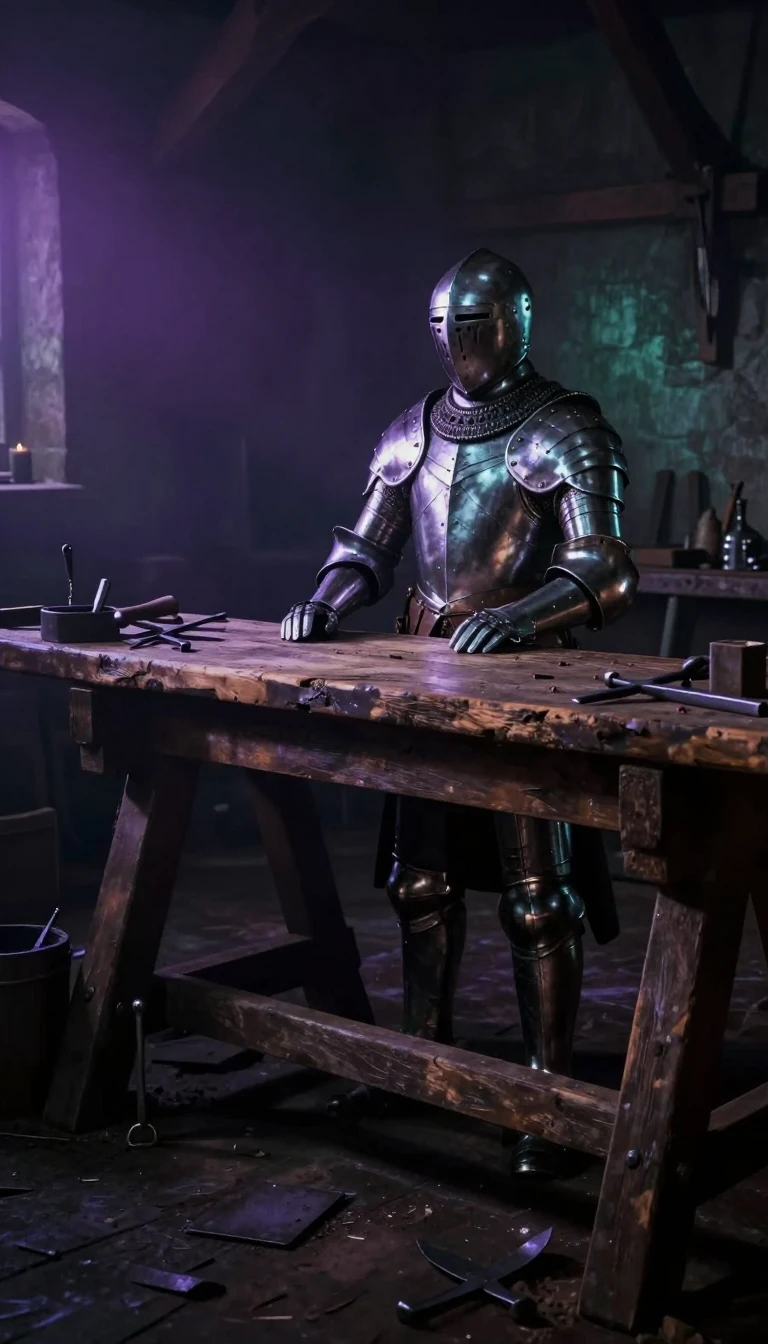 The humble screwdriver evolved from medieval armor repair to a global industrial necessityBefore it was a household staple, the screwdriver was a specialized tool for securing 15th-century jousting armor and early firearms. While we now take for granted the variety of …
 How a simple mechanical innovation increased crop yields by up to eight timesBefore the seed drill, farmers relied on manual broadcasting, a wasteful practice that left seeds vulnerable to birds and the elements. By precisely placing seeds at optimal depth…
 How we measure the earth's pulse using the simple physics of inertiaA seismometer is a master of stillness. By keeping a mass suspended while the ground shifts beneath it, these devices detect vibrations as small as atomic spacing. From monitoring…
 The simple seesaw machine that allowed ancient civilizations to conquer the desert landscape.For millennia, the shadoof has been a silent engine of human survival. By using a basic counterweighted lever to lift water from rivers into irrigation canals, this elegant tool t…
 Shock absorbers do not actually absorb shocks; they dissipate energy to control spring movement.Most people believe shock absorbers cushion a vehicle, but their true job is to manage the energy stored in springs. Without them, a car would bounce uncontrollably after hitting …
 From ancient symbols of virtue to industrial precision, the humble sieve shapes our world.The sieve is far more than a kitchen tool. While we use it to aerate flour or strain pasta, this simple mesh has served as a profound icon of chastity, a critical instrument in ci…
 From musical instruments to emergency warnings, the siren has a surprisingly melodic history.Before they were the wailing alarms of emergency vehicles, sirens were musical instruments. Invented by a Scottish philosopher to power organ pipes, the technology evolved from ro…
 Why the skeleton key is the ultimate master of the warded lockA skeleton key is not just a tool for mystery novels; it is a master key stripped to its bare essentials. By removing the serrated edges that usually interact with specific lock o…
- Why the sledgehammer remains the ultimate tool for applying raw, unrefined kinetic energyThe sledgehammer is a masterclass in physics, trading the precision of a carpenter's tool for pure, crushing momentum. By leveraging a heavy head and a long handle, it transforms …
 The modern slow cooker is a high-tech evolution of ancient hearth-side cooking methods.Before electrical grids, households relied on residual heat from brick ovens and dying fires to tenderize tough meats. Today, the slow cooker automates this ancient wisdom, using …
 Why the humble spirit level relies on alcohol to keep the world straightThe spirit level is a deceptively simple tool that has guided construction since the 17th century. By trapping an air bubble in a liquid-filled vial, it reveals the true horizonta…
 Is the squat toilet actually more hygienic than the modern sitting pedestal?While many view the squat toilet as a traditional relic, it remains the standard for much of the global population. Proponents often cite superior hygiene and physiological benefi…
 The analog computer that kept warships in formation for over a centuryBefore modern radar, naval officers relied on a clever handheld device to calculate distance. By inputting the known height of a target, the stadimeter uses mirrors to determine r…
 Why your modern tin can is actually 99.5 percent steel and lined with plastic.Despite the name, the humble tin can has evolved into a sophisticated piece of engineering. Today, these containers are almost entirely steel, protected by plastic films rather th…
 Why the straight engine remains the gold standard for simplicity in mechanical designThe straight engine, defined by its single row of cylinders, is a marvel of mechanical efficiency. By utilizing one cylinder head instead of multiple banks, it offers a streamline…
 From prehistoric spears to modern code, string is humanity's most versatile, enduring tool.String is more than a simple binding material. This ancient technology, developed tens of thousands of years ago, has evolved from hafting stone spear tips to powering musical ins…
 The surveyor's wheel: a simple, rolling solution for measuring long distances across terrainBefore digital lasers, surveyors relied on a rolling wheel to map the world. Known by many names, including the perambulator and waywiser, this device translates rotations into di…
 The swather is the unsung hero of the harvest, turning crops into neat rows.Before a combine harvester can process grain or hay, the crop often needs to dry. A swather, or windrower, automates the ancient labor of scything by cutting stems and arranging t…
 The humble T-square remains a cornerstone of precision in design and construction workNamed for its distinct shape, the T-square is a fundamental tool for draftsmen and builders alike. While its primary purpose is guiding horizontal lines on a drafting table, its u…
 The humble tappet: how a 300-year-old mechanical trick keeps your engine runningBefore modern electronics, mechanical automation relied on the simple, rhythmic strike of the tappet. From the steam engines of 1715 to the high-performance cars of today, this un…
- The machine that transformed agriculture and sparked a violent revolt in 1830s England.Before the 18th century, threshing grain was a grueling manual task consuming a quarter of all agricultural labor. The invention of the threshing machine mechanized this drudgery,…
 How a simple bubble level helps scientists predict the fury of active volcanoesTiltmeters are precision instruments designed to detect minute shifts in the Earth's surface, measuring changes as small as one arc second. From monitoring the structural integrit…
 The ancient tool that solved the paradox of how the first smith beganTongs are more than simple kitchen utensils; they are a fundamental mechanical extension of the human hand. From ancient Egyptian crucibles to the delicate precision required for …
 The torque wrench is a precision instrument designed to prevent mechanical failure through exact tension.A torque wrench is more than just a heavy-duty tool; it is a calibrated device that ensures nuts and bolts are tightened to precise specifications. By preventing both under-tighte…
 How total stations turn invisible coordinates into the physical world of modern constructionA total station is the surveyor's primary tool for bridging the gap between digital blueprints and physical reality. By combining precise angle measurement with distance-sensing l…
 How modern agricultural machines automate the delicate process of moving seedlings to the fieldTransplanting seedlings by hand is a labor-intensive task that defines traditional farming. Modern transplanters have revolutionized this process, allowing farmers to move crops l…
- The ancient machine that automated heavy labor long before the Industrial RevolutionBefore steam engines, the trip hammer harnessed gravity and water power to crush ore, polish grain, and forge iron. From Imperial China to Roman mines, this mechanical marvel repl…
- From garden beds to archaeological digs, the humble trowel is a master of precision.The trowel is far more than a simple garden scoop. This versatile hand tool has evolved into a specialized instrument for everything from masonry and drywall construction to delic…
 The high-speed machine that revolutionized biology by spinning samples at 100,000 times gravityThe ultracentrifuge is a powerhouse of modern science, capable of generating forces up to 100,000 times that of Earth's gravity. By spinning samples at extreme speeds, this instru…
 The surprising engineering behind the public urinal and the quest for waterless efficiencyUrinals are marvels of resource efficiency, designed to save space, time, and water in high-traffic environments. While they have evolved from simple wall-mounted fixtures to soph…
 Why the quest for nothingness required centuries of engineering and a few dead horsesA vacuum is not merely empty space; it is a technical frontier. From 17th-century experiments with horses to modern semiconductor manufacturing, creating a vacuum requires overcom…
 Varnish is a complex chemical film, not just a simple coat for wood.Varnish is a protective, transparent film that has evolved from ancient resin mixtures to modern synthetic polymers. While often confused with wood stain, it serves a distinct pur…
 The accidental invention of a space-age fastener inspired by a simple walk in nature.Born from a Swiss engineer's observation of burdock burs in 1941, this iconic fastener was initially rejected by industry experts. It eventually found its footing in the aerospace…
 How a 17th-century French invention lets us measure the invisible gaps between marks.A standard ruler is limited by the human eye, but the vernier scale bypasses this constraint. By sliding an auxiliary scale against a main one, it uses the brain's natural ability…
- More than just a spacer: the hidden engineering behind the humble hardware washer.A washer is far more than a simple metal disk. From preventing galvanic corrosion to acting as a precision bearing or a vibration-dampening spring, these components are critical t…
 The hidden environmental and health costs behind your daily water bottle choiceFrom the convenience of single-use plastic to the rise of smart, connected hydration, the humble water bottle is a complex piece of engineering. While reusable options promise sus…
 From simple fountains to complex filtration, the water dispenser is a marvel of engineering.Invented in 1906, the water dispenser has evolved from a basic cooling device into a sophisticated appliance. Whether using gravity-fed bottles or direct-plumbed municipal connect…
- From Victorian geysers to modern heat pumps, how we heat our water has evolved.Water heating is a fundamental domestic process, yet the technology behind it varies wildly by region and energy source. Whether you rely on a traditional tank that stores heat or…
 The simple mechanical bar that balances everything from horse teams to space telescopesA whippletree is a deceptively simple linkage mechanism that distributes force evenly across multiple points. Originally designed to keep draught animals pulling in harmony, this …
 The whiteboard was not invented in the 1950s, but two decades earlier in 1937.While many credit mid-century innovators with the whiteboard's birth, the concept actually debuted in an Illinois classroom in 1937. Long before they became office staples, these …
- From ancient pontoon bridges to modern rescue missions, the winch is a mechanical marvel.A simple spool and crank can move mountains, or at least heavy machinery. Whether it is pulling a glider into the sky, rescuing survivors from the sea, or shifting scenery on a th…
- Why wire rope replaced chains to become the backbone of modern industrial engineeringBefore the 1830s, heavy lifting relied on wrought iron chains prone to sudden, catastrophic failure. The invention of wire rope changed everything, offering superior strength and …
- Why the tool in your hand is called a wrench or a spannerDepending on your geography, the tool you use to turn a bolt is either a wrench or a spanner. While these terms are often used interchangeably, their origins trace back to distinc…
 Why your mechanical pencil lead contains zero lead and uses advanced polymer engineeringThe mechanical pencil is a marvel of precision engineering that has evolved from simple 18th-century prototypes into a sophisticated tool. Despite the name, these pencils contain …
- How a single wing design birthed two different Airbus giantsIn the mid-1970s, Airbus began developing the A300B9, a larger derivative intended to challenge the McDonnell Douglas DC-10. By sharing wing components and fuselage structures wit…
 From Antler to Arsenal: The Unexpected Versatility of the PickaxeThis seemingly simple T-shaped tool has a history far beyond digging holes in the ground. Its evolution shows how fundamental forms adapt across agriculture, warfare, and daily la…
 The evolution of instructions from ancient gears to AI assistantsWe often view user guides as modern necessities, but the impulse to document complex systems is millennia old. From 2,000-year-old Greek computers to today's digital manuals, thes…
- How the V engine configuration reshaped the dimensions of modern powerEngineers often face a brutal trade-off: length versus width. The V engine solved the problem of engine length by splitting cylinders into two angled banks, but this innovation br…
- The simple lever that amplified human strength for millenniaPliers are a masterclass in mechanical advantage. By arranging two metal levers around a single pivot point, these tools allow your grip strength to be magnified and focused with …
 The slow-drying revolution that transformed the art of naturalismFor centuries, artists struggled with fast-drying tempera that prevented detail. The arrival of oil paint changed everything, allowing for wet-on-wet blending and luminous texture…
 The evolution of coffee brewing from gravity to high pressureModern coffee is a feat of fluid dynamics. From the simple drip of hot water through paper filters to the intense pressure required for espresso, our machines have spent over a ce…
- The versatile hand tool that helped shape the foundations of ancient agricultureMore than just a shovel, the mattock is a master of terrain. From chopping roots to prying through rocky soil, this ancient implement has evolved from prehistoric antler blades to…
 The ancient, versatile knot that survives everything except the most slippery ropesFrom 4,500-year-old archaeological sites to modern surgical suites, the fisherman's knot is a master of connection. Known for its remarkable strength, this simple configuration of…
- From ancient wax paintings to the classroom staple we know todayLong before they were colorful classroom essentials, crayons were tools of ancient artistry. From Roman encaustic techniques to the invention of the washable stick, the evolution …
 From ancient Greek vases to modern combat, the enduring utility of the cageWhether protecting fruit from birds or confining lions for kings, the cage is a fundamental tool of containment. While we often associate them with captivity, these structures ser…
 Linoleum is a natural, biodegradable material that accidentally became the first generic product name.Invented by Frederick Walton in 1860, linoleum is far more than a kitchen floor staple. Derived from flax and linseed oil, this sustainable material is naturally bactericidal and …
 From spinning rocks to electric motors, the drill has shaped human history for millennia.The humble drill is one of our oldest technologies, evolving from simple hand-spun stones in the Paleolithic era to the sophisticated battery-powered tools of today. Whether borin…
 The larch is a botanical anomaly that defies the rules of the evergreen world.Most conifers keep their needles year-round, but the larch is a rare deciduous rebel. Dominating the boreal forests of the Northern Hemisphere, this tough, resinous tree thrives i…
 From ancient water-lifters to modern giants, how cranes mastered the art of verticality.The crane is a masterpiece of mechanical advantage, transforming simple levers and pulleys into the backbone of global construction and logistics. From the humble shaduf of ancien…