 Intellect Plus
Cards starting with W
29,907 cards. Page 238 of 499.
 Why do we switch between BC/AD and BCE/CE?While they point to the same years on a calendar, the shift from BC/AD to BCE/CE represents a move toward secular terminology. This video explains the linguistic origins of these …
 Why do we tip some service providers but ignore others entirely?Tipping often feels like a random social obligation, yet it is governed by unspoken rules that dictate who gets extra pay and why. This video explores the origins of these customs…
 Why do we treat modern celebrities like medieval saints?This video examines the surprising parallels between the way we worship contemporary icons and the historical practice of honoring holy figures. It reveals that the impulse to ven…
 Why do we turn real-life horrors into our favorite form of entertainment?True crime is a genre that transforms violent reality into a global obsession. From 17th-century pamphlets to modern podcasts, audiences have long been drawn to the psychological …
 Why do we use a cartoonist's name to describe the world's most inefficient machines?Rube Goldberg was a trained engineer who turned his back on city infrastructure to draw absurdly complex contraptions. His cartoons, which depicted simple tasks performed through …
 Why do we use Alfa, Bravo, and Charlie to communicate across the globe?The NATO phonetic alphabet is a standard set of 26 words used to clarify communication in aviation and military operations. This video explores the origins of this system and the …
 Why Do We Use Base 10?Base 10 is the most common number base among the world's languages, and fingers are a likely explanation, though researchers treat that link as one possibility among several and h…
 Why do we use Common Era instead of Anno Domini to track our years?The Common Era notation offers a secular alternative to the traditional Christian dating system. While the year numbers remain identical to those based on the birth of Jesus, this…
 Why do we use simple stories to explain the most complex human truths?A parable is more than a bedtime story; it is a rhetorical tool designed to bypass our defenses. By placing a moral dilemma in a world that feels distant, these short narratives f…
 Why do we use ten symbols to represent every possible number?From basic counting to the invention of zero, this video explores the evolution of numerical systems and the logic behind the symbols we use to quantify our world.
 Why do we use titles instead of names for our parents?Calling a parent by their first name feels alien, even rude in many cultures. This video explores the linguistic origins of these universal nicknames and investigates whether any …
 Why Do We Use X for the Unknown?This short history follows how algebra learned to name the unknown, from the Egyptian 'aha' to the z, y and x of Descartes, and explains why the choice of x itself is still uncert…
 Why do we value certain artworks enough to preserve them in museums?This video explores how we determine the worth of art beyond its monetary price tag. It examines the complex interplay of culture, history, society, and storytelling that shapes o…
 Why do we value real wood even when fakes look identical?We have many reasons to want wood substitutes, but the material is incredibly complex and intricate. Even when a replica is as durable and high-quality as the original, humans sti…
 Why do we vote the way we do? The hidden psychology of political power.Political psychology explores the complex, bidirectional relationship between our minds and the state. By blending anthropology, economics, and cognitive science, researchers stud…
 Why do we wait until someone is gone to say what matters?We often reserve our deepest compliments for those who can no longer hear them. This video explores Andrea Driessen's concept of 'living eulogies' and how expressing gratitude now…
 Why do we wait until someone is gone to say what matters?We often reserve our deepest compliments for funerals, but Andrea Driessen suggests a different approach. This video explores the practice of 'Gracenotes'—writing eulogies for the…
 Why do we waste resources on signals that seem so useless?From a peacock's tail to a generous donation, many biological and human behaviors appear to be evolutionary mistakes. They are costly, risky, and metabolically expensive. Yet, the…
 Why do we watch dance instead of just doing it ourselves?Concert dance transforms movement into a deliberate spectacle for an audience. Unlike social dance, which prioritizes participation, this art form relies on rehearsed choreography…
 Why do we wear neckties? The surprising military origins of our favorite decorative accessory.Imagine explaining a necktie to someone who has never seen one. It offers no warmth, serves no practical purpose, and exists purely as a signal of professional intent. Yet, this s…
 Why do we write letters we never say? The logic behind silent characters.Silent letters are often dismissed as spelling nuisances, but they are rarely truly redundant. From signaling word origins to distinguishing homophones and guiding syllable stress…
 Why do we write linear equations in different forms like standard and slope-intercept?Linear equations describe relationships between variables, but how we write them changes what we see. This video explores how standard form and slope-intercept form provide unique…
 Why do we yawn? It is a mysterious reflex that remains scientifically debated today.Yawning is a universal vertebrate behavior, yet its primary purpose remains elusive. While often linked to fatigue or boredom, this complex reflex involves intense muscle stretchi…
 Why do well-fed domestic cats still pursue a hunt?Even when provided with regular meals at home, many pet cats retain a powerful drive to hunt. This video investigates the underlying reasons behind this persistent predatory insti…
 Why do winning basketball teams cut down the nets?After the final buzzer sounds on an NCAA championship, a unique ritual unfolds. This video explores the tradition of players, coaches, and staff using scissors and ladders to clai…
 Why do witches fly on broomsticks instead of other objects?This video investigates the shadowy origins behind the iconic image of witches riding broomsticks. While it is a staple of modern Halloween costumes, the true history behind this …
 Why do witnesses stay silent when they see workplace harassment?Memory scientist Julia Shaw explores the psychological barriers that prevent people from speaking up against discrimination and shares practical strategies for companies to empowe…
 Why do wombats produce cube-shaped droppings despite having round bottoms?Wombats are famous for their unique, square-shaped excrement. This video explores the biological adaptations behind this unusual phenomenon, debunking the common myth that these m…
 Why do women kill? An anthology series explores the breaking points of domestic life.Created by Marc Cherry, the dark comedy series Why Women Kill examines the events leading to lethal outcomes. Each season navigates the complex, often dark, domestic tensions that…
- Why do women report higher levels of financial stress than men?Financial stress affects women differently than men, with reports of overwhelming pressure occurring twice as frequently. This video explores the underlying factors of compensatio…
 Why do women succeed half as often in negotiations?While research indicates that women negotiate with the same frequency as men, a significant gap remains in their success rates. Business consultant Kathryn Valentine examines the …
 Why do world leaders wear matching outfits at the Asia-Pacific Economic Cooperation summit?Every year, the heads of 21 Pacific Rim economies gather to discuss trade, but the most famous tradition is the group photo. Leaders often don national costumes of the host countr…
 Why do writers rely on the god from the machine to fix impossible plots?The deus ex machina is a classic storytelling shortcut where an unlikely force suddenly resolves a hopeless situation. While often dismissed as a sign of lazy writing, this ancien…
 Why do you choose one combination of goods over another when shopping?Professor Joana Girante explains how economists model consumer preferences using indifference curves. This video breaks down how your income, prices, and personal tastes interact …
- Why do you feel lighter when standing near the Ross Sea in Antarctica?Earth contains mysterious regions where gravity is weaker than elsewhere. This video explores the existence of these gravity holes, including one near Antarctica, and explains why…
 Why Do You Like What You Like?Twin studies, infant feeding experiments, an artificial music market and research with the Tsimane' suggest that taste grows from genes, early exposure, other people and culture t…
 Why do your ankles swell and when should you actually be worried?Edema is the medical term for fluid retention, often manifesting as puffy, stretched skin in the lower limbs. While frequently caused by simple lifestyle factors like prolonged si…
 Why do your calculator's approximations of pi sometimes fail?Explore the mysterious mathematical discrepancies found when using standard calculators to find rational approximations of pi. This video investigates why certain calculations dev…
- Why do your cells look different if they all share the same genetic code?Your body is a collection of diverse cells, from skin to muscle, yet they all carry identical DNA. The secret lies in gene expression, a precise regulatory system that acts as bot…
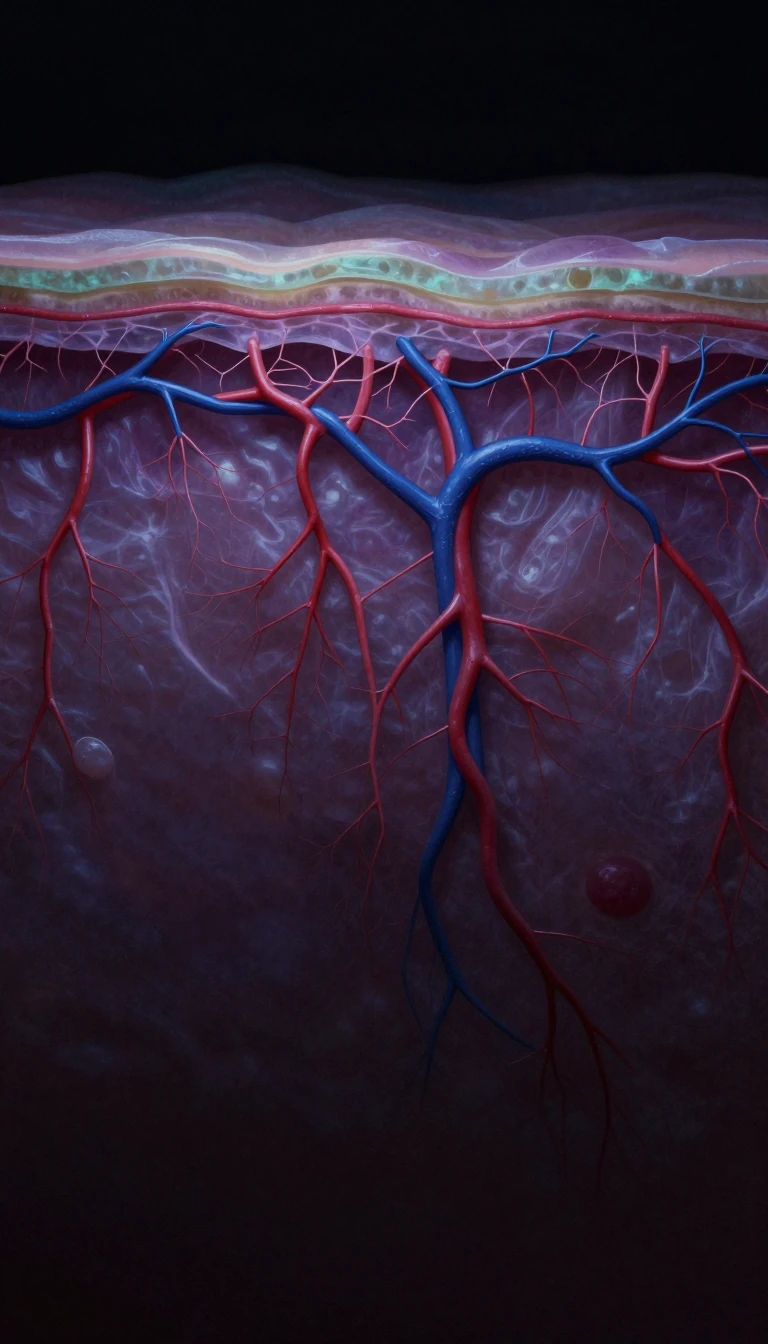 Why do your fingers turn white, blue, and then red in the cold?Raynaud's phenomenon is a common condition where blood vessels in your fingers, toes, or even nose spasm in response to cold or stress. While often just a minor inconvenience, the…
- Why do your glasses fog up when the temperature shifts?This video explains the physics behind the condensation that obscures your vision. Discover how temperature discrepancies between the lenses and the surrounding air create the tin…
 Why do your limbs fall asleep and feel like pins and needles?That familiar prickling or numbness, known as paresthesia, usually happens when you sit or sleep in a position that compresses a nerve or restricts blood flow. While often harmles…
 Why do your tomatoes split before you can harvest them?Tomato splitting is a common frustration for home gardeners, but it is often preventable. This video from Huw Richards explores the specific environmental triggers that cause frui…
 Why do zebras have black-and-white coats? The science behind the stripes.Join Emma Caton and scientist Nola Scholte from the Natural History Museum as they examine a museum specimen to investigate the function of zebra stripes. This video offers a behi…
 Why do zebras have stripes? Modern science finally has a better answer.For generations, the purpose of zebra stripes has puzzled researchers, dating back to the era of Darwin and Wallace. This video corrects previous misconceptions and presents the m…
 Why Docker is the essential tool for modern software deployment and development workflowsDocker is an open-source engine that simplifies how developers package and deploy applications. This session explores the containerization ecosystem, demonstrating how to build, s…
 Why doctors analyze patients who never actually took the medicineIn clinical trials, some patients drop out or refuse treatment. If researchers only studied those who finished the course, they might see a fake success. To find the truth, scient…
 Why doctors and police officers are studying fine art to improve their professional skillsAmy E. Herman explains how analyzing art can sharpen real-world investigative abilities. By learning to observe both the visible and the hidden elements in works like René Magritt…
- Why doctors are now prescribing nature as a formal medical treatmentFrom the remote shores of Shetland to the cities of Japan, the medical profession is evolving. Beyond pills and procedures, clinicians are increasingly fighting for a healthy envi…
 Why doctors are now prescribing nature as a medical treatmentFrom the Shetland Islands to Japan, the medical profession is increasingly treating a clean environment as a fundamental human right. As global health challenges rise, experts are…
 Why doctors draw blood into bottles to hunt for invisible, life-threatening infectionsWhen a patient shows signs of sepsis, every minute counts. Doctors use blood cultures to capture and grow microscopic pathogens, turning an invisible threat into a targetable enem…
 Why doctors listen to your body: the ancient art of diagnostic auscultationAuscultation is the practice of listening to internal body sounds to detect health conditions. While it dates back to ancient times, the invention of the stethoscope in 1819 trans…
- Why doctors now use painless flicking sensations to check the health of your liverHepatology, the study of the liver and its neighbors, has evolved from ancient speculation to precise modern diagnostics. Today, doctors can assess liver stiffness without surgery…
 Why doctors often choose to do nothing when diagnosing chronic lymphocytic leukemiaChronic lymphocytic leukemia is a slow-moving cancer that often presents without symptoms. Because early intervention has not been proven to alter the disease course, many patient…
 Why doctors removed the word 'nuclear' from MRI scansWhen you undergo an MRI, you aren't being exposed to X-rays or radiation. While the technology relies on the magnetic properties of atomic nuclei, the name was changed to avoid th…
- Why doctors say biceps brachii: anatomy's dead languages exist to stop mistakesTell someone you have a scar above the wrist and they might picture your forearm or the heel of your palm. Anatomists avoid that ambiguity with a vocabulary drawn from Greek and L…
 Why doctors track your pregnancy history using a specific shorthand of letters and numbersIn medicine, your reproductive history is summarized by gravidity and parity. These terms track how many times you have been pregnant and how many births have reached a viable ges…
- Why doctors trust some data more than othersIn medicine, not all facts are created equal. To prevent decisions from being swayed by mere anecdotes or personal bias, researchers use a structured hierarchy. This framework ran…
 Why doctors use odds ratios to solve the 'missing data' problemIn epidemiology, knowing the risk of a disease is the goal, but sometimes the data simply doesn't exist. When researchers can't see the whole population, they turn to the odds rat…
 Why documenting your future care preferences is a vital act of personal agencyAdvance Care Planning is the deliberate process of reflecting on and communicating your values for future medical care. By documenting these wishes, you ensure that your end-of-li…