 Intellect Plus
Cards starting with W
29,907 cards. Page 324 of 499.
 Why scientists are searching for dark matter deep inside a gold mineThis video explores the ongoing scientific quest to detect dark matter. By venturing into the Stawell gold mine, researchers seek a quiet environment to isolate potential signals …
 Why scientists are shifting their focus from lifespan to healthspanWhile we are living longer than previous generations, the real question is not how long we live, but how long we remain healthy. This video explores the evolving scientific focus …
 Why scientists are traveling to a metal asteroid to understand Earth's hidden core.Earth's metallic core is buried too deep for us to reach. NASA's Psyche mission aims to study a unique, metal-rich asteroid that may reveal the secrets of how planets are built. T…
 Why scientists are trying to replace our body's natural defense proteinsAntibodies are cornerstone tools in modern medicine, but they have physical limitations. This video explores the next frontier of biotechnology: engineering smaller, more stable a…
 Why scientists are using a giant moose decoy as a crash-test dummyEngineers are employing an unusual tool to study vehicle safety: a life-sized moose decoy. This video explores the practical application of using large animal models in crash test…
 Why scientists are using cannons to launch salmon over damsIt looks like a viral meme, but shooting salmon through a tube is a legitimate scientific effort. This video explores how researchers use specialized cannon technology to help fis…
 Why scientists chase twenty seconds of weightlessness inside a steep-climbing aircraftTo study the physics of the universe, researchers board aircraft that perform intense, repeated maneuvers to simulate zero gravity. These parabolic flights provide brief windows o…
 Why scientists deliberately build wrong versions of the worldJohn von Neumann claimed the sciences barely try to explain anything; mostly they make models, mathematical constructs justified only because they work. Every model is a simplifie…
 Why scientists draw imaginary boundaries around the universe to solve impossible problemsA closed system is a conceptual tool that simplifies reality by forbidding the movement of matter across a boundary. By isolating a process from external interference, researchers…
 Why scientists have spent decades dressing up as birds to study themThe internet joke that birds are not real masks a genuine scientific practice. Researchers have long used decoys and even human-worn bird costumes to observe avian behavior and su…
 Why scientists hunt for shipwrecks to build ultra-sensitive particle detectorsModern steel carries a hidden radioactive signature from atmospheric nuclear fallout. To shield the world's most sensitive detectors from this noise, researchers must scavenge "pr…
- Why scientists kept the femur of a major human ancestor secret for twenty years.In 2002, researchers discovered Sahelanthropus, an ancient human ancestor. While the public believed only a skull was found, a hidden femur remained under wraps for two decades du…
 Why scientists must agree on a shared language of measurementTo accurately describe how an object moves, direction and position are not enough. This video explains why scientists must use a consistent system of units to communicate the beha…
 Why scientists must always clarify when a study was conducted in miceYou often hear the disclaimer that mice are not people. This video explores why researchers must specify when a study was performed in rodents and why these studies remain a funda…
- Why scientists occasionally build treadmills for shrimpScientific progress often requires unconventional methods to solve complex problems. This video explores six unusual research projects where creativity led to some truly bizarre e…
 Why scientists once believed nitrogen could never be turned into a liquidFor decades, nitrogen was classified as a permanent gas that defied liquefaction. This video explores the history of cryogenics, detailing the early experiments that finally prove…
 Why scientists once dismissed the most populous particle in the entire universeEvery second, about 100 trillion neutrinos pass through your body, yet they remain one of the most elusive mysteries in physics. Initially proposed as a desperate mathematical fix…
 Why scientists organize the chaos of life into a filing systemDiscover how taxonomy transforms biological diversity into an organized map. This video explores the fundamental science of classification, moving from basic naming conventions to…
 Why scientists pay people to stay in bed for weeks at a timeNarrated by David Mitchell, this series explores how researchers simulate microgravity on Earth to study everything from bacterial resistance to human aging. Discover the ingeniou…
 Why scientists rewrite the book of life using synthetic copy DNATo mass-produce proteins like insulin, researchers do not just copy genes; they rewrite them. By using an enzyme to turn messenger RNA back into synthetic DNA, they create a strea…
 Why scientists sometimes choose ridiculous names for newly discovered speciesTaxonomy is usually a serious business, but the rules for naming new species are surprisingly flexible. Join Michael Aranda as he explores ten of the most outrageous and hilarious…
 Why scientists still struggle to define what psychological trauma actually isPsychological trauma is a term used everywhere, yet a clear scientific consensus remains elusive. While we often associate it with specific distressing events, the field is curren…
 Why scientists still use a 19th-century measurement system for the deepest theoretical physicsThe centimetre-gram-second system, or CGS, was once the global standard for scientific measurement. Though largely replaced by the modern International System of Units, CGS persis…
 Why scientists struggle to agree on a single way to classify the earth beneath usSoil type is more than just dirt; it is a formal taxonomic unit used by scientists to categorize the ground. Yet, there is no universal agreement on how to define these categories…
 Why scientists struggle to define the exact boundaries of a subspeciesA subspecies is a local variant of a species, yet its classification is often a matter of expert opinion rather than rigid biological law. While these groups exhibit distinct phys…
 Why scientists struggle to pinpoint the exact location of an atom's electronsAtoms are composed of protons, neutrons, and electrons, but while protons define an atom's identity, electrons remain elusive. This video explains how scientists attempt to predic…
- Why scientists study a blood-red river to find life on MarsThis video explores how the acidic, rust-colored waters of Spain's Rio Tinto serve as a vital testing ground for space agencies looking for extraterrestrial life.
 Why scientists study a hidden Swiss lake to understand Earth's ancient pastLake Cadagno in the Swiss Alps acts as a living time capsule. By examining its unique chemistry, researchers can study oxygen-averse microorganisms that mirror the conditions of o…
 Why scientists study cold-blooded creatures to unlock secrets about our own medical healthHerpetology is the scientific study of reptiles and amphibians, a field that spans from tracking environmental shifts to developing life-saving medicines. While often associated w…
 Why scientists study tiny lunar rocks to unlock the secrets of our early EarthNASA’s Mid-Atlantic Noble Gas Research Laboratory, known as the Moon Girl lab, is analyzing Apollo-era lunar samples preserved for half a century. By studying these ancient, tiny …
 Why scientists track tornadoes from a distance rather than driving into themCapturing the data of a super storm is a high-stakes balancing act between precision and safety. Atmospheric scientist Karen Kosiba explains the sophisticated modeling and remote …
 Why scientists travel to the Arctic to prepare for missions on MarsThis episode of the Martians series follows NASA engineers and scientists to the remote Norwegian island of Svalbard. By studying the volcanic terrain at 79 degrees north, the tea…
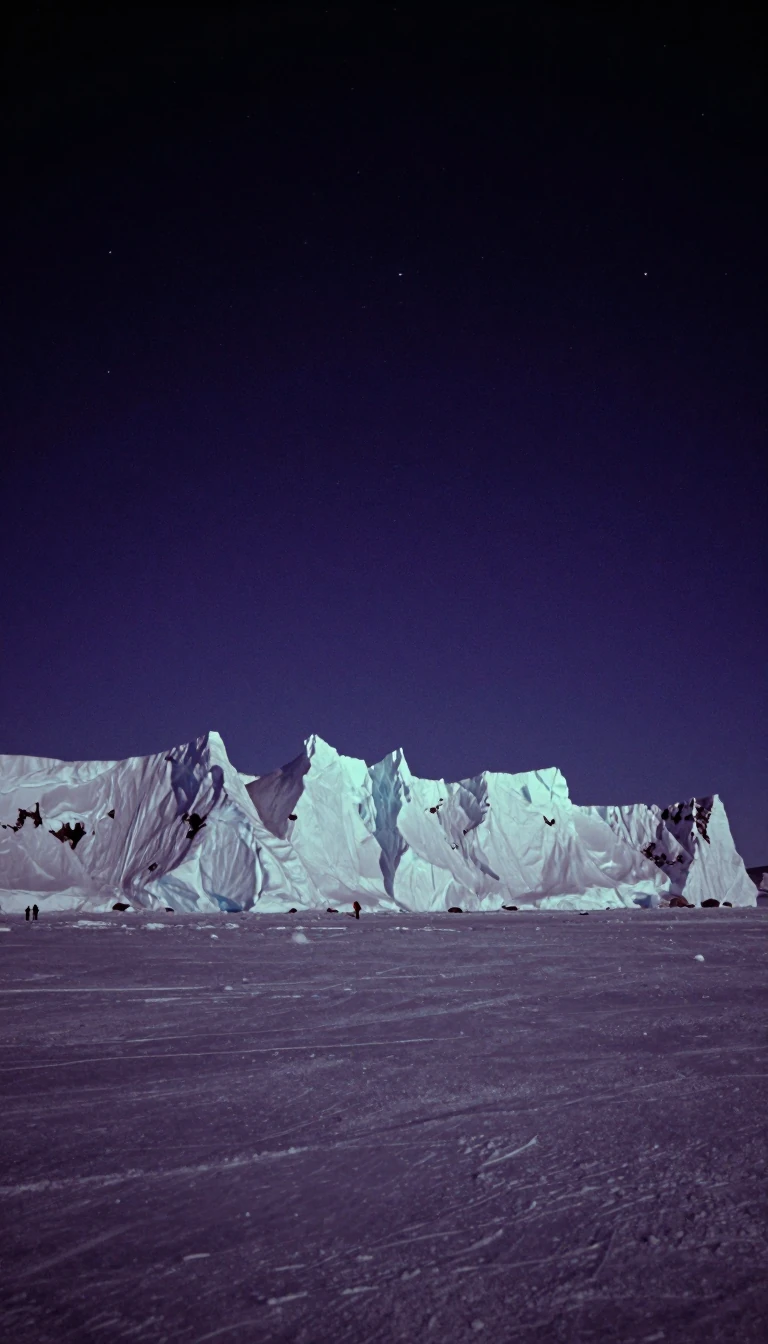 Why scientists travel to the world's coldest desert to study the baby universeThe South Pole Telescope sits in an environment so harsh that researchers face biting temperatures and constant daylight. Yet, this frozen, dry landscape provides the clearest win…
- Why scientists treat massive stars and entire power plants as tiny mathematical pointsA point source is a localized origin of flux or flow, treated as a mathematical singularity to simplify complex calculations. While these points do not exist in the physical unive…
 Why scientists use a Spanish volcano to prepare for missions to the planet MarsTeide National Park in Tenerife is more than Spain's highest peak and most visited national park. Its extreme, volcanic landscape mirrors the surface of Mars so closely that space…
- Why scientists use chocolate chips to model the Sun’s most mysterious magnetic featuresThe Sun is a massive ball of plasma, but you can model its complex magnetic behavior in your own kitchen. By using chocolate chips to represent sunspots on a sugar cookie, you can…
 Why scientists use particle accelerators to peer inside ancient texts and modern batteriesSynchrotron radiation is the intense light emitted when charged particles, like electrons, are forced to change direction at near-light speeds. Originally considered a nuisance in…
 Why scientists use wavenumbers to tame the massive frequencies of lightIn atomic and molecular spectroscopy, light frequencies are so staggeringly high that they become cumbersome to calculate. To simplify, scientists use the wavenumber—a clever metr…
 Why scientists value connections over beauty when studying museum specimensHerpetology Curator Darrel Frost explains taxonomy, the science of classification, using turtle specimens as a lens. This video reveals how researchers look past the aesthetic app…
- Why scientists were shocked by the physical structure of asteroid BennuWhen the OSIRIS-REx mission approached asteroid Bennu, the team encountered a significant surprise. This episode of NASA Explorers details the reality of navigating a celestial bo…
 Why scientists work to disprove their own ideas through the null hypothesisScience does not always aim to prove a theory right. Instead, researchers often focus on disproving a null hypothesis. This video explores how this fundamental scientific process …
 Why Scipio Africanus won the Battle of Baecula but failed to end the warIn 208 BC, Scipio Africanus routed Hasdrubal Barca’s forces in Iberia using a brilliant pincer maneuver. Yet, despite this tactical triumph, Scipio allowed his enemy to escape int…
 Why scoring three times is called a hat-trick, and how cricket started itIn 1858 the bowler H. H. Stephenson took three wickets with three consecutive balls, and delighted spectators passed round a collection to buy him a hat. That gift gave sport one …
 Why Scotland's 282 Munros are defined by a list rather than their heightA Munro is not merely a mountain over 3,000 feet; it is a specific peak on an official list maintained by the Scottish Mountaineering Club. While these summits define the Scottish…
 Why Scotland's disproportionate sacrifice in the First World War reshaped its modern demographic trajectoryScotland's demographic story is defined by more than just birth rates and migration. During the First World War, Scots accounted for 20 percent of British combat deaths despite re…
 Why Scotland's historic Sons of the Rock play under the shadow of an elephantDumbarton F.C. is one of Scotland's oldest football clubs, boasting a legacy that includes winning the nation's first two league titles. Today, the club plays beneath a volcanic p…
- Why Scotland's most enduring rock trio refuses to explain their own nameFormed in 1995, Biffy Clyro has evolved from a scrappy Scottish outfit into a chart-topping powerhouse. Despite their massive success, the band remains playfully elusive about the…
 Why Scotland's northernmost land was named for its position in the southSutherland is a rugged Highland region defined by deep sea lochs and isolated mountains. Despite its name, which means southern land, it encompasses some of the northernmost terri…
- Why Scotland's smallest historic county is known as The Wee CountySpanning just 61 square miles, Clackmannanshire holds the title of Scotland's smallest historic county. Despite its diminutive size, this east-central region has played a signific…
 Why Scotland's top football league was defined by a permanent, two-club monopolyFounded in 1998, the Scottish Premier League promised a new era of commercial independence for top-tier clubs. Yet, for its entire fifteen-year existence, the competition was defi…
 Why Scotland's vast, ancient peat bog is a global climate heroSpanning 4,000 square kilometers in northern Scotland, the Flow Country is Europe's largest blanket bog. This waterlogged landscape is more than a wild habitat; it is a massive ca…
 Why Scotland’s 'Miniature' Island Is a Geologist’s Paradise and a Historical CrossroadsOften called Scotland in Miniature, the Isle of Arran packs mountains, beaches, and ancient history into 432 square kilometres. From Neolithic cairns to a rare geological unconfor…
 Why Scotland’s King Once Attempted to Install His Brother as the High King of IrelandIn 1315, Edward Bruce launched a three-year military campaign to seize control of Ireland. Backed by Scottish forces and local Gaelic leaders, he aimed to open a second front agai…
 Why Scotland’s most popular soft drink had to change its name to survive.Known for its bright orange hue and a flavor profile that defies simple description, Irn-Bru has reigned as Scotland's favorite soft drink for over a century. Yet, this iconic bev…
 Why Scotland’s top football league splits its season into two distinct phasesThe Scottish Premiership manages a unique 38-game schedule by dividing the season into two halves. After 33 matches, the league splits into top and bottom sections, locking teams …
 Why Scottish Shortbread Secretly Relies on Rice Flour from the Global Trade EraForget the modern myth that shortbread is purely wheat-based. The secret to a melt-on-your-tongue texture lies in rice flour, a staple ingredient in Scotland during its time as th…
 Why Scottish titles often travel through mothers and illegitimate childrenThe rules of nobility in Scotland differ sharply from the English tradition. While many British titles are strictly patrilineal, Scots law allows for a more fluid inheritance that…
 Why Scrabble tile distributions change dramatically depending on the language you are playingScrabble is not a universal game of fixed tiles. Because letter frequency varies by language, every edition requires a custom distribution to maintain balance. While English sets …
 Why screenwriters immerse themselves in the raw, personal archives of the Great WarScreenwriter Krysty Wilson-Cairns discusses the research process behind the film 1917. By examining primary accounts at the Imperial War Museums, she sought to craft a believable …
 Why Scrubs used surreal daydreams to redefine the medical sitcom experienceScrubs broke the mold of the traditional hospital drama by filtering reality through the vivid, often bizarre imagination of its protagonist, J.D. By blending fast-paced slapstick…