 Intellect Plus
Cards starting with W
29,907 cards. Page 467 of 499.
 Why your body must dismantle sugar before it can fuel your daily lifeA disaccharide is a crystalline, water-soluble compound formed by linking two simple sugars. While these double sugars are essential for energy, your body cannot use them in their…
 Why your body needs a delivery service to transport fat through your bloodBecause fat and water do not mix, your body cannot move lipids through the bloodstream on their own. Instead, it uses lipoproteins—complex protein-lipid vehicles—to shuttle choles…
 Why your body needs a slow start to high-intensity movementMost fitness experts insist on a warm-up, but what is actually happening inside your muscles? It isn't just about getting hot; it is a complex physiological transition that prepar…
 Why your body needs sunlight to keep your bones from breaking downVitamin D is essential for regulating calcium and phosphorus, the building blocks of healthy bones and muscles. While sunlight is our primary source, global deficiency is widespre…
 Why your body needs this essential B vitamin to build DNA and stay healthyFolate, or vitamin B9, is a fundamental building block for life. It is essential for creating DNA and producing healthy red blood cells. Without enough of it, your body struggles …
 Why your body often fails the ultimate nacho challengeEver wonder why some snacks lead to digestive distress while others provide fuel? This video breaks down the final stages of chemical digestion, from the small intestine's nutrien…
 Why your body only cares about one specific form of vitamin EVitamin E is not a single substance but a family of eight distinct compounds. While all share antioxidant properties, your liver is remarkably selective. It prioritizes one specif…
 Why your body produces gas and when you should actually be concerned about itFlatulence is a universal human experience, yet it remains shrouded in social taboo. While often dismissed as a mere annoyance or a source of humor, the science of gas reveals com…
 Why your body produces more urine the moment you lie downIf you wake up frequently to urinate, it might not just be about how much you drink. Your body undergoes complex hormonal and circulatory shifts at night that can turn a full blad…
 Why your body reacts to cannabis in ways that remain scientifically unpredictableCannabis interacts with a sophisticated internal network called the endocannabinoid system, which regulates mood, memory, and appetite. When external cannabinoids like THC enter t…
 Why your body relies on a complex network of duct-based secretors to functionExocrine glands are the unsung engineers of your physiology, constantly secreting essential substances like sweat, tears, and digestive enzymes through specialized ducts. Unlike e…
- Why your body relies on evaporation to stay coolThis video explores the biological necessity of sweating. Learn how your body uses evaporation to regulate temperature and maintain a consistent internal state when external heat …
 Why your body requires more than just calories to functionMost people know they need to eat, but few understand the specific micronutrients that keep biological systems running. This video explores the essential vitamins and minerals req…
 Why your body requires tiny amounts of specific elements to function effectivelyTrace elements are chemical substances that living organisms require in minute quantities, typically less than 0.1 percent by volume. While these elements are needed in only tiny …
 Why your body shakes when you are cold, scared, or even recovering from surgeryShivering is more than just a reaction to a chilly breeze. It is a sophisticated, energy-intensive survival mechanism triggered by your brain to generate heat. From the biology of…
 Why your body speaks louder than your words, according to the science of movementWe often think of communication as a verbal exchange, but research suggests that words carry less than 35 percent of social meaning. Kinesics, the study of body movement, reveals …
 Why your body steals from your bones to keep your blood runningCalcium is the silent conductor of your nerves and muscles, but your blood levels are so critical that your body will strip your skeleton to maintain them. When this delicate bala…
 Why your body stops responding to insulin and how lifestyle changes can reverse itType 2 diabetes is defined by insulin resistance, where cells fail to process glucose effectively. While often chronic, the condition is not always permanent. Significant weight l…
 Why your body struggles to breathe when you climb to high mountain peaksAltitude sickness is a physiological reaction to the thinning air of high elevations. While the oxygen percentage remains constant, the drop in overall air pressure makes it harde…
 Why your body struggles to handle the modern weight of workplace stressWorkplace stress manifests as physical pain, from tension headaches to digestive issues. This video explores the biological mechanisms behind chronic stress, explaining how our bo…
 Why your body struggles to keep pace when you cross multiple time zonesJet lag is not just travel fatigue; it is a physiological mismatch between your internal clock and the external environment. When you fly across three or more time zones, your bod…
 Why your body suddenly decides it can no longer handle a glass of milk.Lactose intolerance is not a disease, but a biological mismatch. When your small intestine stops producing enough lactase, the sugar in dairy remains undigested, traveling to your…
- Why your body treasures a waste product that causes painful, crystalline joint inflammationUric acid is often dismissed as a metabolic byproduct linked to gout, yet it serves as a critical antioxidant in human blood. While most mammals convert this compound into allanto…
 Why your body treats a simple amino acid as the universal starting gun.Methionine is more than just a building block for proteins. As the essential amino acid encoded by the start codon AUG, it signals the beginning of life at the cellular level. Bey…
 Why your body treats anger and fear as two sides of the same coinAnger and fear are basic evolutionary tools, both triggering the sympathetic nervous system to prepare you for a physical threat. While they share similar physiological markers li…
 Why your body type is a climbing strategy, not a limitationRock climbing isn't just about raw strength; it is a puzzle of geometry and physics. This video explores how climbers of different heights and power levels can solve the same prob…
 Why your body weight naturally shifts by several pounds every single dayIt is common to notice a weight difference of two or three pounds between morning and night. This video explains the science behind these daily fluctuations, revealing that the pr…
- Why your body—and the bridge you drive over—must be able to flexTemperature is more than just a number on a thermometer; it is a physical force that dictates how matter behaves. From the structural integrity of massive bridges to the internal …
 Why your body's defense system makes you feel miserableWhen you suffer from the flu, you experience muscle aches, irritability, and loss of appetite. This video explores whether these unpleasant symptoms are actually caused by the inf…
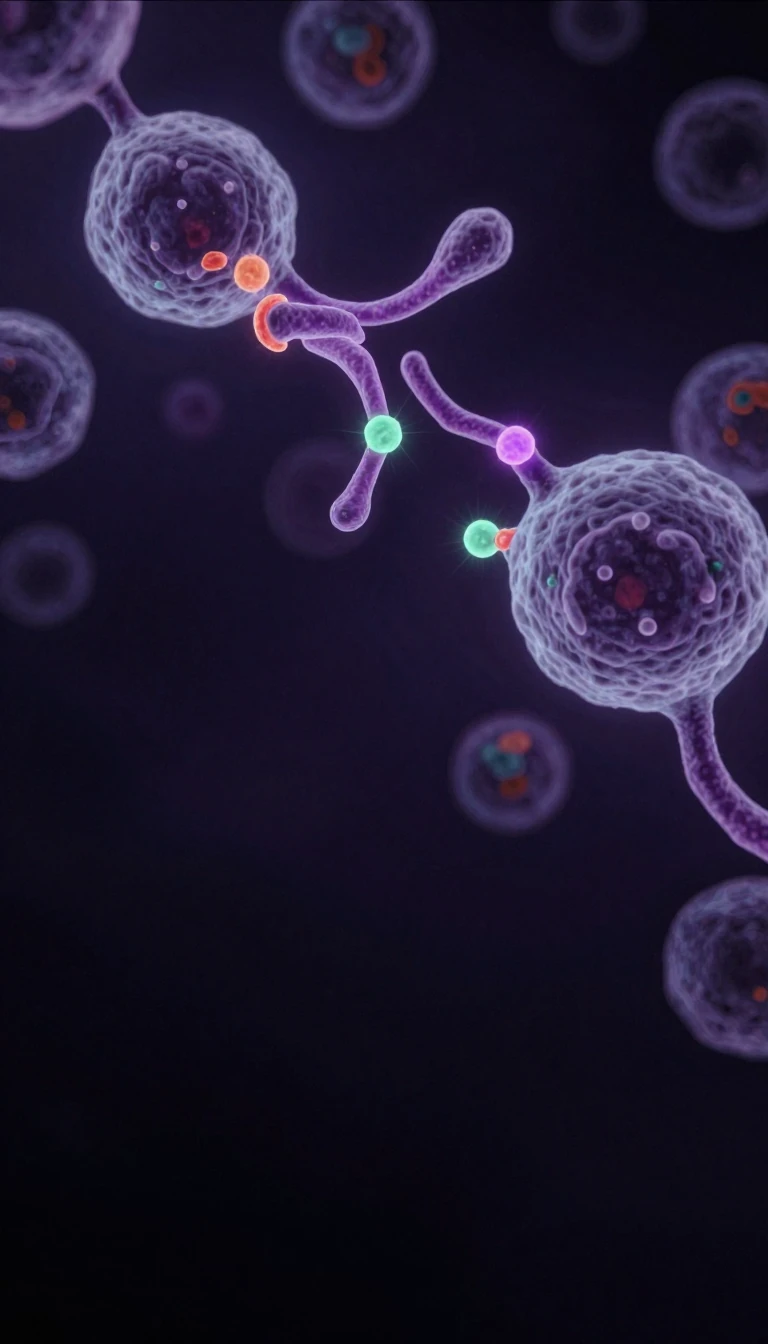 Why your body's first line of defense is a master of genetic recognitionImmunity is more than just fighting off germs; it is a sophisticated biological balancing act. Your body distinguishes between self and non-self, using both innate and adaptive sy…
 Why your body's internal clock struggles to keep up with flight speedsWhen you cross multiple time zones, your brain moves much faster than your biological rhythms can process. This mismatch, known as jet lag, creates a physiological strain as your …
 Why your body's most common cartilage is a master of shock absorptionHyaline cartilage is the glossy, resilient tissue lining your joints, acting as a vital shock absorber. Despite its importance, it lacks nerves and blood vessels, making it notori…
 Why your body's smallest cells might be failing as they grow largerIn biology, bigger is rarely better. New research reveals that blood stem cells—some of the smallest in the human body—lose their ability to replenish our blood supply simply by e…
 Why your body's survival mechanism can become a source of damageThe stress response is hard-wired to provide quick bursts of alertness and energy. However, when this biological mechanism is activated too frequently or for too long, it can caus…
 Why your body’s waste product might actually be a powerful cellular protectorBilirubin is often dismissed as a toxic byproduct of red blood cell destruction, responsible for the yellow hue of jaundice. Yet, this red-orange pigment may serve a vital, hidden…
 Why your boiling water changes temperature depending on where you stand on EarthVapor pressure is the hidden force determining when a liquid turns to gas. As temperature rises, molecules escape their liquid bonds, creating pressure. When this pressure matches…
- Why your bones act as a protective sanctuary for your bloodYour bones do much more than provide structure; they serve as a vital factory for your blood. While scientists have long known that blood production occurs in specific niches, new…
- Why your bones become porous and how to protect them as you ageOsteoporosis is a silent condition where bone tissue deteriorates, turning solid structures into porous, fragile frameworks. Often undetected until a sudden fracture occurs, this …
 Why your boss can't always know if you're actually workingWhen you hire someone to act on your behalf, a fundamental friction emerges: the agent knows more than the principal. This information gap creates a playground for self-interest, …
 Why your boss values your grit over your degreeIn a competitive job market, high grades are often secondary to a specific internal engine: your work ethic. It is the invisible relationship you have with your tasks, determining…
 Why your bottle of avocado oil might actually be soybean oil in disguisePrized for its exceptionally high smoke point and rich nutrient profile, avocado oil has become a kitchen staple. Yet, recent investigations reveal a troubling reality: much of th…
 Why your bottled water has a shelf life despite being essentially agelessWater itself does not expire, yet manufacturers print expiration dates on bottles. This practice is not about the water turning bad, but rather a precaution against the degradatio…
 Why your bowel movements might hold the key to life-saving medical breakthroughsIt is a subject most people avoid at the dinner table, yet stool analysis is a vital tool in modern medicine. From detecting microscopic traces of blood to identifying early cance…
 Why Your BPA-Free Plastic Bottle Might Still Be Mimicking Estrogen in Your BodyCommon food plastics often leach chemicals that mimic estrogen, potentially disrupting human health. While many consumers trust BPA-free labels, research suggests these alternativ…
 Why your brain 'zones out' is more complex than just being boredWe often dismiss absent-mindedness as a simple lack of focus. However, it is a sophisticated mental state where our brains fail to process information deeply enough to form lastin…
 Why your brain actually needs those moments of doing absolutely nothingWe constantly reach for stimulus to avoid the discomfort of boredom, but this urge might be counterproductive. Research suggests that embracing unstructured, open thinking can unl…
 Why your brain and belly are in constant conversationObesity is often framed as a failure of willpower, but neuroscience suggests it is a complex biological disease. This talk explores the molecular signals between your gut and brai…
 Why your brain assumes a pretty face equals a smart mindWe often assume that attractive people are more intelligent, trustworthy, or successful. This isn't just a social preference; it is a documented psychological phenomenon where a s…
 Why your brain can remember everything even if half is goneTraditional neuroscience views memory as a series of specific locations, like files in a cabinet. But what if your mind works more like a hologram? In a hologram, every tiny piece…
 Why your brain chooses verbal worry over vivid mental imageryWorrying feels like a burden, but it might actually be a misguided defense mechanism. By turning fears into a loop of words, your brain attempts to bypass the intense physical sen…
- Why your brain conjures terrifying nightmares and how to stop them from recurringNightmares are more than just bad dreams; they are vivid, distressing experiences that jolt you awake, often leaving you unable to return to sleep. While they can stem from stress…
 Why your brain consistently tricks you into misjudging your own future happinessDaniel Kahneman, the psychologist who won a Nobel Prize in Economics, spent his career proving that human rationality is a myth. By uncovering the systematic biases that govern ou…
 Why your brain craves a constant stream of bad newsDoomscrolling isn't just a bad habit; it is a biological trap. When we scroll through upsetting content, our brains seek updates to manage uncertainty, creating a self-perpetuatin…
 Why your brain craves sugar even when your stomach is already fullSweetness is not just a flavor on your tongue. It is a sophisticated biological signaling system that links taste to energy-dense nutrition. While we often think of sugar as a sim…
 Why your brain craves the familiar loops of your favorite songsEver wonder why a catchy chorus feels so satisfying? This video explores the psychological mechanics behind musical repetition, revealing how it transforms us from passive observe…
 Why your brain demands you scratch, even when it causes you more harmAn itch is more than just a minor annoyance; it is a distinct sensory experience that triggers a specific reflex to remove potential threats. While pain signals the body to withdr…
 Why your brain discards information faster than you thinkMost people believe they simply lack the capacity to remember, but memory loss is often a predictable mechanical failure of time. By understanding the specific geometry of how we …
 Why your brain fails when oxygen levels drop during high-altitude flightThis video documents a training exercise designed to simulate the effects of oxygen deprivation. By reliving a specific training event from 15 years ago, the presenter demonstrate…
 Why your brain falls for these deceptive sensory illusionsExplore the fascinating science of sensory deception. This video examines how specific auditory and visual illusions can trick almost anyone, featuring insights from experts in th…
 Why your brain feels like it's 'almost' there when you forget a wordThat frustrating itch of a word on the tip of your tongue is more than a mental glitch. It is a sophisticated neurological process where your brain can sense a memory's presence e…