 Intellect Plus
Cards starting with W
29,907 cards. Page 466 of 499.
 Why your best creative breakthroughs might be hiding behind the dataIn an era of data-driven decision making, Bozoma Saint John argues that the most powerful ideas often come from within. This talk explores why trusting your intuition is essential…
 Why your best decisions depend on what everyone else is doingGame theory is more than just strategy; it is a mathematical framework for understanding interactive decision-making. This lecture introduces the core concept that your outcomes a…
 Why your best guess is often no better than an expert's intuitionForecasting is the art of predicting the future using past data, yet research suggests that experts often struggle to outperform non-experts in complex scenarios like conflict res…
 Why your best ideas might be moving faster than your dataNetflix Chief Marketing Officer Bozoma Saint John argues that over-relying on data can stifle innovation. This talk explores how to capture fleeting creative sparks by trusting yo…
 Why your best ideas often arrive during the most mundane tasksHave you ever solved a complex problem while doing the dishes? This video explores the neurological link between boredom and creativity, explaining why 'spacing out' is actually a…
 Why your best pick-up line is actually just a simple introductionForget the rehearsed jokes and clever puns. Relationship experts suggest that the most effective way to approach someone isn't through a witty script, but through genuine confiden…
 Why your best poker move might be the simplest oneNew players often overcomplicate poker by trying to set elaborate traps or bluff with nothing. However, for those just starting out, the most effective strategy is often the most …
 Why your best skill might not be your most valuable oneThis video breaks down the principle of comparative advantage through a practical worked example. It explains why individuals and nations benefit from specializing in tasks where …
- Why your best skill might not be your most valuable tradeIn economics, being the best at something doesn't mean you should do it exclusively. The concept of comparative advantage explains why individuals and nations thrive by focusing o…
 Why your bicycle brakes might be squealing and how to fix itThat piercing screech when you pull the lever isn't just an annoyance; it is a signal. While it often means your brake pads are worn down, it can also be caused by the way the pad…
 Why your bicycle gears might be skipping and how to fix themWhen your gears skip, the culprit isn't always a broken component. It could be a bent derailleur hanger designed to fail, or even corroded cable housing. Learning to adjust your l…
 Why your bicycle shifting feels sluggish and how to fix itCorrosion, rust, and trapped grit can turn a smooth gear change into a mechanical struggle. Replacing your cables and housing is a fundamental skill, but the secret to a perfect i…
- Why your bicycle's gear system relies on a precise, splined architectureModern bicycles often use a cassette rather than a threaded freewheel. This design allows for bearings to be positioned further out, resulting in a sturdiness and lightness that r…
 Why your biggest fears are actually your most important to-do listMost people focus on setting goals, but Tim Ferriss argues that identifying what we fear most is the real key to overcoming self-paralysis. This video explores a practical exercis…
 Why your biggest regrets are actually a map of your untapped potentialRegret is often dismissed as a painful burden, but psychologists view it as a sophisticated tool for adaptation. Far from mere self-recrimination, this emotion highlights where yo…
 Why your biology is still programmed for the prehistoric nightMost mammals spent 160 million years living in the shadows. This evolutionary period, known as the nocturnal bottleneck, shaped our bodies and senses to thrive in darkness, leavin…
 Why your bird of paradise plant might take a decade to bloomThe iconic bird of paradise is a slow-growing tropical masterpiece that demands patience. While these South African natives make stunning centerpieces with their paddle-shaped lea…
 Why your birth status remains the most powerful predictor of your future lifeSocial inequality is not merely a matter of bank accounts. It is a structural architecture of resources, power, and opportunity that shapes everything from health outcomes to digi…
 Why your birthright matters more than your grit in building wealthWe are taught that success is a byproduct of hard work and resilience. However, economists argue that economic security is often predetermined by the wealth position you inherit a…
 Why your bladder is a masterclass in biological engineering and pressure managementUrination is more than a simple reflex; it is a complex physiological dance involving the brain, spinal cord, and specialized muscles. While we often take this process for granted…
 Why your bladder might signal an urgent need to urinate even when emptyInterstitial cystitis is a chronic condition causing persistent bladder pain and an overwhelming, frequent urge to urinate. While it mimics a urinary tract infection, tests often …
 Why your blood and tissue samples are the silent architects of modern medicineMedical laboratories are the hidden engine rooms of healthcare, processing millions of samples to guide life-saving decisions. Far from simple testing centers, these facilities co…
 Why your blood can turn against you: the mystery of thrombotic thrombocytopenic purpuraThrombotic thrombocytopenic purpura is a life-threatening blood disorder where clots form spontaneously in small vessels. It is driven by a deficiency in a critical enzyme, ADAMTS…
 Why your blood contains a protein that acts like a muddy footprintMyoglobin is a vital oxygen-binding protein found in your muscles, but it should never be circulating in your blood or urine. When it appears there, it acts as a biological alarm,…
 Why your blood donation might be more complex than a simple pint of redBlood donation is a global life-saving operation, yet it is far from uniform. From the specific anticoagulants used to preserve cells to the evolving eligibility criteria for dono…
 Why your blood lipid levels are the most important silent threat to your heartDyslipidaemia is an invisible condition where abnormal fat levels in your blood silently build plaque in your arteries. It causes no symptoms, yet it remains a primary driver of h…
 Why your blood sugar history is permanently etched into your red blood cellsYour red blood cells act as biological logs of your average blood sugar over their three-to-four-month lifespan. When glucose binds to hemoglobin, it creates a permanent marker ca…
 Why your blood sugar levels are the ultimate indicator of your metabolic healthGlucose is your body's primary fuel, but maintaining the right balance is a delicate act. When insulin fails to move this sugar into your cells, levels spike, signaling potential …
 Why your blood test results might mention a bun, but not the bread kindIf your doctor mentions a BUN test, they are not talking about a bakery item. This acronym stands for Blood Urea Nitrogen, a critical diagnostic tool used to assess kidney functio…
 Why your blood type might be more than just a simple positive or negativeThe Rh blood group system is far more complex than a simple plus or minus sign. While we often focus on the D antigen, this system involves over 50 distinct antigens and a fascina…
 Why your blood vessels can suddenly stop holding the pressure needed for lifeDistributive shock is the most common form of circulatory collapse, yet it remains a complex medical emergency. It occurs when blood vessels lose their tone and become excessively…
- Why your blood vessels widen to keep your body running at peak performanceVasodilation is the body's elegant mechanism for widening blood vessels to boost blood flow and lower pressure. While this process is essential for delivering oxygen and nutrients…
 Why your BMI might not tell the full story of your healthBody Mass Index is the global standard for measuring weight, but it is a surrogate marker. While it effectively estimates fatness for most adults, it often fails to account for ho…
 Why your boarding pass code and your pilot's flight plan code never matchYou likely know your airport by a three-letter code like LHR or JFK. But behind the scenes, pilots and air traffic controllers use a four-letter ICAO code. While IATA codes are fo…
 Why your body affects your radio reception: the hidden physics of near-field zonesEver noticed your radio signal change when you move near the antenna? You are interacting with the near field, a zone where electromagnetic waves behave differently than they do i…
 Why your body begins to dismantle its own muscle massWhen you stop moving, your body doesn't just pause; it actively begins to break itself down. From the weightlessness of space to prolonged bed rest, understanding the biological d…
 Why your body behaves in such strange and amazing waysFrom the mysterious purpose of your appendix to the science behind sudden food cravings, this video explores the biological quirks that define the human experience and why our bod…
 Why your body builds a painful fluid-filled pocket when you wear the wrong shoesA blister is not just an injury; it is a sophisticated biological defense mechanism. When friction or heat damages your skin, your body creates a protective cushion of fluid to sh…
- Why your body builds armor against the world and when to leave it alone.Calluses are your skin's way of building a shield against constant friction. While these patches of thickened, dead cells protect you from blisters, they can become problematic if…
 Why your body can tell the difference between a mirror image and realityChirality is the geometric property of an object that cannot be superimposed on its mirror image, much like your left and right hands. In chemistry, this simple asymmetry dictates…
- Why your body can't digest wood but plants thrive on itCellulose is a structural masterpiece of nature. While it provides the rigid skeleton for trees and cotton, it remains biologically inaccessible to most animals. This chemical par…
 Why your body can't stop broadcasting the scent of last night's dinnerGarlic doesn't just sit in your mouth; it hijacks your internal chemistry. Once ingested, its signature sulfur compounds enter your bloodstream and organs, turning your sweat, bre…
 Why your body cannot keep pace with modern flight speedsWhen you cross multiple time zones, your brain struggles to catch up with your physical location. This biological lag creates a profound disconnect between your internal rhythm an…
 Why your body cannot survive without these essential polyunsaturated fat moleculesOmega-3 fatty acids are vital building blocks for your cells, yet your body cannot produce them on its own. These essential nutrients are concentrated in your brain and eyes, supp…
 Why your body chooses to replace skin with permanent remindersMost of us have scars from childhood accidents or minor injuries. This video explains the biological process behind why these marks look different from your original skin and why …
- Why your body chooses your palms to handle high-pressure momentsHave you ever noticed your hands becoming damp the moment you face a daunting public speech or a literal cliffside? This video explores the physiological response that turns your …
 Why your body doesn't turn every brunch bite into immediate energyYour metabolism is a sophisticated sorting system, not a simple furnace. This video explains how your body distinguishes between different types of nutrients to fuel your cells an…
 Why your body fat percentage is harder to measure than you might thinkBody fat percentage is a direct measure of composition, yet it remains notoriously difficult to pin down. While tools like bioelectrical impedance and skinfold calipers offer conv…
 Why your body fights medical implants and how engineers are finally winning the warWhen you introduce a foreign object into the body, the immune system immediately treats it as an invader, encasing it in scar tissue. This foreign body response can cause pain and…
- Why your body forces you to cough and when you should actually worryThat persistent tickle in your throat is not just an annoyance; it is a sophisticated protective reflex designed to clear your airways of irritants and pathogens. While most cough…
 Why your body forces you to sigh throughout the daySighing is often seen as an emotional expression, but medical insights from ventilator use reveal it is actually a fundamental, necessary component of human respiration.
 Why your body has two different types of massIn physics, mass isn't a single property. This video explains the distinction between inertial and gravitational mass, showing how they function independently despite often sharin…
 Why your body is a living museum of discarded evolutionary blueprintsHumans carry over 100 vestigial anomalies, remnants of an ancient past that no longer serve their original purpose. From muscles that once swiveled ears to reflexes meant for clin…
 Why your body is a walking museum of ancient, forgotten evolutionary historyVestigiality refers to structures or behaviors that have lost their original ancestral function. From the human tailbone to the wings of flightless birds, these remnants are not n…
 Why your body is built for movement and how to reclaim it dailyModern life has quietly erased the movement our bodies are designed for. Exercise scientist Keith Diaz explains how small, frequent doses of activity can improve your physical and…
 Why your body keeps two separate genetic accounts for the next generationYour body maintains a strict divide between the cells that build your tissues and the lineage tasked with reproduction. This separation ensures that most changes you acquire durin…
 Why your body might actually need you to cryCrying is often viewed as a sign of weakness, but it may be a vital biological tool for emotional regulation. This talk explores the science behind how tears can improve both your…
- Why your body might already have a built-in system for pain reliefChronic pain is often treated with opioids that carry severe risks of lethality and organ damage. However, researchers are increasingly looking toward the body's own cannabinoid s…
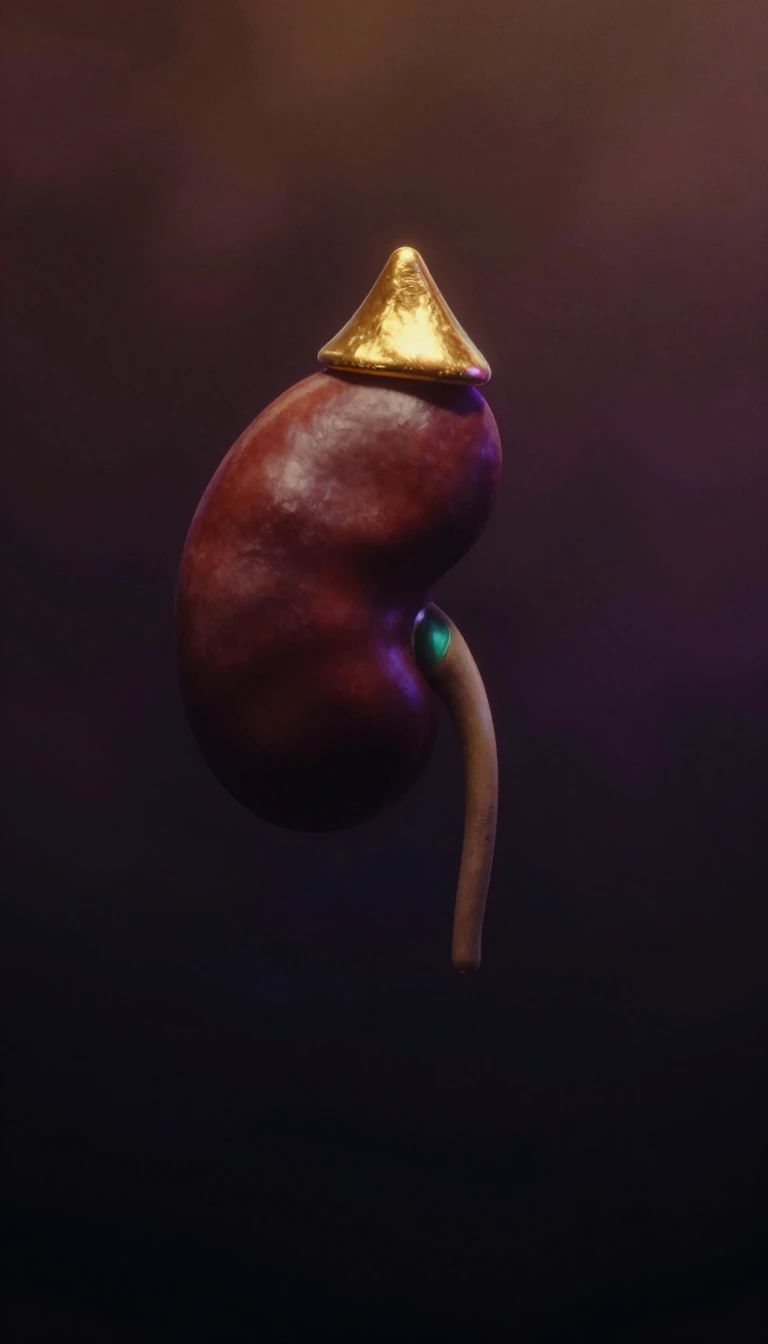 Why your body might stop producing the essential hormones that keep you aliveAdrenal insufficiency occurs when your body fails to produce enough cortisol, a vital hormone for metabolism and blood pressure. While often overlooked due to vague symptoms like …
 Why your body might turn a safe medicine into a dangerous oneRacemization is the chemical process where a pure, optically active substance transforms into a mixture of mirror-image molecules. Because our bodies are chiral, these two forms o…