 Intellect Plus
Language
409 cards. Each one is a 40-second story with a five-minute read behind it. Page 2 of 7.
 A band's debut album was born from a sudden departure and a near-firingParamore's 2005 debut, All We Know Is Falling, almost never happened. After the bassist quit just days into recording, the remaining members channeled their frustration into the a…
 Why your inner ear rocks are causing the room to spin around youIf you feel dizzy when rolling over in bed or tilting your head, you may have benign paroxysmal positional vertigo. This condition occurs when tiny calcium crystals in your inner …
 Casper Ruud is the most successful Norwegian tennis player in the history of the sport.Before Casper Ruud, no Norwegian had ever cracked the top 10 of the ATP rankings or won an ATP Tour singles title. Today, he stands as the highest-ranked Norwegian in history, hav…
 How a tennis player reached the world top 15 without a single tour titleAlejandro Davidovich Fokina has carved out a career as a formidable competitor on the ATP circuit, consistently challenging top-ranked opponents. Despite reaching high-stakes fina…
 How a classically trained prodigy became the secret architect of modern funk and hip-hopBernie Worrell was a child prodigy who wrote his first concerto at eight. He went on to redefine the sound of Parliament-Funkadelic and Talking Heads, creating synth lines that be…
- Marcel Latak ends an eleven-year drought for American boys at the US OpenIn a dramatic three-set final at the 2026 US Open, Marcel Latak secured the boys' singles title. By defeating top-seeded Guto Miguel, Latak became the first American to claim this…
 How Alex Michelsen became one of the fastest rising stars in American men's tennisBorn in 2004, Alex Michelsen transitioned from a standout junior career to the professional ATP circuit with remarkable speed. By age 20, he had already secured top-30 status, rea…
 Why Belfast’s city airport quietly dropped a football legend from its public brandingBelfast City Airport is officially named after local football icon George Best, yet recent marketing campaigns have conspicuously omitted his name. This tension between corporate …
- Novak Djokovic rewrites tennis history with a record-shattering twenty-third major championship victoryAt the 2023 French Open, Novak Djokovic secured his twenty-third major singles title, establishing a new all-time record for men. By defeating Casper Ruud in straight sets, the th…
 Team World secured a crushing victory at the 2023 Laver Cup in VancouverThe sixth edition of the Laver Cup saw a lopsided result, with Team World securing their second consecutive title. Held at the Rogers Arena in Canada, the tournament featured a un…
 Novak Djokovic rewrote tennis history at the 2023 US Open in New YorkAt 36 years old, Novak Djokovic claimed his 24th major title, solidifying his status as the oldest champion of the Open Era. This victory was more than just another trophy; it was…
 Did a Scottish diplomat save ancient art or commit an act of historical vandalism?Thomas Bruce, the 7th Earl of Elgin, arrived in Constantinople in 1799 with a plan to document Greek antiquities. He left with a massive collection of Parthenon marbles that spark…
- The Rapa Nui language is a resilient survivor of colonial trauma and linguistic shiftsSpoken on Easter Island, the Rapa Nui language is an Eastern Polynesian outlier with a complex history. Nearly decimated by 19th-century slave raids and epidemics, the language ha…
 The surreal, subversive, and tragic literary legacy of Richard BrautiganHe was the darling of the 1960s counterculture, famous for whimsical, dreamlike prose. Yet behind the lighthearted surface of his best-selling novels lay a life marked by extreme …
- The Italian-inspired muscle car that almost became the MustangBefore it dominated NASCAR tracks and drag strips, the Ford Torino was a premium alternative to the Fairlane. Named after the 'Italian Detroit,' this intermediate powerhouse combi…
 The secret history of the Serbian tricolour and its royal symbolsSerbia's national flag is more than just three stripes; it is a visual record of revolution, dynastic power, and shifting borders. From medieval silk banners to the pan-Slavic col…
 The red star: a symbol of revolution, commerce, and unexpected originsWhile often synonymous with 20th-century communist ideology, the five-pointed red star has a much more fragmented history. From the flags of California and New Zealand to the logo…
 The bloody origins of the political red flagToday, a red flag signals left-wing ideology, but its history is written in combat and revolt. From medieval naval warfare to the streets of the French Revolution, the color has t…
 The elusive sound that English speakers can almost, but not quite, pronounceIt exists in the shadows of the International Phonetic Alphabet, a sound that is neither a full vowel nor a harsh consonant. While absent from English, you can mimic it by adjusti…
 The global architecture of the world's smallest neighborsFrom African anthills to North American forests, humanity has consistently populated the margins of our world with tiny, magical beings. These 'little people' aren't just fairy ta…
 Why a Quebec stop sign says ARRÊT while France uses STOPLanguage is more than just a tool for communication; it is a vessel for history and resistance. In Canada, the French language has evolved into distinct dialects shaped by centuri…
- Why true nonsense is actually an excess of meaningWe often mistake nonsense for a lack of sense, but the genre thrives on the opposite. It is a delicate tension where language and logic are intentionally subverted, creating a wor…
 The lost echoes of the Khitan language and its undeciphered scriptsOnce the official voice of the Liao Empire, the Khitan language remains a linguistic puzzle. Despite having two distinct writing systems, much of its vocabulary and grammar remain…
 The subtle social architecture of Japanese honorificsIn Japan, a single suffix can transform a stranger into a friend or a professional into a child. This linguistic system, known as keishō, does far more than show respect; it maps …
- The mirror-image logic of Japanese sentence structureWhile English builds sentences from the center outward, Japanese follows a strict, head-final logic. In this language, the most important part of a phrase—the head—always waits un…
 The lost trade language that bridged the Pacific NorthwestBefore English dominated the Pacific Northwest, a unique pidgin called Chinook Jargon served as the region's vital linguistic bridge. Spanning from Alaska to California, this simp…
 How a single naval defeat collapsed an entire Indigenous confederacyIn 1813, the British lost control of Lake Erie, severing a vital supply line. This strategic rupture triggered a desperate retreat up the Thames River, leading to a decisive Ameri…
 A linguistic time capsule preserved by a forced exileWhile standard French underwent massive standardization in the 19th century, Acadian French remained largely untouched. By avoiding significant contact with France for over a cent…
 Is the unique dialect of Gibraltar a dying mother-tongue?Llanito is a linguistic mosaic, blending Andalusian Spanish with English, Genoese, and even Arabic. While this hybrid language defines the identity of Gibraltar's inhabitants, it …
 The linguistic heartbeat of the Puget Sound is finding its voice againOnce spoken by 12,000 people across the Salish Sea, Lushootseed faced a near-silent future. After decades of decline, a new generation is reclaiming this complex language, moving …
 How computers transform raw text into meaningful symbolsBefore a large language model can predict the next word, or a compiler can run your code, a hidden process must first break the chaos of raw characters into organized pieces. This…
- The oldest living creole is a linguistic puzzle of three theoriesSpoken across the islands of Cape Verde, Kabuverdianu is a linguistic marvel. As the world's oldest living creole, its origins remain a subject of intense debate: was it a simplif…
- The linguistic marvel of a language with sixty consonants but only three vowelsWhile most languages rely on a rich variety of vowels, Adyghe operates on a different principle. This Northwest Caucasian language boasts a massive inventory of consonants—sometim…
- Why Belarus waited twenty-five years to introduce coins into its national currency systemFor decades, Belarus was a rare outlier in the global economy: a nation that never issued coins for general circulation. Rampant inflation following independence made physical coi…
- Why Chinese dictionaries organize thousands of complex characters using a system of 214 radicals.Chinese characters are not alphabetized. Instead, they are traditionally indexed by radicals—visual components that act as section headers. While these radicals often provide a se…
 In Bosnia and Herzegovina, language is a powerful tool for asserting national identity.While Bosnian, Serbian, and Croatian are mutually intelligible varieties collectively known as Serbo-Croatian, their usage has evolved into a distinct marker of ethnic affiliation…
- Why the flag of Bosnia and Herzegovina features a triangle and nine white starsThe current flag of Bosnia and Herzegovina is a deliberate departure from the country's turbulent past. Featuring a blue field, a yellow triangle, and a diagonal line of white sta…
 Why the shortest stories in history are finally having their moment in the sunFlash fiction is a narrative form defined by its brevity, yet it manages to capture a complete character arc or a larger story within a few hundred words. While its roots stretch …
 The Arabic Hamza: A Tiny Symbol That Defines the Glottal StopThe hamza is a small, versatile character in Arabic script that represents a glottal stop. Though it functions like a letter, it is often treated as a diacritic, requiring complex…
 How the Himba people perceive color through a unique four-category linguistic lensThe Himba people of Namibia categorize the visible spectrum into just four distinct color names. This linguistic framework, which groups shades of blue, green, and red in ways tha…
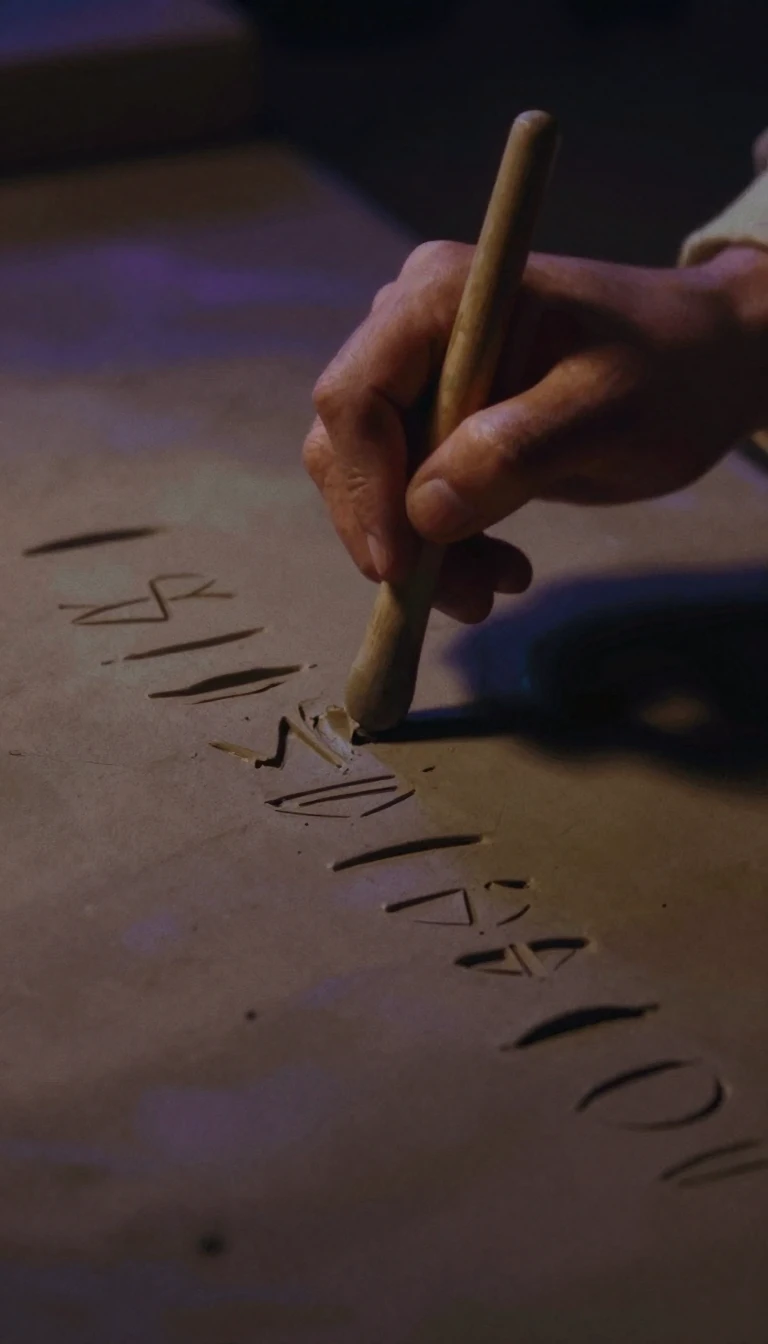 Can a language built from common roots be understood without any prior study?Interlingua is a constructed language designed to be immediately readable by millions of people. By distilling vocabulary from major Western European languages into a simple, regu…
 Interslavic is a bridge language designed to be understood by all Slavic speakers instantly.Interslavic is a semi-constructed language that functions as a modern successor to Old Church Slavonic. By drawing on common grammatical and vocabulary elements shared across Slav…
- The Kannada script is a phonemic abugida with a history spanning over a millenniumUsed primarily in Karnataka, the Kannada script is a sophisticated Brahmic writing system that evolved from Ashokan Brahmi. Beyond its official role in the Indian Republic, this a…
 Beyond English: The complex tapestry of indigenous languages spoken across the United KingdomWhile English is the dominant language of the United Kingdom, the nation hosts a rich diversity of indigenous Celtic and Germanic tongues. From the growing presence of Welsh to th…
 Lojban is a language designed to be perfectly logical and free of syntactic ambiguity.Created in 1987, Lojban is a constructed language built to explore the intersection of human thought and machine logic. By removing grammatical ambiguity, it aims to provide a pre…
- Why the symbol for the open-mid back unrounded vowel is a linguistic chameleonThe symbol ⟨ʌ⟩, often called a wedge, caret, or hat, is a staple of phonetic transcription. Yet, it rarely represents the exact sound it was designed for. While it technically den…
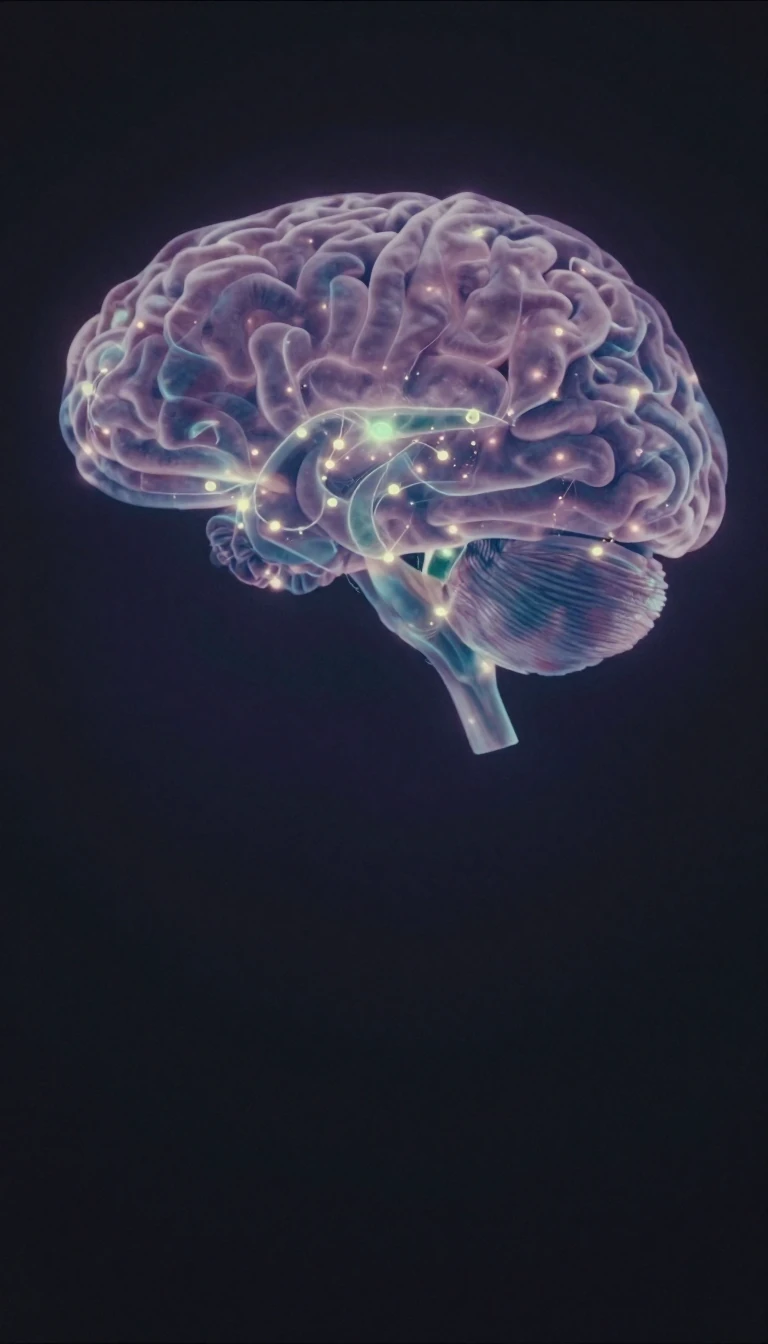 Why your brain prefers a comfortable lie over an uncomfortable, complex truthYour brain is a master of efficiency, using mental shortcuts called schemata to categorize the world. While these frameworks help you navigate daily life without constant, strenuo…
 Why the ambitious experiment to crowdsource global news eventually hit a dead endWikinews was designed to be the collaborative, open-source answer to traditional journalism. While it successfully attracted contributors and secured high-profile interviews with …
- Is your fictional world a rigid machine or a mysterious, shifting dreamscape?Worldbuilding is the art of crafting immersive universes for stories, games, and film. Creators generally choose between two distinct paths: hard worldbuilding, which demands rigo…
 Why Chinese characters are not just pictures, but a complex system of logicContrary to popular belief, Chinese characters are not merely ideographic images. While some began as simple pictographs, roughly 95% of characters in the foundational Shuowen Jie…
- Why Blackfoot grammar classifies drums and knives as living, animate beingsBlackfoot is a complex, polysynthetic language spoken by the Niitsitapi people. Its grammar defies simple categorization, treating objects like drums as animate while requiring ve…
- The humble copula is the linguistic glue that binds subjects to their essential properties.In linguistics, a copula is the functional bridge connecting a subject to its complement. While English relies on the verb to be, other languages use pronouns, suffixes, or nothin…
 The ancient script of Gandhara that vanished from history for over a millenniumKharosthi was a sophisticated writing system used across South and Central Asia for centuries before it mysteriously died out. Deciphered only in the 19th century, this right-to-l…
 Pahlavi: An ancient writing system where words were written in Aramaic but read in Persian.Pahlavi was not a language, but a complex writing system used for Middle Iranian dialects. It relied on huzwārišn—Aramaic words used as logograms—meaning a scribe might write the …
- Why the terms past and present participle are misleading labels for English verbsParticiples are linguistic chameleons, sharing traits of both verbs and adjectives. While we call them past or present, these labels rarely indicate actual time. Instead, they fun…
 How Isaac Pitman turned the sounds of English into a precise, geometric visual languageDeveloped in 1837, Pitman shorthand revolutionized transcription by prioritizing phonetics over traditional spelling. By using varying stroke thicknesses to distinguish voiced fro…
 What languages were spoken in Europe and Asia before the Indo-European expansion?Before Indo-European languages dominated vast regions, a diverse tapestry of ancient tongues thrived across Europe, Western Asia, and the Indian subcontinent. While most were disp…
- Beyond a simple monogram, the royal cypher is a centuries-old mark of sovereigntyA royal cypher is more than just a decorative monogram. From the Tudor period to the modern era, these interwoven initials have served as a distinct signature for monarchs, markin…
- Is Siraiki a distinct language or merely a dialect of Punjabi?Siraiki is a linguistic bridge between Sindhi and Punjabi, yet its status remains a flashpoint in Pakistan. While millions speak it, the debate over whether it is a unique languag…
- Why did English abandon the intimate 'thou' for the formal 'you'?Once the standard singular pronoun, 'thou' vanished from everyday English by the 17th century. While most European languages retained a distinction between formal and informal add…