 Intellect Plus
Languages
1,420 cards. Each one is a 40-second story with a five-minute read behind it. Page 13 of 24.
 A brilliant intelligence analyst was found dead in a locked bag, but how?Gareth Williams, a gifted mathematician working for British intelligence, was discovered dead inside a padlocked sports bag in his London flat in 2010. Despite an official inquest…
 Sweden's demographic landscape has shifted from post-war homogeneity to a complex, globalized society.Once a relatively uniform nation, Sweden has undergone a profound transformation over the last 70 years. Today, one in four residents has a foreign background, and the country’s p…
 Why nineteenth-century Mormon pioneers tried to replace the English alphabet with a new script.Between 1847 and 1854, the leaders of the LDS Church developed the Deseret alphabet, a radical phonemic spelling reform. Intended to simplify English for immigrants and restore a …
 Why two tiny dots over a vowel change how you read a wordThe diaeresis is a subtle diacritic mark consisting of two dots that forces a reader to treat adjacent vowels as separate syllables. While often confused with the umlaut, this mar…
 The title of docent means everything from a museum volunteer to a senior professor.Derived from the Latin word for teaching, docent is a title that shifts meaning across borders. In some European nations, it marks a prestigious academic rank equivalent to a prof…
 Why the title of doctor means teacher, physician, and sometimes a complete mysteryThe word doctor traces back to the Latin docere, meaning to teach. While it originated as a license for medieval scholars to instruct others, it evolved into a global title for me…
 The Douay–Rheims Bible: A Latin-Based Counter-Reformation Response to Protestant English TranslationsBorn from the English College in exile, the Douay–Rheims Bible was a deliberate, literal translation of the Latin Vulgate. Designed to combat Protestant interpretations, its dense…
 Is the social struggle of autism actually a two-way communication mismatch?For decades, psychology labeled autistic people as inherently mind-blind and empathy-deficient. But a newer theory suggests the problem is not a one-sided deficit, but a bidirecti…
 How a Secretive Religious Minority Became a Pillar of the Israeli Defense EstablishmentThe Druze are an enigmatic, monotheistic community that forbids conversion and keeps its scriptures hidden. Yet, in Israel, they have forged a unique path of deep integration. Unl…
 How three historic Scottish counties merged to form a modern unitary council areaDumfries and Galloway is a sprawling region in southwestern Scotland, defined by its rugged Southern Uplands and a coastline that faces the Irish Sea. Formed by the 1975 merger of…
 Why the letter E is the most powerful character in the alphabetAs the most frequent letter in English and many European languages, E is a linguistic titan. Its origins trace back to a Semitic figure of jubilation, yet today it serves as a cor…
 Why did a historic Scottish county trade its name for a geographical description?Known until 1921 as Haddingtonshire, this coastal region underwent a formal identity shift to East Lothian. While the name change was a bureaucratic decision, the area's cultural …
 Why American educational attainment is a story of shifting gender and racial dividesEducational attainment in the United States has reached historic highs, with nine in ten adults now completing high school. Yet, beneath these national averages lies a complex lan…
 Why Charles Dickens’s most notorious villain remains a lightning rod for literary controversyFagin, the manipulative criminal mastermind from Oliver Twist, is one of English literature’s most enduring and problematic figures. While he is famous for training homeless boys …
 The Germanic roots of France: How a lost language shaped the modern worldThe Franks left a permanent mark on Europe, yet their original tongue is largely invisible. While Latin dominated government and the Church, the Frankish language quietly infused …
 How a British teen drama about horses became a global Netflix success storyFree Rein follows Zoe Phillips, a teenager from Los Angeles who discovers a local stable on a fictional island off the English coast. What begins as a summer holiday story evolves…
 Why the legendary Gascon musketeers are rooted in a complex linguistic and ethnic historyGascony is more than a backdrop for swashbuckling literature. This southwestern French region, defined by its unique dialect and ancient Iberian roots, has long been a cultural cr…
 Gaulish: The Lost Celtic Language That Once Echoed Across Ancient EuropeBefore Roman expansion, a vibrant Celtic language dominated the continent from France to Asia Minor. Known as Gaulish, this ancient tongue left behind mysterious inscriptions and …
 Were the legendary Geats of Beowulf actually the ancestors of modern Sweden's people?The Geats were a powerful North Germanic tribe in southern Sweden, long debated as either the inspiration for Beowulf or a lost nation subsumed by the Swedes. Their name, linked t…
- How a Roman historian's second-hand account of Germanic tribes shaped centuries of European ideology.Written around 98 AD, Tacitus's Germania was a minor ethnographic work that vanished for centuries. After its 1425 rediscovery, it became a potent tool for nationalism, eventually…
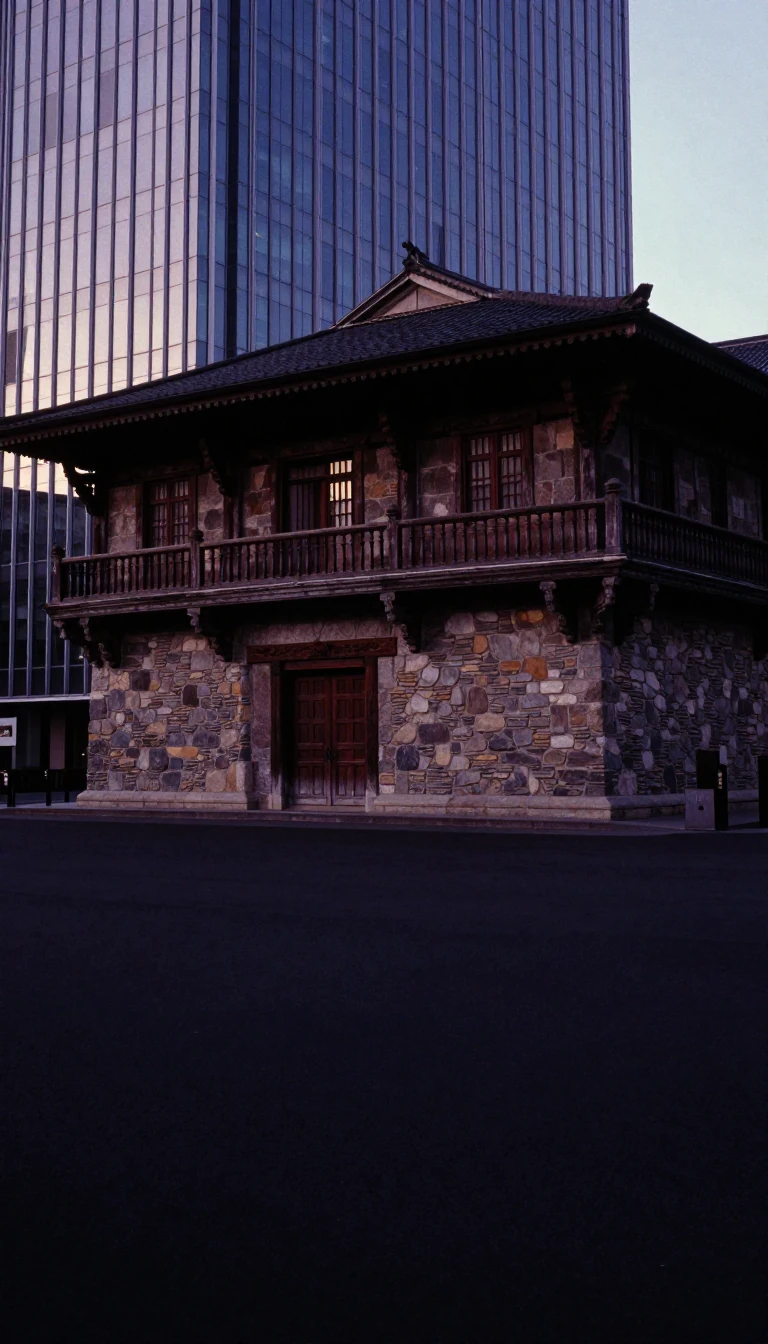 Glastonbury Abbey was once England's richest monastery, fueled by legends of Arthur and Avalon.Founded by Britons and later transformed by Saxon and Norman influence, Glastonbury Abbey became a powerhouse of medieval wealth and myth. From its legendary connection to King Ar…
 How a fictional love song became a real-life burden for its unsuspecting museTom Higgenson wrote Hey There Delilah after meeting a runner named Delilah DiCrescenzo. He lied about having a song ready to impress her, then spent a year crafting the track. The…
 Is the traditional biography of Muhammad a historical record or a later religious construction?The life of Muhammad is central to Islam, yet modern historians struggle to separate historical fact from centuries of oral tradition. While the Quran provides only fleeting glimp…
- Why the British honours degree system is a unique academic ranking mechanismIn the United Kingdom, your undergraduate degree is not just a pass or fail. It is classified into specific honours levels based on your academic performance. This distinct system…
 How a new Irish political party is challenging the traditional establishment from the rightFormed in late 2023, Independent Ireland has rapidly moved from a small group of rural-focused TDs to a national political force. By positioning itself as a common-sense alternati…
 How a simple transcription error turned a yew-place into the island of IonaIona is a tiny Scottish island with a massive history, serving as a cradle for Celtic Christianity and a final resting place for ancient kings. Yet, its very name is a mystery, li…
 How a remote Scottish island became the medieval world's center of Christian intellectual life.Founded in 563 by Saint Columba, Iona Abbey evolved from a modest wattle-and-thatch monastery into a powerhouse of medieval scholarship. Despite repeated Viking raids and the even…
 Why a failed 1715 rebellion against the Hanoverians ultimately cemented their British ruleWhen the Stuart dynasty was replaced by German cousins in 1714, a disgruntled nobleman launched a desperate bid to restore the old order. The 1715 rising promised a swift return o…
- Jilly Cooper: The witty architect of the bonkbuster and chronicler of British classDame Jilly Cooper transformed British popular literature with her sharp social commentary and sprawling, hedonistic sagas. From her early satirical journalism to the iconic Rutshi…
 How a high-profile Scottish political career collapsed in a single landslide election nightJim Murphy rose from student activism to become a Cabinet minister and leader of the Scottish Labour Party. Yet, his career faced a dramatic reckoning in 2015, when his party lost…
 How a small-town grocer’s spirit became the world’s most recognizable blended Scotch whisky.John Walker began as a teenage grocer in 1820, selling spirits to survive. Today, his namesake brand is the world’s highest-selling Scotch. From the iconic 24-degree tilted label …
- The Filipino lawyer who topped the bar and CPA exams before fighting a dictatorship.Jose W. Diokno remains the only person to top both the Philippine Bar and CPA board examinations. A former senator and Secretary of Justice, he became the nation's foremost human …
- Why the K in KDE no longer stands for a desktop environmentFounded in 1996 to fix the fragmented, complex state of Linux desktop software, KDE began as a mission to create a consistent user experience. Today, the project has evolved far b…
- Why the letter L is a master of disguise in your daily lifeFrom ancient cattle prods to modern chemistry, the letter L is far more than a simple consonant. It hides in plain sight as a currency sign, a unit of measurement, and a mathemati…
 How a century-old football league evolved from eight Dublin clubs to a national phenomenonFounded in 1921 with just eight teams from County Dublin, the League of Ireland has transformed into a complex, multi-tiered professional structure. Today, it encompasses men’s an…
 Why hackers and gamers turned the alphabet into a secret digital codeLeet, or 1337, is a system of modified spellings that replaces letters with symbols and numbers. Originating in 1980s bulletin board systems to bypass text filters, this hacker ar…
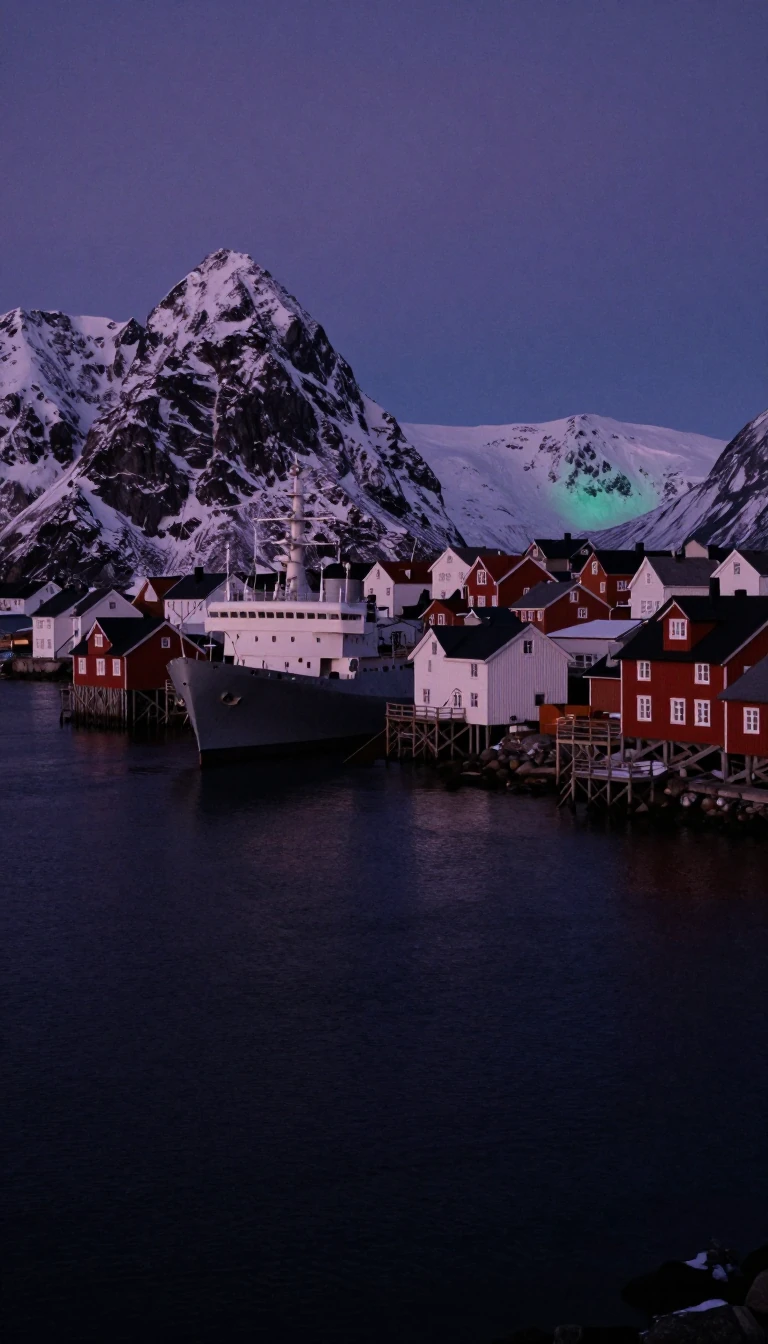 Lerwick: The Clay Bay That Became the Northernmost Major Settlement in the UKPerched on the edge of the North Atlantic, Lerwick is a town defined by its Norse roots and extreme northern latitude. From its origins as a lawless 17th-century fishing camp to i…
- How Mahmood Mamdani redefined our understanding of the colonial state and modern political violence.Born in India and raised in Uganda, Mahmood Mamdani is a preeminent scholar of post-colonial politics. His work challenges conventional wisdom on everything from the roots of apar…
- How a firebrand activist ended three decades of communist rule in West BengalKnown to supporters as Didi, or Elder Sister, Mamata Banerjee rose from humble beginnings to become West Bengal’s first female chief minister. Her career, defined by a populist br…
 The Marcomanni were the 'border men' who challenged the might of the Roman Empire.Known as the border men, the Marcomanni were a powerful Germanic people who lived north of the Danube. From their origins in the Elbe region to their eventual migration into the R…
 The lost language of Mediterranean pirates, traders, and slaves that bridged two worldsFor eight centuries, a mysterious contact language known as Sabir allowed merchants, crusaders, and captives to communicate across the Mediterranean. This hybrid tongue, born from…
- From maritime warnings to global climate modeling, the Met Office tracks our changing skies.Established in 1854 to protect sailors from violent storms, the Met Office has evolved into a global powerhouse of atmospheric science. Today, it manages everything from aviation …
 Munster Rugby: How a provincial Irish team became a global giant-killing forceMunster Rugby is more than a professional team; it is a cultural institution defined by its fierce resilience. From humble amateur beginnings in 1879 to historic victories over in…
 Can India’s ambitious 2020 education overhaul truly transform its massive, complex learning landscape?The National Education Policy 2020 aims to replace India’s rigid 10+2 schooling structure with a flexible 5+3+3+4 model. By prioritizing foundational literacy, multidisciplinary d…
 Necropolitics: When the State Decides Who Lives, Who Dies, and Who Simply ExistsBeyond the traditional state power to protect life, necropolitics describes how political systems dictate death. It transforms vast populations into the living dead, stripping the…
 Why New Zealand English sounds like a shifting, murmuring puzzle to foreign earsNew Zealand English is one of the world's youngest native-speaker varieties, born from a mix of colonial settlers and indigenous influence. It features a distinct vowel shift that…
 Nynorsk is the official Norwegian written standard born from a 19th-century rural revival.While Bokmål dominates urban centers, Nynorsk remains a vital, state-sanctioned written language. Developed by Ivar Aasen in the 1850s to reclaim Norwegian identity from Danish in…
 How Philippine English evolved from American roots into a unique, indigenized global forceBorn from American colonization and the 1901 arrival of the Thomasites, Philippine English has rapidly transformed into a distinct variety. Today, it is not merely a colonial reli…
 Why your dictionary uses a secret alphabet to explain how to say simple wordsStandard spelling is often a poor guide to pronunciation. Because written language frequently fails to capture the nuances of speech, linguists use phonetic transcription to map s…
 Why the twelfth sign of the zodiac is defined by duality and divine escapePisces is the final sign of the zodiac, a mutable water sign spanning the celestial longitude of 330° to 360°. Often depicted as two fish swimming in opposite directions, the sign…
- How a controversial police emblem became a symbol of Northern Ireland's fragile consensusWhen the Police Service of Northern Ireland replaced the Royal Ulster Constabulary in 2001, finding a neutral logo seemed impossible. The final design, featuring a crown, harp, an…
 How a volunteer-led charity became the gold standard for maritime rescue and safetyFounded in 1824, the Royal National Lifeboat Institution has evolved from a fledgling shipwreck society into a sophisticated, volunteer-powered maritime force. Today, this charity…
 The Welsh patron saint who urged followers to do the little things in life.Saint David, the 6th-century bishop of Mynyw, remains a foundational figure in Welsh identity. Beyond his traditional miracles and ascetic monastic rules, his legacy persists thro…
 Is Sauron a literal eye or a fallen angel with a dark, physical form?Sauron is often remembered as a disembodied, flaming eye, yet J.R.R. Tolkien’s legendarium describes a far more complex entity. Originally an angelic spirit who served the smith-g…
 How a regional sports tournament evolved from six founding nations to an eleven-country powerhouseBorn in 1959 to foster regional cooperation, the Southeast Asian Games has grown from a modest six-nation event into a complex biennial spectacle. While it remains a cornerstone o…
- Does a historical film have a duty to be a documentary, or a story?Ava DuVernay’s 2014 drama Selma ignited fierce debate over the boundaries of artistic license. While critics praised its emotional power and David Oyelowo’s portrayal of Martin Lu…
 How a brutal bridge assault catalyzed the landmark Voting Rights Act of 1965In 1965, thousands marched from Selma to Montgomery to demand voting equality. Met with state-sanctioned violence on the Edmund Pettus Bridge, the movement captured national atten…
- Why the small strokes at the end of letters define our reading experienceSerifs are the small, decorative strokes attached to the ends of letters, a feature born from ancient stone-carving techniques. While they have defined Western typography for cent…
 Why the world’s most famous chocolate beans are effectively banned in the United StatesIf you ask for Smarties in the United States, you will receive hard, chalky tablets. Yet, in the rest of the world, Smarties are iconic, colorful, milk-chocolate-filled treats. Th…
 How a Colombian dental student became one of the world's most successful television starsBefore she was a household name, Sofía Vergara was studying dentistry in Colombia. A chance discovery on a beach launched a modeling career that eventually led her to Hollywood. T…