 Intellect Plus
History by topic
216 cards. Each one is a 40-second story with a five-minute read behind it. Page 3 of 4.
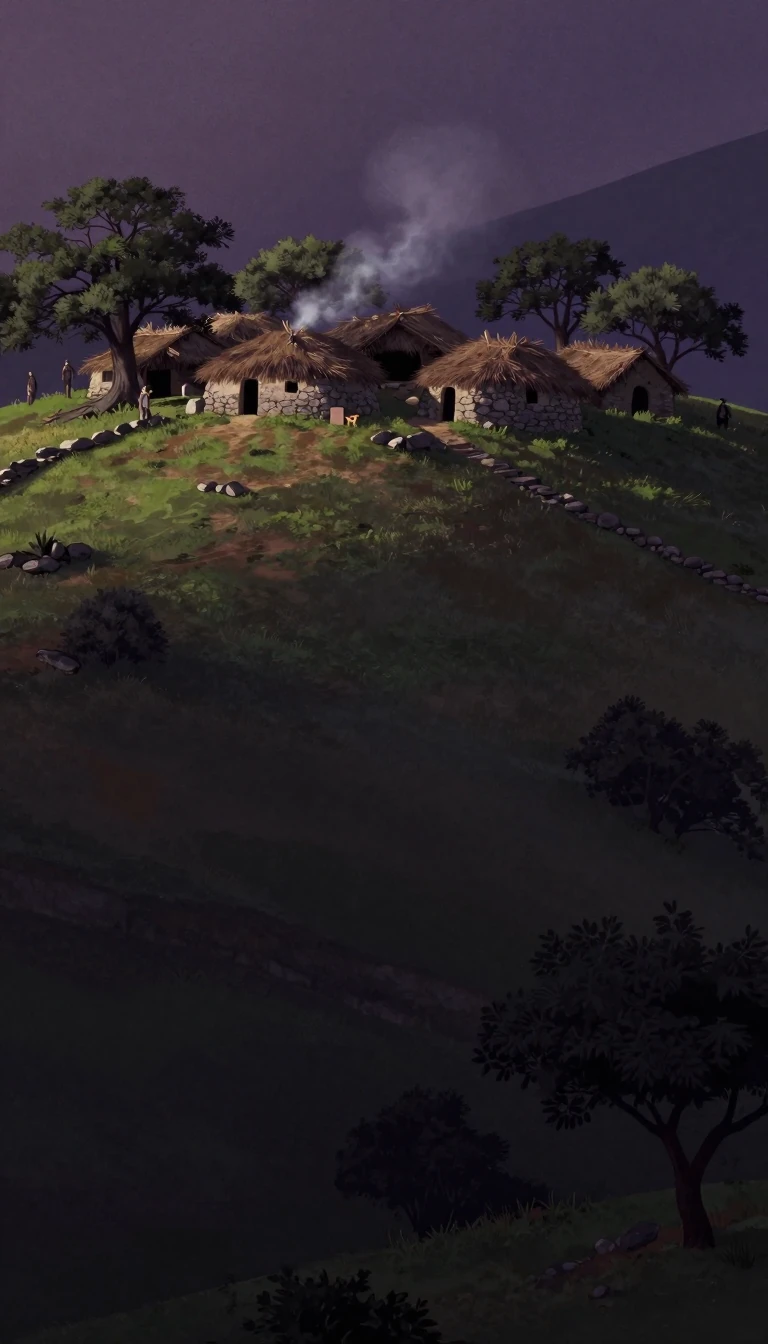 From animal hides to skyscrapers: how humanity mastered the art of building shelterConstruction began as a basic survival strategy to moderate the climate, allowing humans to adapt to diverse environments across the globe. Over millennia, this functional necessi…
 From ancient ritual to modern industry, cosmetics have shaped human status for 7,000 years.Cosmetics are far more than modern vanity. They began as ritualistic body art 7,000 years ago and have served as markers of social class, medicinal tools, and even protective gear…
 Creationism is not a monolith, but a shifting response to scientific discovery over centuries.Long before modern debates, thinkers from ancient Greece to the Renaissance grappled with how a divine intelligence shaped the natural world. Today, we often associate creationism…
 From Spartan batons to FBI stings, the secret history of hidden writing is ancient.Cryptography is not just a digital phenomenon; it is an ancient art of concealment. From the Spartan scytale to the FBI's deceptive ANOM messaging app, the struggle between those …
 How a simple two-wheeled machine became the ultimate symbol of personal freedom and emancipation.Before it was a professional sport, the bicycle was a social revolution. By the 1890s, it offered unprecedented mobility to the middle class and became a powerful tool for women's…
 Is dance a primal human impulse or a highly refined, professional art form?Dance is both a universal, rhythmic urge and a disciplined craft. While it serves as a tool for social bonding and emotional release, it has also evolved into a highly structured …
 Ecology began as a study of household management before becoming a global science.The term ecology comes from the Greek oikos, meaning household. Coined by Ernst Haeckel, it originally described the relationship between animals and their surroundings. What star…
 For centuries, humanity viewed electricity and magnetism as entirely unrelated, mysterious natural phenomena.Long before modern physics, ancient civilizations observed the strange pull of magnetite and the static charge of rubbed amber. While these forces were documented as early as 800 …
 How a century of radio obsession built the modern digital worldElectronics engineering emerged from the technical fascination of early 20th-century radio amateurs. From bulky vacuum tubes to the silicon MOSFET, this discipline evolved through…
 Are your feelings truly your own, or are they products of your historical era?Historians now treat emotions as a fundamental category of analysis, just like race or class. They argue that feelings are not universal constants but learned experiences shaped b…
 From ancient Roman scrolls to medieval mirrors: the long evolution of the encyclopediaLong before digital databases, humanity sought to capture the sum of all knowledge. From the early Roman efforts to categorize the natural world to the massive, multi-volume medie…
- Energy is not a physical substance, but a mathematical constant governing all natural phenomena.We often speak of energy as if it were a fuel or a fluid, but physics tells a stranger story. It is not a concrete mechanism, but a numerical quantity that remains stubbornly unch…
 Engineering is the art of creating the optimum solution to complex, conflicting real-world problems.Engineering is more than just building; it is the creative application of science to convert natural resources into human utility. From ancient pyramids to modern infrastructure, …
 Did ancient Sophists invent moral relativism to help their students win political debates?Before Socrates and Plato defined Western ethics, a group of professional teachers called the Sophists challenged the idea that morality was objective. They argued that justice wa…
 Evolutionary thought did not begin with Darwin but evolved through centuries of philosophical inquiry.Long before Charles Darwin set sail on the HMS Beagle, thinkers from ancient Greece to the Enlightenment grappled with the origins of life. While early theories often relied on sp…
 Why modern fantasy is a deliberate invention rather than a retelling of old mythsModern fantasy is not just a collection of old fairy tales. It is a distinct, commercially viable genre defined by the intentional creation of fictitious worlds. Unlike traditiona…
 How a French Queen’s dressmaker invented the modern concept of the fashion designer.Before the mid-19th century, clothing was largely a bespoke collaboration between dressmakers and clients. Everything changed when Rose Bertin, the 'Minister of Fashion,' began sh…
 From ancient manure to industrial chemistry, how we learned to feed the world.For millennia, farmers relied on manure and minerals to boost crop yields. By the 20th century, however, the rise of synthetic fertilizers fundamentally altered our environment. T…
 Cinema began as a scientific tool to analyze movement beyond the human eye's reach.Before movies were entertainment, they were instruments of inquiry. Inventors like Eadweard Muybridge and Étienne-Jules Marey used rapid-fire photography to deconstruct motion, su…
 From ancient fast food to global trade, how we eat defines our human storyFood is more than sustenance; it is a record of human migration, technological leaps, and social change. From the 2,000-year-old fast-food counters of Pompeii to the industrial sh…
 Why Einstein’s theory of gravity transformed from a neglected idea into modern physics' foundation.Albert Einstein’s general relativity redefined gravity not as a force, but as the warping of space-time. Though initially met with uncertainty—even by Einstein himself—the theory …
 From pea plants to the double helix: how we decoded the blueprint of lifeGenetics evolved from theoretical musings to a precise molecular science in less than two centuries. While early thinkers debated heredity through philosophy, the mid-19th century…
 For centuries, humanity believed magnetic mountains and garlic fumes dictated the behavior of compasses.Before modern science, the Earth's magnetic field was a profound mystery. Early thinkers blamed celestial poles, magnetic islands, or even the smell of onions for confusing compas…
 From ancient geometry to global tectonics: how we decoded the physics of EarthGeophysics emerged from a dual pursuit: the intellectual urge to understand our planet and the economic necessity of locating resources. From Eratosthenes measuring Earth's circum…
 Before glass became common kitchenware, it was a luxury reserved for ancient royalty.Today, glass is an ordinary material found in every home. Yet, in the Late Bronze Age, it was a prized commodity as valuable as precious stones. Pharaohs were buried with vibrant,…
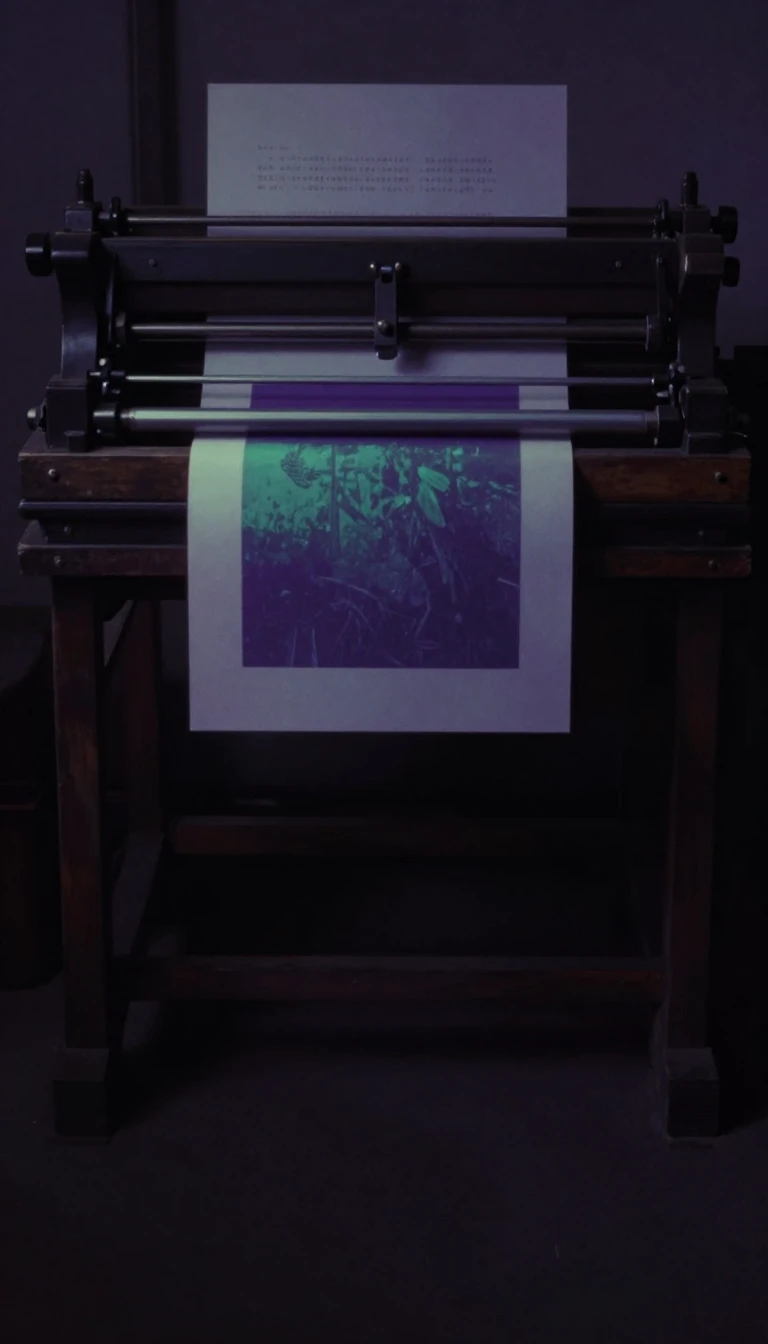 Before the printing press, graphic design was a labor of love and woodblocksLong before digital screens, graphic design flourished through ancient Chinese woodblock printing and the meticulous artistry of medieval scribes. While we often associate the cra…
 Hip-hop dance was born in urban streets, not studios, through improvisation and neighborhood parties.Far from formal training, hip-hop dance emerged in the 1970s as a raw, improvisational response to break beats. From the Bronx to California, street dancers developed distinct sty…
 Jainism thrived by shaping empires before adapting to survive centuries of political upheavalJainism is one of South Asia’s oldest traditions, defined by the pursuit of spiritual purity through non-violence. Far from being isolated ascetics, Jain monks once acted as kingm…
 Liberalism is not a single philosophy but an evolving, often contradictory, set of ideas.Liberalism emerged as a radical challenge to the divine right of kings, asserting that individuals possess inalienable rights. Yet, this same tradition has historically accommodat…
 Before libraries were for reading, they were the administrative backbone of ancient empires.Long before the quiet halls of modern libraries, the earliest collections were high-stakes archives of clay tablets. From the Fertile Crescent to the palaces of Assyria, these rep…
 Logic did not begin with Aristotle; it emerged independently across ancient civilizationsWhile Aristotle is often credited with formalizing logic in the West, the discipline actually blossomed through separate, sophisticated traditions in ancient Greece and India. Fro…
 Materials science is a modern discipline born from the urgent necessity of wartime engineering.For millennia, humans manipulated matter through alchemy and trial-and-error. It was only during the mid-20th century that the field coalesced into a formal, interdisciplinary sci…
 Why military technology is more than just weapons, it is a social force.Military technology is not merely a collection of hardware; it is the knowledge required to build, use, and maintain the tools of combat. From ancient phalanxes to modern cyberwar…
- Before GPS, ancient mariners mastered the oceans using only stars, winds, and sheer intuition.Long before digital maps, early explorers crossed thousands of miles of open water. By reading the sky, tracking seasonal winds, and memorizing coastal landmarks, these pathfinder…
 How ancient thinkers and medieval scholars decoded the physics of light and visionFor centuries, humanity debated whether light was a physical force or a projection from the eye. From the pinhole experiments of ancient China to the mathematical breakthroughs of…
- Modern organic farming emerged as a deliberate reaction to the rise of synthetic agriculture.While traditional farming relied on natural cycles for millennia, the 20th century saw a conscious movement arise to counter the environmental toll of chemical pesticides and fert…
 Why did a single theological disagreement split the ancient Christian world for centuries?The Oriental Orthodox churches emerged from a 5th-century schism over the nature of Christ. While they rejected the Council of Chalcedon’s definition of two natures, they argue th…
 Why did it take until the 19th century to accept that species go extinct?For centuries, naturalists debated whether fossils were organic remains or mere stones grown by the earth. It was only through the rigorous application of comparative anatomy by G…
 Why the paper you use today is fundamentally different from ancient Egyptian papyrusWe often confuse paper with its ancient ancestor, papyrus, but they are distinct materials. While papyrus was a laminated sheet of plant strips, true paper requires breaking down …
 Photography was not invented by one person but emerged from centuries of optical experimentation.Before the first permanent photograph, humanity spent centuries perfecting the camera obscura and studying light-sensitive chemicals. From Aristotle to 19th-century chemists, the …
 Why a 1529 political protest against a German emperor birthed a global religious movement.Protestantism began not as a unified church, but as a defiant political act. When German princes rejected an imperial decree banning Martin Luther’s writings, they were labeled Pr…
- Why did classical physics fail to explain the light emitted by a red-hot object?Classical physics predicted that a hot body would emit energy at an infinite rate at high frequencies, a failure known as the ultraviolet catastrophe. This glaring contradiction f…
 From invisible waves to global broadcasts: the century-long evolution of the radioRadio began as a theoretical curiosity about electromagnetic fields, eventually transforming into a medium that defined the twentieth century. While early pioneers focused on tele…
 From ancient myths to factory floors, the quest to build artificial life spans millennia.Long before silicon chips, humans dreamed of mechanical servants. From the golden handmaidens of Greek myth to the industrial arms of the 1960s, our obsession with artificial bein…
- Technology is not just machines; it is the human capacity to reshape our environment.We often define technology by the gadgets we hold, but its roots run deeper into human nature. From the first sharpened sticks to modern digital systems, technology is the systema…
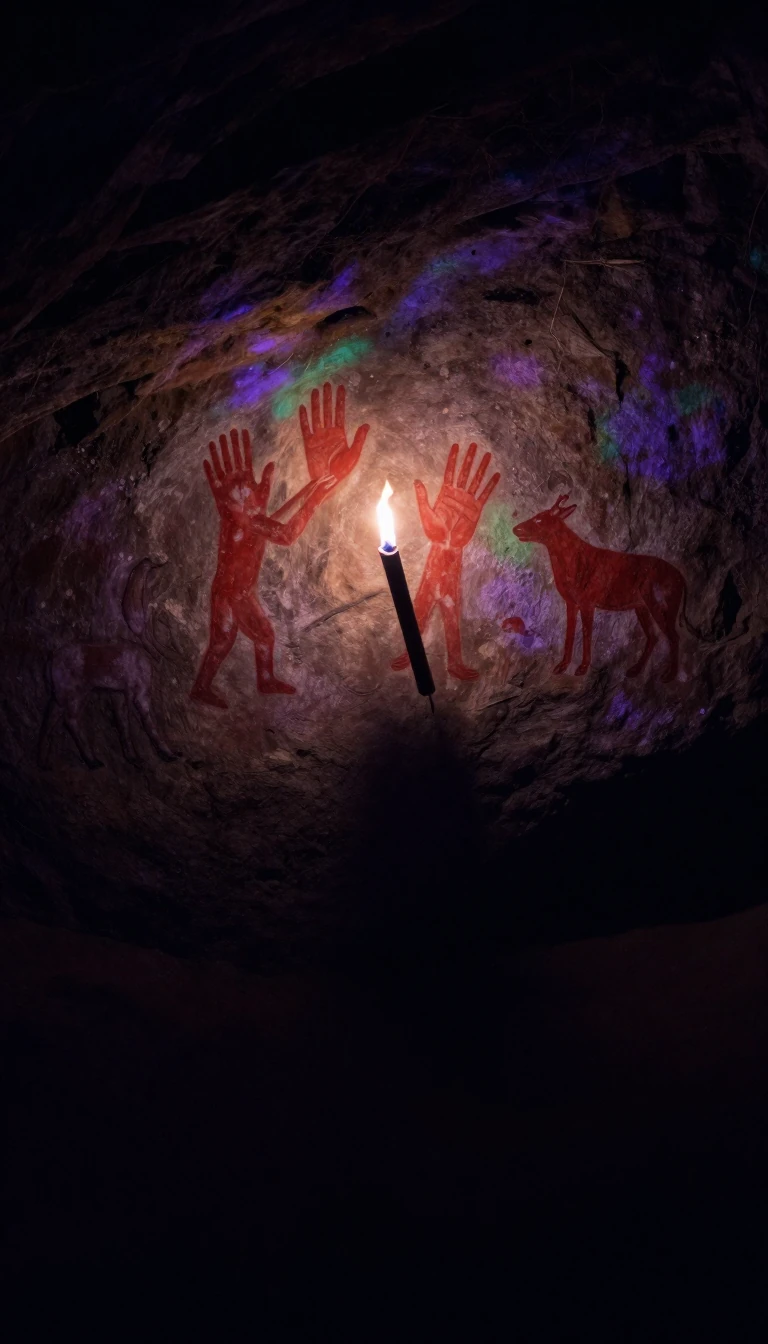 Africa holds the world's oldest record of human technological and mathematical achievement.From the earliest stone tools crafted 3.3 million years ago to sophisticated geometric traditions and advanced astronomical observations, Africa’s scientific history is vast. Ofte…
 Why did China’s early technological dominance eventually stall while the West surged ahead?China pioneered iron casting, papermaking, and complex mechanical engineering centuries before the West. Yet, despite these early breakthroughs, a bureaucratic elite and a lack of…
 From infinite series to cataract surgery, ancient India pioneered complex scientific and mathematical breakthroughs.Long before modern laboratories, the Indian subcontinent was a hub of sophisticated innovation. From the Indus Valley's advanced hydraulic engineering to the Kerala school’s early…
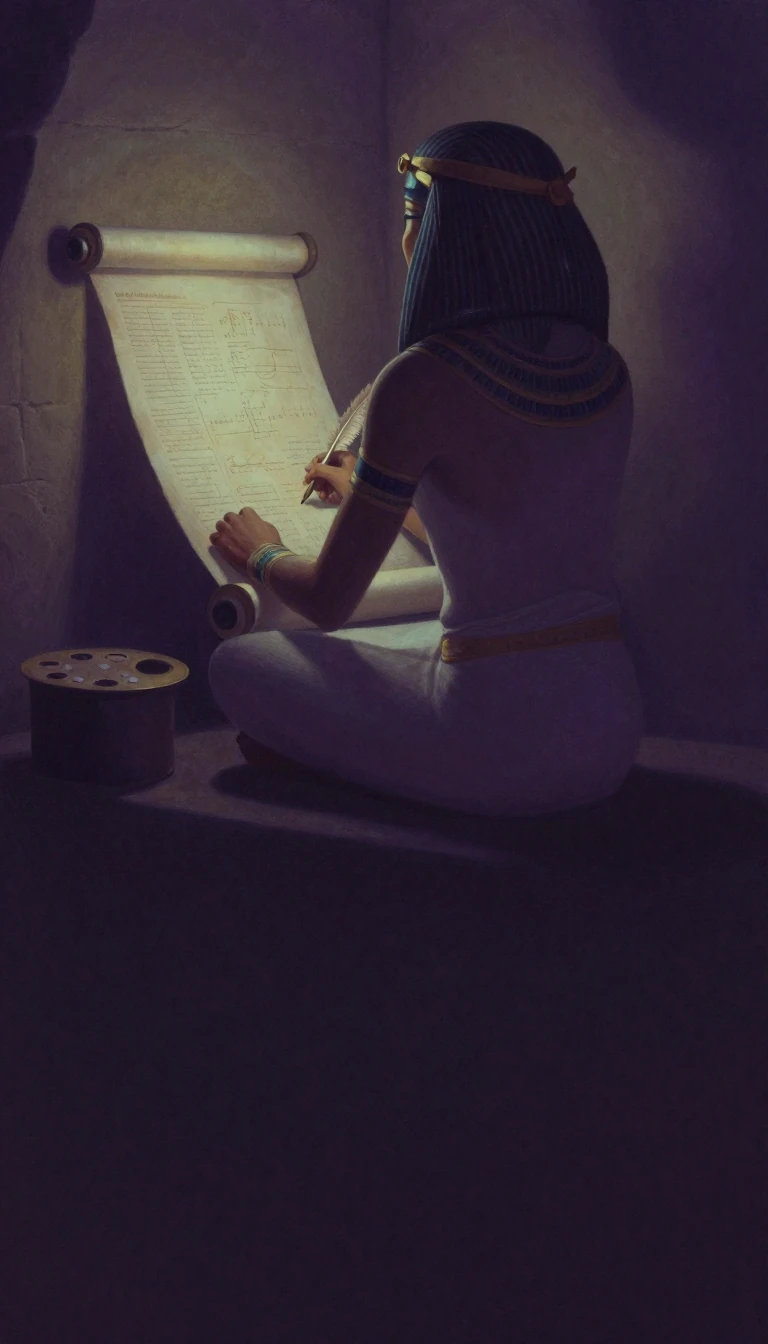 Is the Epic of Gilgamesh the world's first piece of science fiction?Scholars debate whether science fiction is a modern invention or an ancient tradition. While some point to 20th-century technology, others trace the genre back to the Sumerian Epi…
 Why did the early Muslim community split into two major branches after Muhammad's death?When the Prophet Muhammad died in 632 without a clear successor, his followers faced a crisis of leadership. While some chose a caliph through consensus, others believed authority…
 Sikhism began with a simple, radical declaration: There is no Hindu, no Muslim.Founded in the Punjab region during the late 15th century, Sikhism emerged as a distinct spiritual path known as Gurmat. While tradition traces its origins to Guru Nanak, the fait…
 Socialism is far older than the Industrial Revolution and Karl Marx’s famous theories.While often associated with 19th-century industrial politics, socialist ideals have roots stretching back to antiquity. From the granaries of Ancient Egypt to the communal visions…
 Before software existed, programmers were human beings who physically rewired entire electronic computers.Modern software feels like an abstract, intangible layer of our digital lives, but its origins were profoundly physical. Before stored-program computers, computing meant manually …
 Before Einstein, physicists believed light required a mysterious, invisible medium called the luminiferous aether.For decades, scientists struggled to reconcile Maxwell's electromagnetic equations with the laws of motion. They hypothesized an immobile aether to carry light waves, leading to a…
 Why modern physics abandoned the dream of finding the ultimate, indivisible building block.For centuries, philosophers and scientists chased the idea of an indivisible atom. Today, we know that atoms are mostly empty space, and their constituents are not solid objects b…
 Was Taoism a pure philosophy later corrupted by superstition, or is that a myth?For centuries, scholars argued that Taoism began as a pristine, mystical philosophy before degrading into ritualistic religion. Modern research suggests this is a misconception. T…
 From smoke signals to the internet: how humanity mastered the art of distanceLong before fiber optics, humans used drums, smoke, and hydraulic semaphores to bridge the gap between distant locations. This ancient urge to connect evolved through centuries of…
- Why the definition of terrorism remains one of history's most contested and elusive conceptsTerrorism is often called the weapon of the weakest, yet its definition remains fiercely debated. While we associate it with modern non-state actors, the term originated to descri…
 The alphabet began as a shortcut for laborers in the Sinai PeninsulaLong before it became the foundation of modern literacy, the alphabet was a practical hack. Created by West Semitic laborers around the 2nd millennium BC, it repurposed Egyptian h…
 A global faith born from an Islamic movement in the mid-19th centuryEmerging from the Bábí movement in Iran, the Baháʼí Faith seeks to unify humanity by abolishing prejudice. Founded by Bahāʾu’llāh, this universalist religion rejects clergy and ri…