 Intellect Plus
History by topic
216 cards. Each one is a 40-second story with a five-minute read behind it. Page 4 of 4.
 Before photography existed, the camera was a room-sized tool for drawing the world.The camera did not begin as a device to capture images, but as a natural optical phenomenon called the camera obscura. For centuries, this dark room projection was used by artists…
 Is the Eastern Orthodox Church a single, centralized organization or a loose fellowship?The Eastern Orthodox Church is not a monolithic hierarchy but a fellowship of independent, autocephalous churches. While the Ecumenical Patriarch of Constantinople holds honorary …
 The nuclear family did not emerge from industrialization; it may have actually enabled it.We often assume the modern nuclear family is a byproduct of the industrial age. Yet, evidence suggests the causality is reversed. In Northwestern Europe, the pre-existence of inde…
 Why the jet engine was once dismissed as an impractical, fuel-hungry flight of fancyEarly aviation experts doubted the jet engine could ever be economically viable. They believed it was too inefficient and underpowered compared to the reliable piston engine. Yet,…
 How a 19th-century American religious movement transformed into a global faith traditionEmerging from the fervor of frontier revivals, the Latter Day Saint movement began with Joseph Smith’s claims of divine restoration. What started as a small group in western New Y…
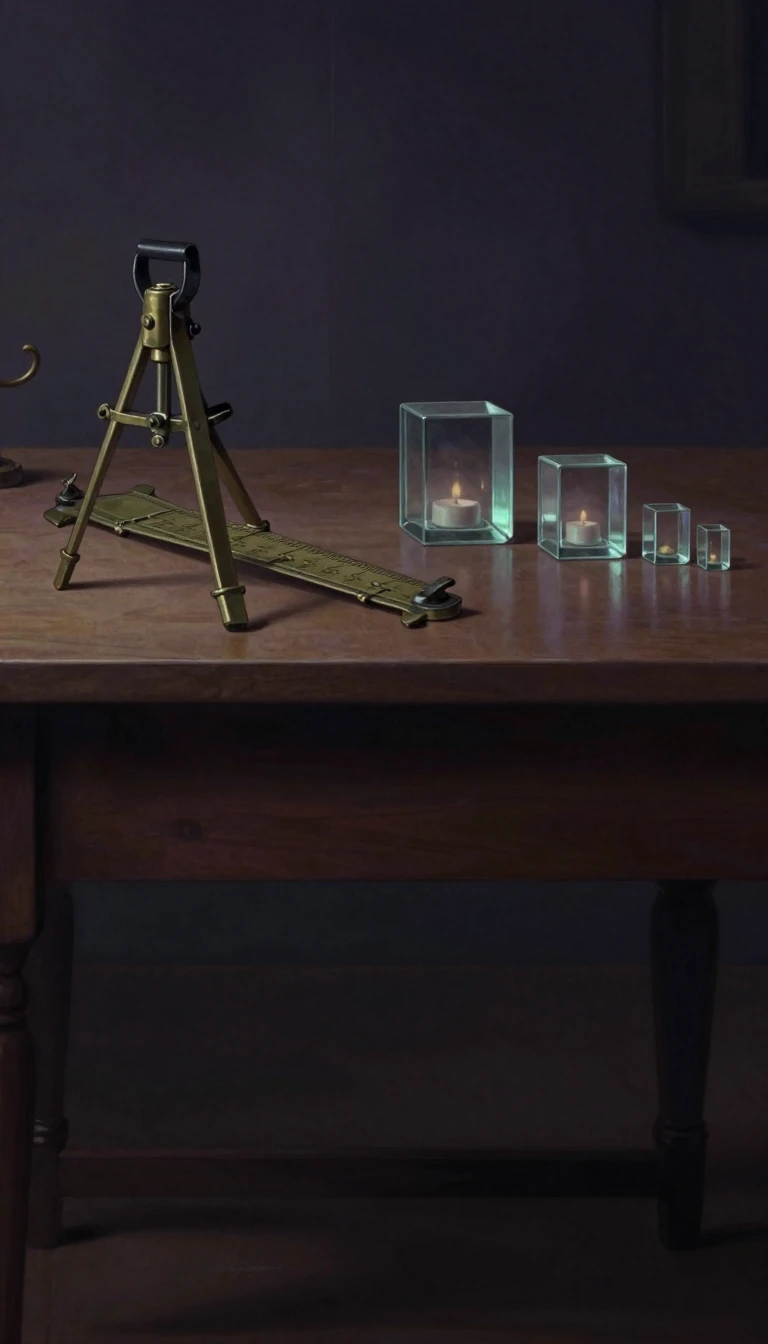 How the French Revolution replaced chaotic medieval measurements with a universal, natural standard.Before the metric system, Europe relied on a confusing mess of local units. Seeking immutability, French scientists turned to the Earth itself to define length. This quest for a r…
 The papacy began as a title for many, but became a singular global office.The office of the pope, now synonymous with the Roman Catholic Church, was once a title shared by many Western bishops. It took centuries of political maneuvering, theological the…
- The periodic table was not just a scientific breakthrough but a bold, debated prediction.Before the periodic table became a cornerstone of chemistry, it was a controversial, fragmented puzzle. While many scientists struggled to organize the elements, Dmitri Mendeleev …
 From ancient bitumen to modern fuel: how rock oil transformed the global economyPetroleum was used for construction and lighting thousands of years before it powered the internal combustion engine. While ancient civilizations tapped natural seeps, the modern …
 How a royal ruse and a prisoner of war turned the potato into a global staple.Once feared as a source of leprosy and dismissed as animal feed, the potato faced intense European resistance before becoming a dietary pillar. Its rise to global dominance requir…
 From ancient temple toys to the engines that powered the Industrial RevolutionThe steam engine began as a scientific curiosity in Roman Egypt, where it was used to open temple doors. Centuries later, this same principle of converting heat into mechanical wo…
 From Dutch spyglasses to space observatories, the telescope has evolved through four centuries of innovation.The telescope began in 1608 as a Dutch military tool, but quickly transformed into a window to the cosmos. By mastering lenses and mirrors, astronomers overcame chromatic aberrati…
 The transistor was not just one invention, but a race between competing global teams.While Bell Labs famously demonstrated the first transistor in 1947, they were not alone. Across the Atlantic, European scientists were simultaneously developing solid-state amplif…
 Why the science of heat and work began with the quest to measure motionThermodynamics is the study of how energy shifts between forms, but its origins lie in early attempts to quantify mechanical work. Before we understood heat as atomic motion, thin…
 From ancient Nile sails to modern grids, wind power has shaped human historyWind energy is not a modern invention but a multi-millennial pursuit. From propelling boats on the Nile to grinding grain in ancient Persia, humanity has long harnessed the breeze…
 How the Inca Empire mastered extreme high-altitude farming without money or a marketThe Inca Empire thrived across the Andes by managing a vast, moneyless agricultural machine. By leveraging vertical geography, state-mandated labor, and sophisticated storage, the…
 Do ideas exist in a vacuum or are they products of their time?Intellectual history examines how human thought evolves, treating ideas not as isolated sparks of genius but as deeply embedded elements of culture and society. By studying the th…
 Why Italy's Golden Age of Cinema Was Actually a Rejection of Polished Studio SetsItalian neorealism emerged from the ruins of World War II, replacing elaborate studio sets with the raw, gritty reality of city streets. By casting non-professional actors to port…
 Was the medieval era a time of technological stagnation or a hidden industrial revolution?History once painted the Middle Ages as a dark, stagnant void. In reality, this millennium was a period of intense experimentation and recovery. From the heavy plow that unlocked …
 Why the world’s most precise measurement system still struggles to conquer every kitchenMetrication is a global shift toward a uniform language of measurement, yet it remains incomplete. While 95% of the world relies on the metric system, cultural attachment to tradi…
 Before oxygen, chemists believed fire was a physical substance called phlogiston hidden inside materials.For over a century, the greatest scientific minds believed that burning was not a reaction with oxygen, but the release of a trapped element. This invisible, fire-like principle, …
 Why a simple envelope is a historical document that reveals the world's hidden mechanicsPostal history is more than stamp collecting. It is the study of human connection through the rates, routes, and markings on mail. By analyzing the journey of a letter, historians…
 Why postmodern cinema treats the screen as a construction rather than a windowPostmodernist film rejects the idea that cinema should mirror reality. Instead, it treats movies as self-aware puzzles, using irony, fragmented timelines, and constant references …
 Why stone tools are the ultimate key to unlocking our deep evolutionary historyThree million years ago, our ancestors were unremarkable apes. Today, we dominate the planet. The secret to this transformation isn't just our anatomy, but our unique capacity for…
 Renaissance technology was less about scientific theory and more about the practical magusWhile we often credit the era for its intellectual breakthroughs, Renaissance technology was driven by engineers acting as manipulators of nature's hidden forces. From the demands…
- Why 19th-Century Scientists Preferred Admiration and Love Over Cold Mathematical ControlBetween 1800 and 1840, Romanticism challenged the Enlightenment’s mechanistic view of the world. Rather than dissecting nature into cold, isolated parts, these scientists argued t…
 How Ancient Greek Natural Philosophy Laid the Foundation for Modern Scientific InquiryScience did not emerge in a vacuum; it began as a human quest to navigate the world. From the early Ionian thinkers to the rigorous mathematical achievements of the Alexandrian sc…
 Ancient civilizations laid the foundations for modern science long before the Enlightenment era began.From Mesopotamian tablets tracking planetary motion to Nubian antibiotics and Indian atomic theory, ancient thinkers were far from primitive. They developed sophisticated mathemat…
- How Enlightenment thinkers turned the universe into a clockwork machine governed by mathThe Enlightenment was not just a shift in ideas, but a revolution in method. By applying rigorous mathematical reasoning to the natural world, 17th-century thinkers like Isaac New…
 How Medieval Islamic Scholars Built the Foundations of Modern Science and MathematicsBetween the 8th and 13th centuries, the Islamic world experienced a golden age of innovation. From pioneering the scientific method to developing algebra and advanced optics, thes…
 Why social history shifted the focus from great men to everyday livesFor decades, history was the story of powerful leaders and grand political events. In the 1960s, a new movement emerged to challenge this narrative, arguing that true societal cha…
 Did Christianity and Judaism really split, or were they always distinct paths?The traditional story of a clean break between Judaism and Christianity is fading. Modern historians suggest a messier reality: two sister religions emerging from the same chaotic…
- How humanity evolved from a flat, circular Earth to an infinite, star-filled cosmos.For millennia, our ancestors viewed the universe as a small, Earth-centered stage. Yet, through ancient observations and bold mathematical leaps, thinkers gradually dismantled thi…
 For two millennia, the study of clouds and weather relied on ancient Greek intuition.Long before modern satellites, early thinkers from India to China and the Arab world sought to decode the atmosphere. From Aristotle’s foundational observations to the invention o…
- From Assyrian crystals to atomic probes: a brief history of seeing the invisibleThe microscope did not appear overnight. It evolved from ancient magnifying lenses into sophisticated tools capable of resolving individual atoms. This journey spans millennia, mo…
 From 'Bad Air' to Drug Resistance: Malaria's 2,500-Year StruggleMalaria's history spans millennia, evolving from ancient fever myths to modern pharmaceutical challenges. Early understanding blamed stagnant water, but the true culprits—mosquito…