 Intellect Plus
Ideas & Philosophy
17,867 cards. Each one is a 40-second story with a five-minute read behind it. Page 280 of 298.
Subtopics: Abrahamic religions · Artificial intelligence · Attention · Classic philosophy · Cognitive biases · Consciousness · Cooperation · Cynicism · Decision making · Decision theory · Descartes · Dharmic religions · Dreams · Eastern philosophy · Eastern religions · Epistemology · Ethics · Evidence · Existentialism · Fairness · Famous psychology experiments · Free will · Game theory · Greek mythology · Historians · Identity · Infinity · Justice · Logic · Logical fallacies · Mathematics · Medieval philosophy · Mind · Mythology · Mythology of the ancient world · Other religions · Paradoxes · Philosophers · Philosophers, historians, political and social scientists · Philosophy · Philosophy of mind · Philosophy of science · Political philosophy · Probability · Psychology · Reality · Religion · Religion and spirituality · Religious figures · Self knowledge · Statistics · Stoicism · Strategy · Taoism · Thought experiments · Trivia & curiosities · Truth · Utopias & ideal worlds · Wellbeing · World religions · Writers
 Providence literally means seeing ahead, and theologians still argue how farThe word providence comes from Latin roots meaning to see ahead. In theology it names God's care for the world, but traditions split sharply over the details: does God steer every…
 A Sheffield-born Etonian became the American cop McNulty in The WireFew viewers of The Wire guessed that Baltimore detective Jimmy McNulty was played by an Old Etonian from Sheffield with a Trinity College Dublin degree. Dominic West's accent drew…
 Doris Lessing heard about her Nobel Prize while carrying in the groceriesWhen a journalist told Doris Lessing in 2007 that she had won the Nobel Prize in Literature, she swore mildly and kept unloading her shopping. She was then the oldest person ever …
 Rejected by 44 publishers, a fashion designer's first novel took the BookerDouglas Stuart drafted Shuggie Bain around twelve-hour days as a senior design director at Banana Republic. Thirty-two American publishers and twelve British ones said no. Grove A…
 The anti-brand author spent her teens obsessed with designer labelsNaomi Klein, whose book No Logo became a handbook for critics of corporate globalisation, grew up haunting shopping malls and rejecting her feminist mother's politics. Two shocks …
 Nobody can define an altered state without first defining normalPsychologists still lack an agreed definition of an altered state of consciousness, because any attempt depends on pinning down what an ordinary waking mind is. Yet humans may hav…
 As a Barnard freshman, Cynthia Nixon ran between two Broadway hits nightlyIn 1984 a teenage Cynthia Nixon played in two Mike Nichols productions at once, dashing the two blocks between theatres because both parts were short. Decades before Miranda in Se…
 Lemony Snicket's creator saw his first novel rejected 37 timesBefore he became Lemony Snicket, narrator of A Series of Unfortunate Events, Daniel Handler wrote a satirical novel about a teenage girl so dark that publishers turned it down 37 …
 When a navy loses a ship, a court-martial follows even without blameA court-martial is a military trial that judges members of the armed forces under military law. Yet it is not always an accusation: most navies automatically convene one whenever …
 Why the word liberal means opposite things in America and EuropeSay liberal in the United States and most people hear centre-left, pro-welfare politics. Say it in Europe or Australia and it often means the reverse: free markets, low taxes and …
 Christopher Hitchens left behind a one-line rule for dismissing unsupported claimsAnything asserted without evidence can be dismissed without evidence. That compact principle, now called Hitchens's razor, is cited in philosophy and law. Its author was a Portsmo…
 Aristotle's syllogism dominated logic for many centuries until Frege came alongAll men are mortal; Socrates is a man; so Socrates is mortal. Aristotle set out this pattern of reasoning around 350 BC, and it proved so durable that Immanuel Kant declared logic…
 Britain's Poet Laureate paid his bills writing detective novels as Nicholas BlakeCecil Day-Lewis was Poet Laureate from 1968 until his death, a former communist turned Oxford professor. He was also, under another name, the author of a long run of crime novels …
 Chiron, the gentle centaur who taught Greece's greatest heroesMost centaurs in Greek myth were drunken brawlers. Chiron was the exception, hailed as the wisest and most just of his kind. Fostered by Apollo, he mastered medicine, music and pr…
 Why four ancient virtues are called cardinal, after the Latin word for hingePrudence, justice, courage and temperance earned the label cardinal from cardo, Latin for hinge, because every other good quality was thought to swing on them. Plato sketched the …
 The Buraq, Muhammad's heavenly steed, is usually painted with wings it was never givenIn Islamic tradition the Buraq carried the Prophet Muhammad from Mecca to Jerusalem and up through the seven heavens in a single night. The early texts never say it had wings like…
 Problem solving is studied everywhere from Tower of Hanoi to theorem proversGetting across town and debugging a program are both problem solving, one simple and one complex. Psychologists, computer scientists, engineers and military planners all study how…
 Polymaths faded as knowledge exploded, yet may matter more than everAncient and medieval scholars could roam freely across disciplines. From the 17th century, as discoveries poured in, mastering many fields grew nearly impossible. Cambridge histor…
- Brindisi's name means stag's head, after the shape of its harbourThe southern Italian port of Brindisi takes its name from a Messapian word for a stag's head, likely because its natural harbour branches like antlers. That harbour made it Rome's…
 A first-class degree went from rare to nearly one graduate in threeIn the early 1990s about one British graduate in 15 earned first-class honours. By 2017 the figure was 26%, and since 2019 it has approached 30%. The century-old grading system, d…
 Uncle Tom's Cabin was begun in a small Maine college townBowdoin College in Brunswick, Maine, is tiny, yet its orbit includes Nathaniel Hawthorne, Henry Wadsworth Longfellow, a US president and the town where Harriet Beecher Stowe start…
 Bohumil Hrabal wrote a whole book as one sentence and told stories in a Prague pubOne of the great Czech writers of the 20th century spent years packing waste paper, labouring in a steelworks and moving scenery before his first book appeared, at 49. His novel C…
 Krishna Bhanji became Ben Kingsley, and the work arrived almost immediatelyBorn Krishna Pandit Bhanji in a Yorkshire village, the future Oscar winner found casting directors unsure where to place an actor with his name. After switching to Ben Kingsley in…
 A sugar merchant's son put the word nihilism on the philosophical mapFriedrich Heinrich Jacobi trained for business, not scholarship. Yet this Düsseldorf merchant's son sparked one of German philosophy's great quarrels, accused Enlightenment reason…
 Giorgio Agamben played the apostle Philip in a Pasolini filmBefore becoming one of the most discussed political philosophers alive, Giorgio Agamben attended Heidegger's seminars, advised the publisher Einaudi alongside Italo Calvino, and a…
- At 23, Pico offered to debate 900 theses and pay his rivals' travelIn December 1486 a young nobleman published 900 propositions on theology, philosophy and magic and invited scholars from anywhere to Rome to argue with him, travel costs on him. T…
 Christian apologetics has nothing to do with saying sorryIn ancient Greek, an apologia was a courtroom defence, the kind Socrates mounted against charges of corrupting the young. Early Christians borrowed the form to answer emperors and…
 Hölderlin shared a student room with Hegel and spent 35 years in a carpenter's towerAt the Tübingen seminary, Friedrich Hölderlin studied alongside Hegel and Schelling and may have handed Hegel the ancient idea of the unity of opposites. He went on to become one …
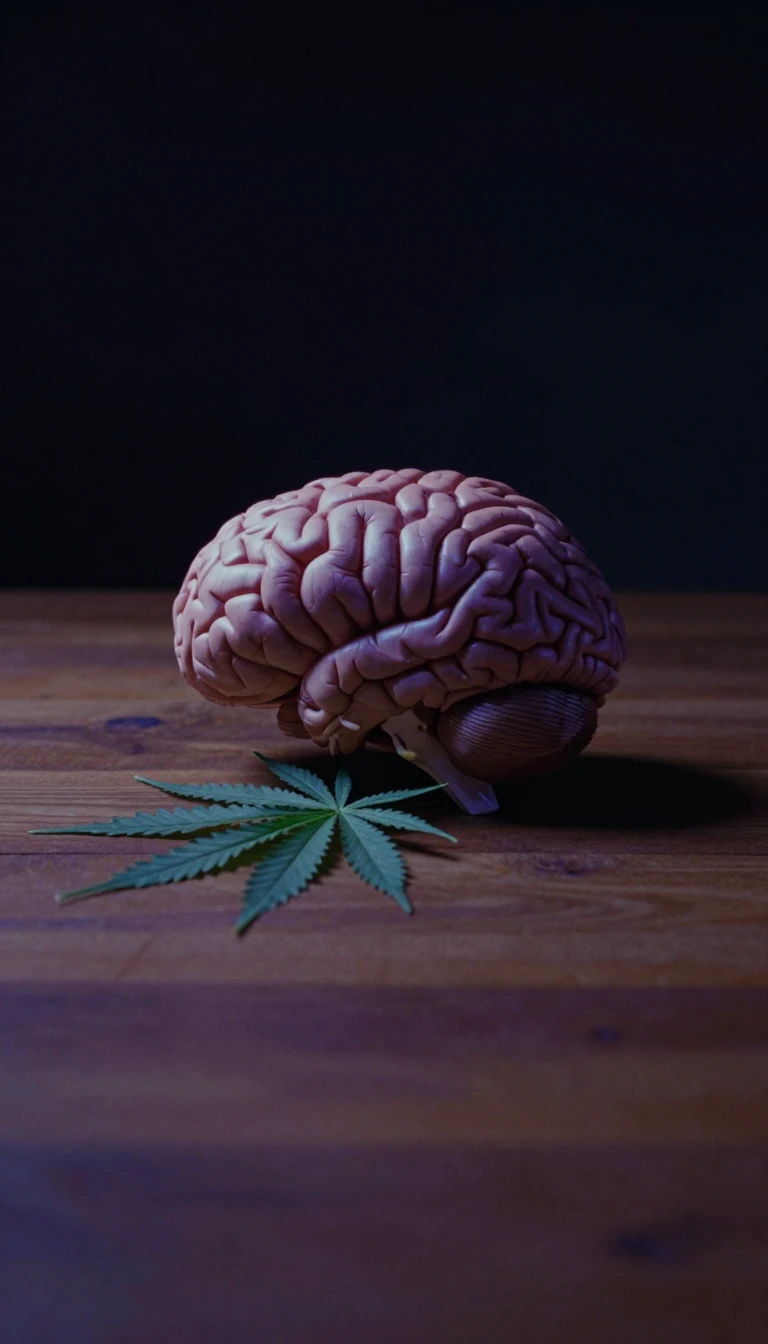 Peruvians were chewing coca leaves some 8,000 years agoCoffee, a glass of wine, an antidepressant and a banned hallucinogen share one trait: they change how the brain works. Humans have sought such substances for at least 10,000 years…
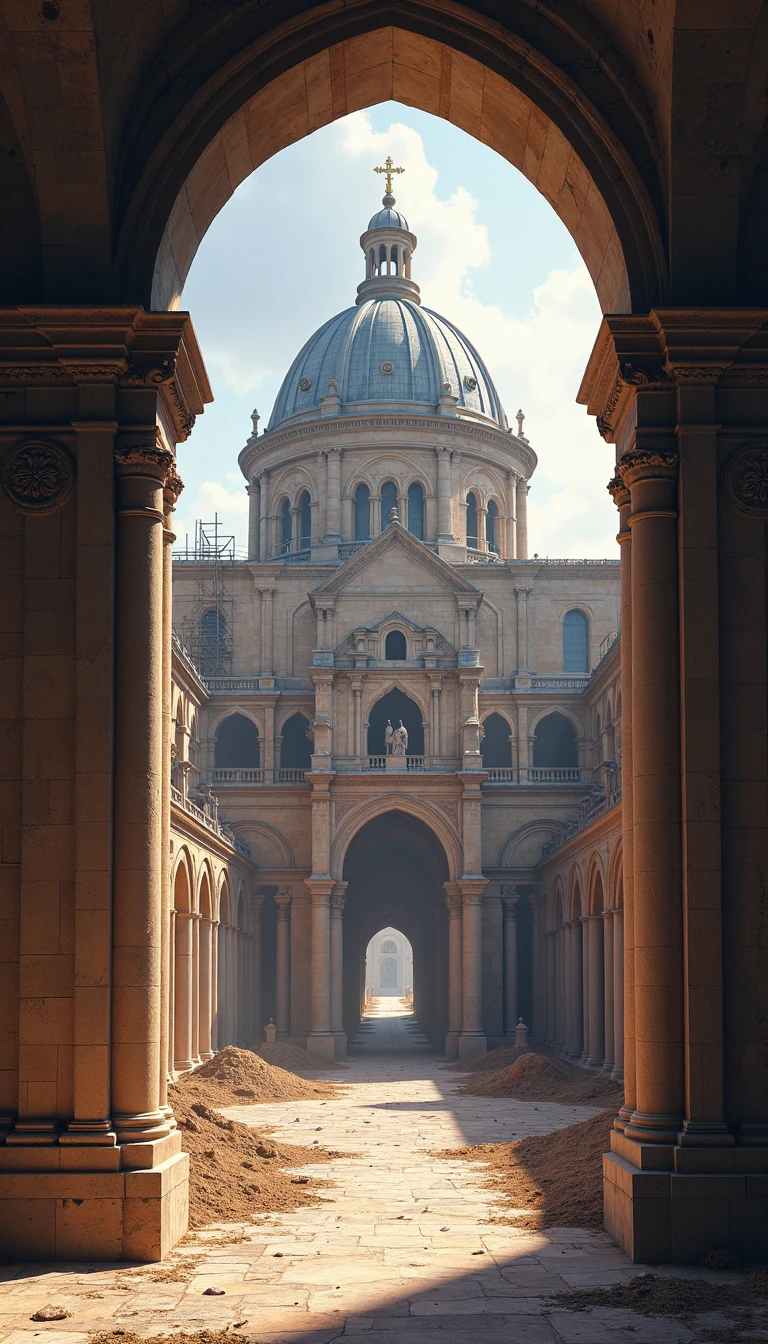 A priest-mathematician built stone domes that seem to float on lightGuarino Guarini was a Theatine priest who taught philosophy and theology, yet he designed domes in Turin so daring that they look like lace held up by nothing. He wanted buildings…
 Staring at the sun cost Gustav Fechner his eyes and gave psychology numbersIn 1839 a Leipzig physics professor damaged his eyes by gazing at the Sun through coloured glass to study afterimages. Forced to resign, Gustav Fechner turned to a question Kant h…
 The doctor who never practised wrote the book on crowds and foresaw atomic blastsGustave Le Bon called himself Doctor all his life without ever treating patients. Instead he wrote a best-seller arguing that people in a crowd become a new creature, translated i…
 A Lima priest asked how to tell the poor that God loves themConfined to a wheelchair from age 12 to 18 by a bone infection, Gustavo Gutierrez said those years taught him hope. He grew into a Peruvian priest whose 1971 book A Theology of Li…
 Guy Debord bound his first book in sandpaper to wreck its shelf neighboursGuy Debord's debut film had no pictures at all, just a white screen during speech, black during silence, and a closing 24 minutes of dark nothing. Audiences walked out. Fifteen ye…
 Giuseppe Peano gave a lecture that slowly turned Latin into his own languageOn 3 January 1908, the mathematician Giuseppe Peano began addressing the Turin Academy of Sciences in Latin. With each grammar simplification he described, he dropped that feature…
 Gregory Bateson turned a New Guinea ritual into a theory of escalating feudsWatching the Iatmul people of New Guinea in the 1930s, Gregory Bateson noticed how one person's behaviour provokes a reaction that provokes more of the same, round and round. He c…
 An Armenian monk's thousand-year-old prayer book is treated like a talismanAround 1002, a monk on the shores of Lake Van finished 95 chapters of anguished prayer, each addressed straight to God. Armenians have kept Gregory of Narek's Book of Lamentations…
- A rival mocked Athos monks as men with souls in their navelsIn the 1330s a scholar named Barlaam met monks on Mount Athos who prayed in stillness, seeking a vision of divine light. He derided them as navel-gazers and heretics. Their defend…
- Julia Kristeva split language into a rhythmic semiotic layer and a rule-bound symbolicA Bulgarian postgraduate arrived in Paris in December 1965 on a research fellowship, aged 24. Julia Kristeva went on to publish more than 30 books, from Powers of Horror to Black …
 Ortega y Gasset's philosophy in one line: I am me and my circumstanceIn 1914 the Spanish philosopher José Ortega y Gasset declared that a self cannot be pulled apart from the world around it: I am me and my circumstance. That maxim anchored all his…
 Sophie's World, a novel teaching teenagers philosophy, sold over 40 million copiesA former Bergen high school teacher wrote a novel in which a Norwegian girl receives mysterious lessons in the history of philosophy. Jostein Gaarder's Sophie's World, published i…
 Judah Halevi left comfortable Spain to chase the land his poems longed forA respected physician in Toledo, Judah Halevi wrote some 800 Hebrew poems, and many are still sung in synagogues today. His best-known lyric sets a heart in the East against a bod…
- The pagan philosophy student who shopped around schools before choosing ChristianityJustin Martyr tried a Stoic, a Peripatetic who wanted his fee too eagerly and a Pythagorean who insisted he learn geometry first. He settled on Plato, until an old man by the sea …
 Martha Nussbaum asks one blunt question of every society: what can people do?The philosopher Martha Nussbaum helped build the capabilities approach, which judges a society by what each person is actually able to do and to be. Her list runs from life and bo…
 The plant scientist who quit his lab to practise do-nothing farmingA bout of pneumonia at 24 convinced Masanobu Fukuoka that modern agricultural science had it wrong. He left his job as a plant pathologist, went home to his family's orchards, and…
- Maurice Blanchot shaped French theory while almost never appearing in publicIn June 1944 Maurice Blanchot came within moments of being shot by a Nazi firing squad, an episode he retold half a century later. The surviving writer then withdrew from view for…
- Merleau-Ponty argued we know the world first with our bodies, not our thoughtsDescartes began philosophy with a thinking mind doubting everything. Maurice Merleau-Ponty started somewhere else: a living body already reaching for, gripping and moving through …
 Martin Buber split all human relating into two words: I–Thou and I–ItIn 1923 Martin Buber argued that we meet the world in two basic ways. Treat a person as an object to use or analyse, and you live in I–It. Meet them wholly, as a presence rather t…
 An AI pioneer once designed a machine whose only job was switching itself offIn 1952 Marvin Minsky sketched the ultimate machine: flip its switch and a mechanical hand pops out to flip it back. His mentor Claude Shannon built one, and Arthur C. Clarke foun…
 Mary Daly went from reforming the Catholic Church to leaving theology entirelyMary Daly began as a Catholic scholar asking her church for equality and ended as a self-described post-Christian feminist inventing her own vocabulary. Along the way she collecte…
 Aristotle's lost book on comedy left only his thoughts on tragedyAround 335 BCE Aristotle wrote the first surviving treatise devoted purely to literary theory, and half of it vanished. The part on comedy was lost in antiquity, and the remaining…
- Moses Mendelssohn beat Immanuel Kant in a Berlin Academy essay contestHe walked into Berlin at 14 through the one gate open to Jews and cattle, a poor scribe's son with a curved spine. Within two decades Moses Mendelssohn had outscored Kant for an a…
 Mircea Eliade split human experience into sacred and profaneMircea Eliade argued that religion begins with hierophanies, moments when the sacred breaks into ordinary life, dividing space and time into sacred and profane. The Romanian schol…
 Monique Wittig argued that 'woman' is a political category, not a natural oneFor the French writer Monique Wittig, sex did not produce oppression; oppression produced the categories of sex. She treated heterosexuality as a political regime rather than a pr…
 Moritz Schlick gathered the Vienna Circle on Thursday nights in a chemistry buildingA physicist trained under Max Planck, Moritz Schlick came to distrust any claim that could be neither defined nor tested. In Vienna he hosted weekly meetings that drew Kurt Gödel,…
 Mortimer Adler never got his bachelor's degree because he skipped a swimming testMortimer Adler dropped out of school at 14 to run copy for a New York newspaper, refused Columbia's compulsory swimming test, and still became one of America's best-known philosop…
 The man who converted Friedrich Engels to communismBefore Marx and Engels were household names, a self-taught Rhineland writer named Moses Hess had already published Germany's first book of socialist theory. He introduced both men…
 Max Frisch took revenge on a difficult client by putting him in a playBefore he was famous as a playwright, Max Frisch was a Zurich architect. A shampoo magnate sued him over a staircase in the country house Frisch designed, and the writer later use…
 The Frankfurt School's leader was a factory owner's son groomed for textilesMax Horkheimer was pulled out of school at fifteen to learn his father's textile business in Stuttgart. Instead he became the director who turned Frankfurt's Institute for Social …
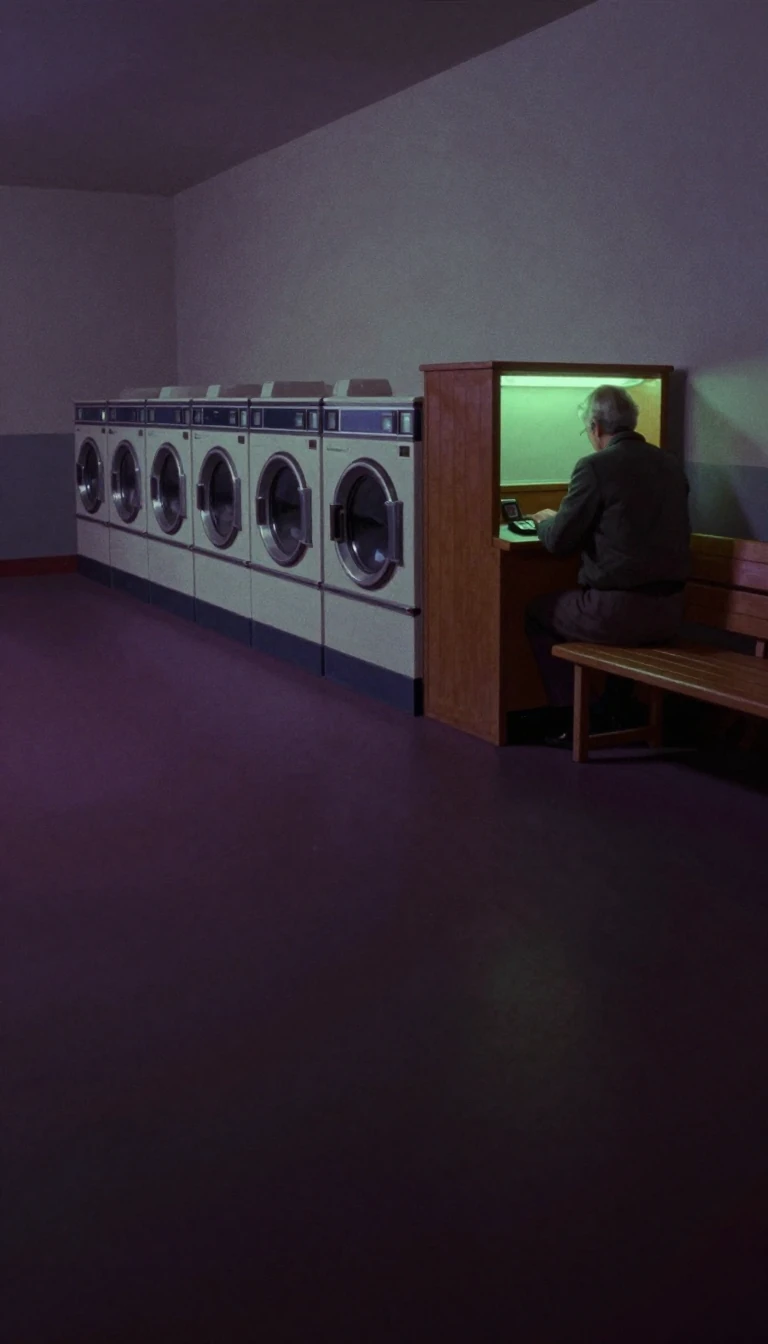 Retrofuturism is nostalgia for a future that never actually arrivedFlying cars, robot butlers and holidays among the stars were once confidently predicted. Retrofuturism takes those old forecasts and treats them as a style, blending vintage looks…