 Intellect Plus
Ideas & Philosophy
17,867 cards. Each one is a 40-second story with a five-minute read behind it. Page 260 of 298.
Subtopics: Abrahamic religions · Artificial intelligence · Attention · Classic philosophy · Cognitive biases · Consciousness · Cooperation · Cynicism · Decision making · Decision theory · Descartes · Dharmic religions · Dreams · Eastern philosophy · Eastern religions · Epistemology · Ethics · Evidence · Existentialism · Fairness · Famous psychology experiments · Free will · Game theory · Greek mythology · Historians · Identity · Infinity · Justice · Logic · Logical fallacies · Mathematics · Medieval philosophy · Mind · Mythology · Mythology of the ancient world · Other religions · Paradoxes · Philosophers · Philosophers, historians, political and social scientists · Philosophy · Philosophy of mind · Philosophy of science · Political philosophy · Probability · Psychology · Reality · Religion · Religion and spirituality · Religious figures · Self knowledge · Statistics · Stoicism · Strategy · Taoism · Thought experiments · Trivia & curiosities · Truth · Utopias & ideal worlds · Wellbeing · World religions · Writers
 Why higher intelligence can sometimes lead to worse performance on specific logical problems.This video examines a counterintuitive phenomenon where individuals with higher cognitive abilities may struggle more than others on certain logic puzzles. It explores the psychol…
 Why Plutarch’s ancient biographies of Greeks and Romans remain a timeless guide to characterWritten nearly two millennia ago, Plutarch’s Parallel Lives pairs famous Greeks with Romans to explore the moral motivations behind their legendary deeds. Rather than simple histo…
 Is humanity a solitary achievement or a quality we owe to one another?Ubuntu, a philosophy rooted in Bantu languages, suggests that a person is only a person through other people. Far from a simple platitude, this worldview challenges Western indivi…
 Is tribalism a hard-wired human instinct or a modern political construct?We often blame tribalism for modern polarization, but the roots of our group-based behavior run deep into human evolution. While the term is frequently used to describe ethnic str…
 Is liberal democracy a set of institutions, or a reflection of a culture's values?Liberal democracy is more than just voting. It is a complex framework combining representative government with the rule of law, protected civil liberties, and market-based economi…
 Is the divide between analytic and continental philosophy a myth or a reality?The split between analytic and continental philosophy defines modern academia, yet experts struggle to agree on what the terms actually mean. Often used as a convenient label for …
 Why some things defy categorization, from the European Union to a local pubThe Latin phrase sui generis means of its own kind, describing entities that exist outside standard classifications. Whether in law, biology, or philosophy, it identifies somethin…
 Why do our best-laid plans often lead to the exact opposite of our intentions?Robert K. Merton, a founding father of modern sociology, argued that human actions frequently produce unintended consequences. By distinguishing between manifest and latent functi…
 Why ancient epithets were more than just nicknames for gods and kingsAn epithet is a descriptive byname that does more than label; it defines essence, status, or location. From Homeric epics to modern comic books, these linguistic tools serve as gl…
 You cannot manage time, only the events in your life relative to it.Time management is a misnomer. You are not managing hours, but your own actions within a fixed 24-hour window. Whether you view time as a linear resource to be optimized or a cycl…
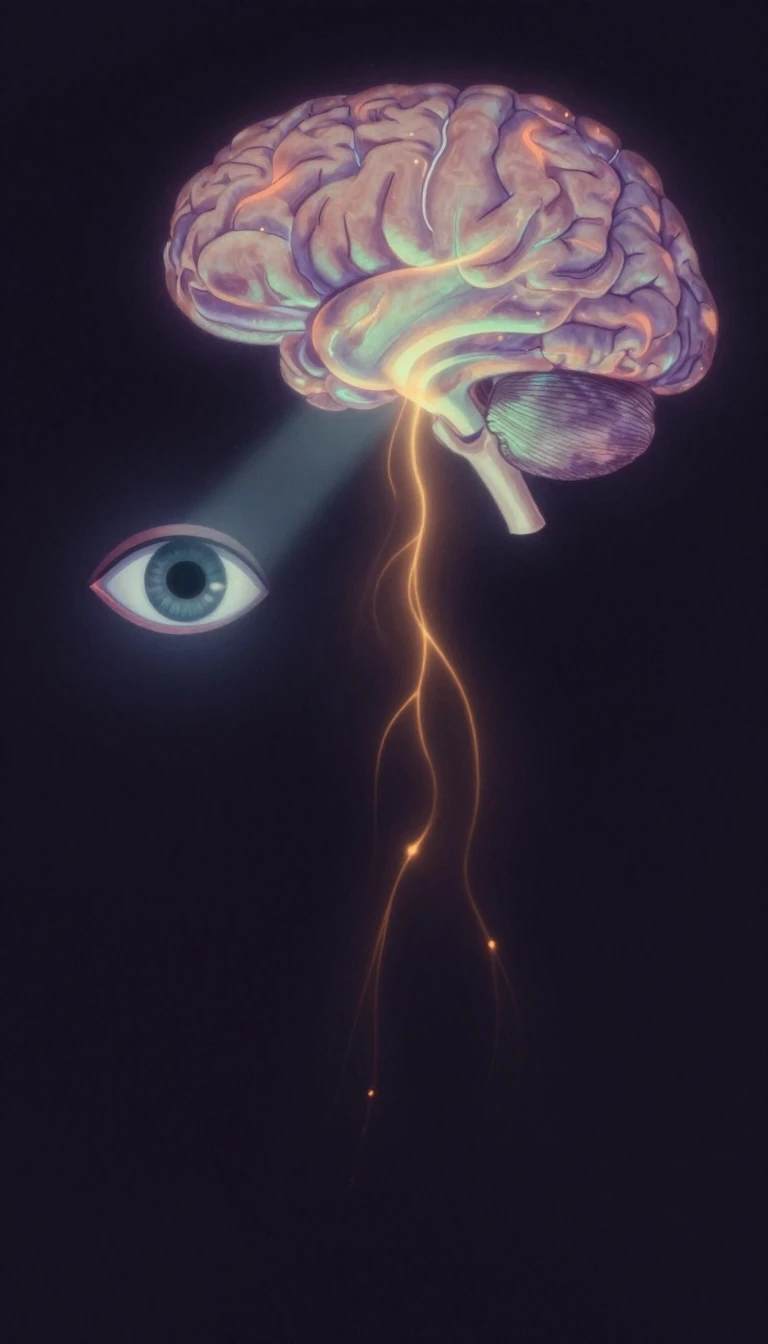 Why your emotional state dictates how much of the world you actually seeYou might think your focus is steady, but your brain constantly adjusts its scope based on your current emotional intensity. When you feel a strong urge to act, your vision narrow…
 Why the Latin phrase for a fair trade actually means a total misunderstandingThe Latin term quid pro quo is widely used today to describe a reciprocal exchange, like a favor for a favor. Yet, in its original context and in many modern Romance languages, th…
 The Moirai were not just gods of fate, but the enforcers of cosmic order.In ancient Greek belief, the Moirai—or Fates—were the personifications of destiny, often holding power even over the gods themselves. These three sisters spun, measured, and cut t…
 Why children make mistakes: Jean Piaget’s theory of how we construct our realityJean Piaget argued that children do not just know less than adults; they think differently. By observing their errors, he identified four distinct stages of cognitive development.…
 Is the biblical Leviathan a chaotic sea monster, a state metaphor, or pure enlightenment?Leviathan is a shape-shifting figure of ancient mythology, evolving from a primeval chaos-serpent in Near Eastern lore to a symbol of state omnipotence in political philosophy. Wh…
 Can a novelist use visual tricks to capture the weight of human experience?Jonathan Safran Foer is a polarizing figure in contemporary literature, known for blending traditional prose with unconventional visual techniques. From flipbooks to die-cut pages…
 Can a political ideology successfully marry the free market with traditional social stability?Liberal conservatism attempts to reconcile the classical liberal drive for minimal economic interference with a conservative insistence on social order. By blending individual lib…
 Erik Erikson proposed that human development unfolds through eight distinct psychosocial crises across a lifetime.Erik Erikson’s theory suggests that our personality is shaped by eight life stages, each defined by a specific conflict between psychological needs and social surroundings. From i…
- Why do authors hide stories inside stories to reveal the truth?A story within a story, or embedded narrative, is a device where a character becomes the narrator of a second tale. From ancient epics to modern novels, this technique allows auth…
 Why your brain tricks you into loving groups that put you through hellWe often think of rites of passage as mere tradition, but they are psychological tools. By forcing us through difficult or embarrassing initiations, these ceremonies trigger cogni…
- Is paleoconservatism a return to ancient traditions or a modern political invention?Paleoconservatism champions American nationalism, localism, and non-interventionism, positioning itself as the authentic successor to older conservative traditions. Yet, critics a…
 Why defining the 'Other' is the most powerful tool for shaping human societyIn philosophy, the Other is more than a stranger; it is a mirror used to define the self. By labeling groups as distinct from the dominant norm, societies create hierarchies of po…
- Is Jordan Peterson a conservative icon or a misunderstood classical liberal academic?Jordan Peterson rose from a University of Toronto psychology professor to a global cultural lightning rod. Known for his critiques of political correctness and identity politics, …
- Joseph Campbell and the hidden patterns that connect all human storiesJoseph Campbell spent five years in a rented shack reading nine hours a day to decode the universal structure of myth. He argued that every great hero story, from ancient legends …
 Why the Prince of Paradox remains the most influential writer you never knewGilbert Keith Chesterton was a literary giant of the early 20th century, celebrated for his wit, paradoxical style, and defense of tradition. From inventing the priest-detective F…
 Can a school of thought survive the collapse of its own revolutionary predictions?The Frankfurt School began as a bold attempt to synthesize Marxism and psychoanalysis to explain 20th-century crises. Yet, as history unfolded, its leading thinkers shifted from o…
 Why critical theory aims to change the world rather than just explain itTraditional social science observes the world as it is, but critical theory demands a transformation. Born from the Frankfurt School, this movement argues that knowledge is never …
 Corporatism is not about big business; it is a theory of social organization.Often confused with corporate dominance, corporatism is actually an ancient political philosophy that organizes society into functional groups like guilds or unions. Instead of cl…
 Why Distributism Rejects Both the Corporate Boardroom and the State BureaucracyDistributism is an economic philosophy that views both laissez-faire capitalism and state socialism as equally exploitative. By advocating for the widespread ownership of producti…
 Is your identity truly your own, or is it a product of your community?Communitarianism argues that individuals are not isolated, generic beings but are deeply shaped by their social relationships and history. While often misunderstood as a call for …
 Why the most honest autobiographies are often inherently subjective and sometimes even fictionalAn autobiography is a self-penned narrative, yet it is rarely a mirror of objective reality. From ancient confessions to modern celebrity memoirs, these works are shaped by memory…
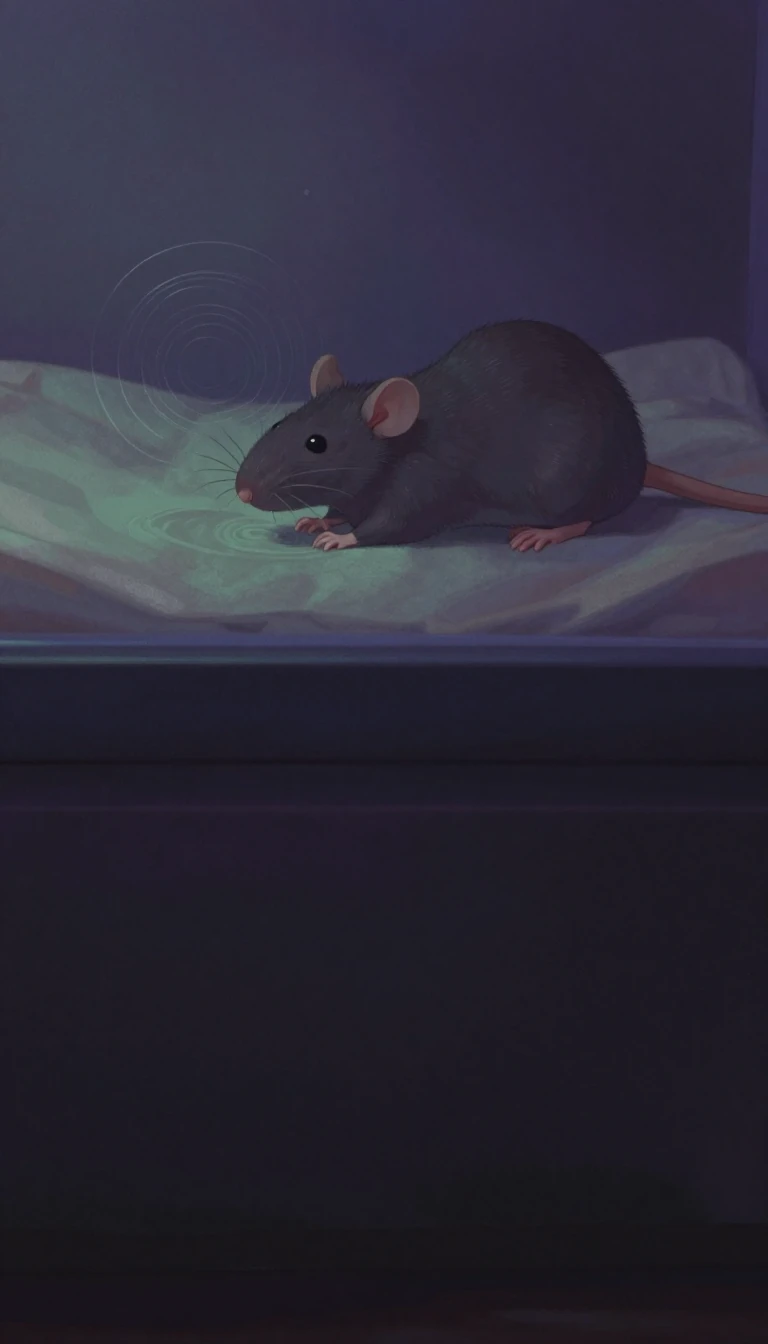 Why your voluntary actions are often just responses to invisible environmental consequencesOperant conditioning explains how we learn by linking our actions to their outcomes. Whether you are training a pet or navigating your own habits, this process shapes behavior thr…
- Can philosophy solve the mundane anxieties of modern life and work?Alain de Botton is a British author who translates complex philosophical concepts into practical tools for everyday existence. From the architecture of our homes to the nature of …
 Why ancient Chinese thinkers viewed the universe as a cycle of five moving phases.Wuxing is often mistranslated as five static elements, but it is actually a dynamic system of five moving phases. Far from being physical substances, these agents represent proces…
- Are the Ten Avatars of Vishnu an Ancient Blueprint for Darwinian Evolution?The Dashavatara, or ten incarnations of the Hindu god Vishnu, are traditionally viewed as divine descents to restore cosmic order. Yet, some modern thinkers argue these figures re…
- Can your thoughts physically reshape your reality, your health, and your personal circumstances?New Thought is a diverse spiritual movement that emerged in the 19th century, positing that the human mind is a powerful, creative force. By mastering mental states and affirmatio…
 Why millions believe ancient civilizations were built by extraterrestrial visitorsErich von Däniken’s 1968 bestseller Chariots of the Gods? popularized the idea that ancient human achievements were actually the work of alien astronauts. While his books have sol…
 Why do millions of people vividly remember a cornucopia that never existed?The Fruit of the Loom logo is a simple arrangement of fruit and leaves, yet a vast number of consumers insist they recall a cornucopia in the design. This persistent false memory …
 If God is all-powerful and all-good, why does suffering exist?It is one of philosophy's oldest puzzles: the apparent contradiction between a benevolent, omnipotent creator and the reality of widespread agony. From natural disasters to the 'D…
 Is republicanism a political ideology or a scientific method for designing stable governments?Republicanism is often mistaken for a simple rejection of monarchy, but its roots run deeper into a rigorous, experimental science of politics. From ancient Roman ideals to the in…
 Two historic pianos meet in a rare performance of Chaminade's Pas des cymbalesPianists Llewellyn Sánchez-Werner and Derek Wang perform Cécile Chaminade's Pas des cymbales, Op. 36, No. 2. This unique session showcases two distinct instruments from The Metrop…
 Chaos magic treats belief as a flexible tool rather than an objective truth.Emerging in 1970s England, chaos magic strips away traditional religious dogma to focus on results. By treating belief as a psychological instrument, practitioners manipulate arbi…
 Can a novelist successfully bridge the gap between rigorous scientific inquiry and literary fiction?Barbara Kingsolver, a trained biologist, has spent decades weaving environmental science and social activism into the fabric of her storytelling. From the Appalachian mountains to…
- How a journalist who loved astronomy became the UK's most prolific fantasy satiristTerry Pratchett transformed from a local reporter into a literary titan, selling over 100 million books worldwide. Known for his Discworld series, he balanced sharp social comment…
 Why is it easier to imagine the end of the world than of capitalism?Mark Fisher, the influential cultural theorist known as k-punk, diagnosed our modern malaise as capitalist realism. He argued that we are trapped in a pervasive atmosphere where t…
 Is lying an essential part of human communication or just a political problem?We often view lying as a moral failure, but linguistically, it is deeply intertwined with our ability to tell stories. If language allows us to build imaginary worlds and share my…
- Is atheism a religion or simply the absence of one?When we talk about atheism, we often frame it as the opposite of faith. But is it a distinct system of belief, or merely a refusal to accept the existence of the divine? Understan…
 How a simple flash tube and a ruby rod changed the world of lightIn 1960, the first laser was demonstrated in California, marking a pivotal moment in scientific history. By using a photographer’s flash tube and a chromium-doped aluminium oxide …
 Why co-design is the essential toolkit for solving our most complex modern challengesAs our world faces increasingly intricate social, political, and environmental hurdles, traditional problem-solving often falls short. Co-design offers a collaborative alternative…
 Why the Professional Doctorate in Education is more than just a research degreeThe EdD is a unique academic path that transforms both the researcher and their practice. By blending rigorous independent inquiry with structured collaborative learning, it allow…
- Why your writing might be losing its punch: the power of active voiceActive voice brings clarity, energy, and directness to your prose by placing the subject in the driver's seat. While passive voice has its place in formal or scientific contexts, …
 Why preparing for your later years is the ultimate act of independence and kindnessPreparation for later life is often avoided, yet simple organization while healthy can secure your autonomy and provide profound peace of mind. By documenting your wishes and mana…
 Leonardo da Vinci saw the apocalypse not as chaos, but as a cosmic order.While many apocalyptic visions focus on future calamity, Leonardo da Vinci’s late series of sketches, created around 1517–1518, offers a different perspective. Rather than simple …
 Was the potato chip born from a chef's act of culinary spite in 1853?The potato chip is a global snack staple, but its origin story is rooted in a moment of professional frustration. In 1853, a cook named George Crum allegedly invented the crispy t…
 Why do cats purr even when they are in pain or feeling distressed?While we often associate purring with a content cat, the behavior is far more complex. This video explores the mechanics behind the sound and why cats use it as a self-soothing to…
 Fifty years after the first Earth Day, how has our planet changed?This American Museum of Natural History video marks the 50th anniversary of Earth Day by contrasting the rapid growth of human consumption with our evolving scientific understandi…
 Why are blue whales the largest animals to have ever lived on Earth?Blue whales are the biggest creatures in planetary history, surpassing even the dinosaurs. This video explores the evolutionary mysteries behind their massive scale, examining how…
 High school researchers identify a previously unknown species of sea anemoneTwo students participating in an American Museum of Natural History mentorship initiative uncovered a new anemone species. This video details how their work with the institution's…
- Earth's population has surged by 4 billion people since the first Earth Day in 1970.Since the inaugural Earth Day in 1970, the global population has expanded by 4 billion. This video explores the environmental consequences of this growth, specifically focusing on…
 Why did the world's largest animals disappear 50,000 years ago?Ross MacPhee, curator of mammalogy at the American Museum of Natural History, explores the mysterious extinction of prehistoric megafauna. From woolly mammoths to giant lemurs, th…