 Intellect Plus
Cards starting with H
40,576 cards. Page 456 of 677.
 How Carl Hempel defined the rules of scientific explanation for the twentieth centuryCarl Gustav Hempel was a titan of logical empiricism who shaped how we understand scientific inquiry. From the famous raven paradox to his standard model of explanation, Hempel so…
 How Carl Ritter Transformed Geography from Simple Mapping into a Study of Human HistoryCarl Ritter, a foundational figure in modern geography, viewed the Earth not as a static map, but as a living organism. By integrating natural science with human history, he argue…
 How Carl Sagan transformed our understanding of Earth's place in the vast cosmosIn 1977, astronomer Carl Sagan delivered a landmark series of Christmas Lectures at the Royal Institution. By examining the geometry and scale of our planet, he challenged the anc…
 How Carl Sauer transformed geography from a study of maps into a human storyCarl Sauer, a giant of 20th-century geography, rejected the rigid environmental determinism of his era. Instead, he pioneered a vision of the earth as a landscape shaped by human …
 How Carl Stumpf bridged the gap between musical intuition and experimental scienceCarl Stumpf was a polymath who transformed how we understand the human mind. By applying rigorous experimental methods to the subjective experience of sound, he moved beyond abstr…
 How Carl Wagner unlocked the atomic secrets behind our modern digital worldKnown as the father of solid-state chemistry, Carl Wagner transformed our understanding of how materials behave at the atomic level. From the oxidation of metals to the semiconduc…
 How Carlo Maderno defined the Baroque by reshaping the heart of Saint Peter’sCarlo Maderno was a pivotal architect who bridged the gap between Renaissance restraint and the dramatic flair of the early Baroque. By transforming Saint Peter’s Basilica from a …
 How Carlo Rubbia proved the existence of the elusive W and Z particlesIn 1984, Carlo Rubbia and Simon van der Meer won the Nobel Prize for discovering the W and Z bosons. These particles act as the carriers of the weak force, a fundamental interacti…
 How Carlos Alcaraz dominates the elite ranks of professional tennisCarlos Alcaraz has redefined modern tennis through sheer consistency and high-stakes performance. With a career defined by rapid ascent and a formidable record against the world's…
 How Carlos do Carmo transformed Portuguese fado from tradition into a modern, orchestral artBorn into a fado dynasty, Carlos do Carmo did not just preserve a national treasure; he reinvented it. By weaving jazz, orchestral arrangements, and political nuance into the trad…
 How Carlos Santana transformed Latin rock into a global multi-platinum phenomenonFrom a San Francisco blues band to a multi-platinum powerhouse, Santana's musical journey is defined by constant evolution. While their signature Latin influence remains, the band…
 How Carlotta Grisi bridged the divide between Romantic ballet’s greatest rivalsCarlotta Grisi was the rare ballerina who mastered both the ethereal grace of Marie Taglioni and the dramatic intensity of Fanny Elssler. As the original star of Giselle, she beca…
 How Carol Kane pivoted from Oscar-nominated drama to iconic comedic character actingCarol Kane’s career spans over five decades, evolving from a serious Academy Award-nominated dramatic actress into a beloved comedic force. Known for her distinct voice and versat…
 How Carol Reed defined the visual language of postwar cinematic tension and moral ambiguity.Carol Reed was a master of suspense who shaped the moody, high-contrast aesthetic of the late 1940s. While he is celebrated for his technical precision, his true genius lay in his…
 How Carole King’s Tapestry redefined the singer-songwriter and shattered industry double standards for womenReleased in 1971, Carole King’s Tapestry transformed her from a behind-the-scenes hitmaker into a global icon. The album’s raw, intimate sound challenged the era's rigid expectati…
 How Caroline Ouellette redefined dominance in women's ice hockey across two decadesWith four Olympic gold medals and a career spanning the NCAA to the professional leagues, Caroline Ouellette stands among the most decorated athletes in hockey history. Beyond her…
 How Caroline Series turned complex hyperbolic geometry into stunning, fractal-based computer imageryCaroline Series is a pioneering mathematician whose work bridges the gap between abstract hyperbolic geometry and visual art. By applying symbolic dynamics to chaotic systems, she…
 How Carolyn Bertozzi pioneered chemistry that functions inside living cells without causing harmCarolyn Bertozzi revolutionized medicine by inventing bioorthogonal chemistry, a method allowing scientists to perform chemical reactions within living organisms without disruptin…
 How Caryl Churchill transformed the stage into a laboratory for power and identityFrom the boardroom to the bedroom, Caryl Churchill has spent decades dissecting the structures that govern our lives. By abandoning traditional realism for surrealist narratives a…
 How Case Keenum became the most prolific passer in college football historyBefore his long career as an NFL journeyman, Case Keenum rewrote the record books at the University of Houston. He remains the only player in Division I FBS history to surpass 20,…
 How Caspar David Friedrich transformed landscape painting into a mirror for the human soulExplore the work of Caspar David Friedrich, a pioneer of German Romanticism who redefined landscape art. This virtual tour examines how he turned nature into a profound space for …
 How Cassini will end its long journey through the Saturnian systemAfter two decades in orbit, the Cassini spacecraft is entering its final mission phase. This video previews the dramatic series of dives and the mission's ultimate conclusion with…
 How casual gaming integrated video games into our daily livesExplore how the gaming industry shifted from consoles to internet-accessible devices, creating a new landscape of social and mobile play. This video explains why casual games now …
 How Catalytic Cracking WorksA clear look at fluid catalytic cracking, the refinery conversion process that uses a circulating, sand-like catalyst and heat to break large gas-oil molecules into smaller ones, …
 How category theory unifies diverse mathematical structures under a single, elegant frameworkIn mathematics, limits are not just about calculus. They are a powerful, abstract way to capture the essential properties of constructions like products and pullbacks. By viewing …
 How category theory uses Hom functors to map the relationships between mathematical objectsIn category theory, the Hom functor is a foundational tool that transforms the internal structure of a category into a collection of sets. By mapping morphisms between objects, th…
 How Catherine Deneuve evolved from a screen icon into a global cinematic institutionBorn into a family of actors, Catherine Deneuve rose to international stardom in the 1960s. Renowned for her archetypal beauty and mysterious screen presence, she became a definin…
 How Catherine Destivelle redefined the limits of human climbing through sheer, calculated audacityCatherine Destivelle dominated the 1980s sport climbing scene before pivoting to alpine mountaineering, where she became the first woman to complete the winter solo trilogy of the…
 How Catherine Tate transformed from a struggling actress into a British comedy iconBorn Catherine Ford, this English performer rose to fame through her sharp character work and iconic catchphrases. From the halls of drama school to the TARDIS, she has navigated …
 How Catherine the Great and Alexander I transformed Russia into a European superpowerThis video examines the Russian Empire's era of immense territorial growth and cultural refinement. It tracks the shift from Catherine the Great's enlightened autocracy to the exi…
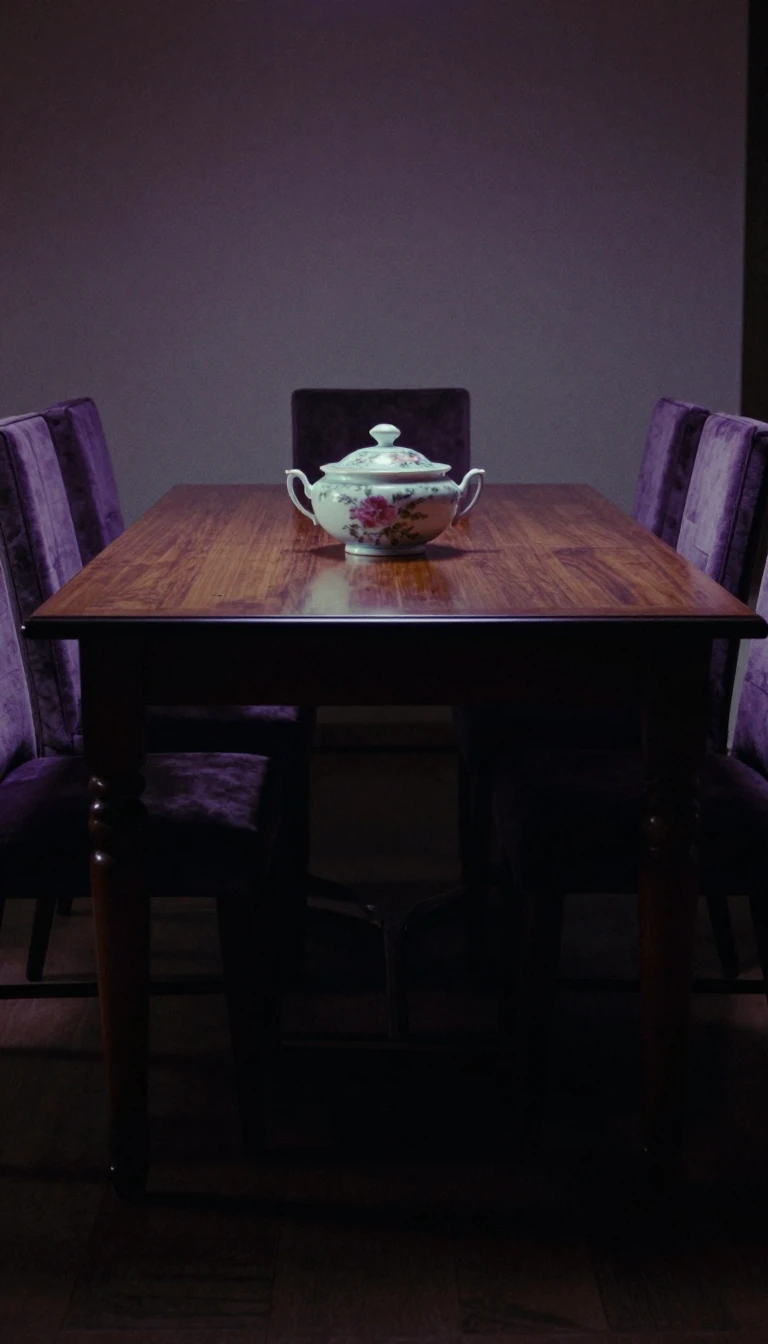 How Catherine the Great used porcelain to project a vision of imperial NeoclassicismIn 1776, Empress Catherine II commissioned a massive dinner service from the Sèvres manufactory. This set, featuring eight hundred pieces, was designed to showcase the newest styl…
 How Catherine the Great’s invitation created a global diaspora of German farmersIn the early 19th century, thousands of Germans migrated to the Russian Empire to farm the southern steppes. Their journey, marked by imperial privilege, later dissolved into forc…
 How Catherine the Great’s Volga German Settlers Created the Iconic Bierock PastryWhen Catherine the Great invited German settlers to the Volga region, they brought more than just farming skills; they brought a culinary legacy. Among their most enduring contrib…
 How Catherynne M. Valente turned a joke into a genre-defining literary movementCatherynne M. Valente is a prolific American author who reshaped speculative fiction by coining the term mythpunk. Beyond her writing, she pioneered the use of crowdfunding for ma…
 How cathodic protection keeps massive infrastructure from crumbling into rustCorrosion is a leading cause of infrastructure decay. This video explores cathodic protection, a vital technique used to prevent rust and extend the lifespan of structures like sp…
 How cattle drives and beefsteaks shaped the American frontierExplore how the movement of livestock did more than just feed a nation; it drove the expansion of the United States. This episode examines the pivotal role of cattle drives in sha…
 How CeCe Winans redefined gospel music while staying true to her religious rootsCeCe Winans transformed contemporary gospel by blending faith-centered lyrics with pop and R&B sensibilities. Despite immense pressure to pursue secular stardom, she remained stea…
 How Cecil B. DeMille turned a biblical epic into a global cultural phenomenonTo ensure his 1927 silent epic The King of Kings felt authentic, director Cecil B. DeMille forced his lead actor into a year of monastic isolation. The result was a massive succes…
 How Cecil B. DeMille turned a biblical fragment into a Hollywood blockbusterTo adapt the Book of Judges, Cecil B. DeMille struggled for over a decade to find a narrative thread. He eventually found it in a novel that combined two characters into one, crea…
 How Cecil B. DeMille used a fake snake to film Cleopatra's iconic death sceneWhen Claudette Colbert refused to film her final scene with a snake, director Cecil B. DeMille orchestrated a clever deception. He walked onto the set draped in a massive boa cons…
 How Cecilia Brækhus became the first woman to unify all four major boxing beltsCecilia Brækhus redefined boxing history by becoming the first woman to simultaneously hold the WBA, WBC, IBF, and WBO titles. A Colombian-born Norwegian athlete, she dominated th…
 How Cecily Brown reinterprets the masters within the walls of The MetArtist Cecily Brown sits down with curator Adam Eaker to discuss her unique creative process and the deep influence of art history on her work. This conversation offers a rare loo…
 How Cecily Brown uses classical themes to capture the fleeting nature of lifeArtist Cecily Brown discusses her first major New York museum survey, which examines how she weaves concepts of mortality and vanity into her painting practice. This look behind t…
- How Cédric Klapisch used a non-linear narrative to explore the chaos of adult lifeFive years after his formative year in Barcelona, Xavier is approaching thirty and struggling to find his footing as a writer. Russian Dolls, the second installment in the Spanish…
- How celebrity contestants navigate a high-stakes game of social deception in the Scottish HighlandsIn the spin-off series The Celebrity Traitors, famous faces gather at a remote castle to compete in a psychological game of Mafia-style deduction. Participants must identify hidde…
 How Celine Dion became the best-selling Canadian artist of all timeOften called the "Queen of power ballads," Celine Dion has achieved unprecedented global commercial success. From her 1981 debut to her massive 1990s era, her discography represen…
- How Celine Dion became the most profitable music act in Las Vegas historyWhen Celine Dion returned to the Colosseum at Caesars Palace in 2011, she wasn't just performing; she was rewriting the economics of live entertainment. Beyond the soaring vocals,…
 How Celine Dion turned a blockbuster film theme into a global pop phenomenonReleased in 1997, Let's Talk About Love became one of history's best-selling albums, shifting over 31 million copies worldwide. Anchored by the Titanic theme My Heart Will Go On, …
 How cells burn fuel to power the complex machinery of lifeEvery movement you make and every thought you have requires chemical energy. To get it, your cells must break down food molecules like glucose through a sophisticated chemical pro…
 How cells engulf nanoparticles could guide smarter drug deliveryA review of nanomedicine research explains how cells take up nanoparticles through several distinct endocytic pathways, shaped by a particle's size, shape and surface chemistry. U…
 How cells know when to stop reading their own genetic codeTranscription is the process of copying DNA into RNA, but it must have a clear end point to function. Without specific terminator sequences, cells would waste energy on runaway tr…
 How cells move molecules against the grain of natureDiscover the fundamental mechanisms cells use to transport materials. This Khan Academy lesson explains the distinction between passive and active transport, revealing how life ma…
 How cells navigate their environment to build, repair, and sometimes destroy our tissuesCell migration is the engine of life, driving everything from embryonic development and wound healing to immune responses. Yet, this same process can be hijacked by cancer cells t…
 How cells read instructions to build the proteins that make life possibleThis video explores the biological machinery used to turn genetic instructions into functional proteins. It explains the complex processes of transcription and translation that al…
 How cells replicate themselves through the complex dance of mitosisExplore the life cycle of a cell, from its creation to the precise moment of division. This video examines how cells control their own reproduction and the consequences when these…
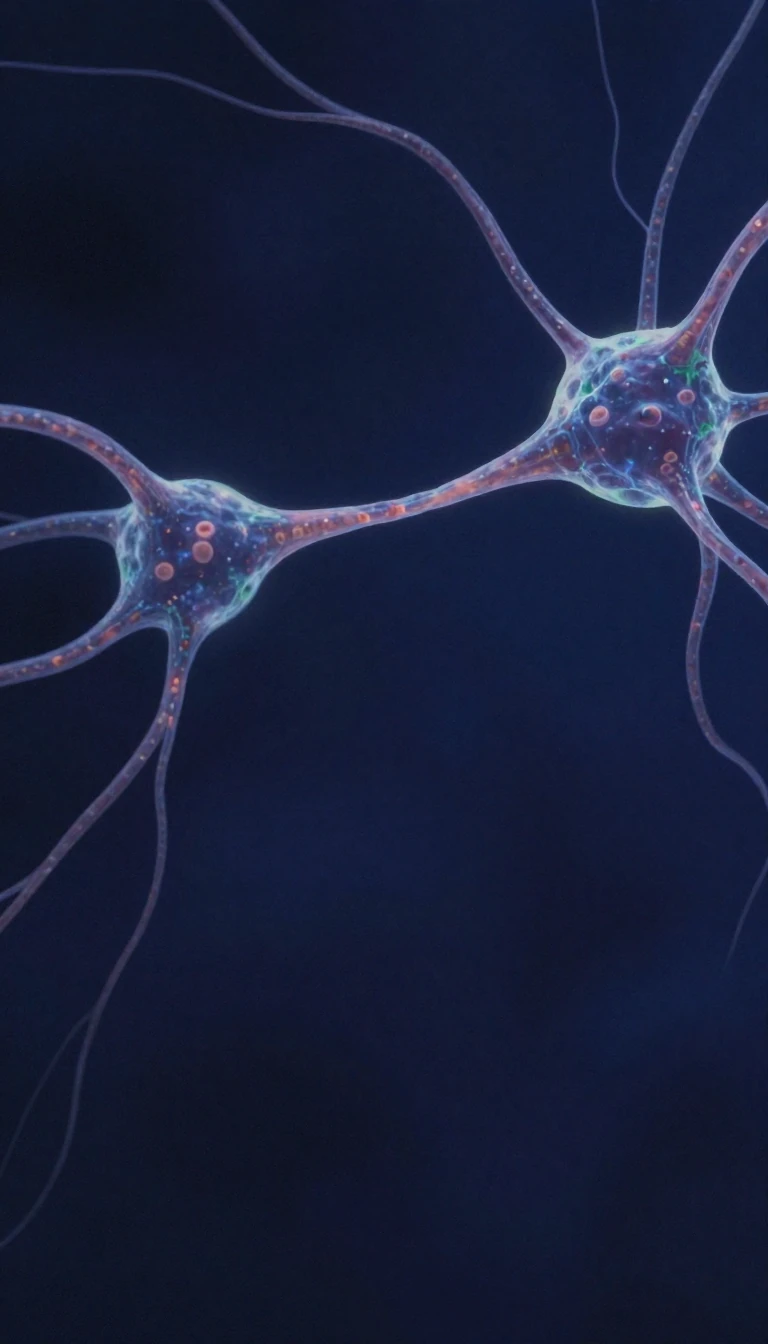 How cells talk: the intricate biochemical cascades that keep your body aliveYour cells are not isolated units; they are part of a massive, silent conversation. Through biochemical cascades, cells detect external cues, amplify signals, and trigger precise …
- How cells translate external signals into internal action using a clever molecular messenger systemCells cannot always read external signals directly. To bridge the gap, they use second messengers—tiny molecules that relay information from surface receptors to the cell interior…
 How cells use a molecular key to recycle their own partsEvery cell is a factory in constant need of cleanup. To prevent chaos, your body uses a sophisticated tagging system to identify and destroy old proteins. Discover the Nobel-winni…
 How cells use chemical coupling to defy the natural flow of energyChemical reactions in a cell follow a strict one-way street: they move from high free energy to low free energy. This means products cannot spontaneously revert to their original …
 How cells use energy to maintain the electrical balance required for lifeThis lecture explores the mathematical principles behind active transport in cells. Learn how the sodium-potassium pump moves ions against electrochemical gradients and discover t…