 Intellect Plus
Cards starting with W
29,907 cards. Page 362 of 499.
 Why the Cradle of Civilization is a Concept Shaped by 19th-Century BiasThe Fertile Crescent is often called the cradle of civilization, a region in Western Asia where cities first emerged. While the term remains a cornerstone of historical study, its…
 Why the cradle of Egyptian civilization was once mistaken for an invading forceWhen Flinders Petrie first excavated the site of Nubt in 1894, he misidentified its unique artifacts as evidence of foreign invaders. He was actually uncovering the Naqada I cultu…
 Why the Crape Myrtle is an unsung hero for your summer gardenCurator Matt Pottage introduces Lagerstroemia indica, a plant that thrives in summer heat and produces blooms well into autumn. This guide explores how the Royal Horticultural Soc…
 Why the creator behind the world's first comprehensive geography channel is taking a breakGeography Now is the only YouTube channel dedicated to profiling every country on Earth in alphabetical order. After consistent production, the creator is stepping back to recharg…
 Why the creator of Calvin and Hobbes chose a life of total privacyAfter ending his legendary comic strip in 1995, Bill Watterson didn't seek the spotlight. Instead, he retreated from the public eye, pursuing painting and music while avoiding the…
 Why the creator of The Fall named his characters after famous guitar brandsAllan Cubitt, the creator of the crime drama The Fall, found inspiration in an unlikely place: guitar manufacturing. By naming his characters after brands like Gibson, Spector, an…
 Why the creator of The Simpsons originally planned to reveal Krusty as Homer's identity.Krusty the Clown was designed to look like Homer Simpson in makeup because Matt Groening wanted to reveal that the boy who disrespected his father worshipped a clown who was actua…
 Why the creators of Shaun of the Dead pivoted to paranormal broadband installationIn 2020, comedy icons Nick Frost and Simon Pegg launched Truth Seekers, a supernatural horror series blending mundane office life with ghost hunting. The show follows a broadband …
 Why the creators of the 2020 Dracula series reimagined the vampire as a protagonistMark Gatiss and Steven Moffat, the duo behind the hit series Sherlock, returned to television in 2020 with a bold, three-part adaptation of Bram Stoker's classic. By positioning t…
 Why the creators of the original Hair musical hated the 1979 film adaptationMiloš Forman’s 1979 adaptation of the counterculture classic Hair is often celebrated as a spirited, groovy musical. Yet, the original stage writers famously disowned it, arguing …
 Why the creators of The Threepenny Opera sued their own film adaptationWhen G. W. Pabst brought the hit stage play to the screen in 1931, he turned a biting satire on capitalism into a more entertaining musical. The original creators, Bertolt Brecht …
 Why the crescent moon is the enduring symbol of the French city of BordeauxThe Port de la Lune, or Port of the Moon, is more than just a harbor in Bordeaux. Named for the distinctive crescent shape of the river winding through the city, this iconic landm…
 Why the cricket ball is a masterpiece of engineering, danger, and strict regulationA cricket ball is far more than a simple sphere. Constructed from cork, string, and leather, this hard, heavy projectile is the heart of the game. Its condition dictates the match…
 Why the crime film is an impossible genre to define with absolute precisionCrime films are not defined by the presence of a crime, but by their complex relationship with society. Scholars argue that labeling every film featuring a central crime as a crim…
 Why the crime scene is a masterclass in clinical reasoningDoctors and forensic scientists share a fundamental challenge: data is useless without context. Both must sift through fragments of information to reconstruct a narrative. By look…
 Why the Criminal Minds spin-off Suspect Behavior vanished after only three short monthsIn 2011, ABC attempted to expand the successful Criminal Minds franchise with a new rapid-response unit called Red Cell. Despite starring Forest Whitaker and utilizing a backdoor …
 Why the crinkled Savoy cabbage is the ultimate winter garden survivorDistinguished by its emerald, crinkled leaves, the Savoy cabbage is a winter-hardy powerhouse that thrives in frost and snow. While it demands careful attention to fend off pests …
 Why the Crookes Radiometer is more than just a desk toyOften dismissed as a simple novelty, the Crookes radiometer offers surprising insights into physics. This video explores the device's mechanics and why it remains a relevant subje…
 Why the cross product formula actually matches our geometric intuitionThe cross product formula can feel like a rote calculation, but there is a deeper logic at play. This video explores how the cross product relates to a specific linear transformat…
- Why the cross product produces a vector instead of a numberWhile the dot product collapses two vectors into a single scalar, the cross product does something entirely different. It generates a new vector, perpendicular to the original pai…
 Why the CrossFit Games keeps its athletes in the dark until the last minuteThe CrossFit Games is designed to test fitness against the unknown. Athletes arrive at the competition without knowing the events they will face, sometimes learning the details on…
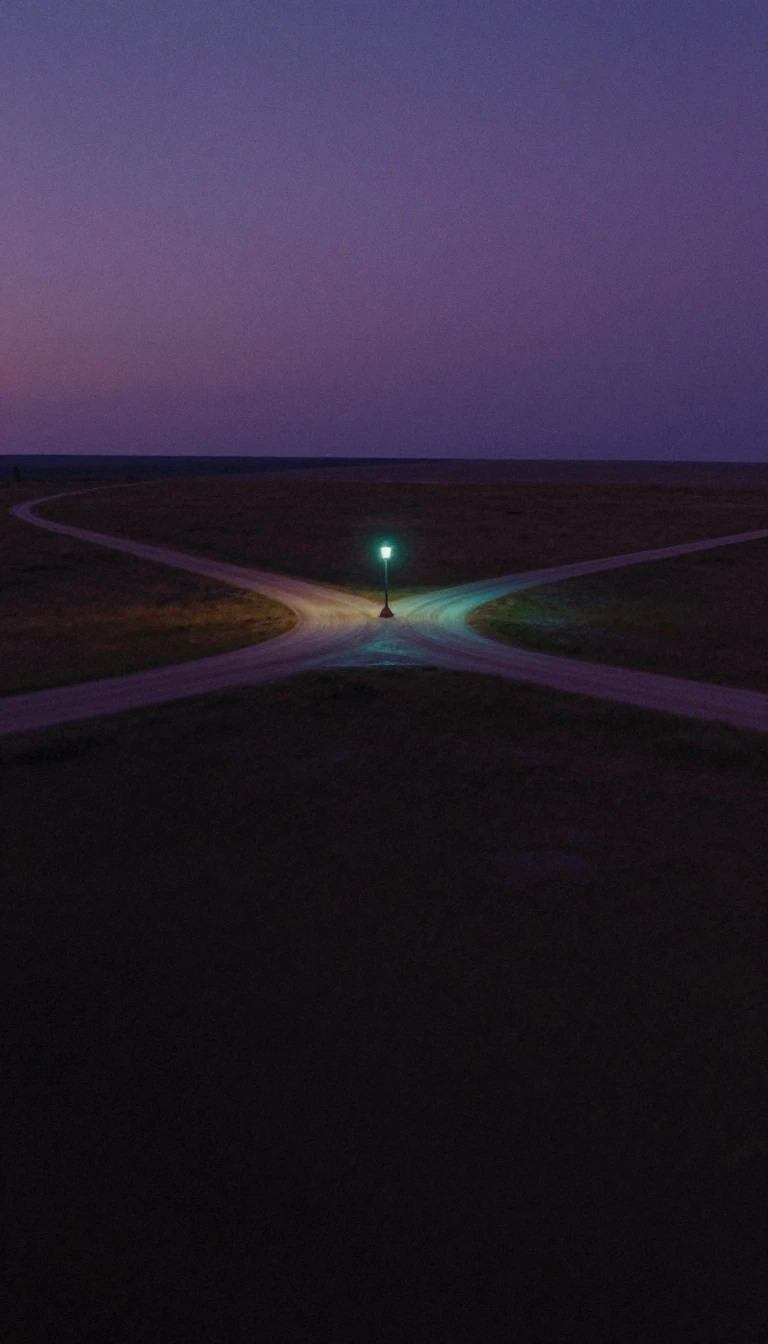 Why the crossroads has always been a gateway between worldsFrom ancient Greek rituals to the legends of the American Blues, the crossroads is more than a simple intersection. It is a liminal space—a place 'neither here nor there' where th…
 Why the Crown Dependencies are not part of the United Kingdom or its EmpireThe Channel Islands and the Isle of Man are not sovereign states, nor are they part of the United Kingdom. These self-governing territories hold a unique constitutional status, tr…
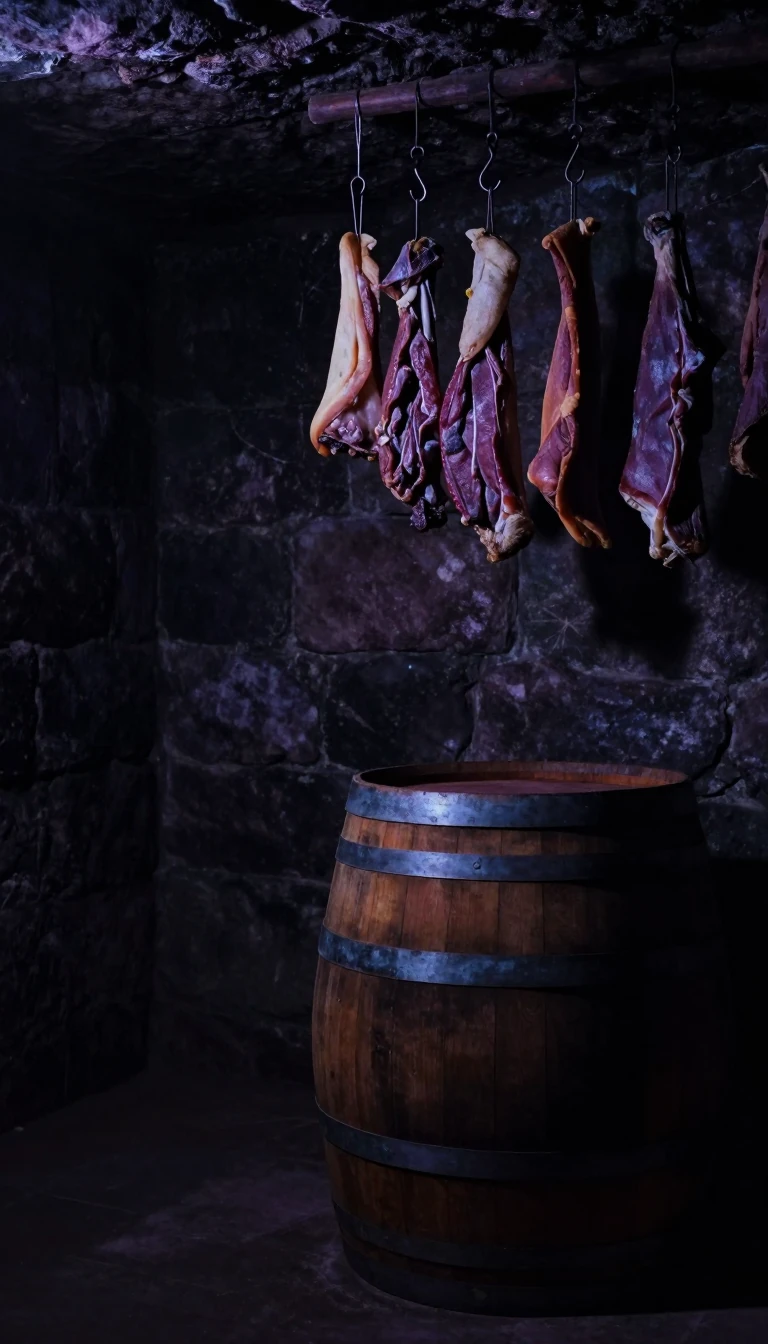 Why the crude iron from a blast furnace is named after a nursing sowPig iron is the raw, high-carbon output of a blast furnace, but its unusual name comes from the way it was historically cast. Molten iron was poured into a central channel with sm…
 Why the crumbly texture of your favorite dessert is actually called shortcakeThe term shortcake has nothing to do with size. It refers to the short, crumbly texture achieved by cutting fat into flour. While we often associate it with strawberries and cream…
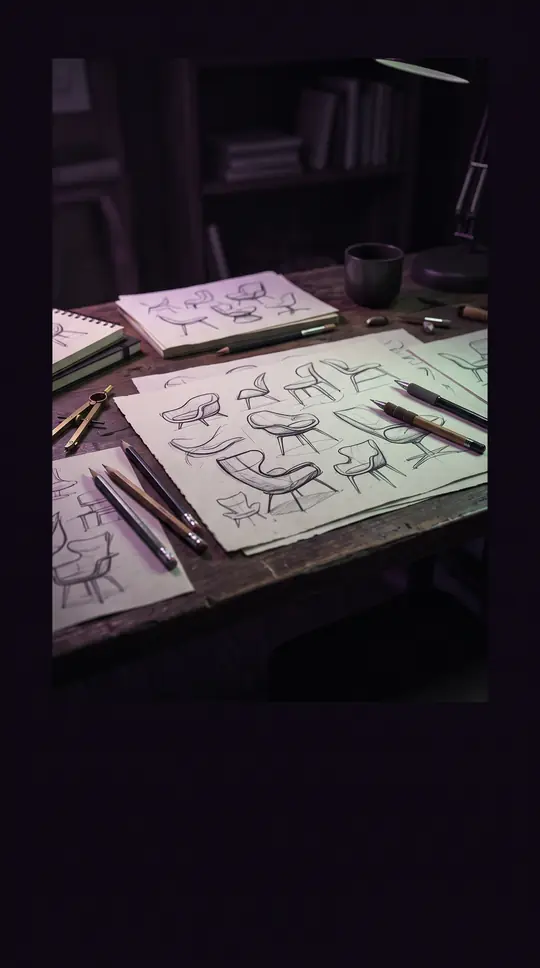 Why the crutch has barely evolved since the days of ancient EgyptFor thousands of years, the crutch has remained a fundamental mobility aid, transferring weight from damaged legs to the upper body. While modern materials like titanium and carbo…
 Why the cryptic rc suffix in your computer files is actually a historical ghostThe Unix shell is a command-line interface that powers the heart of many operating systems. While modern users often prefer graphical windows, the shell remains a vital tool for s…
 Why the Cuban link chain became the ultimate symbol of hip-hop status and luxuryWith origins tracing back to the Latin and hip-hop communities of Miami in the 1970s, the Cuban link chain has evolved from a regional style into a global icon of wealth. These th…
- Why the cube root of a number is rarely as simple as it seemsWhile you might assume every number has one cube root, the reality is far more complex. Depending on the mathematical system you use, a single number can possess one, three, or ev…
 Why the cube stands out as a perfectly balanced three-dimensional shapeThis video examines the geometric properties of a cube. By understanding how its faces and edges interact, you can grasp the fundamental characteristics that define this specific …
 Why the cubic metre per second is the silent heartbeat of our natural worldThe cubic metre per second is the standard unit for measuring volumetric flow, tracking the movement of a one-metre cube every second. While often hidden in technical jargon, this…
 Why the cultural archetype of the evil stepfather remains a persistent, dark literary tropeWhile literature famously fixates on the wicked stepmother, the stepfather occupies a distinct, equally unsettling space in our stories. From fairy tales to modern cinema, this fi…
 Why the culture of hate is often more personal than we admitMost people agree that hate is a social problem, but Sally Kohn argues it is an internal one too. This talk explores how to identify and dismantle hatred within our own lives and …
 Why the cumulative distribution function is the ultimate map of probabilityEvery probability distribution, whether continuous or discrete, follows a unique blueprint known as the cumulative distribution function. By mapping the likelihood that a variable…
 Why the cups and balls trick is the ultimate litmus test for every magicianFor two millennia, the cups and balls have served as the fundamental training ground for sleight of hand. From ancient Roman conjurers to modern masters, this deceptively simple r…
 Why the Curie unit represents a massive amount of radioactive decayThe curie is a standard unit for measuring radioactivity, but it is surprisingly large. Defined by the decay rate of one gram of radium, a single curie equals 37 billion disintegr…
 Why the current 'low hire, low fire' job market challenges new college graduatesEconomists characterize the current labor market as a period of low hiring and low firing. This episode explores how this stagnant environment impacts graduating seniors, specific…
 Why the current AI arms race might be killing the next big breakthroughLlion Jones, co-author of the foundational transformer paper, argues that corporate competition is hindering genuine innovation. This talk examines how the industry's current traj…
 Why the current bond market collapse rivals history's worst stock market crashesThe 10-year U.S. Treasury yield has recently climbed above 4.9%, marking its highest point since July 2007. This video examines the scale of the ongoing bond sell-off and the inve…
 Why the current era requires a shift from safety to fearlessnessIn this TED talk, Pat Mitchell argues that the modern world demands a specific type of courage. She explores why women—and their allies—must move beyond seeking safety to becoming…
 Why the current generation of Americans faces a crisis of intergenerational theftMarketing professor Scott Galloway examines the data behind a troubling trend: young people in the US are, by many measures, more financially disadvantaged than previous generatio…
 Why the current global semiconductor shortage might soon transform into a massive supply glutThe semiconductor industry is notoriously volatile, characterized by rapid cycles of boom and bust. While we currently navigate a period of intense chip shortages, the aggressive …
 Why the current mental health crisis among parents is just as urgent as teensWe often sound the alarm about teen mental health, but parents are struggling at nearly identical rates. Psychologist Richard Weissbourd argues that deep-seated parental lonelines…
- Why the current Pope warns that artificial intelligence threatens the global workforceDrawing parallels to a century-old papal stance on industrialization, the current Pope has issued a warning regarding the economic disruption posed by artificial intelligence. Thi…
 Why the curtsy evolved from a courtly necessity into a symbolic performance of graceOnce a mandatory gesture of submission to royalty and social superiors, the curtsy has transformed from a rigid marker of class hierarchy into a stylized remnant of etiquette. Fro…
 Why the cyclohexane molecule constantly flips between shapes to find its lowest energy stateCyclohexane is not a flat hexagon. To minimize strain, it adopts a warped chair shape, which accounts for 99.99% of its molecules at room temperature. Yet, it is never truly stati…
 Why the cylindrical coordinate system is the natural language of rotational symmetryWhen you need to map a straight pipe, a spinning galaxy, or heat inside a metal cylinder, standard grid-based coordinates often fail. The cylindrical system extends 2D polar geome…
 Why the Czech Republic clings to its crown despite European Union membership obligationsThe Czech koruna is more than just legal tender; it is a symbol of national identity that has survived imperial collapse, wartime occupation, and monetary reform. While the countr…
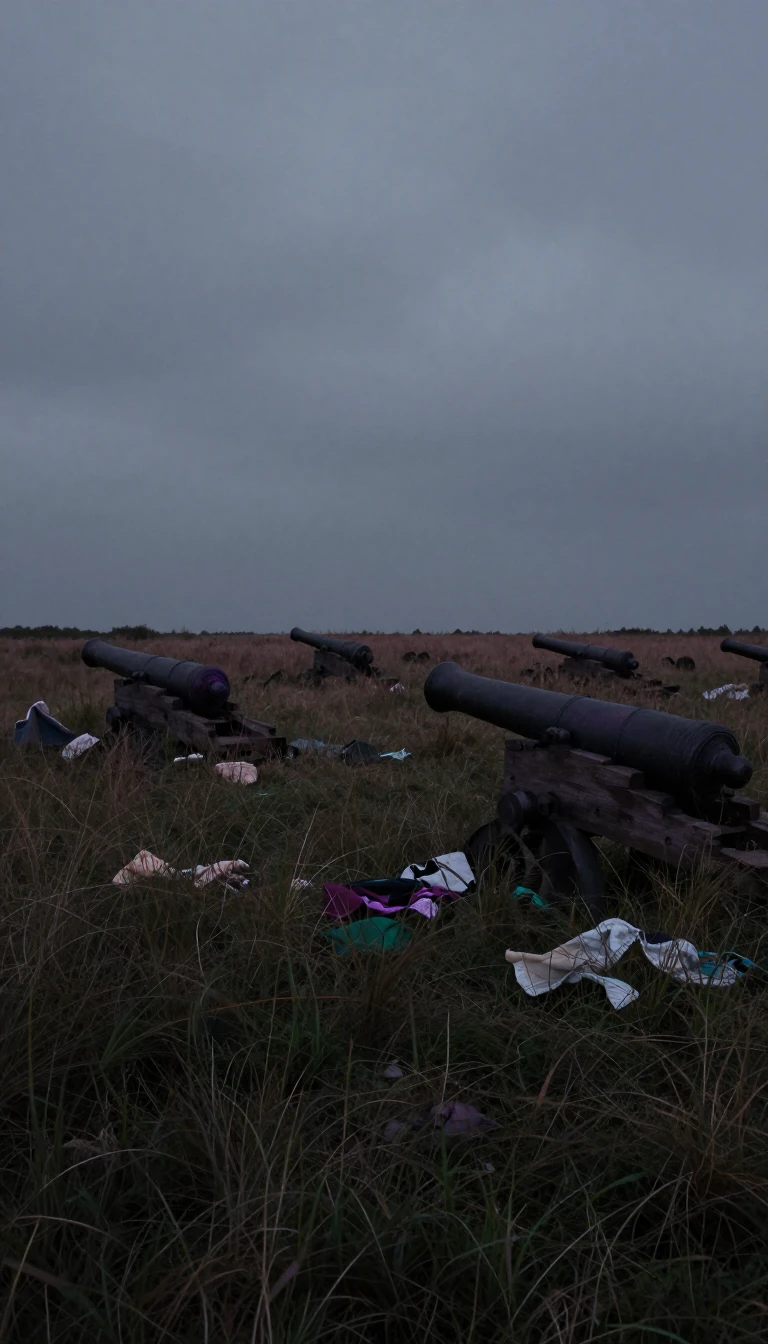 Why the D-Day assault on Omaha Beach nearly ended in total disasterOn June 6, 1944, the American landing at Omaha Beach became a chaotic killing zone. Navigational errors, sunken tanks, and fierce German defenses left thousands of soldiers strand…
 Why the D-segment is the most misunderstood category in the modern automotive worldThe D-segment is the fourth category of European passenger cars, often called large cars. While it encompasses everything from basic transport to high-end luxury, its definition h…
 Why the D.I.C.E. Awards are considered the video game industry's Academy Awards equivalentOften called the Academy Awards of gaming, the D.I.C.E. Awards recognize excellence in the multi-billion dollar entertainment software industry. Held annually in Las Vegas, these …
 Why the D'Hondt method consistently favors larger political parties over smaller onesThe D'Hondt method is a widely used system for allocating parliamentary seats, but it is not as proportional as it seems. By design, it minimizes the largest seats-to-votes ratio,…
 Why The Da Vinci Code became the ultimate test of the critic-proof filmWhen Ron Howard’s 2006 adaptation of Dan Brown’s novel premiered at Cannes, critics hissed and catcalled. Yet, the film became a massive commercial juggernaut, grossing $760 milli…
 Why the Daily Bugle's editor-in-chief spent decades obsessed with unmasking Spider-ManJ. Jonah Jameson is more than a grumpy newspaper publisher. Created by Stan Lee and Steve Ditko in 1963, he represents a complex mix of integrity and deep-seated prejudice. His re…
 Why the daily life of ancient Romans feels so strikingly similar to our ownMark Cartwright explores the everyday realities of Roman society, moving past military history to examine the cultural habits and structures that define their identity and mirror …
 Why the daily life of ancient Rome feels so familiar to us todayMark Cartwright discusses his book on Roman culture, shifting focus from military history to the everyday experiences of citizens. By examining nine core aspects of life, he revea…
 Why the Dallas Cowboys now command a staggering thirteen billion dollar valuationThe landscape of elite sports ownership has shifted dramatically, with American football leagues now dominating the financial hierarchy. While global soccer clubs once held the to…
 Why the Dalmatian became the iconic symbol of the firehouseFor over a hundred years, one specific dog breed has been inseparable from the history of firefighting. This video explores the unique legacy that earned Dalmatians their noble re…
 Why the Danakil Depression Outshines Death Valley as an Extreme ClimateWhile Death Valley is a famous desert icon, the Danakil Depression presents a more surreal and hostile environment. This video explores why this specific location is one of the mo…
 Why the dark green manganate ion is a master of chemical instabilityManganate is a fascinating, fleeting chemical species that exists in a delicate state of balance. While it serves as a critical industrial intermediate, it is notoriously unstable…