 Intellect Plus
Cards starting with W
29,907 cards. Page 366 of 499.
 Why the Earth is divided into five distinct climate zones based on latitudeEarth is partitioned into five geographical zones defined by major circles of latitude. These regions, ranging from the icy poles to the sun-drenched tropics, dictate the planet's…
 Why the Earth is heating up: the delicate physics of incoming and outgoing energyRadiative forcing is the fundamental metric scientists use to measure the Earth's energy imbalance. When the energy entering our atmosphere from the sun exceeds the heat escaping …
 Why the Earth is more like a piece of jelly than a solid rockWe live on a planet that feels solid, yet deep inside, it behaves like a flowing, mobile substance. By studying earthquakes, volcanoes, and magnetic fields, scientists have discov…
 Why the Earth is not a dead rock but a shifting, living jellyViewed from space, Earth appears static, yet it is a dynamic, ever-changing system. James Jackson’s 1995 Christmas Lectures reveal that our continents are constantly rearranging t…
 Why the Earth is not a perfect sphere, but an ellipsoid insteadGeodesy is the scientific discipline dedicated to measuring the Earth's precise dimensions and shape. This video explores how engineers determine land boundaries and how pilots na…
 Why the Earth is not a sphere and how we measure its true shapeEarth is not a perfect sphere but an oblate spheroid, bulging at the equator due to its rotation. Geodesists use mathematical models called reference ellipsoids to map this shape.…
 Why the Earth is still reacting to ice sheets that melted thousands of years agoThe Earth behaves like a mattress, deforming under pressure and slowly returning to its original shape. Even though the last ice age ended millennia ago, the planet is still adjus…
 Why the Earth keeps its most violent secrets from usA few seconds of warning could save thousands of lives, yet we remain unable to forecast major quakes. While we understand the mechanics of tectonic movement, the transition from …
 Why the Earth's atmosphere is the ultimate enemy of the world's largest telescopesAstronomical seeing is the atmospheric turbulence that blurs starlight into a distorted mess. By shifting the refractive index of air, our own sky limits the resolution of ground-…
 Why the Earth's crust behaves like both a brittle fracture and flowing hot metal.Deep beneath our feet, the Earth's crust undergoes a dramatic transformation. While surface rocks shatter under pressure, deeper layers flow like heated metal. These shear zones a…
- Why the Earth's crust ripples like a rug when continents collideWhen tectonic plates collide, the Earth does not just break; it bends. Synclines are the vast, trough-like folds in stratified rock that form when flat layers are warped by immens…
 Why the Earth's deepest geological depressions hold the keys to our modern energy supplyStructural basins are massive, bowl-shaped rock formations created by tectonic warping. These geological depressions act as natural traps for vital resources, ranging from groundw…
 Why the Earth's magnetic poles are not where your compass actually pointsWe often imagine Earth as a simple bar magnet, but the reality is far more chaotic. While geomagnetic poles provide a useful, stable model for scientists, they are purely theoreti…
- Why the Earth's mid-latitude winds act as a global steering system for weatherThe westerlies are powerful, prevailing winds that flow from west to east across the middle latitudes. Driven by the planet's rotation and temperature gradients, these currents ac…
 Why the Earth's shadow is not responsible for the changing phases of the moon.Many people mistakenly believe the moon changes shape because of the Earth's shadow. This video clarifies the actual mechanics behind lunar phases, explaining how our perspective …
 Why the Earth's surface is a complex map of wind, ice, and fireLandforms are not just static scenery; they are the physical records of our planet's history. By examining attributes like slope, elevation, and soil, geomorphologists categorize …
 Why the Earth’s axis nods: understanding the subtle wobble of our spinning planetThe Earth does not spin with perfect stability. Beyond its long-term precession, our planet experiences a rhythmic nodding motion known as nutation. Driven by the gravitational tu…
- Why the Earth’s surface is constantly sinking into diverse, dramatic, and deep depressionsA geological depression is any landform sunken below its surroundings, but the forces creating these voids are wildly varied. From the slow, heavy weight of ice sheets and sedimen…
 Why the East Midlands struggles to define its own identity on the mapThe East Midlands is a sprawling region of England, yet it remains notoriously difficult to pin down. Caught between rival cities and lacking a single overriding governing body, t…
 Why the Eastern and Western Fronts reached a brutal stalemate in 1916By 1916, the First World War had devolved into a devastating war of attrition. While the meat grinder at Verdun consumed French and German forces, Russian General Aleksei Brusilov…
- Why the Eastern Hemisphere is more than just a line on a mapThe Eastern Hemisphere is defined by convention rather than nature, yet it contains the world's most extreme physical contrasts. From the highest peaks to the deepest continental …
 Why the eastern region of Uttar Pradesh has campaigned for statehood for decadesPurvanchal, the eastern region of Uttar Pradesh, has long sought to become an independent state. Proponents argue that separation would accelerate development and improve governan…
 Why the Eastern Roman Empire was far more than a pale imitation of RomeHistorian Anthony Kaldellis re-examines the Eastern Roman Empire, or Byzantium, as a vigorous, independent state. This interview explores how modern scholarship has transformed ou…
 Why the Eastern Roman Empire was far more than a pale shadow of RomeHistorian Anthony Kaldellis re-examines the Eastern Roman Empire, commonly called Byzantium. This video explores how modern research has transformed our understanding of this stat…
 Why the economy fluctuates: understanding short-run and long-run equilibriumThis lesson introduces the fundamental tools economists use to map out the business cycle. It explains how markets reach different states of balance over different time horizons.
 Why the economy's 'easy money' phase almost always ends in a crashWhen credit flows freely, it creates a seductive cycle of rising asset prices and fueled growth. But this 'easy money' often masks a looming credit crunch—a sudden, systemic tight…
 Why the economy's long-term growth potential is represented by a simple vertical lineThe long-run aggregate supply curve provides a framework for understanding economic fluctuations. By mapping potential growth against demand, we can better analyze why economies d…
 Why the eCVT is a mechanical masterpiece that enthusiasts often misunderstandThe eCVT is frequently dismissed by car enthusiasts, yet it is one of the most elegant transmission designs ever engineered. By ditching traditional belts and pulleys for a simple…
 Why the efficiency of hybrid engines comes at a hidden cost to longevityHybrid vehicles are celebrated for boosting fuel economy, but they introduce a unique set of mechanical stresses. Frequent engine restarts and lower operating temperatures create …
 Why the efficiency of your search depends on how you organize the dataWhen searching through a list, the difference between a slow crawl and a lightning-fast find is often just a matter of order. Discover how a simple classroom demonstration of line…
 Why the Efficient Market Hypothesis fails to explain real-world economic puzzlesThe Efficient Market Hypothesis suggests markets process news perfectly to set prices, yet reality often tells a different story. Professor Jagjit Chadram explores the gap between…
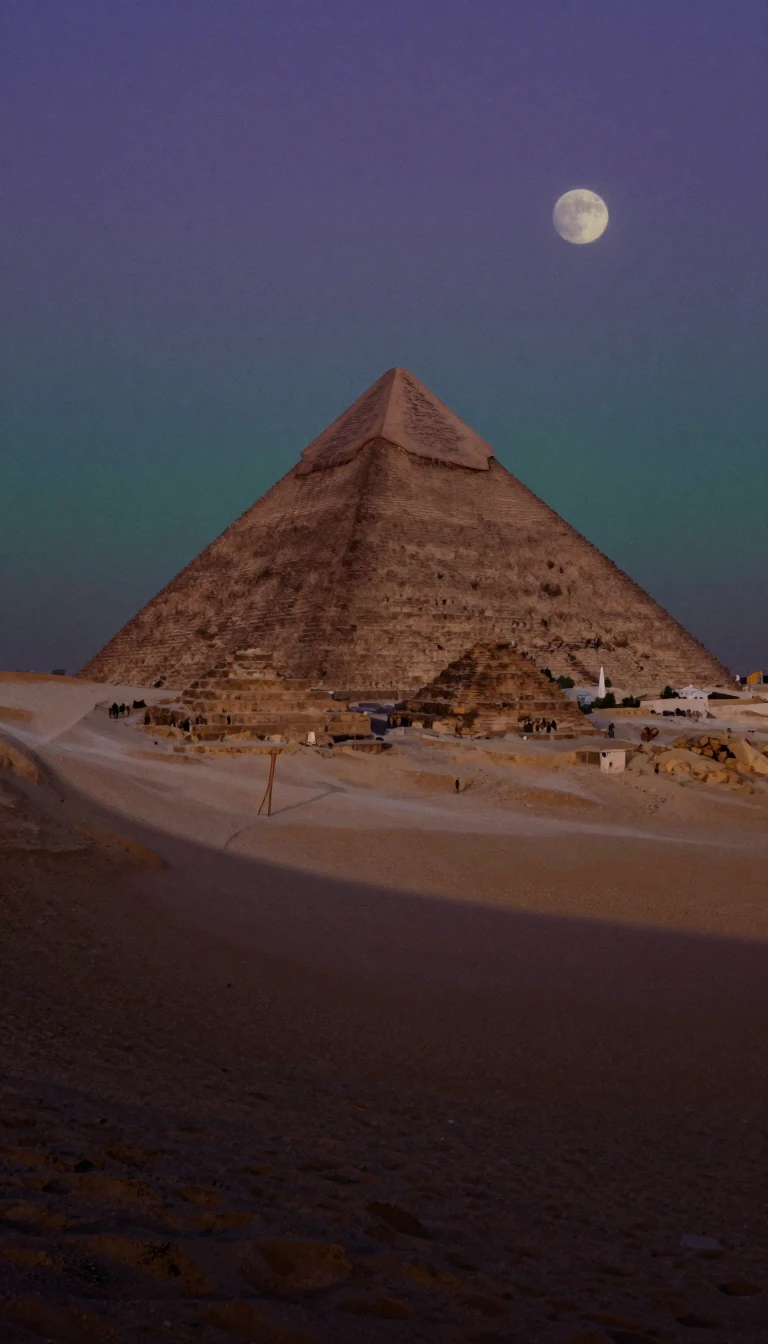 Why the Egyptian God of Chaos Was Essential to Maintaining Cosmic OrderSet is often remembered as the villainous usurper of the Osiris myth, yet his role in ancient Egyptian theology was far more nuanced. Far from being a simple agent of evil, he ser…
 Why the eighth season of RuPaul's Drag Race remains a landmark in reality televisionPremiering in March 2016, the eighth season of RuPaul's Drag Race marked a pivotal transition for the franchise. Featuring twelve contestants vying for the title of America's Next…
 Why the electric car revolution is accelerating faster than you might thinkElectric vehicles are transforming from a niche choice into a practical, high-performance standard. With instant torque, lower maintenance costs, and a rapidly expanding charging …
 Why the electric vehicle industry's rapid growth projections have hit a major wallThe automotive industry once believed internal combustion engines would vanish by 2035. This video examines why that vision collapsed, exploring the gap between political mandates…
 Why the electromagnetic forces you feel today are actually echoes from the pastWhen you observe an electromagnetic field, you are not seeing the present. Because light travels at a finite speed, information takes time to bridge the gap between source and obs…
 Why the electron behaves like a tiny, hyper-efficient bar magnetAn electron is more than just a charged particle; it acts as a miniature magnet due to its intrinsic spin and charge. While classical physics suggests a specific magnetic strength…
 Why the electron's g-factor is the ultimate test for our understanding of realityThe g-factor is a dimensionless number that links a particle's magnetic moment to its angular momentum. Because it can be calculated with extreme precision using quantum electrody…
- Why the electronic structure of elements holds the key to the physical worldHow can something as simple as taste or magnetism be explained through chemistry? By looking past the macroscopic world to the atomic scale, we can understand how manipulating tin…
 Why the Eleventh Doctor's companion Amy Pond was designed to be a complex enigmaAmy Pond, the fiery companion of the Eleventh Doctor, was crafted by Steven Moffat to evolve from a cynical, abandoned child into a seasoned adventurer. Portrayed by Karen Gillan,…
 Why the elite clubs of 1920s Ghana gave birth to a national musical iconHighlife emerged in the 1920s as a derisive label for the exclusive, high-priced dance music enjoyed by the Ghanaian elite. Today, it is a celebrated cultural pillar, having evolv…
 Why the Elo rating system is the gold standard for measuring competitive skillInvented by physics professor Arpad Elo to improve chess rankings, the Elo system replaced subjective rewards with statistical estimation. By treating performance as a random vari…
 Why the elusive concept of genius remains scientifically undefined and culturally misunderstoodGenius is often romanticized as a rare, innate spark, yet science struggles to define it precisely. While high intelligence is a prerequisite, it is not sufficient. True genius re…
 Why the elusive enol is the secret engine behind life's most vital chemical reactionsEnols are fleeting chemical chameleons, rarely stable enough to be detected, yet they drive the essential machinery of life. By shifting between keto and enol forms, these molecul…
 Why the elusive giant squid remained hidden from our cameras for so longOceanographer Edith Widder explains the breakthrough approach that finally allowed researchers to capture the giant squid on film. This video details the collaborative effort and …
 Why the elusive neutrino might hold the key to our fundamental understanding of physicsNeutrinos are abundant yet rarely discussed particles produced in everything from the sun and the Earth's core to supernovae and beer. Physicist Kirsty Duffy explains their unique…
 Why the elusive sei whale is named after a common Norwegian fishThe sei whale is one of the ocean's fastest swimmers, yet it remains a mystery to researchers. Named for the Norwegian word for pollock, this sleek rorqual prefers deep, unpredict…
 Why the Emperor of Voice remains the heartbeat of Nepali music decades laterKnown as the Swar Samrat, or Emperor of Voice, Narayan Gopal transformed Nepali music through a career spanning nearly three decades. A master of emotional range, he navigated pol…
 Why the Emperor survived the aftermath of World War IIThe death of Emperor Hirohito in 1989 signaled the end of a profound era. This video examines the life of the monarch who presided over Japan's period of intense warfare, total de…
 Why the end of fighting doesn't mean the end of warWhen the guns fall silent, the legal battle often just begins. A ceasefire or an armistice might stop the bloodshed, but until a formal peace treaty is signed, the parties remain …
 Why the end of the 19th century felt like a total societal collapseThe fin de siècle was more than just a calendar event. It was a cultural fever dream defined by pessimism, decadence, and a desperate search for meaning. As the 1890s closed, arti…
 Why the end of the war in Europe was only half the battle.Following the German surrender in 1945, the United States faced the massive logistical challenge of shifting its military focus to the Pacific. This video examines the complex obs…
 Why the end of World War II in Europe is celebrated on different daysVictory in Europe Day marks the formal surrender of Nazi Germany, yet the date of celebration varies across the globe. While most Western nations commemorate the event on May 8, o…
 Why the Endeavour's final mission launch was delayedA technical malfunction with the auxiliary power unit heaters forced a scrub of the STS-134 mission. This news conference details the immediate response and the path toward the sh…
 Why the English aristocracy built more than just country estatesWhile often viewed as a purely rural elite, aristocratic families used art and architecture to fuel their political and dynastic ambitions. This lecture explores how their collect…
 Why the English crown spent centuries as a Lord rather than a King in IrelandFrom 1177 to 1542, English monarchs ruled parts of Ireland not as kings, but as Lords. This title, originally granted by the Papacy, created a complex dependency that eventually c…
 Why the English Hippocrates prioritized the patient's bedside over the academic ivory towerThomas Sydenham transformed medicine by rejecting abstract theory in favor of systematic observation. Known as the English Hippocrates, he navigated the political turmoil of the C…
 Why the English pronoun 'I' is always capitalizedIn the age of handwritten manuscripts, a single tiny letter could easily be lost or misread. To prevent confusion, scribes developed a clever way to make the first-person pronoun …
 Why the English Renaissance was a time of both radiant genius and traumatic strainThe English Renaissance is often remembered for its brilliant literary achievements, yet it was also a period of profound social and intellectual upheaval. Beneath the surface of …
 Why the English version of Haruki Murakami’s masterpiece is missing thousands of wordsHaruki Murakami’s The Wind-Up Bird Chronicle is a surreal journey through suburban Japan, but English readers are missing a significant piece of the puzzle. To fit publisher requi…