 Intellect Plus
Cards starting with W
29,907 cards. Page 402 of 499.
 Why the original Rambo film was almost a tragic, fatal disaster for its heroBefore it became a global action franchise, First Blood was a somber, character-driven thriller. Producers Mario Kassar and Andrew G. Vajna originally filmed a dark, fatal conclus…
 Why the original Tablets of Stone were shattered and then replaced by human handsThe Ten Commandments were not just divine decrees but a formal treaty. When Moses smashed the first set of stone tablets, it was a calculated legal act signaling the end of a brok…
 Why the original Viennese waltz was once considered a moral threat to societyBefore it became a ballroom staple, the waltz was a scandalous innovation that broke centuries of dance tradition. By shifting from communal patterns to independent, close-contact…
 Why the origins of April Fools' Day remain a merry, unsolvable historical mysteryEvery April 1, millions engage in the tradition of harmless pranks and practical jokes. Yet, despite centuries of scholarship, historians have failed to pinpoint exactly when or h…
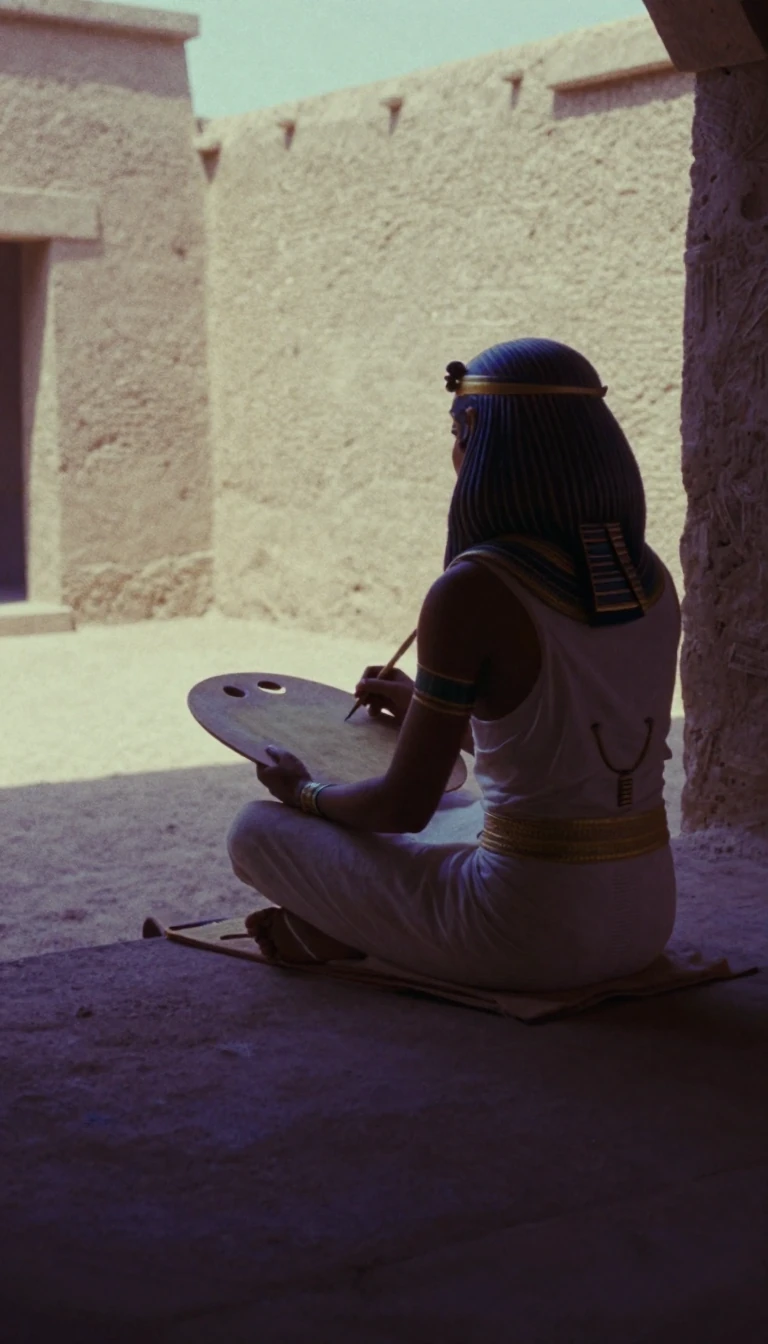 Why the origins of Egyptian civilization remain buried under layers of Nile siltBefore the rise of the pharaohs, a long, gradual evolution shaped Egypt. While we often look to the grand monuments of later dynasties, the true story of Predynastic Egypt lies in…
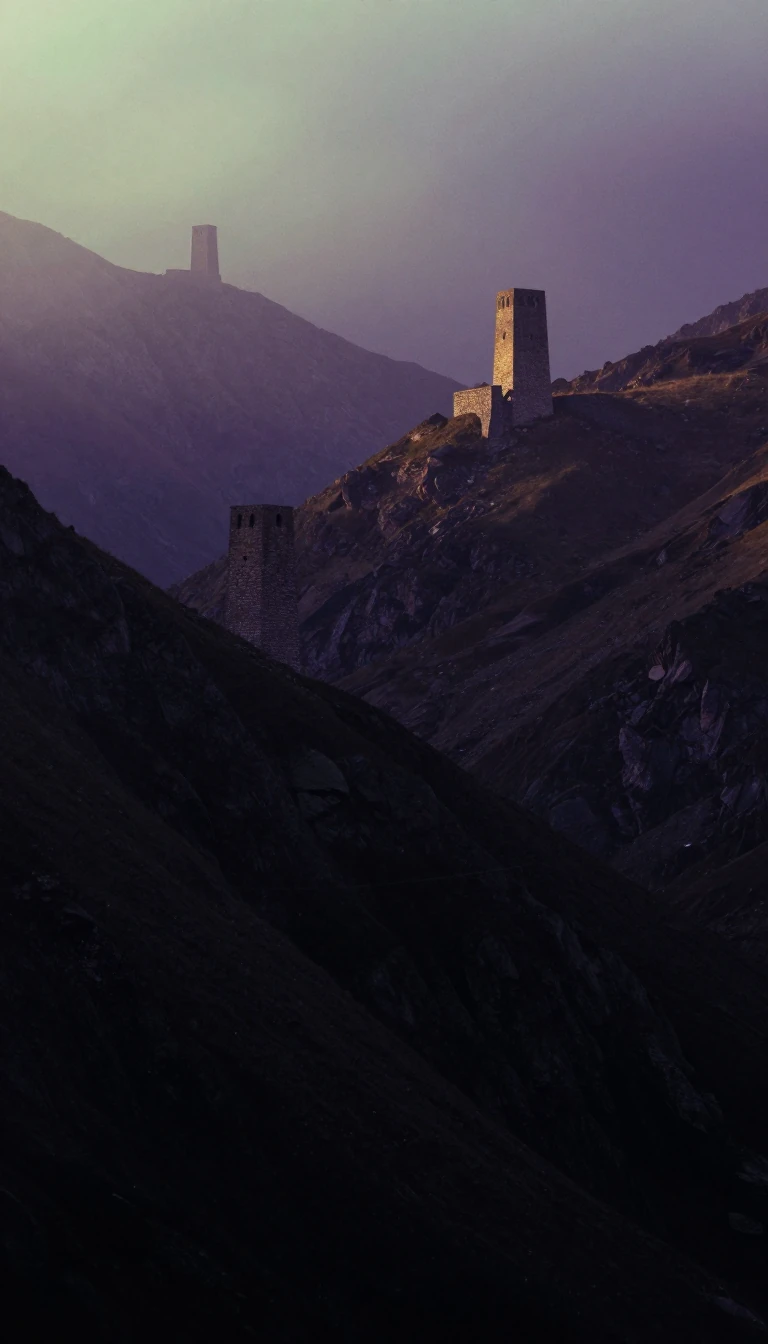 Why the Orkhon Valley served as the sacred heart of ancient nomadic empiresLocated 320 kilometers west of Ulaanbaatar, the Orkhon Valley is far more than a scenic landscape. For over two millennia, this region functioned as the imperial seat of steppe po…
 Why the Orthodox Church views administrative independence as a matter of political geographyIn Eastern Orthodox tradition, autocephaly—literally meaning self-headed—grants a church total administrative autonomy. While rooted in ancient Roman provincial structures, this s…
 Why the orthorhombic crystal system is defined by three unequal, perpendicular axesImagine a cubic lattice stretched until its sides are no longer equal. This is the orthorhombic system, a fundamental category of crystalline structure. Defined by three mutually …
 Why the ostrich is the world's fastest bird with the fewest toes.Explore the anatomy of the ostrich, the world's fastest running bird. This video features Museum scientist Jo Cooper and Alison Shean, who examine 100-year-old specimens from the …
 Why the Ottoman Army of Islam raced to capture the Baku oil fieldsAs World War I neared its end, the Ottoman Army of Islam launched a strategic march toward the Caspian Sea. This video examines the intense competition between multiple global pow…
 Why the Ottoman Empire briefly traded its martial focus for a floral obsessionBetween 1717 and 1730, the Ottoman Empire entered a rare, peaceful interlude known as the Tulip Period. Under Sultan Ahmed III and Grand Vizier İbrahim Paşa, the elite turned towa…
 Why the Ottoman Empire failed to break Portugal's monopoly on Indian Ocean tradeDespite possessing greater wealth, population, and proximity to the Indian Ocean, the Ottoman Empire could not dislodge the Portuguese from their maritime dominance. This decades-…
 Why the Ottoman Empire failed to conquer the Mamluks in the late 15th centuryBetween 1485 and 1491, the Ottoman and Mamluk Sultanates fought a grueling, inconclusive war for regional dominance. Despite Ottoman military might, the Mamluks successfully defen…
 Why the Ottoman Empire granted Jerusalem its own unique, direct administrative status in 1872In the late 19th century, the Ottoman Empire carved out a special district centered on Jerusalem, governed directly from Constantinople rather than through regional intermediaries…
 Why the Ottoman Empire never reached American shoresThis video examines why a dominant naval power failed to expand across the Atlantic during the age of colonization, exploring the strategic and geopolitical factors that kept the …
 Why the Ottoman Empire traded a destroyed fleet for a permanent Mediterranean strongholdThe 1570–1573 war for Cyprus was a strategic masterclass in brutal trade-offs. While the Holy League celebrated a crushing naval victory at Lepanto, the Ottoman leadership underst…
 Why the ounce is not just one unit, but a chaotic historical legacyThe ounce is a linguistic survivor, tracing its roots to the Roman uncia. While we treat it as a standard measure, it has historically shifted across jurisdictions and trades. Fro…
 Why the outcome of a coin flip is rarely as simple as you thinkIn probability theory, an outcome is a single, unique result of an experiment. While we often assume outcomes are equally likely, this is a simplification that fails to account fo…
 Why the outer curve of a river is a landscape in constant, violent motionA cut bank is the outside edge of a river's meander, where the water flows fastest and deepest. This relentless energy carves away the earth, creating steep, unstable cliffs that …
 Why the outer product is the engine behind multidimensional data structuresWhile the dot product collapses two vectors into a single number, the outer product expands them into a matrix. This fundamental operation creates a grid of every possible combina…
 Why the outermost electrons of an atom dictate the behavior of everything around usValence electrons are the high-energy particles residing in an atom's outer shell that determine how elements react, bond, and conduct electricity. From the reactivity of alkali m…
 Why the overcoat has remained a timeless staple of the Western wardrobe for centuriesDesigned to shield the wearer from the biting cold of winter, the overcoat is more than just a functional layer. While often conflated with its shorter cousin, the topcoat, the tr…
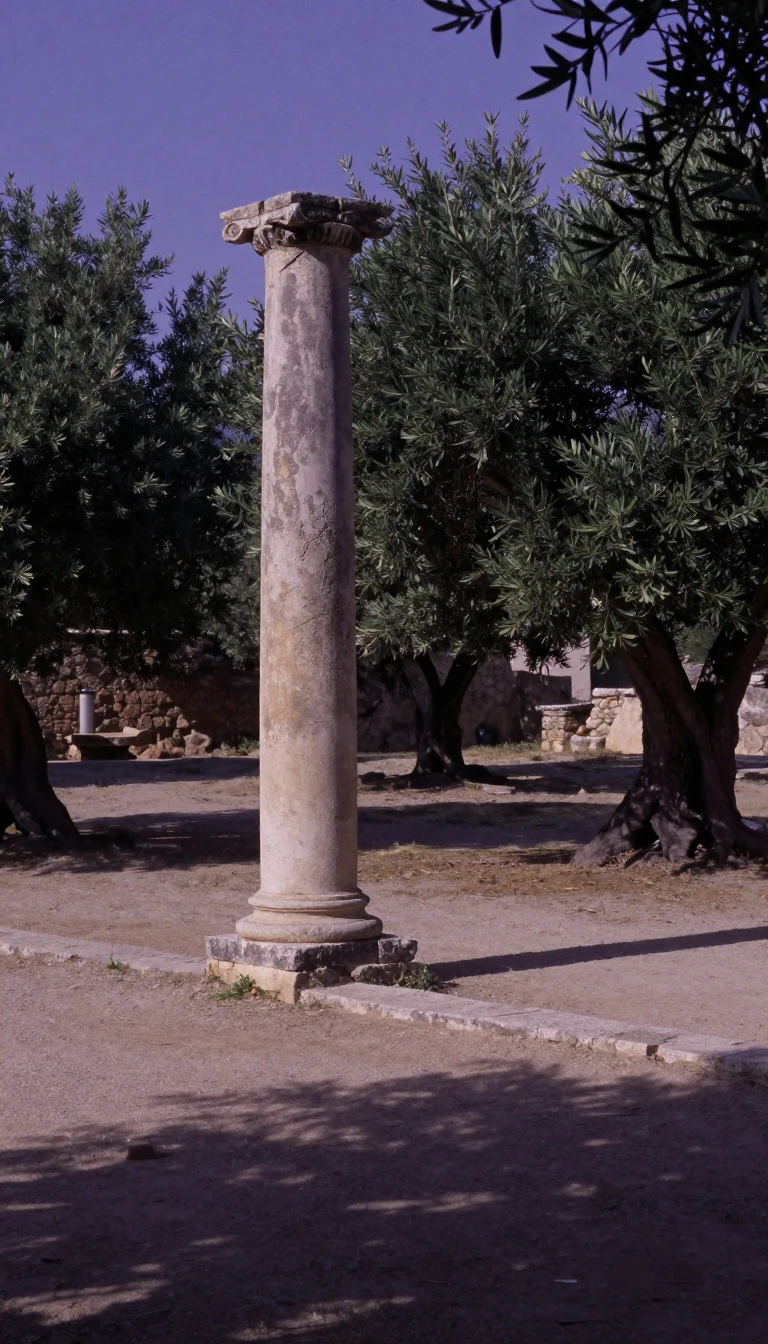 Why the overconfident Spartans marched to war carrying their own chains of defeatSeeking to conquer Arcadia, the Spartans marched on Tegea with absolute certainty of victory. They brought shackles to enslave their enemies, only to suffer a humiliating defeat. …
 Why the oxygen levels in our rivers depend on microscopic appetitesBiochemical oxygen demand measures how much oxygen aquatic microorganisms consume while breaking down organic matter. When pollution spikes, these microbes multiply rapidly, strip…
 Why the P-47 Thunderbolt became the most feared 'Jug' of the Second World WarThe P-47 Thunderbolt was a cornerstone of US air power during the Second World War. This video explores why pilots favored the aircraft, examining the technical features and comba…
 Why the p-value cutoff might be misleading your scientific conclusionsWe often use p-values to decide if a result is unusual enough to reject a null hypothesis. This video explores the logical flaws, common misinterpretations, and the arbitrary natu…
 Why the Pacific Time Zone is no longer a simple clock offsetThe Pacific Time Zone is shifting from a uniform clock to a patchwork of regional policies. While once defined by a standard eight-hour offset from Coordinated Universal Time, rec…
 Why the Painted Desert displays a spectrum of colors across its vast badlandsSpanning 7,500 square miles, the Painted Desert is a geological masterpiece defined by its vibrant, stratified layers. Beyond its striking aesthetic, this arid expanse serves as a…
 Why the Palmyrene King Odaenathus Failed to Conquer the Sasanian Capital in 263In 263, the Palmyrene monarch Odaenathus marched his forces to the gates of Ctesiphon, the heart of the Sasanian Empire. Despite devastating the surrounding region and capturing s…
 Why the pandemic accelerated the future of work faster than expectedJames Manyika explains how recent global crises have forced society to reconsider long-held beliefs and face new challenges as the future of work arrives sooner than anyone imagin…
 Why the pandemic could be a catalyst for a green recoveryNigel Topping explores how the global shift following COVID-19 offers a unique window to rebuild our economy with a focus on net zero emissions.
- Why the pandemic proved that legal expertise is essential for navigating modern crisesThe COVID-19 pandemic blurred the lines between mandatory law and mere guidance, creating a complex environment where legal clarity was often lacking. As regulations shifted rapid…
- Why the pandemic triggered a global computer chip shortage across multiple industriesThe COVID-19 pandemic caused manufacturing disruptions that spiraled into a worldwide shortage of computer chips. This video examines why these essential components, which power e…
 Why the panther Bagheera is often portrayed as a female in global adaptationsIn Rudyard Kipling's original stories, Bagheera is a male black panther who escaped captivity to mentor Mowgli. Yet, across decades of international adaptations, this iconic prote…
 Why the paper you use today is fundamentally different from ancient Egyptian papyrusWe often confuse paper with its ancient ancestor, papyrus, but they are distinct materials. While papyrus was a laminated sheet of plant strips, true paper requires breaking down …
 Why the parachute you ride behind a boat is not actually a parachuteParasailing is often confused with skydiving, but the two share little beyond the canopy. While a skydiver relies on active control to navigate, a parasail is engineered for stabi…
 Why the parallel bars were originally built to strengthen the upper bodyInvented in the early 19th century by Friedrich Ludwig Jahn, the parallel bars were designed as a tool for physical conditioning rather than the aesthetic sport we see today. Orig…
 Why the parasites in your raw fish might actually be worth protectingRestaurant menus carry warnings about raw seafood because fish often harbor parasites that can infect humans if prepared improperly. This video explores the biological reality of …
 Why the parents of Max and Ruby were missing for nearly fifteen yearsFor most of its run, the animated series Max and Ruby famously kept its protagonists' parents out of sight. Creator Rosemary Wells believed that children navigate conflicts more e…
- Why the Parthenon sculptures remain a testament to ancient Athenian ambition and powerPlaywright and former British Museum trustee Bonnie Greer explores the significance of the Parthenon Sculptures. This video examines the temple's original purpose as a monument to…
 Why the party in the White House almost always loses during midterm electionsMidterm elections occur halfway through a president's four-year term, serving as a high-stakes referendum on their performance. While presidential years draw massive crowds, midte…
 Why the Passover Seder is a ritual of order, not just a holiday mealThe Passover Seder is a structured ritual feast commemorating the liberation of the Israelites from Egyptian slavery. Its name, Seder, literally means order or procedure. While of…
 Why the past refuses to stay buried in our modern cultural landscapeWe often feel haunted by futures that never arrived. This sensation, where the past lingers in the present like a ghost, is called hauntology. Originally a philosophical tool to e…
- Why the past tense is rarely just about the pastGrammar is rarely as simple as yesterday versus today. While we use the past tense to anchor events in time, many languages use these forms to express hypothetical desires, ongoin…
 Why the path from a mere proposal to a binding law is so complexA bill is simply a proposal for a new law, yet its journey to becoming a statute is rarely straightforward. From the formal readings of the Westminster system to the presidential …
 Why the path of a chemical reaction does not change its total energyGermain Henri Hess discovered that the energy released in a chemical reaction remains constant, regardless of the steps taken to reach the final state. This principle, known as He…
 Why the path of a thrown object is almost always a perfect parabolaWhen you toss a ball, it traces a graceful arc through the air. This isn't just a random curve; it is a precise parabolic path dictated by the laws of classical mechanics. By sepa…
 Why the path to proving smoking causes cancer was far from straightforward.Scientific consensus is rarely reached in a vacuum. This video examines the complex friction between rigorous research, public opinion, personal values, and corporate interests, u…
 Why the path you take doesn't always change the resultIn multivariable calculus, some vector fields possess a unique property: the line integral remains constant regardless of the route taken. This video explores how these fields rel…
 Why the path you take doesn't matter for energy in a conservative force fieldIn physics, a conservative force is one where the work done moving an object depends solely on its start and end points, not the route taken. Because these forces conserve mechani…
 Why the path you take doesn't matter when calculating energy in a conservative field.In physics, some forces are path-independent, meaning the energy change between two points depends solely on your location, not your route. This elegant concept, known as scalar p…
 Why the path you take matters more than the destination in thermodynamicsIn thermodynamics, a system's state is defined by simple variables like pressure, volume, and temperature. Yet, moving between these states is never neutral. The work performed de…
- Why the path you take through a force field might not matter at allIn physics and calculus, some vector fields allow you to reach a destination without the specific route changing the total work done. These are called conservative vector fields. …
 Why the path you take to a chemical reaction does not change the energyIn chemistry, the total energy shift of a reaction remains constant regardless of the specific route taken to get there. This principle, known as Hess's law, allows scientists to …
 Why the patron saint of lost causes was once the most ignored apostleJude the Apostle is widely venerated today as the patron saint of desperate cases. Yet, for centuries, he was largely overlooked by believers. The reason for this neglect was a si…
 Why the patron saint of television is a 13th-century cloistered nunSt. Clare of Assisi, who founded a strict order of contemplative nuns in 1212, is the unlikely patron saint of television. Pope Pius XII bestowed this title in 1958, citing a mira…
 Why the PBY Catalina was the most versatile Allied aircraft of World War IIThe PBY Catalina served throughout the entirety of the Second World War across every major theatre. This video examines the design and operational history of this remarkable flyin…
 Why the PC remains the ultimate, chaotic frontier for global video game developmentUnlike closed consoles, the PC is an open, uncoordinated platform where hardware and software evolve without central permission. This lack of control creates a massive, complex ma…
 Why the peace process of 1919 proved more difficult than the war itselfAfter four and a half years of global conflict and millions of casualties, the path to peace in 1919 was far from straightforward. It unfolded within a volatile, rapidly shifting …
 Why the peacock's elaborate train remains one of nature's most debated evolutionary puzzlesFor over a century, scientists have argued over the function of the peacock's train. While Charles Darwin proposed sexual selection, others suggest it acts as a handicap signaling…