 Intellect Plus
Cards starting with W
29,907 cards. Page 416 of 499.
 Why the structure of a church is more than just administrative bureaucracyEcclesiastical polity is the framework governing how a church functions, yet its origins reveal deep theological divides. From the hierarchical authority of bishops to the democra…
 Why the studio head of MGM called a 1938 drama his favorite filmSpencer Tracy won an Academy Award for his portrayal of Father Edward J. Flanagan, a priest who founded a sanctuary for underprivileged boys in Nebraska. The film, a massive box o…
 Why the study of ancient documents is the ultimate defense against historical forgeryDiplomatics is not about international relations, but the rigorous science of verifying historical records. Born from a 17th-century academic feud, this discipline provides the to…
 Why the study of ancient Greek and Roman culture shaped Western civilization for centuries.Classics, the study of ancient Greek and Roman antiquity, once served as the bedrock of elite Western education. From the Renaissance to the 18th century, these classical models d…
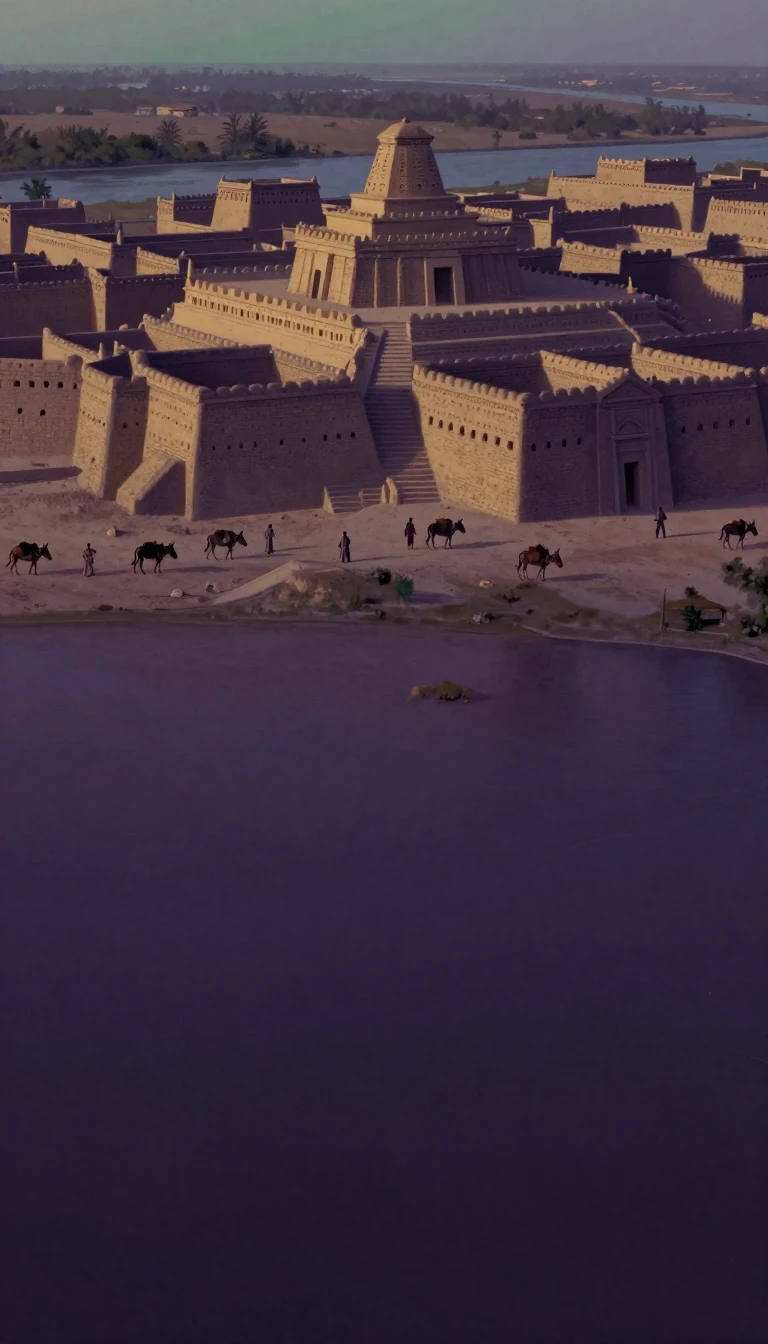 Why the study of cities is more than just architecture and urban designUrban studies is a transdisciplinary field that examines how human values and social interactions shape the physical environment. By blending geography, sociology, and public poli…
 Why the study of coins is known as the Hobby of KingsNumismatics is far more than just hoarding loose change. It is a rigorous discipline tracing the evolution of currency, from ancient cowry shells to modern fiat money. Once the ex…
 Why the study of flags is a modern discipline with ancient rootsWhile flags have signaled identity since the dawn of civilization, the formal academic study of them is surprisingly recent. Coined in 1957, the term vexillology separates the ana…
 Why the study of friction could change your physical worldMechanical engineer Jennifer Vail explores the field of tribology, the study of friction and wear, to reveal how these invisible forces impact our daily lives and how understandin…
 Why the study of triangles powers everything from satellites to songsTrigonometry is often viewed as a dry classroom requirement, but it is actually the mathematical backbone of our modern world. This video explores the fundamental properties of tr…
 Why the stylish Triumph Stag became one of history's most notorious mechanical disappointmentsDesigned by Giovanni Michelotti to rival the Mercedes-Benz SL, the Triumph Stag was a visual triumph that suffered a disastrous reputation. Despite its sleek convertible design an…
 Why the Subaru badge shows six stars of the Seven SistersSubaru is the Japanese name for the Pleiades, the cluster also called the Seven Sisters. Tradition holds that one sister cannot be seen, which is why the badge carries six stars. …
 Why the Subaru Performance Transmission challenges the stigma against continuously variable transmissionsEnthusiasts often dismiss continuously variable transmissions as sluggish or rubber-band-like. This video examines the 2022 Subaru WRX, which offers a performance-oriented CVT alo…
 Why the subatomic world defies everything we know about classical physicsExplore the strange reality of the quantum realm, where particles exist in multiple states simultaneously and distance seems irrelevant. This documentary examines the foundational…
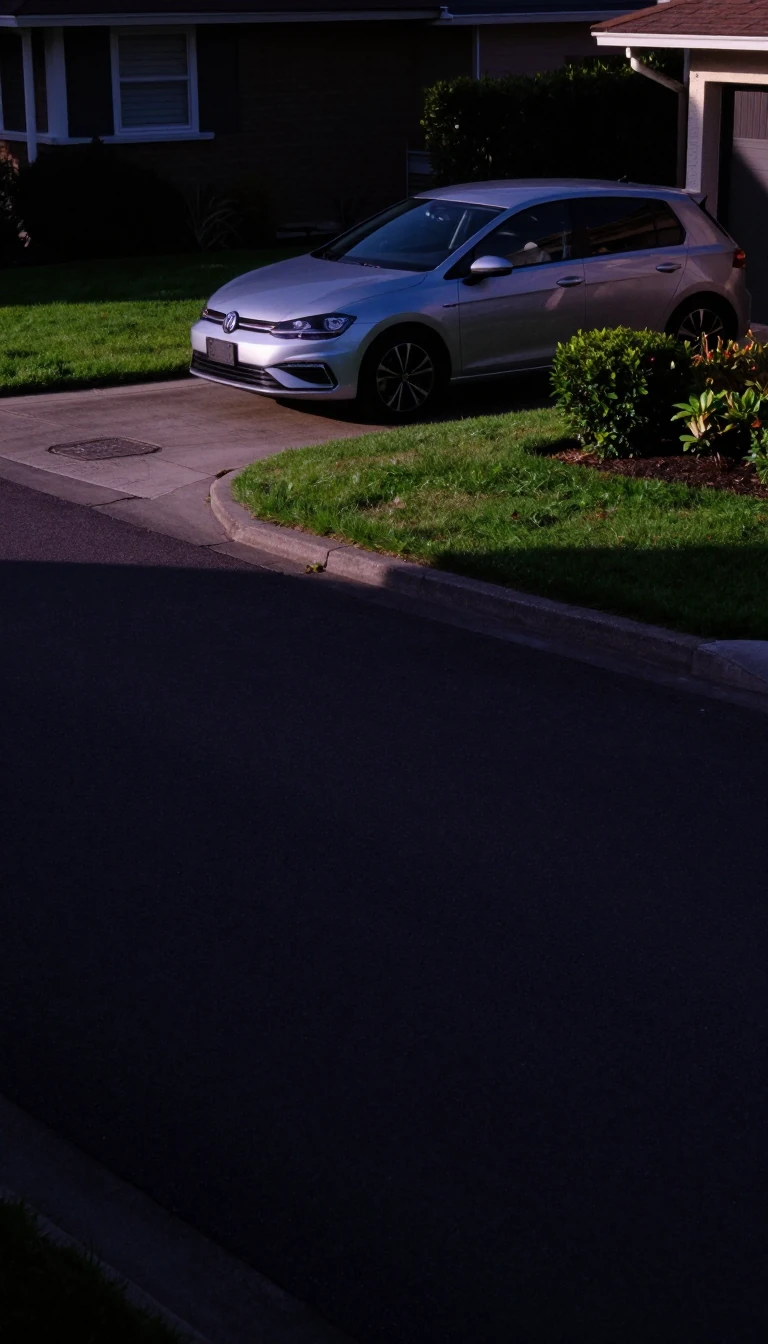 Why the subcompact crossover SUV is the most successful automotive segment of our timeThe subcompact crossover has quietly conquered global roads, evolving from a niche experiment into a dominant market force. By blending the elevated seating and rugged styling of …
 Why the subscription model is shifting from a convenience to a business-critical trapThe subscription model, pioneered by 17th-century publishers, has evolved from a simple way to receive periodicals into a dominant digital strategy. While it offers businesses pre…
 Why the subtle art of hand-kissing remains a powerful gesture of respect todayOnce a staple of European courtly etiquette, the hand-kiss has evolved from a romantic greeting into a complex symbol of hierarchy, faith, and cultural tradition. While largely re…
 Why the success of a pandemic depends more on political coordination than regime typeThe COVID-19 pandemic serves as a massive global lesson in externalities. While we often focus on medical breakthroughs, the true challenge lies in how institutions manage the hid…
 Why the successful invasion of Tinian remains a forgotten chapter of Pacific war history.While battles like Iwo Jima and Okinawa dominate the narrative of the Pacific War, the invasion of Tinian is often overlooked. This video examines why a military operation that pr…
 Why the sudden rise of flowering plants remains a major scientific mysteryAngiosperms, or flowering plants with seeds enclosed in fruit, make up over 90 percent of Earth's plant life. Despite their dominance, the timeline and mechanisms behind their rap…
 Why the suffix on a scientific name tells you exactly where it fitsIn the vast hierarchy of biological classification, the tribe sits quietly between the genus and the family. While these groupings help scientists organize life, identifying them …
 Why the Suit of Swords is the most misunderstood card in the Tarot deckOften feared as the painful suit, the Swords represent much more than mere hardship. As the mental suit of the Tarot, they govern our thoughts, beliefs, and identity. By mastering…
 Why the Suits spin-off Suits LA struggled to find its own legal footingCreated by Aaron Korsh, Suits LA aimed to transplant the high-stakes legal drama of the original series to the glitzy world of Hollywood entertainment law. Despite a star-studded …
 Why the Sultan of Sufis taught that true prayer must never lead to prideKnown as the Sultan, Junayd of Baghdad was a foundational mystic whose influence shaped early Islamic spirituality. He famously argued that spiritual devotion should lead to humil…
 Why the sum of voltages in any closed loop is always zeroUnderstanding how electricity moves requires mastering Kirchhoff's Voltage Law. This video explains a fundamental principle of electrical engineering: why energy balances out perf…
 Why the summer of 1919 became a decisive turning point in the Russian Civil War.This video examines the 1919 summer offensive during the Russian Civil War, detailing the strategic maneuvers of the White movement and the Bolshevik response. It provides essenti…
 Why the sun appears to set, and why its colors are never the sameSunset is not just the sun disappearing; it is a complex interplay of atmospheric physics, planetary rotation, and optical illusions. While we perceive a sinking orb, we are actua…
 Why the sun briefly turns emerald green just before it vanishes from viewThe green flash is a fleeting optical event occurring at sunrise or sunset. While a subtle green rim exists at every sunset, it is usually invisible to the naked eye. When atmosph…
 Why the sun can catch you off guard in unexpected placesYou might assume a sunburn requires tropical heat, but the sun can strike when you least expect it. This video explores how sunburn occurs in the shade or even in the cold, and th…
 Why the sun delivers a different amount of energy depending on where you standSolar irradiance is the power density of sunlight hitting a surface, but the amount you receive depends on more than just the sun. From atmospheric scattering to the tilt of your …
 Why the sun is finally setting on the British Empire this yearFor centuries, the phrase 'the sun never sets' described a global reach where daylight always touched some part of the realm. This video explores the origins of this imperial slog…
 Why the Sun traces a figure-eight pattern across our skyIf you photographed the Sun at the exact same time every day for a year, you wouldn't see a straight line or a circle. Instead, you would witness the creation of a complex shape k…
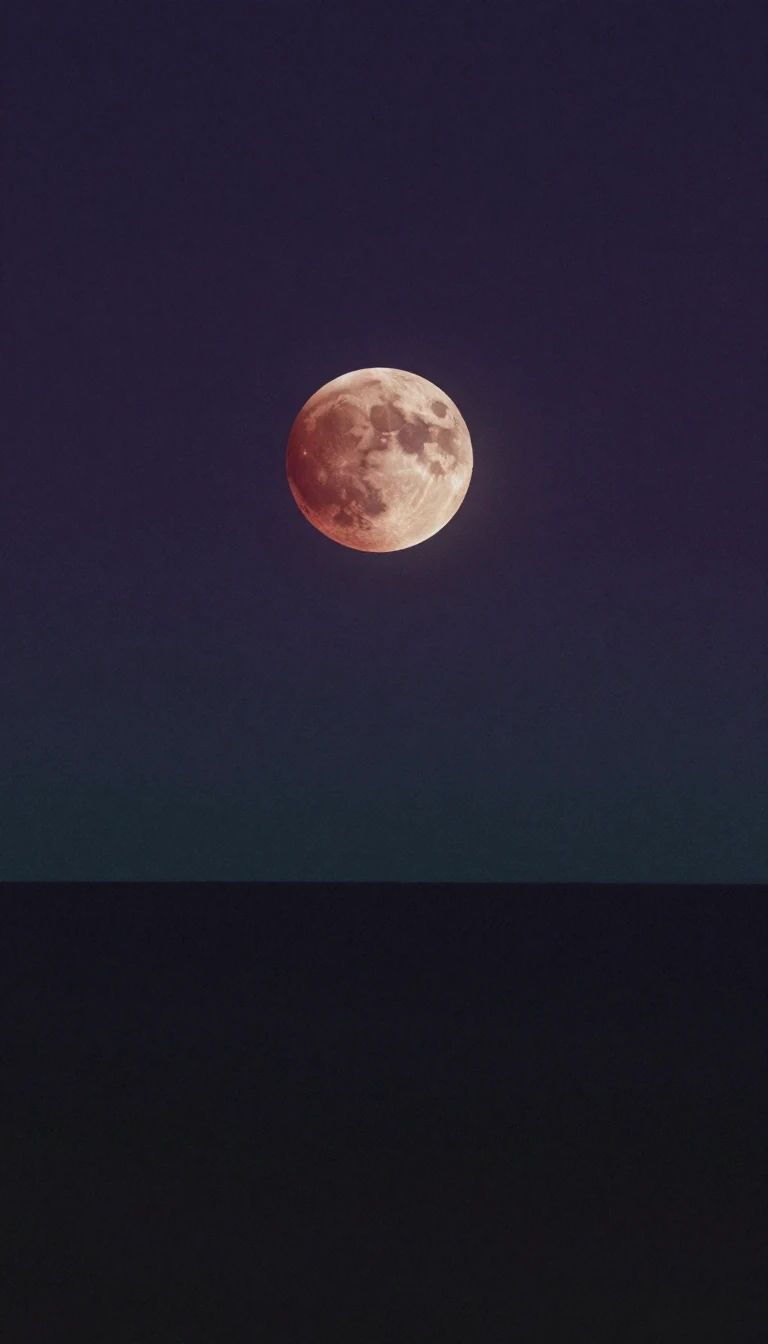 Why the Sun wears a hidden red veil visible only during total eclipsesThe Sun is surrounded by a mysterious, thin layer called the chromosphere. Normally invisible because the photosphere is too bright, this layer reveals its vibrant red hue only wh…
 Why the Sun will eventually shrink into a dense, cooling white dwarfWhile massive stars end their lives in violent supernova explosions, our Sun faces a quieter, albeit destructive, fate. It will eventually expand into a red giant, consuming nearb…
 Why the Sun you see at sunrise is actually a ghost of the pastSunrise is a daily optical illusion. Because Earth’s atmosphere bends light, you witness the Sun before it physically clears the horizon. What you perceive as a rising star is act…
 Why the Sun's exact size remains a moving target for modern astronomersWe define the Sun's radius as 695,700 kilometers, but this is a nominal convention rather than a static physical truth. Because the Sun is a rotating, non-spherical body with a co…
 Why the Sun's light contains a hidden map of the chemical elements within itIn 1814, Joseph von Fraunhofer mapped hundreds of dark lines crossing the Sun's spectrum. These spectral fingerprints, caused by atoms absorbing light in the solar atmosphere, tra…
 Why the Sun's missing particles forced us to rethink the nature of matterFor decades, astrophysicists were baffled by a massive discrepancy: the Sun produced far fewer neutrinos than our best models predicted. This mystery, known as the solar neutrino …
 Why the sun's path across the sky is the secret to perfect building designThe sun does not just rise and set; it traces a precise, predictable arc that shifts with the seasons and your latitude. Understanding this geometry is not just for astronomers. I…
 Why the Sun's solar storms are a modern threat to our digital worldWhile the Sun has always released charged particles, our modern reliance on satellites and global communications has created a new vulnerability to solar-driven turbulence.
 Why the sunless winter at the poles is rarely a total blackoutPolar night is defined as a period exceeding 24 hours where the sun fails to crest the horizon. Yet, this phenomenon is rarely a state of absolute darkness. Thanks to atmospheric …
 Why the Super Bowl dominates the history of American television viewership recordsWhen we look at the most-watched television events in American history, one spectacle consistently rises to the top. While news events like the 1969 moon landing captured massive …
 Why the Super Bowl of Stock Car Racing happens before the season even beginsThe Daytona 500 is a sporting anomaly. While most championships culminate in a grand finale, this prestigious 500-mile race serves as the season-opening event for the NASCAR Cup S…
 Why the Super Friends abandoned their peaceful diplomacy for comic book style combatFor over a decade, the Super Friends defined Saturday morning television. While early episodes focused on peaceful resolutions and environmental themes, the show eventually pivote…
- Why the supercharged 6.2L Hellcat V8 is a masterclass in raw powerThis video breaks down the engineering behind the Dodge Challenger SRT Hellcat's iconic engine. You will explore its specifications, layout, and the specific mechanics that allow …
 Why the supergroup G.R.L. was intentionally misspelled to exclude the word 'team'The American girlband G.R.L. wasn't just a catchy name; it was a deliberate linguistic choice. By removing the letter 'I', the group's name reflected a specific philosophy regardi…
 Why the superhero Shazam was once known as Captain Marvel and then renamedBefore becoming a DC Extended Universe staple, the hero now known as Shazam spent decades in legal limbo. Originally created as Captain Marvel in 1939, the character faced a long …
 Why the superheterodyne radio is named after a clever mathematical trickThe superheterodyne receiver sounds like a strange name, but it describes a logical, effective method for tuning radio signals. This video explains how the design uses algebra and…
 Why the supernatural drama Ghost Whisperer left its audience with unfinished businessFor five seasons, Melinda Gordon helped earthbound spirits cross into the light. Yet, when CBS abruptly canceled the series in 2010, the show’s star, Jennifer Love Hewitt, lamente…
 Why the supposedly impregnable National Redoubt of Antwerp fell in just eleven daysAntwerp was designed as a final, invincible sanctuary for the Belgian state, ringed by two layers of modern forts. Yet, when German heavy artillery arrived in 1914, the city’s def…
 Why the Supreme Court relies on its own past decisionsUnderstanding how the Supreme Court maintains consistency in American law requires looking at the principle of stare decisis. This video explains how previous rulings shape curren…
 Why the Supreme Deity of Yoruba Religion Has No Shrines or Direct WorshipỌlọrun is the omnipotent, omnipresent creator of the universe in Yoruba tradition, yet this supreme being remains distant and inaccessible. Unlike the divine beings who govern the…
 Why the supreme international crime has resulted in almost no criminal prosecutions since 1948.Known as the supreme international crime, aggression involves state leaders initiating large-scale military force against another nation. Despite its status as a core internationa…
 Why the supreme poet of Greek comedy was almost entirely lost to historyMenander was the master of Athenian New Comedy, yet for centuries his work existed only as scattered fragments. While he wrote over 100 plays, his complete corpus vanished, leavin…
 Why the surface area of a sphere and cylinder share a 2:3 ratioSurface area is more than just a measurement; it is a fundamental constraint on biology, chemistry, and geometry. From the way elephants regulate heat to why cells cannot grow ind…
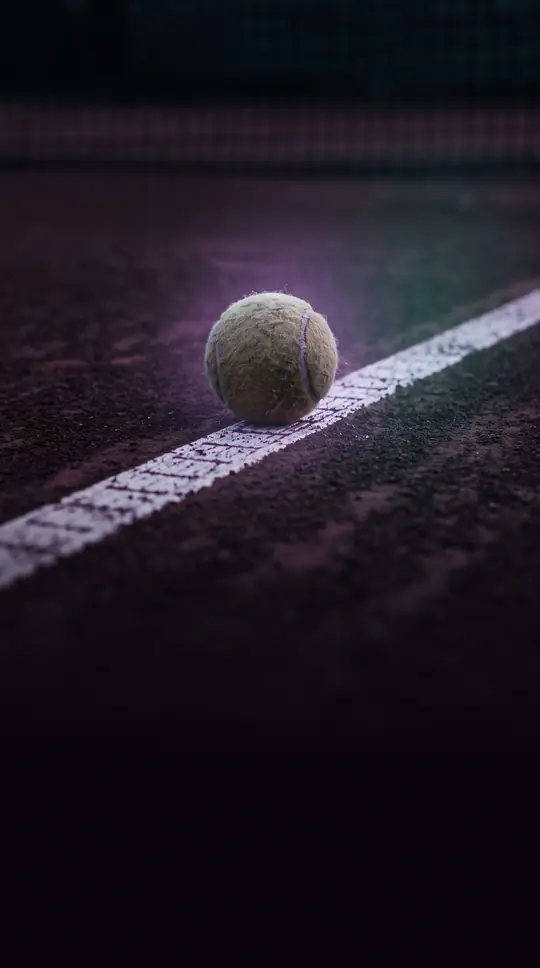 Why the surface beneath your feet dictates how a tennis match is wonA tennis court is far more than a simple rectangle. From crushed brick to termite mounds, the material underfoot fundamentally alters the physics of the game. By changing the spee…
 Why the survival of a criminal in Infernal Affairs is actually his ultimate punishmentIn the 2002 Hong Kong thriller Infernal Affairs, the protagonist who survives is not the winner. By framing the story through the Buddhist concept of Avīci, or continuous hell, th…
 Why the survival of Native American languages matters for cultural identityExplore the vital connection between language and culture through the lens of endangered and thriving Native American tongues, featuring the perspectives of Tlingit linguists Nora…
 Why the survival of our ancient history relied on a few secret book huntersHistory is not a guaranteed record. This documentary explores the vital, often overlooked role of book hunters who risked everything to preserve manuscripts during eras of destruc…
 Why the survival of the Pacific kelp forest depends on sea ottersSea otters are more than just charismatic animals; they are a keystone species essential to the health of Pacific kelp forests. This video explores their role in ecosystem stabili…
 Why the Sutton Hoo helmet remains the most iconic find in British archaeologyThe 1939 Sutton Hoo excavations revealed an unparalleled ship burial, but one artifact stands above the rest. This video follows a curator as they handle the delicate, intimidatin…