The troposphere is the thin, turbulent engine driving almost all of Earth's weather.
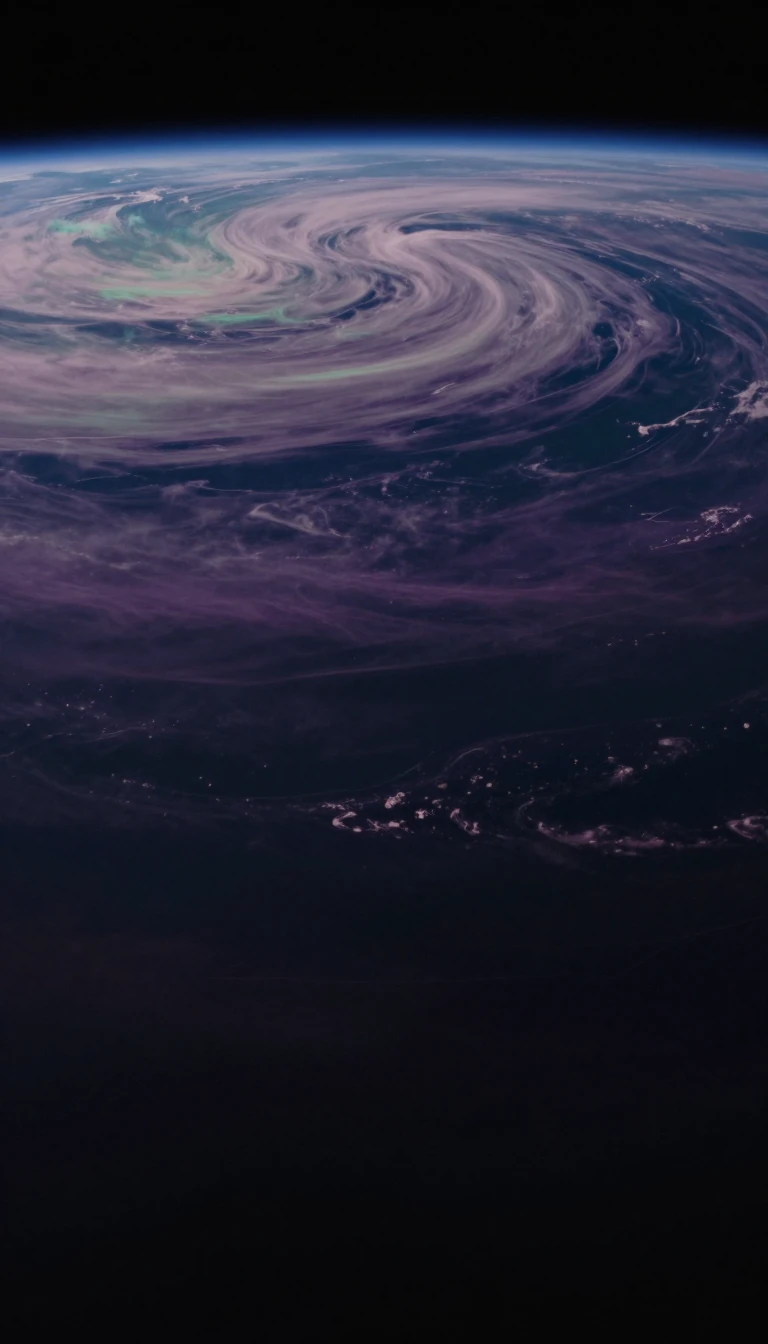
In short: While we live at the bottom of the atmosphere, we rarely consider the troposphere as a distinct, shifting machine. Containing nearly 80% of the atmosphere's mass and almost all its water vapor, this layer is where clouds form, storms brew, and the planet's temperature creates the weather we experience daily.
The troposphere is the lowest region of Earth's atmosphere, extending from the surface to the tropopause, a boundary that marks the transition to the stratosphere. Its height is not uniform; it fluctuates based on latitude and season. Near the equator, it can reach up to 20 km, while over the poles in winter, it may drop to as low as 6 to 7 km. This variation is driven by solar heating, which causes the air to expand and rise, making the layer thicker in tropical regions.
A defining characteristic of the troposphere is that temperature decreases with altitude. This occurs because the Earth's surface absorbs solar energy and radiates it outward, heating the air from below. As air parcels rise, they encounter lower atmospheric pressure, expand, and lose energy, resulting in cooling. This process is governed by adiabatic lapse rates, which account for how dry or moist air behaves as it ascends. Because the air is warmest at the surface, the troposphere is inherently unstable, facilitating the vertical mixing and turbulence that define our weather patterns.
Beyond temperature, the troposphere holds roughly 75% to 80% of the atmosphere's total mass and nearly all of its water vapor. This moisture is the fuel for clouds and precipitation. While the lower atmosphere is relatively well-mixed, phenomena like jet streams and upper-air waves in the higher reaches of the troposphere exert significant influence on surface pressure patterns. These interactions, such as the El Niño/Southern Oscillation, demonstrate how anomalies in ocean-surface temperatures can trigger weather events thousands of miles away, illustrating the complex, interconnected nature of this thin, vital layer.
Understanding the troposphere is essential for modern life, from predicting severe storms to managing food production and transportation. Since the mid-19th century, scientific forecasting has evolved from simple observation to complex computer modeling. Today, meteorologists use radar, satellites, and physics-based models to track everything from local humidity to global cyclone movements, though the inherent variability of the mid-latitudes remains a significant challenge for long-range accuracy.
Opens the Intellect+ feed with this card first. Swipe up for the next one.
Sources
- Summary by Intellect · source: Troposphere | Weather, Climate Change & Air Pollution | Britannica
- Also: Troposphere
- Also: The Troposphere | Center for Science Education
To cite this card, link to https://intellectplus.co.uk/app/nature-troposphere.
How we source, check and correct cards: Editorial standards.
General information, not professional advice. Spotted an error? Flag the card or see corrections and complaints.
Intellect Plus is a visual educational discovery platform for exploring fascinating facts and ideas. Brain Food, Not Brain Rot. What is Intellect Plus?
Related
More in Air · More in Nature · Latest · A–Z · All topics
