 Intellect Plus
Performing arts
253 cards. Each one is a 40-second story with a five-minute read behind it. Page 2 of 5.
 For two centuries, the law punished the homeless for the crime of being poor.The 1824 Vagrancy Act once criminalized rough sleeping and begging in England, treating poverty as a moral failing rather than a social crisis. As governments shift toward support…
 Why the best stories often abandon plot to capture a single, vivid momentA vignette is a literary snapshot, prioritizing imagery and meaning over traditional narrative arcs. Derived from the French word for little vine, these brief, spontaneous sketche…
 Windsor: From a medieval boomtown to the beating heart of the British EmpireWindsor is far more than a royal residence. Once a bustling medieval hub that rivaled Canterbury for pilgrim traffic, the town transformed through centuries of royal investment, i…
 How a Box-Office Flop Inspired the Golden Raspberry Awards and Became a Cult ClassicReleased in 1980, the musical fantasy Xanadu was a critical failure that helped spawn the Golden Raspberry Awards. Yet, the film’s innovative special effects, vibrant 1980s aesthe…
 Training animals is a precise science of consequences, from goldfish to elephantsAnimal training is far more than simple commands. It is a sophisticated application of operant conditioning, where trainers manipulate stimuli to shape behavior. Whether teaching …
 Why ballet technique is the invisible architecture behind every graceful leap and turnBallet technique is far more than mere aesthetic preference; it is a rigorous framework of physical principles designed to defy gravity. By mastering alignment, turnout, and muscl…
 Once a harvest celebration for farmers, Bhangra is now a global dance phenomenon.Bhangra began as a communal folk dance in the Punjab region, performed by farmers to celebrate the harvest. Today, it has evolved from its traditional roots into a high-energy, gl…
 The Spanish bolero is a rhythmic dance that inspired centuries of classical music masterpieces.Originating in 18th-century Spain, the bolero evolved from a lively couple's dance into a global musical phenomenon. While its traditional form relied on castanets and precise foo…
 The high-energy can-can was once a scandalous, male-dominated dance of the Parisian streets.Long before it became a synchronized chorus-line staple for tourists, the can-can was a rowdy, individualistic performance. Often danced by men in the 1830s, this physically deman…
 The secret science of card magic is built on centuries of calculated deceptionCard manipulation is more than just sleight of hand; it is a sophisticated craft of psychological control and technical precision. From false shuffles that maintain a deck's order…
 The Hidden Power Brokers Who Decide Which Actors You See on ScreenCasting directors are the unseen architects of film and television. While directors make the final call, these professionals control the talent pool, managing everything from init…
 The Cha-Cha-Chá Was Born From a Composer's Frustration With Complex Syncopated RhythmsIn the early 1950s, Cuban violinist Enrique Jorrín noticed dancers struggling with the syncopated rhythms of the danzón-mambo. By simplifying his compositions to emphasize the fir…
- The circle dance is humanity's oldest social ritual, spanning from Paleolithic caves to modern weddings.From the Bhimbetka rock shelters in India to contemporary wedding halls, the circle dance remains a universal human expression. By linking hands or shoulders, participants shed in…
- Why do we watch dance instead of just doing it ourselves?Concert dance transforms movement into a deliberate spectacle for an audience. Unlike social dance, which prioritizes participation, this art form relies on rehearsed choreography…
- How contemporary ballet broke the rigid rules of classical dance to find new freedomContemporary ballet blends the technical precision of classical training with the fluid, grounded movements of modern dance. By discarding the strict requirements of tutus and upr…
 Is extreme flexibility a natural gift or the result of rigorous physical training?Contortion is more than just bending; it is a demanding performance art requiring immense strength to stabilize joints. While genetics and hypermobility play a role, the most impr…
- Contra dance is a social, non-hierarchical folk tradition that thrives on continuous, rhythmic movement.Contra dance is a communal folk form where couples progress through long lines, dancing with everyone in the set. Unlike many social dances, it requires no memorization or specifi…
- The corps de ballet is the backbone of dance, yet its history is complex.Far from mere background scenery, the corps de ballet provides the essential framework and aesthetic form for classical dance. While these dancers move in perfect synchronization …
 Why the cups and balls trick is the ultimate litmus test for every magicianFor two millennia, the cups and balls have served as the fundamental training ground for sleight of hand. From ancient Roman conjurers to modern masters, this deceptively simple r…
- Dabke: The ancient Levantine dance that turns stomping feet into a symbol of unityDabke is a vibrant group dance across the Levant, defined by rhythmic footwork and synchronized movement. Whether performed spontaneously in a village square or by professionals a…
 Why dance crazes are more than just fleeting fads of the twentieth centuryFrom the Twist to Gangnam Style, dance crazes are short-lived bursts of popularity that define specific eras. While often dismissed as commercial novelties, these dances reveal ho…
- Dance notation is the art of translating four-dimensional movement into two-dimensional written signs.Just as musical notation captures sound, dance notation attempts to freeze the fluid, four-dimensional nature of movement onto paper. From Renaissance shorthand to modern digital …
 Drag kings have performed for centuries, yet they remain the stage's best-kept secret.While drag queens often dominate mainstream pop culture, drag kings have a rich, global history spanning from Tang dynasty China to modern cabaret. These performers use makeup, pr…
 From underground speakeasies to mainstream brunch, the evolution of the modern drag show.Drag shows began as secret gatherings for marginalized communities in the 1920s. Today, they have transformed into a widespread cultural phenomenon, moving from hidden nightclubs …
- Why the length of a dragon puppet determines the luck of a communityThe dragon dance is a sophisticated performance where teams manipulate massive, serpentine puppets to simulate mythological movement. Beyond the spectacle, these dances are deeply…
 Escapology: How Performers Turned Secret Illusions Into a High-Stakes Art FormEscapology began not as a public spectacle, but as a hidden tool for illusionists to simulate spirit phenomena. It took decades for the craft to evolve into the death-defying, ove…
- Why early 20th-century dancers traded their shoes for the raw spirit of movementExpressionist dance emerged as a radical rebellion against the rigid, mechanical constraints of classical ballet. By prioritizing raw emotion, improvisation, and the natural body …
- The foxtrot is a smooth, flowing dance that once dominated the global music charts.Developed in the 1910s, the foxtrot became the most popular fast dance for decades. It was so pervasive that even early rock and roll hits were marketed as foxtrots to ensure thei…
 The hidden mechanics of the hand puppet: from simple socks to complex human-arm performancesA hand puppet is more than a toy; it is a sophisticated extension of the performer. While simple versions rely on a single hand inside a glove, advanced variants require multiple …
 From Balkan weddings to Zionist symbols, the hora is a dance of many names.Across Southeast Europe and the Jewish diaspora, the hora is more than a simple circle dance. Whether performed as a festive Romanian tradition or a foundational element of modern…
 Why a tower of playing cards can become stronger as it grows tallerBuilding a house of cards is usually seen as a delicate test of patience, prone to collapse at the slightest tremor. Yet, professional architects argue that these structures rely …
 Hula is not just a dance, but a sacred vessel for Hawaiian oral history.Far beyond the tourist-friendly imagery, hula is a complex, disciplined art form rooted in the preservation of genealogy, mythology, and spiritual mana. Whether performed as ancie…
- Why Indian classical dancers use their entire bodies to tell ancient, sacred storiesUnlike Western ballet, which prioritizes height and speed, Indian classical dance is a narrative art form rooted in religious ritual. By combining intricate hand gestures, rhythmi…
- From ancient courtly grace to spiritual trance, discover the diverse world of Iranian dance.Iranian dance is a vast tapestry of styles, ranging from refined court performances to energetic folk traditions. While the 1979 Revolution forced many artists into the diaspora, …
- From Elizabethan Stages to Minstrel Shows: The Surprising Global Evolution of the JigThe jig is more than a lively folk dance. Originating in the 16th century, it transformed from a dramatic stage performance in England into a cornerstone of Irish tradition and a …
- The jitterbug began as a mocking term for white dancers in HarlemOriginally a derogatory label for white patrons who danced the Lindy Hop with erratic, jumpy energy, the jitterbug evolved into a global phenomenon. Driven by American soldiers du…
- Why the high-energy jive is often misclassified as a Latin ballroom danceThe jive is a high-octane dance born from African American culture in the 1930s. While modern ballroom competitions often lump it in with Latin styles, its true DNA is rooted in s…
- Beyond the circus ring: how juggling evolved from ancient battlefield tactics to modern sportJuggling is far more than a simple circus act. From ancient warriors who allegedly won battles with nine balls to modern practitioners using complex mathematical notation, this ar…
 Kathakali is a centuries-old Indian dance-drama where makeup and movement define character archetypes.Originating in 17th-century Kerala, Kathakali is a rigorous synthesis of dance, drama, and music. Performed traditionally by men, this art form uses codified hand gestures and int…
 Kochari is an ancient, intimidating circle dance that mimics the movements of jumping goats.Across the Armenian Highlands, dancers link arms to perform a rhythmic, warlike display that has persisted for over a millennium. Whether interpreted as a call to knees or a nomad…
- Latin dance is a global fusion born from centuries of cultural collision and evolutionLatin dance is not a single style, but a dynamic category encompassing everything from competitive ballroom to street social dances. It emerged from a complex synthesis of Indigen…
 Beyond the Chinese tradition, lion dances are a global phenomenon of ritual and myth.While often associated with Lunar New Year, the lion dance is not a singular tradition. From the acrobatic Northern Chinese style to the heavy, tooth-carried masks of Java and the…
- The Mambo was once a wild, unscripted Cuban dance before it became a ballroom commodity.Born in the 1940s as a fusion of son and swing, the original mambo was a radical departure from rigid dance traditions. It prioritized raw, individual expression over structured s…
 Why the most impersonal actors on stage can evoke our deepest human emotionsMarionettes are more than simple string-pulled figures. By stripping away the actor's personality, these puppets force audiences to project their own inner lives onto the stage. T…
 Mentalism is a performance art that blurs the line between psychology and the supernatural.Mentalists appear to demonstrate psychic abilities, yet they rely on conjuring, behavioral science, and subtle influence. Unlike stage magicians who perform visual illusions, ment…
 The secret to stage magic is not what you see, but what you ignore.Magic relies on a fundamental psychological vulnerability: the human brain struggles to process multiple focal points simultaneously. By manipulating where an audience looks and w…
 How British music halls evolved from rowdy pub saloons into the birth of varietyBorn in 1830s London pub saloons, music halls were once raucous venues where audiences smoked and drank while watching comedy and song. Over a century, these working-class spaces …
 Is the iconic Spanish pasodoble actually a French invention in disguise?The pasodoble is synonymous with Spanish bullfighting, yet its origins remain a subject of intense debate. While often viewed as a traditional Iberian military march, some musicol…
 Is performance a display of skill, a psychological state, or an act of rebellion?Performance is more than just a stage production. It spans from the structured requirements of workplace tasks to the chaotic, avant-garde happenings of the 20th century. Whether …
 Performance poetry is an ancient oral tradition reborn through modern technology and live competitionLong before the printing press, poetry was a performance art. Today, it has evolved from Dadaist sound experiments and 1980s radio broadcasts into a global phenomenon. From compet…
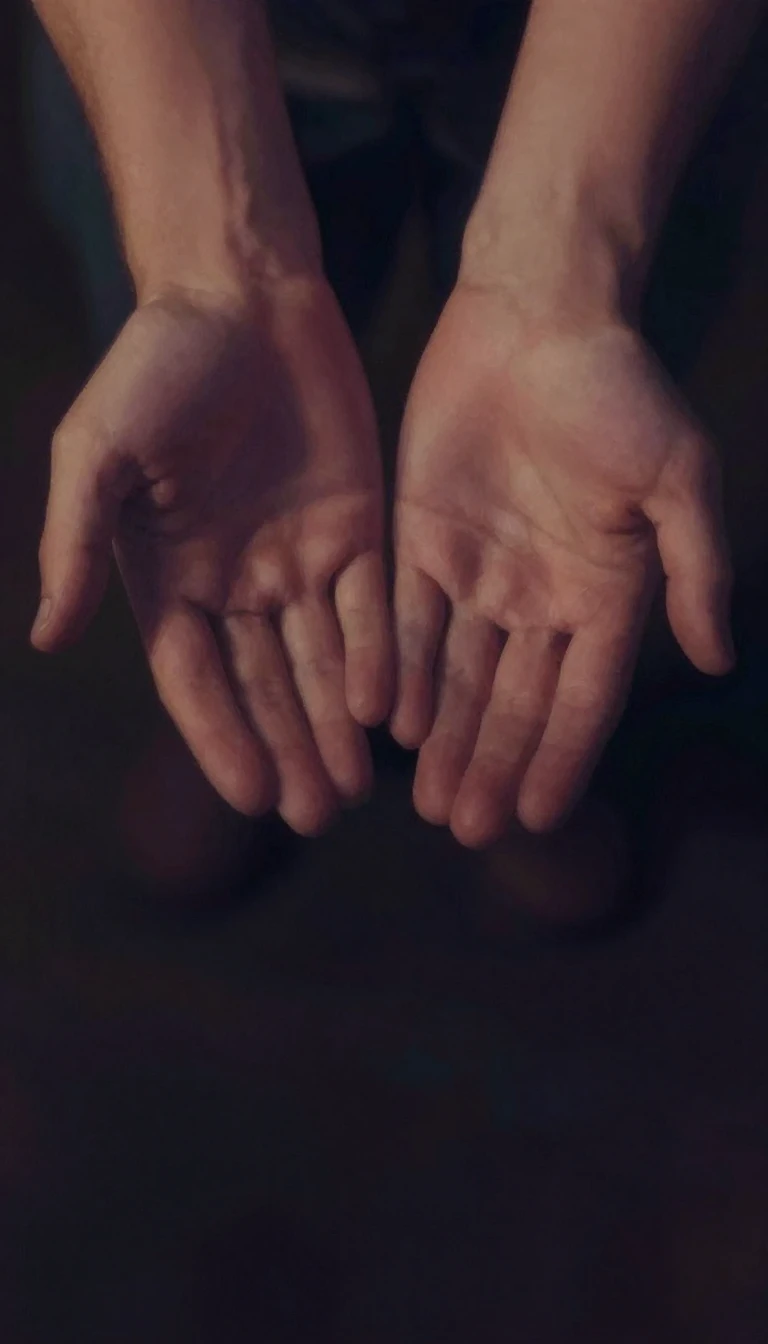 Why the objects in your favorite films are called properties, not just props.A prop is any movable object on stage or screen, distinct from costumes or scenery. While we use the shortened term today, the word property originated in the 15th century, reflec…
- The Quickstep: How a 1920s Jazz Fusion Became the Standard for Ballroom EleganceBorn from the frantic energy of the 1920s, the quickstep is a ballroom marvel that blends the smooth grace of the foxtrot with the rhythmic rebellion of the Charleston. It is a da…
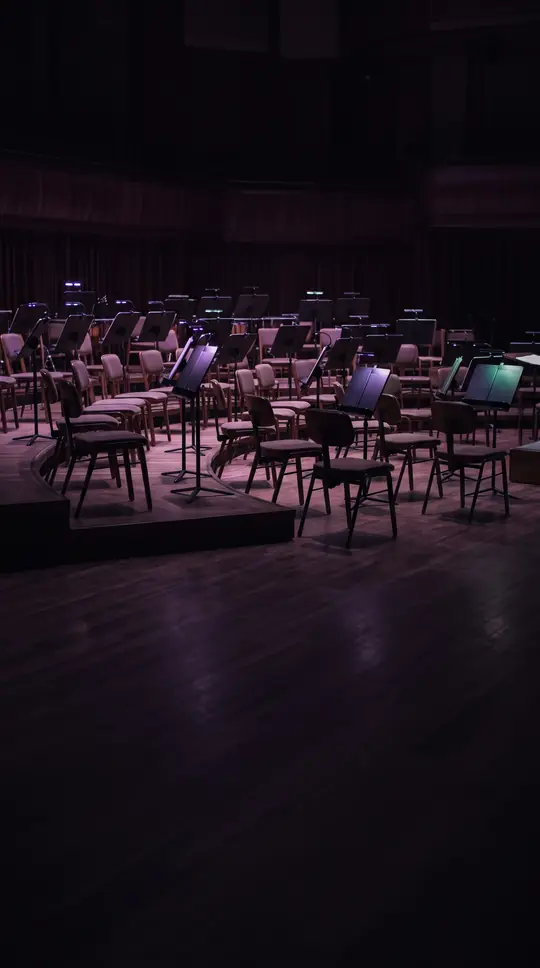 Beyond the stage, rehearsal is a universal tool for mastering complex, high-stakes coordination.While we associate rehearsals with music and theatre, the practice is a fundamental mechanism for preparation across human endeavor. From orchestras refining dissonant harmonies t…
 How Russian dancers shattered Western expectations and reinvented ballet for the modern ageIn 1909, Serge Diaghilev brought the Ballets Russes to Paris, transforming ballet from a fading curiosity into a premier theatrical art. By blending elite choreography, avant-gard…
- Why humanity has danced before its gods for thousands of yearsFrom ancient fertility rites to modern meditative circles, sacred dance has served as a bridge between the human body and the divine. Whether to summon rain, honor the dead, or ac…
 Salsa is not just a dance; it is a global language of rhythmic movementSalsa is a vibrant, worldwide phenomenon that blends African polyrhythms with European partner structures. While often seen as a simple social dance, it is a complex, evolving art…
 Samba is not one dance but a diverse language of rhythm and resistanceSamba is often mistaken for a single, uniform style seen in Carnival parades. In reality, it is a complex set of Afro-Brazilian traditions that evolved from 17th-century roots. Fa…
 How a simulated war in the Sahara preserves peace between rival communitiesIn the Algerian oasis of Djanet, the Tuareg people transform the potential for real-world violence into a vibrant artistic competition. During the first ten days of the Islamic lu…
 Shadow play is an ancient, global art form that predates modern cinematic projection techniques.Long before the silver screen, shadow puppetry captivated audiences from Asia to Europe. By manipulating articulated figures between a light source and a translucent screen, skill…
- The sideshow evolved from exploitative human exhibits to a modern celebration of extreme stunts.Once defined by the controversial display of human oddities, the sideshow has undergone a radical transformation. As public opinion shifted and legal restrictions tightened, the i…