 Intellect Plus
Visual artists
833 cards. Each one is a 40-second story with a five-minute read behind it. Page 8 of 14.
 Why the Inquisition once put a Renaissance master on trial for his paintingPaolo Veronese was a titan of the Venetian Renaissance, famous for monumental canvases and brilliant color. Yet, his creative freedom once landed him before the Inquisition. Charg…
 Was the Mannerist master Parmigianino actually a failed alchemist obsessed with printmaking?Girolamo Francesco Maria Mazzola, known as Parmigianino, was a brilliant Italian painter whose career was defined by elongated forms and refined sensuality. Yet, his life was mark…
 How a French sculptor defined the visual identity of Brazil's most iconic monumentPaul Landowski was a prolific monument maker whose influence spans from the streets of Paris to the summit of Mount Corcovado. While his name is synonymous with the massive Art De…
 How a sailor turned scientific precision into the vibrant, dotted world of Neo-ImpressionismPaul Signac abandoned architecture to master the art of light. By replacing intuitive brushstrokes with a rigorous, scientific system of pure color dots, he helped pioneer Pointil…
 How Paul Strand transformed the camera from a painter's tool into an objective eyePaul Strand rejected the soft, manipulated aesthetics of early 20th-century photography to embrace the camera's inherent sharpness. By treating everyday objects as abstract geomet…
 How Peter Behrens invented the modern corporate identity and shaped the industrial ageBefore Peter Behrens, companies lacked a cohesive visual language. By designing everything from factory buildings to product logos for AEG, Behrens pioneered the role of the indus…
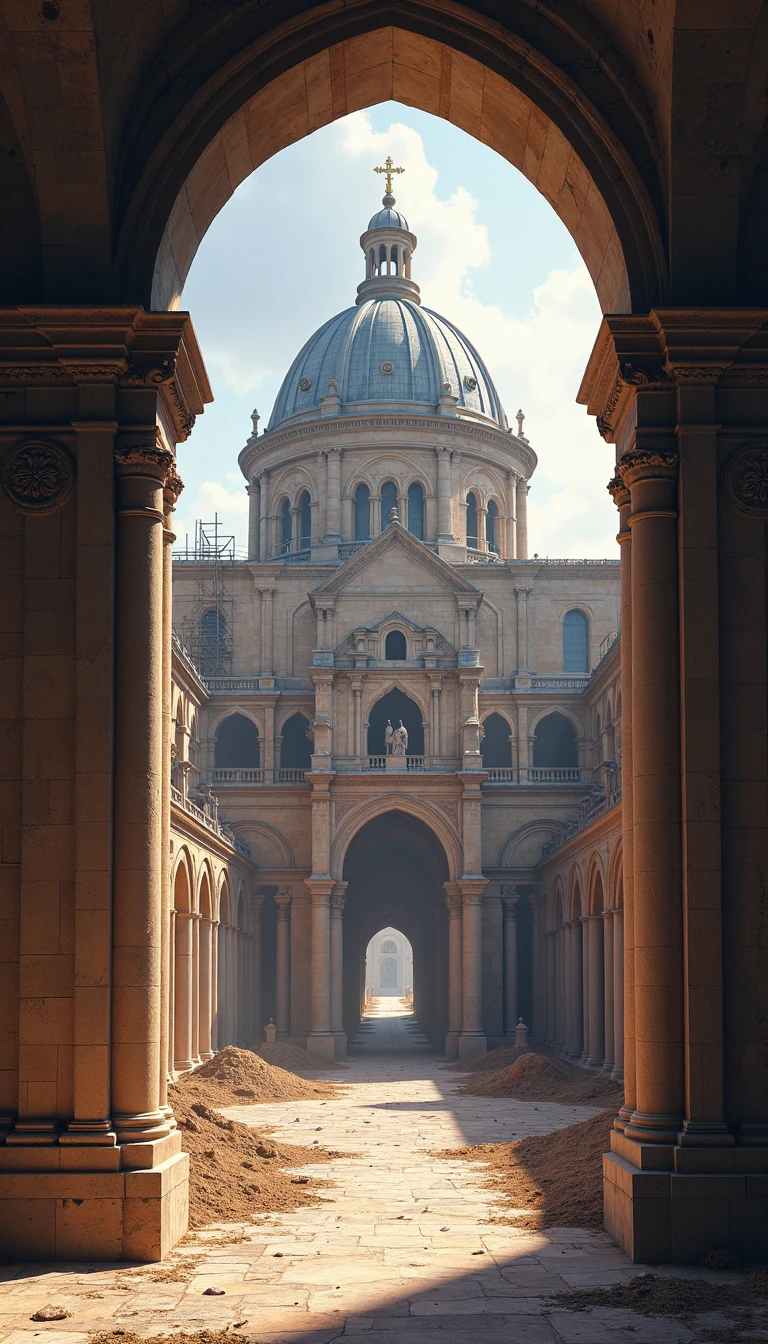 How a 23-year-old architect built the most important cathedral in the Holy Roman Empire.When Charles IV sought to transform Prague into a showcase capital, he entrusted the construction of St. Vitus Cathedral to Peter Parler. Arriving in 1356, the young master builde…
 Why Peter Zumthor keeps his architecture practice small and his buildings quietPeter Zumthor is a master of the austere, creating spaces that feel both monumental and deeply intimate. By intentionally limiting the size of his practice, he ensures he remains …
 How a Belgian artist's accidental nickname became a global cultural phenomenonPierre Culliford, known as Peyo, began his career as a struggling cartoonist after World War II. While his medieval fantasy series Johan and Peewit defined his early work, a minor…
 Why did an Italian artist sell 90 cans of his own excrement in 1961?Piero Manzoni was a master of irony who challenged the nature of art itself. By pricing his infamous canned works based on the fluctuating market value of gold, he created a bitin…
 Pierre Balmain turned Parisian elegance into a global standard after the Second World War.Before he became a titan of haute couture, Pierre Balmain learned the business of fashion under Lucien Lelong alongside Christian Dior. In 1945, he launched his own house, quickly…
 Why this master of color refused to stretch his canvases onto framesPierre Bonnard was a painter who rejected the constraints of traditional art. He famously worked on unstretched canvases tacked to his studio walls, allowing him to decide the dim…
 How a tailor from Italy defined the Space Age aesthetic of the 1960s.Pierre Cardin transformed fashion by ignoring traditional silhouettes in favor of geometric shapes and futuristic motifs. Inspired by the dawn of space exploration, he pioneered t…
- The volatile French engineer who sketched the blueprint for America's capital cityPierre Charles L'Enfant was a brilliant, uncompromising artist and military engineer whose grand vision shaped Washington, D.C. Though his temperament led to his dismissal and a l…
- Why did the master who taught Raphael eventually fall out of favor with critics?Pietro Perugino was once the summit of Italian Renaissance painting, celebrated for his clarity and spacious compositions. Yet, as his career progressed, he faced harsh mockery fr…
 Was this ancient Greek painter the true inventor of the art of painting?Polygnotus, a master of the 5th century BC, transformed Greek art by abandoning simple groundlines for complex, multi-level landscapes. Though none of his monumental murals surviv…
 How a Greek Sculptor Used Mathematics to Define the Ideal Human FormPolykleitos, a master of the Argive school, revolutionized classical art by codifying beauty into a rigorous mathematical system. His lost treatise, the Canon, introduced the conc…
- Why did this Renaissance master abandon the rules of perspective for a haunting, floating world?Jacopo Pontormo broke from the calm, balanced traditions of the Florentine Renaissance to create an unsettling, Mannerist style. His figures seem to defy gravity, drifting through…
- A peasant carpenter who became China's most expensive and prolific master of inkQi Baishi rose from humble beginnings to become a titan of Chinese art, mastering everything from seal carving to painting shrimp and mice. Despite living through the fall of the …
 Qiu Zhu: The Ming Dynasty Artist Who Mastered the Transcendent FigureActive during the late Ming dynasty, Qiu Zhu emerged as a celebrated painter of religious figures and women at leisure. Often compared to the legendary Li Gonglin, she refined a s…
- How a Dutch painter commanded higher prices than Rembrandt during the Golden AgeRachel Ruysch was a powerhouse of the Dutch Golden Age, achieving international fame for her dynamic floral still lifes. While many women of her era were steered toward domestic c…
 How a Javanese Painter Used European Romanticism to Subvert Colonial NarrativesRaden Saleh was the first modern Indonesian artist to master Western painting, winning over European courts while secretly embedding anti-colonial defiance into his work. By manip…
 How a Bronx-born salesman built a global empire on the myth of British aristocracy.Ralph Lauren transformed from a tie salesman in the Empire State Building into a billionaire icon of American style. By blending the aesthetics of English country life with a dist…
 How a self-taught sculptor redefined Indian public art by honoring the rural working classRamkinkar Baij transformed the landscape of modern Indian art by turning away from elite, state-commissioned aesthetics. Instead, he drew inspiration from the dignity of Adivasi c…
 Rem Koolhaas rejects architectural sentimentality to embrace the gritty, unpredictable energy of modern life.Before he became a world-renowned architect, Rem Koolhaas worked as a journalist and screenwriter. This background informs his unique approach: he avoids fixed aesthetic styles, i…
 Renzo Piano: The Architect Who Turns Buildings Inside-Out and Into Urban MachinesRenzo Piano does not have a signature style. Instead, he treats every project as a unique puzzle, from high-tech Parisian museums to earthquake-resistant airports in Japan. By ble…
 Reza Abbasi: The Last Great Master of the Persian Miniature and His Mid-Life CrisisReza Abbasi, the preeminent Persian miniaturist of the late Safavid era, defined an era of art before abandoning his royal post for the gritty underworld of Isfahan. Known for his…
 How a bald street kid in a yellow gown birthed modern sensationalist journalism.Richard F. Outcault transformed the newspaper industry by pioneering the comic strip. His creation, the Yellow Kid, became a cultural phenomenon so powerful that the fierce rivalr…
 The mathematician who transformed tabletop gaming by treating cards like roleplaying charactersRichard Garfield, a mathematician with a Ph.D. in combinatorial studies, revolutionized the gaming industry by inventing the first collectible card game. By blending the customiza…
 Richard Meier redefined modern architecture through pure geometry, open space, and brilliant white light.Richard Meier is an American architect celebrated for his mastery of light and geometric precision. His iconic structures, such as the Getty Center and the High Museum of Art, exe…
 Why did Richard Neutra use detailed questionnaires to design his clients' dream homes?Richard Neutra, a titan of mid-century modernism, famously rejected the architect's ego. Instead of imposing a singular artistic vision, he used rigorous, sometimes surprising, qu…
- Why Richard Rogers turned buildings inside out to celebrate their structural bonesRichard Rogers redefined modern architecture by exposing the guts of his buildings. By moving service elements like elevators and ductwork to the exterior, he created flexible, hi…
 How Richard Scarry turned a fictional town into a global childhood phenomenonWith over 100 million books sold, Richard Scarry created the iconic Busytown, a world of anthropomorphic animals defined by cooperation and community. Beyond the whimsical illustr…
 Why Richard Serra’s massive steel sculptures are designed to make you feel physically uneasyRichard Serra transformed sculpture by abandoning traditional pedestals for raw, industrial materials. By balancing massive steel plates through gravity alone, he created works th…
 How a teenage comic artist sparked a revolution in creator-owned superhero storytellingRob Liefeld rose from a teenager tracing comics in Anaheim to a central figure in the 1990s industry. By co-founding Image Comics, he helped shift the power balance from publisher…
 How a Scottish Architect Transformed the Heavy Palladian Style Into Airy Neoclassical EleganceRobert Adam was a man of intense contradictions: an arrogant social climber who was also a deeply dedicated artist. By abandoning the rigid, heavy architecture of his predecessors…
 Was the Master of Flémalle actually the legendary Tournai master Robert Campin?For decades, art historians debated the identity of the mysterious Master of Flémalle. Today, most scholars believe this enigmatic figure was Robert Campin, a prominent 15th-centu…
 Robert Crumb transformed underground comics from mere entertainment into a medium for raw self-expression.Once a greeting card illustrator, Robert Crumb became the defining figure of the underground comix movement. By rejecting commercial polish for uncensored, crosshatched narratives…
- How Robert Delaunay broke the rules of Cubism with the power of pure colorWhile his contemporaries stripped their palettes to focus on geometric form, Robert Delaunay went in the opposite direction. By injecting vibrant, rhythmic color into the fragment…
 The man who convinced America to adopt a national anthem through a cartoonRobert Ripley was an American cartoonist who turned bizarre trivia into a global empire. At his peak, he reached 60 million daily readers, outpolling Franklin Roosevelt in popular…
- Robert Venturi: The Architect Who Declared That Less Is Actually A BoreRobert Venturi challenged the rigid functionalism of mid-century modernism, famously replacing the era's minimalist mantra with a playful, provocative alternative. By embracing co…
 How a shy clerk became the legendary Queen of Adventure GamesBefore she revolutionized digital storytelling, Roberta Williams was a clerk with a vivid imagination. By co-founding Sierra On-Line and pioneering the graphic adventure genre, sh…
 Before the funny pages, a Swiss schoolmaster invented the modern comic stripRodolphe Töpffer never intended to change art history. A Geneva schoolteacher, he drew satirical caricatures to entertain his students. Encouraged by Johann Wolfgang von Goethe, h…
 How a master of the Northern Renaissance redefined the power of religious portraitureRogier van der Weyden rose from a humble background to become the most significant Northern European painter of his era. By blending deep emotional intensity with meticulous oil t…
 How a nineteenth-century painter navigated gender norms to become a global art iconRosa Bonheur was the most celebrated female artist of her era, known for her masterful depictions of animals. To study her subjects, she secured police permission to wear trousers…
 The woman who invented haute couture was never actually known as RoseMarie-Jeanne Bertin, the legendary fashion merchant to Marie Antoinette, is credited with bringing high fashion to the masses. Yet, the name Rose was a posthumous invention, a rom…
 How Rumiko Takahashi Became One of the World's Most Successful and Influential Manga ArtistsWith over 230 million copies of her work in circulation, Rumiko Takahashi is a titan of manga. From her debut in 1978 to her ongoing influence on global creators, she has redefine…
- How a nomadic sailor transformed tattooing into a precise, sterile, and iconic art form.Norman Keith Collins, known as Sailor Jerry, did more than ink sailors in Honolulu. By pioneering single-use needles, custom pigments, and autoclave sterilization, he revolutioniz…
 Saul Bass transformed movie credits from static text into essential, mood-setting cinematic prologues.Before the 1950s, film titles were often projected onto cinema curtains, ignored by audiences until the movie began. Saul Bass changed this by treating the opening sequence as a v…
 How a Greek sculptor transformed stone into the raw intensity of human emotionBefore the fourth century BC, Greek sculpture favored serene perfection. Scopas, a master from Paros, shattered this calm. By carving deep-set eyes and tense, squarish facial feat…
- How a painter who built almost nothing shaped the face of European architecture.Sebastiano Serlio left behind only two major structures, yet his architectural treatise became the most influential handbook of the Renaissance. By prioritizing practical illustra…
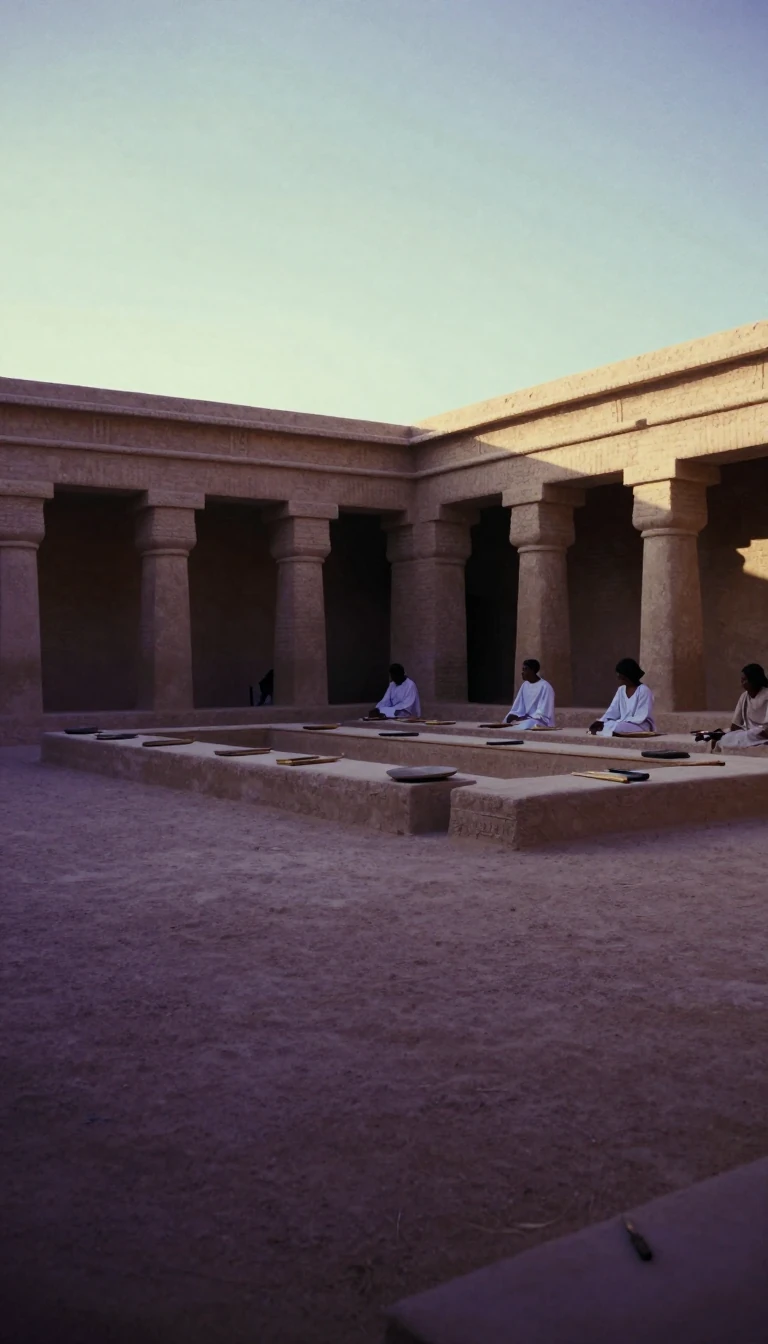 How a royal steward redefined the landscape of ancient Egyptian architecture and royal powerSenenmut was more than a government official; he was the visionary architect behind the reign of Pharaoh Hatshepsut. By orchestrating the construction of her monumental mortuary t…
- How a Japanese potter transformed a quiet town into a global ceramic meccaShōji Hamada was more than a master of clay; he was the architect of a movement. By committing to local materials and traditional aesthetics, he turned the town of Mashiko into a …
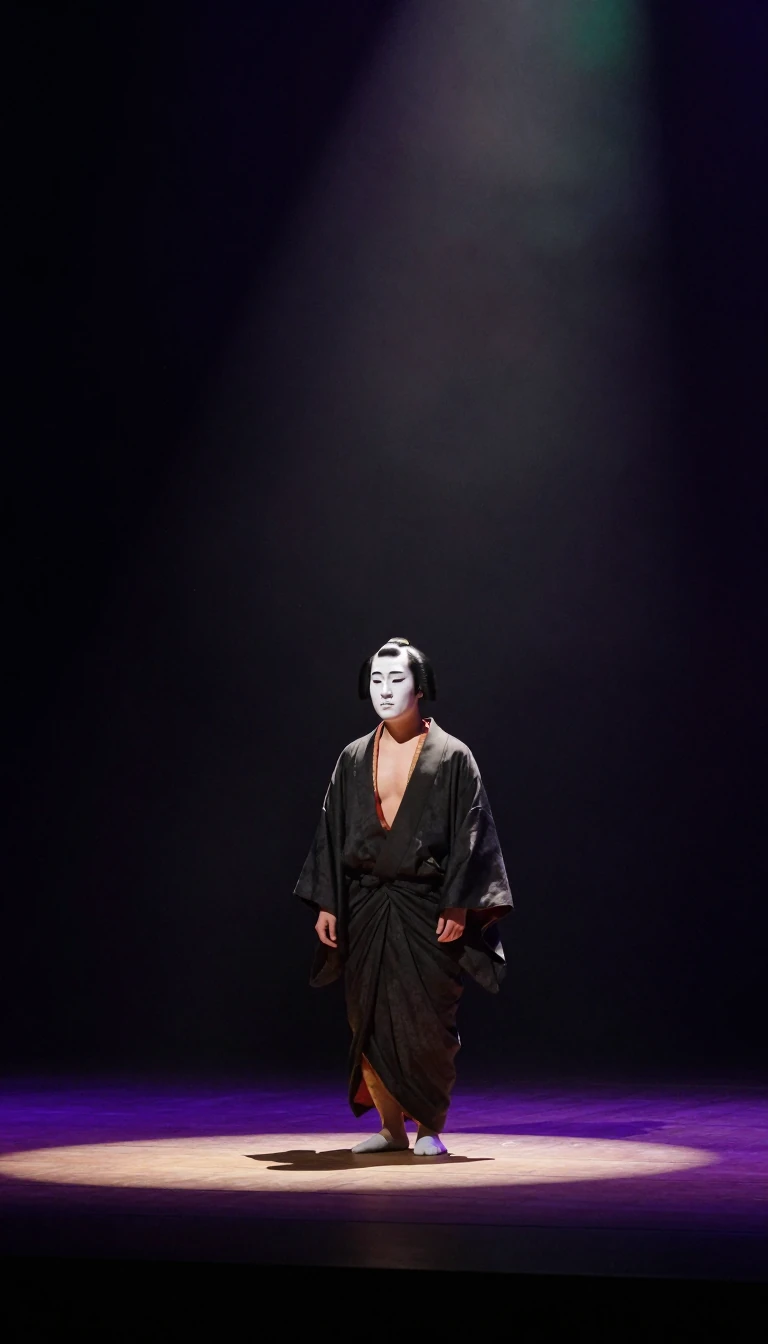 The mysterious Japanese artist who vanished after ten months of brilliant, unflattering kabuki portraitsTōshūsai Sharaku appeared in 1794, produced 144 striking kabuki actor portraits, and then vanished forever. While his contemporaries painted idealized, beautiful subjects, Sharaku…
 How a wealthy tax collector's son became the architect of a subversive artistic movementShen Zhou was born into privilege, yet he rejected the Ming dynasty's official career path to pursue a life of reclusive artistry. By founding the Wu School, he transformed painti…
- How a spontaneous skateboarder’s prank became a global icon of political and street artShepard Fairey began his career by plastering crude stickers of a wrestler across city walls to amuse his friends. He eventually evolved into a powerhouse of graphic activism, cre…
 Is Shibata Zeshin the most revolutionary traditionalist in the history of Japanese art?Shibata Zeshin was a master of lacquer who defied categorization. While critics in Japan debated whether he was too modern or too conservative, the West embraced his genius. By bl…
 How Shigeru Ban turned humble recycled paper into a tool for global disaster relief.Shigeru Ban is a Japanese architect who redefined modern construction by using recycled paper tubes. Beyond his high-profile museum designs, he is celebrated for deploying these i…
 Shin Saimdang was a Joseon-era polymath whose legacy remains a subject of intense debate.Shin Saimdang was a celebrated painter, poet, and calligraphist in 16th-century Korea. While she is now immortalized on the South Korean 50,000 won banknote as a model of maternal…
- How a bankrupt apprentice became a master of Japan's modern woodblock print movementAfter his father's business failed, Shinsui Itō left school at age nine to apprentice at a printing shop. This early exposure to craft launched a career that revitalized tradition…