 Intellect Plus
Visual artists
833 cards. Each one is a 40-second story with a five-minute read behind it. Page 7 of 14.
 László Moholy-Nagy turned the camera downward to reinvent how we see the modern worldA polymath who mastered everything from painting to industrial design, László Moholy-Nagy believed the camera could capture perspectives invisible to the human eye. By pointing hi…
 How a Nigerian village potter became a global icon of ceramic masteryLadi Kwali transformed from a local Gbari artisan into an internationally celebrated ceramicist. By blending traditional hand-building techniques with British studio pottery, she …
 How a teacher with a camera forced America to see its child labor crisisLewis Hine was a sociologist who traded his classroom for the dangerous industrial front lines of the early 20th century. By disguising himself as a salesman to infiltrate factori…
 How Lina Bo Bardi merged Modernist precision with the soul of Brazilian vernacular designLina Bo Bardi was an Italian-born architect who defied categorization, blending Modernist rigor with a deep commitment to populism. From her iconic glass-and-concrete museum in Sã…
 How a royal portraitist survived the French Revolution by fleeing in a stagecoachÉlisabeth Vigée Le Brun was the favored painter of Marie Antoinette, creating over 30 portraits of the Queen. Yet, as the French Revolution ignited, her royal associations turned …
 The true inventor of Monopoly was a feminist who wanted to teach economic equality.For decades, the world believed Charles Darrow invented Monopoly during the Great Depression. This story, long touted as an example of the American Dream, is a lie. The real creat…
 How a goldsmith turned bronze doors into the greatest masterpiece of the Italian RenaissanceLorenzo Ghiberti was a master of metal who transformed the Florence Baptistery with his legendary Gates of Paradise. Beyond his technical brilliance, he was a shrewd businessman a…
 How a Painter’s Obsession With Light Transformed Glass Into a Global Art Nouveau IconLouis Comfort Tiffany began his career as a painter, but his restless experimentation with light and color led him to redefine glassmaking. By inventing the iridescent Favrile gla…
 Louise Bourgeois transformed childhood trauma into a lifetime of haunting, cathartic, and iconic sculpture.Long before she was a celebrated artist, Louise Bourgeois was a woman navigating a male-dominated art world while processing deep-seated family betrayal. By turning her personal d…
 How a struggling artist turned city trash into monumental, world-renowned wooden sculpturesLouise Nevelson transformed discarded scraps found on New York streets into immersive, monochromatic environments. By spray-painting found objects like balusters and chair legs, s…
 The Renaissance master who revolutionized sculpture by painting with fire and tin-based glazes.Luca della Robbia was a titan of Florentine marble, yet he is best remembered for inventing a secret, durable, and vibrant tin-glazed terracotta technique. By transforming baked c…
 Luca Signorelli: The Renaissance Master Who Painted the Apocalypse with Anatomical PrecisionLuca Signorelli was a titan of the Italian Renaissance, celebrated for his mastery of the human form and daring foreshortening. His apocalyptic frescoes in Orvieto remain a benchm…
 Why the architect of serenity rejected the idea that a house is a machine.Luis Barragán transformed modern architecture by defying its cold, functionalist roots. Instead of creating machines for living, he pursued an emotional, lyrical style defined by …
 How a sculptor-turned-architect redefined the landscape through quiet, functional, and site-sensitive design.Born in 1933, Álvaro Siza Vieira is a Pritzker Prize-winning Portuguese architect celebrated for his ability to merge modernism with local traditions. From oceanside pools carved …
 Why this Brazilian artist believed the viewer was the true masterpieceLygia Clark spent her career dismantling the barrier between art and life. Starting with geometric paintings, she evolved into creating interactive objects that required physical …
 How Lysippos redefined the human form by shrinking the head of his statuesLysippos, a master of bronze in the 4th century BC, transformed Greek sculpture by breaking away from the rigid ideals of his predecessors. By introducing a new canon of proportio…
 Why this Song dynasty master pushed his landscapes into the corner of the frameMa Yuan, a legendary Chinese painter of the Southern Song dynasty, revolutionized landscape art by abandoning centered compositions. By shifting his subjects to one corner, he cre…
 Why the greatest geometrician of French fashion despised the industry she helped defineMadeleine Vionnet revolutionized couture by treating fabric as a mathematical puzzle rather than a canvas for frills. By mastering the bias cut, she allowed garments to move fluid…
 How a Malian photographer captured the euphoric spirit of a newly independent nation's youth.In the wake of Mali's 1960 independence, Malick Sidibé documented a generation discovering newfound freedom. Through his lens, the nightclubs and social gatherings of Bamako becam…
 How Manuel Álvarez Bravo used his camera to dismantle the stereotypes of Mexican identityManuel Álvarez Bravo transformed 20th-century photography by rejecting the picturesque. Instead of romanticizing his home, he captured the ironic, surreal, and often gritty realit…
 How Marc Jacobs redefined American fashion through a blend of grunge and high coutureMarc Jacobs rose from a teenage stockboy to a global fashion titan, famously bridging the gap between street-wise aesthetics and luxury design. By rejecting the myth of the solita…
 How Maria Martinez transformed forgotten Pueblo pottery into a global art phenomenonMaria Martinez did not just revive a dying craft; she reinvented it. By mastering the delicate art of reduction firing, she and her husband Julian turned simple, utilitarian clay …
 How a French wax sculptor survived the guillotine to build a global empireMarie Tussaud learned the art of wax modeling from Philippe Curtius in Paris, eventually inheriting his collection in 1794. After narrowly escaping execution during the French Rev…
 Marina Abramović turned her own body into a site of visceral, endurance-based artistic exploration.Known as the grandmother of performance art, Marina Abramović spent decades testing the limits of human consciousness. By treating her body as both subject and medium, she transfo…
 How a self-taught programmer turned a blocky sandbox into a multibillion-dollar cultural phenomenon.Markus Persson, known as Notch, transformed a simple hobby into Minecraft, the best-selling video game in history. After founding Mojang Studios and selling it to Microsoft for $2…
 How a legendary game designer spent 90 million yen to teach the worldMasahiro Sakurai, the visionary creator behind Kirby and Super Smash Bros., spent his own money to launch an educational YouTube channel. By funding the entire project out of pock…
 How a childhood fascination with war stories shaped a global manga phenomenonMasashi Kishimoto, the creator of the legendary Naruto series, spent his youth in Okayama, Japan, absorbing tales of conflict from his grandfather. These stories of grudges and wa…
 Massimo Vignelli turned the chaos of New York City into a masterpiece of clarity.Massimo Vignelli believed design should be timeless, intellectually elegant, and visually powerful. From the iconic New York City Subway signage to the corporate identities of glo…
 Why a forgotten German painter became a cult icon for modernists and nationalists alikeFor centuries, the visionary works of Matthias Grünewald were misattributed to his stylistic opposite, Albrecht Dürer. Only rediscovered in the late nineteenth century, his intens…
 How a crime reporter became the architect of Brazil's most iconic children's universeMauricio de Sousa began his career chasing police leads for a daily newspaper. Today, he is a titan of Brazilian culture, having created over 200 characters inspired by his own ch…
- How the trauma of war transformed a German master into a visionary of despair.Max Beckmann began as a traditionalist, but the horrors of World War I shattered his perspective. He traded academic precision for distorted, nightmarish imagery that captured the…
 How a humble cabinetmaker revolutionized global furniture design through the power of steamMichael Thonet transformed furniture from heavy, carved relics into light, curvilinear icons. By mastering the art of steam-bending solid beechwood, he pioneered mass production, …
 Why the Medici preferred a quiet collaborator over the era's most famous architectWhile history remembers Brunelleschi for his towering dome, the Medici family relied on Michelozzo to define their domestic legacy. A master of bronze and stone, Michelozzo’s abil…
 How Milton Glaser transformed graphic design from simple utility into a global visual languageMilton Glaser did not just design logos; he redefined the boundaries of visual communication. By blending historical styles with modern, conceptual innovation, he turned graphic d…
 Minoru Yamasaki designed the World Trade Center, but his legacy is far more complex.Known for the Twin Towers, Minoru Yamasaki was a master of New Formalism who sought to bring serenity and delight to modern architecture. Yet, his career was defined by sharp cont…
 The master of Nastaʿlīq whose elegance cost him his life in Safavid IranMir Emad Hassani is widely considered the pinnacle of Persian Nastaʿlīq calligraphy. His work defined an era of aesthetic perfection, yet his life ended in a brutal political assa…
 A math teacher once predicted this legendary cartoonist would never succeed in life.Maurice De Bevere, known as Morris, spent his school days doodling in the margins of his math books. That habit led to the creation of Lucky Luke, a global phenomenon that became …
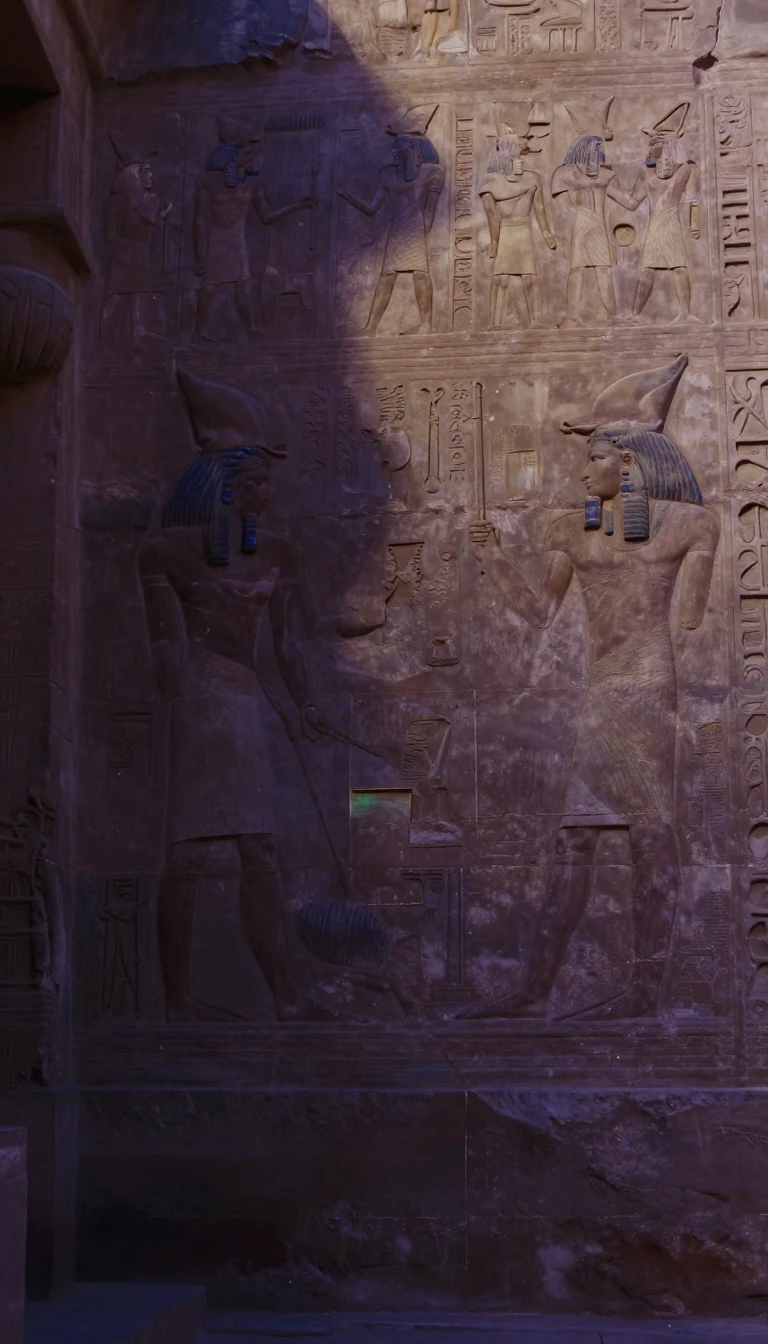 Why the most famous sculptor of antiquity left behind no original works at allMyron of Eleutherae was a titan of classical Greek art, yet every bronze masterpiece he cast has vanished. We know his genius only through Roman copies and ancient critiques. He r…
 Na Hyesŏk was Korea’s first professional female painter and a radical feminist pioneer.Na Hyesŏk shattered the traditional Korean Good Wife, Wise Mother archetype in the early 20th century. As a painter and writer, she challenged patriarchal norms, advocated for wom…
- Before he was a legendary photographer, Nadar was a bohemian caricaturist in Paris.Gaspard-Félix Tournachon, known as Nadar, moved from the fringes of Parisian bohemian life to become a pioneer of aerial photography and portraiture. He captured the era's greates…
- Nakkaş Osman: The Master Who Brought Human Emotion to Ottoman Miniature PaintingAs the chief miniaturist for the Ottoman Empire in the late sixteenth century, Nakkaş Osman transformed court art. While his predecessors favored detached, static figures, Osman i…
 How Nam June Paik turned the tyranny of television into a humanizing art formNam June Paik, a classically trained musician turned visual pioneer, transformed the television from a passive broadcast tool into a sculptural medium. By humanizing technology th…
 Why did India choose to illustrate its Constitution with the soul of rural life?The Constitution of India is the only illustrated constitution in the world. When Jawaharlal Nehru sought to define the new nation, he turned to artist Nandalal Bose to populate t…
 Before creating Sailor Moon, Naoko Takeuchi was a licensed chemist and pharmacist.Naoko Takeuchi is a manga icon, but her path to stardom was unconventional. While her father encouraged a stable career in science, Takeuchi balanced her artistic ambitions with a…
- Natalia Goncharova: The Russian Avant-Garde Pioneer Who Redefined Modernism Through Folk Art and LightNatalia Goncharova was a titan of the Russian avant-garde, co-founding the Rayonist movement and designing for the legendary Ballets Russes. Her work, which bridged medieval icons…
 Naum Gabo rejected solid mass to sculpt the invisible rhythms of space and time.Born Naum Pevsner, this Russian pioneer abandoned traditional sculpture to embrace the industrial age. By using glass, plastic, and taut wire, he sought to define empty space as a…
- Did a thirteenth-century sculptor single-handedly ignite the Italian Renaissance with a single pulpit?Nicola Pisano transformed medieval art by synthesizing French Gothic sensibilities with the grandeur of ancient Roman sarcophagi. By integrating classical figures into religious n…
 The Georgian herdsman who became a global icon of naive art after his deathNiko Pirosmani spent his life in poverty, working as a railway conductor and housepainter while teaching himself to paint on black oilcloth. Though he died in obscurity during the…
- Odilon Redon abandoned his haunting black-and-white nightmares to embrace a vibrant, spiritual color palette.For decades, French artist Odilon Redon worked exclusively in charcoal and lithography, crafting dark, dreamlike visions he called his noirs. Yet, at the turn of the century, he a…
 A merchant turned master: How Ogata Kōrin defined the aesthetic of an eraBorn into a wealthy textile family, Ogata Kōrin did not establish himself as a professional artist until late in life. Despite his late start and eventual poverty, he became a cen…
 How a Kyoto merchant's son revolutionized Japanese pottery with brush and kilnBorn into a wealthy kimono-trading family, Ogata Kenzan abandoned commerce to master the arts of pottery, painting, and calligraphy. By bridging the gap between decorative design …
 How Olafur Eliasson turns light, water, and air into transformative, large-scale sensory experiencesDanish-Icelandic artist Olafur Eliasson creates massive installations that force viewers to rethink their relationship with nature. By manipulating elemental materials like fog, l…
- A bankrupt carpenter turned his failing workshop into the world's most iconic toy empire.Ole Kirk Christiansen faced the Great Depression and two devastating factory fires, yet he refused to abandon his vision. By pivoting from household goods to wooden toys, and even…
 How a self-taught luthier revolutionized the guitar by borrowing from the violin's anatomyOrville Gibson arrived in Kalamazoo with no formal training, yet he fundamentally altered instrument design. By carving tops, bottoms, and sides from solid wood blocks rather than…
- How a Dominican Designer Merged European Luxury With American Ease for Fifty YearsOscar de la Renta defined the look of global elegance for half a century. Born in the Dominican Republic, he bridged the gap between Old World couture and modern American style, d…
- Oskar Kokoschka used vibrant, agitated brushwork to paint the human psyche rather than reality.Before he became a titan of Expressionism, Oskar Kokoschka was a struggling student in Vienna, frustrated by a curriculum that ignored the human figure. He defied traditional tech…
- How one Sudanese artist transformed ancient calligraphy into a radical modern art formOsman Waqialla did the unthinkable: he stripped Arabic calligraphy of its sacred, religious constraints to reinvent it as a secular, modernist graphic language. By blending Africa…
- How a Filipino-American artist transformed the canvas into a sculptural, quilted, vibrant masterpiece.Pacita Abad did not just paint; she built. By integrating trapunto quilting with traditional painting, she created textured, vibrant works that defied the flat constraints of the …
- How Paloma Picasso escaped her father's shadow to define her own aesthetic legacyBorn into the orbit of the twentieth century's most famous artist, Paloma Picasso spent her youth feeling the weight of her heritage. Yet, she forged a distinct path as a globally…
 Paolo Uccello: The Renaissance master who was intoxicated by the science of perspectivePaolo Uccello bridged two worlds, blending the decorative elegance of late Gothic art with the heroic, scientific rigor of the early Renaissance. Obsessed with the geometry of spa…