 Intellect Plus
Ideas & Philosophy
17,867 cards. Each one is a 40-second story with a five-minute read behind it. Page 288 of 298.
Subtopics: Abrahamic religions · Artificial intelligence · Attention · Classic philosophy · Cognitive biases · Consciousness · Cooperation · Cynicism · Decision making · Decision theory · Descartes · Dharmic religions · Dreams · Eastern philosophy · Eastern religions · Epistemology · Ethics · Evidence · Existentialism · Fairness · Famous psychology experiments · Free will · Game theory · Greek mythology · Historians · Identity · Infinity · Justice · Logic · Logical fallacies · Mathematics · Medieval philosophy · Mind · Mythology · Mythology of the ancient world · Other religions · Paradoxes · Philosophers · Philosophers, historians, political and social scientists · Philosophy · Philosophy of mind · Philosophy of science · Political philosophy · Probability · Psychology · Reality · Religion · Religion and spirituality · Religious figures · Self knowledge · Statistics · Stoicism · Strategy · Taoism · Thought experiments · Trivia & curiosities · Truth · Utopias & ideal worlds · Wellbeing · World religions · Writers
 An illiterate firewood seller beat the star pupil in a Zen poetry contestChan tradition says Huineng, a poor woodcutter who could not read, won the robe of the Fifth Patriarch by dictating a single verse that outshone the monastery's leading monk. It i…
 The pope once paid Zwingli a pension; then he broke with RomeHuldrych Zwingli once drew an annual pension from Pope Julius II and marched with Swiss troops in Italy as their chaplain. Defeat and disgust at the mercenary trade changed him. I…
 About 72 travellers at Karbala in 680 permanently reshaped IslamHusayn, the Prophet Muhammad's grandson, refused to swear loyalty to a caliph he considered illegitimate. Setting out for Kufa with roughly 72 companions and family, he was corner…
 Too poor for paper, he wrote lessons on bones and reshaped Islamic lawAs a boy in Mecca, al-Shafi'i reportedly scratched his lessons onto shoulder-bones because his mother could not buy paper. He grew up to write al-Risala, among the earliest books …
- A Tehran nobleman nicknamed Father of the Poor founded a worldwide faithBorn into Persian aristocracy in 1817, Baha'u'llah turned down a government post, gave his wealth to charity, and backed a banned movement. Chained in an underground Tehran dungeo…
 A twelfth-century chief minister told people to be the temple, not build oneBasava, a Brahmin-born poet who rose to chief minister in Karnataka, handed every devotee a small personal lingam to wear, whatever their caste or sex. He opened a public hall whe…
 Billy Graham practised sermons on alligators before preaching to 210 million peopleAs a Florida Bible student, Billy Graham paddled to a river island and preached to birds, alligators and cypress stumps. Decades later his ministry counted live audiences of at le…
 Did Bodhidharma invent kung fu? The idea is barely a century oldBodhidharma, the bearded foreign monk credited with bringing Chan Buddhism to China, is famous today as the father of Shaolin kung fu. That link was popularised only in the twenti…
 A proud young logician from Bengal traded debate for dancing in the streetsNimai Pandit was a star teacher of logic in Nabadwip who loved beating senior scholars in argument. After a trip to Gaya around 1508, he shut his school and threw himself into ecs…
 One teenage monk's nagging question led to Japanese Soto ZenIf everyone is born enlightened, why did every Buddha still need to practise? That puzzle haunted Dogen from his teens on Mount Hiei. Nobody in Japan could answer it, so in 1223 h…
 Desmond Tutu wanted to be a doctor, but his parents couldn't payDesmond Tutu won a place to study medicine but his family could not afford the fees, so he trained as a teacher instead. Quitting classrooms in protest at apartheid schooling, he …
 Even Fatima's birth year splits Muslim historians by a decadeFatima, the daughter of Muhammad and Khadija, is honoured by Sunni and Shia Muslims alike, and her name is still a favourite for girls. Yet the two traditions disagree about when …
- He died at 45, yet his hadith collections are still everyday readingAl-Nawawi lived only from 1233 to 1277, never married, and ate a single meal each day. In that short life he produced at least fifty books, including the Forty Hadiths, and faced …
 At 69 he sailed to New York on a cargo ship and launched Hare KrishnaIn 1965 an elderly Bengali monk arrived in America with a few trunks of books and no contacts. He started chanting in a New York park, and within a year his students helped him fo…
- The founder of Islam's most followed legal school died a prisoner in BaghdadAbu Hanifa, a silk merchant from Kufa, built a school of Islamic law that still dominates from Turkey to South Asia. He prized reason and analogy in legal thinking and refused to …
 India's most revered philosopher may have been little known in his own timeAdi Shankara is hailed today as the towering teacher of Advaita Vedanta, credited with over 300 texts. Yet for centuries he was overshadowed by a rival, and no Hindu, Buddhist or …
 A Baghdad baker defied caliphs over whether the Quran was createdAhmad ibn Hanbal lived modestly, reportedly on seventeen dirhams a month, yet tradition credits him with memorising over a million prophetic sayings. When the caliph al-Ma'mun mad…
 Aisha passed on more than 2,000 hadiths about law, prayer and pilgrimageMuhammad's youngest wife outlived him by 44 years and became one of early Islam's great teachers. Sunni tradition credits Aisha with narrating over 2,000 hadiths, on topics from i…
- Islam's star professor quit the top job and vanished for a decadeIn 1095 al-Ghazali held the most prestigious teaching post in the Muslim world, at Baghdad's Nizamiyya. Then he lost his appetite, his digestion and even his voice for lecturing. …
 Aleister Crowley was a mountaineer, chess fanatic and self-proclaimed prophetBefore he became notorious as the occultist who founded Thelema, Crowley climbed in Mexico and joined a 1905 attempt on Kanchenjunga. At Cambridge he practised chess two hours a d…
- Ali once lay in Muhammad's bed as a decoy for would-be assassinsWhen a plot against Muhammad was uncovered in 622, his young cousin Ali stayed behind and slept in his bed so the killers would think the prophet was still home. The escape to Med…
 China's Yellow Emperor was a god before 'emperor' even meant a human rulerLegend credits the Yellow Emperor with boats, carts, the calendar and early writing. But the word di in his name originally pointed to gods, not kings; only in 221 BC did the firs…
- Yin and yang began as the shady and sunny sides of a hillThe famous pair of opposites is not a battle between good and evil. In Chinese thought yin and yang are complementary forces that feed and sustain each other, shaping everything f…
 Yoga was mostly about stillness and liberation long before it meant stretchingThe poses filling Western studios are a recent blend of hatha yoga and European physical culture. Traditional yoga, born in ancient India, aimed at taming mind and body to win rel…
 A West African faith seeded Santería, Candomblé and other religions across the AtlanticYoruba religion, called Ìṣẹ̀ṣẹ or 'the original tradition', is now the world's largest indigenous African belief system, with several million followers. Its orishas travelled to t…
- Yu the Great tamed China's floods by digging channels instead of building damsHis father spent nine fruitless years piling up dikes against the floods. Yu studied the rivers, then did the opposite: he dredged riverbeds and cut canals to lead water into fiel…
 Zen is Chinese before it is Japanese, and Indian before thatThe word travelled from Sanskrit dhyāna, meditative absorption, to Chinese chan to Japanese zen. The school itself formed in Tang-dynasty China by fusing Indian Mahayana philosoph…
 Zeus shares his name with an Indo-European sky father worshipped from India to RomeOf all the Olympians, only Zeus has a name whose ancestry is crystal clear. It descends from Dyēus, the Proto-Indo-European god of the bright daytime sky, whose relatives include …
 The first modern zombie film never actually used the word zombieIn Haitian folklore a zombie is not a hungry monster but a corpse enslaved by a sorcerer. The flesh-eating version came from George A. Romero's 1968 Night of the Living Dead, whos…
 Zoroastrianism's famous good-versus-evil duel was not in its oldest hymnsZoroastrianism is often summed up as a cosmic war between a good god and an evil one. But its founding hymns, the Gathas, frame the contest as a human choice between truth and the…
- Japan's yōkai were only given that name by a scholar trying to abolish themKappa, tengu and haunted household objects all count as yōkai, a sprawling class of Japanese spirits that can be kind, mischievous or dangerous. Yet before the Meiji era people ra…
 The original pronunciation of Yahweh's name was lost after 70 CEYahweh began as a storm-and-war god of the ancient Levant who shared the stage with El, Asherah and Baal. Over centuries he became the one creator worshipped in Judaism, and his n…
- The Vedas survived three thousand years mostly by memory, not by writingHinduism's oldest scriptures were composed in north-western India from around 1500 BCE and handed down orally, using elaborate memory techniques, for thousands of years. Today som…
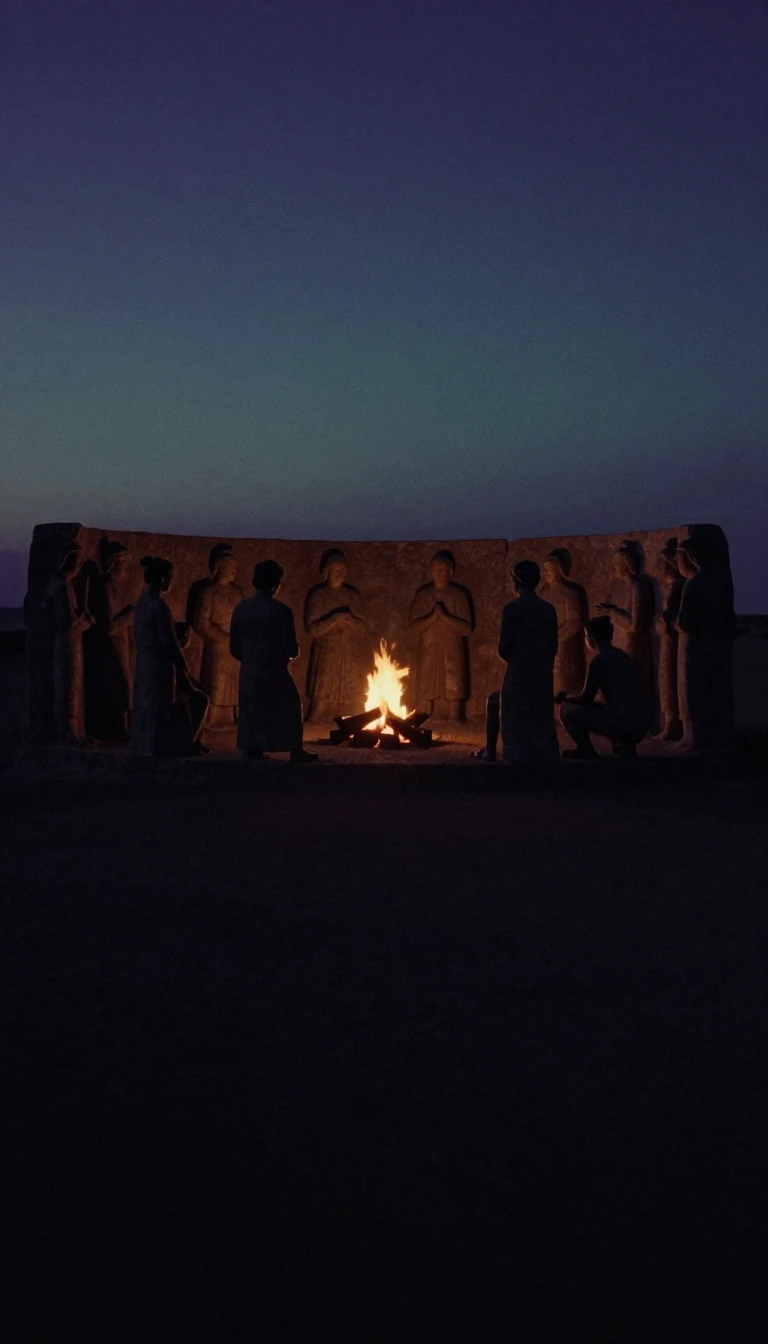 Every documented human culture honours its dead in some formNo society yet studied lacks some form of honouring the dead. In Madagascar families periodically rewrap ancestors in fresh silk and throw a party. In China paper cars and refrige…
 Venus shares a word root with venom, veneration and even huntingThe Roman goddess of love had no birth story of her own until Rome borrowed Aphrodite's. Her name comes from an ancient word for desire, which also gave Latin its words for poison…
 Vishnu has over a thousand names and returns as a fish, boar and man-lionHis name means all-pervading, and one ancient grammarian glossed it as the one who enters everywhere. Hindu tradition says whenever chaos threatens, Vishnu comes down in a new for…
 Werewolf trials began in Switzerland and lasted into the 18th centuryThe full moon and the infectious bite are film inventions. The older werewolf was a matter for courts: from the early 15th century, people in the Swiss Valais and Vaud were tried …
 From Gnostics to the New Age: the West's long tradition of rejected knowledgeHermeticism, Rosicrucians, Freemasons, Theosophists, Wicca and the New Age look like unrelated oddities. Scholars group them as Western esotericism: currents that sit apart from b…
 Wicca was launched in 1954 by a retired British civil servantWicca presents itself as ancient, but it went public in 1954 through Gerald Gardner, a retired British civil servant. Its founding story rested on the claim that persecuted witche…
 Where people blamed fairies for misfortune, witch-hunts were rareAlmost every society has feared that some neighbour could cause harm by magic. Historians see witchcraft belief as a way to explain unaccountable bad luck. That is why Gaelic Irel…
 Worship literally means giving something its worth, and faiths define that differentlyThe English word comes from Old English weorthscipe, roughly worth-ship: assigning value to something. Across religions the practice ranges from Quakers sitting in silence until s…
 The word totem comes from Ojibwe, and anthropologists spent a century misusing itTotem is an English spelling of the Ojibwe doodem, linked to the word for heart. Victorian scholars seized on it as a universal stage of human development and even claimed it prov…
 One God in three persons: how Christians built the Trinity from scattered versesNo single Bible verse spells out the Trinity. Early Christians assembled it from the late 2nd century onward, reading hints into Genesis, the Gospels and Paul's letters, and fourt…
 Marco Polo found real unicorns, and they turned out to be ugly rhinocerosesGreek naturalists were sure unicorns lived in India. Medieval Europeans paid fortunes for their horns. Marco Polo went looking and described a mud-wallowing, boar-headed brute tha…
- A Polish student's objection in 1556 helped launch Unitarian ChristianityAt a Calvinist synod in the Polish village of Secemin, a student named Peter Gonesius stood up and denied the Trinity. Nine years of argument later, his side was expelled and form…
- The Upanishads moved Hinduism from fire sacrifice to questions about the selfThe oldest Hindu scriptures were mostly about rituals and chants. Then came the Upanishads, the last layer of the Vedas, asking how the individual self relates to the ultimate rea…
- Hinduism's largest sect grew by merging several local gods into VishnuIn the Rig Veda, Vishnu is a minor sun god who appears in only a handful of hymns. Today his worshippers number about 399 million, the biggest Hindu tradition. The route from foot…
 Vajrayana Buddhism promised enlightenment fast, through mantras, mandalas and imagined deitiesMost Buddhist paths expect many lifetimes of patient practice. Vajrayana, the Diamond or Thunderbolt Vehicle, claims a shortcut: secret rituals handed from teacher to student, sac…
 Folklore vampires were bloated and ruddy; the pale, elegant version dates from 1819Forget the gaunt aristocrat in a cape. The vampires Balkan villagers feared were swollen, dark-faced corpses in burial shrouds, often without fangs, blamed for deaths among their …
 Vedanta's schools read the same three texts and reach opposite conclusionsIs your soul identical to God, or forever distinct? Vedanta, the most influential school of Hindu philosophy, answers both ways. Every branch works from the same three scriptures,…
 Before Zeus ruled Olympus, twelve Titans held the cosmos, and lost itThe Titans were the old guard of Greek myth: twelve children of Sky and Earth who ruled until Zeus toppled them in a ten-year war. Oddly, most of them barely have personalities. M…
 Torah means teaching, not law, and a translation choice changed thatThe five books opening the Hebrew Bible are usually called the Law in English. The Hebrew root actually means to guide or to teach. Greek translators in Alexandria picked the word…
 Plato was talking about theology centuries before Christianity existedTheology sounds like a church invention, but Plato used the Greek word for discourse on God around 380 BC. He even argued against atheism, claiming divine souls steer the stars. A…
 Every Thursday quietly honours Thor, the Germanic god of thunderLong before his pop-culture fame, Thor was a hammer-swinging protector of farmers whose name literally meant thunder. Vikings wore his hammer as a pendant, possibly in defiance of…
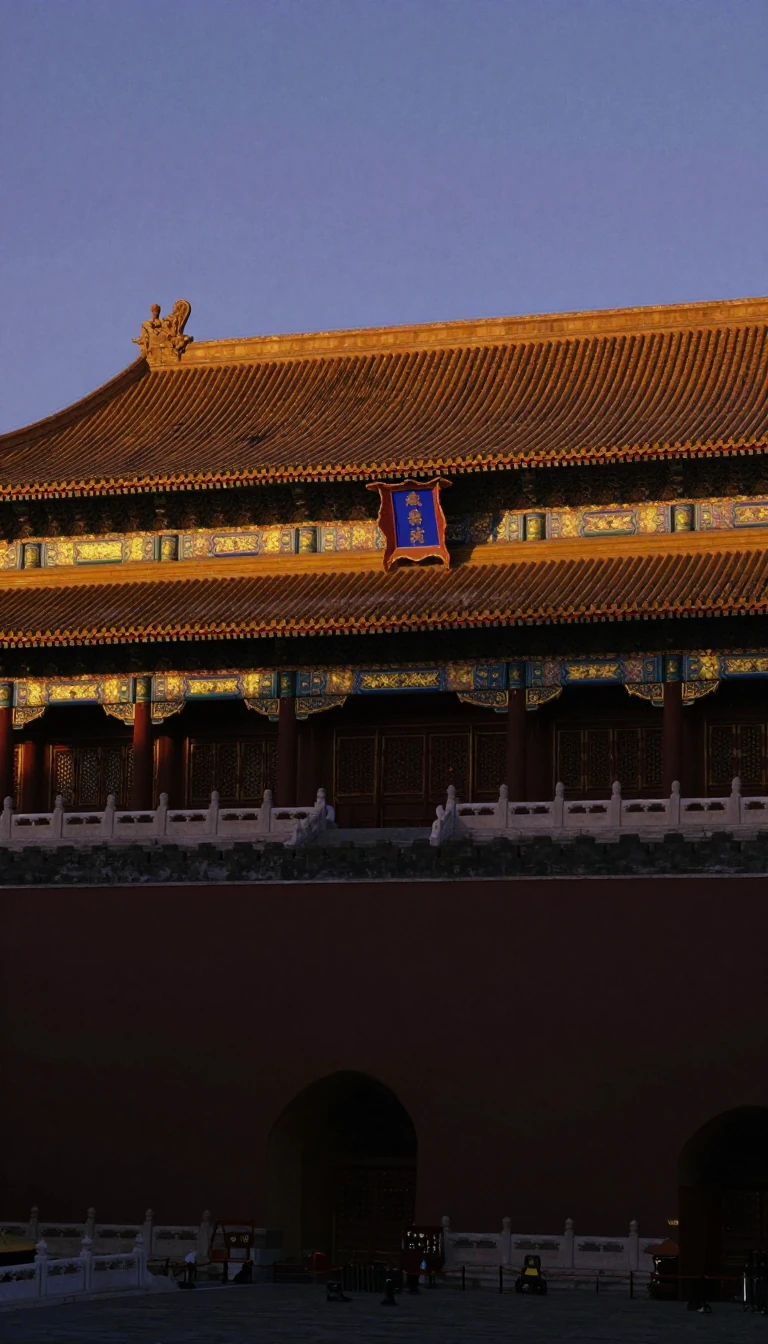 China's first rulers were demigods who taught people fire, farming and writingBefore the Xia dynasty, Chinese tradition places a golden age of sage kings: three semi-divine Sovereigns and five virtuous Emperors. They supposedly gave humanity houses, agricul…
 The swastika meant good fortune for thousands of years before its hijackingAcross much of Eurasia and beyond, the hooked cross was a sign of luck, the Sun and holiness for millennia. Hindus, Buddhists and Jains still treat it as sacred. In the West it re…
 Jewish communal prayer needs ten adults, not a buildingA synagogue can hold a Torah ark, classrooms and a social hall, yet Jewish law says none of that is required for communal worship. Ten adults, a minyan, are enough anywhere. That …
 Syncretism's popular origin story about quarrelling Cretans is probably falsePlutarch claimed syncretism meant Cretans burying their feuds to face a common enemy. The etymology is almost certainly wrong, yet the idea stuck. Blending faiths has produced new…
 The Talmud preserves centuries of rabbinic arguments, not just their verdictsRabbinic Judaism's central text after the Hebrew Bible is essentially a vast record of debate. Thousands of scholars disagree across 63 tractates on law, ethics, history and folkl…
 Tantra literally means a loom, and it is rarely about sexWestern pop culture treats Tantra as a bedroom technique. Scholars say sexual rites were rare, reserved for initiated adepts and meant as a route to transcendence. The word itself…