 Intellect Plus
Ideas & Philosophy
17,867 cards. Each one is a 40-second story with a five-minute read behind it. Page 289 of 298.
Subtopics: Abrahamic religions · Artificial intelligence · Attention · Classic philosophy · Cognitive biases · Consciousness · Cooperation · Cynicism · Decision making · Decision theory · Descartes · Dharmic religions · Dreams · Eastern philosophy · Eastern religions · Epistemology · Ethics · Evidence · Existentialism · Fairness · Famous psychology experiments · Free will · Game theory · Greek mythology · Historians · Identity · Infinity · Justice · Logic · Logical fallacies · Mathematics · Medieval philosophy · Mind · Mythology · Mythology of the ancient world · Other religions · Paradoxes · Philosophers · Philosophers, historians, political and social scientists · Philosophy · Philosophy of mind · Philosophy of science · Political philosophy · Probability · Psychology · Reality · Religion · Religion and spirituality · Religious figures · Self knowledge · Statistics · Stoicism · Strategy · Taoism · Thought experiments · Trivia & curiosities · Truth · Utopias & ideal worlds · Wellbeing · World religions · Writers
 The Tao is the principle behind everything, and words cannot capture itOne Chinese character, meaning road or path, came to name the source of the entire universe. The Tao is described as formless, eternal and everywhere, yet any attempt to define it…
 Nobody knows who wrote the Tao Te Ching, or whether Laozi existedTaoism's founding classic is among the most translated books in the world, second only to the Bible. Yet its supposed author has a name that simply means Old Master, and legends s…
 The Bible gives three different versions of the Ten CommandmentsEveryone thinks they know the Ten Commandments, but the Hebrew Bible records them three distinct ways, in Exodus 20, Deuteronomy 5 and a ritual list in Exodus 34. Those biblical t…
 The Turkish word for God began as the steppe name for the skyWhen a Turkish speaker today says Tanrı, meaning God, they are echoing Tengri, the heavenly deity of the Eurasian steppe. Khans claimed his mandate, the Huns carried his worship t…
 Believing in gods comes in more varieties than monotheism and polytheismTheism simply means believing that at least one deity exists, but the fine print is rich. Some worship one god while admitting others exist; some worship each god in turn as supre…
 A country can have an official faith without being run by priestsDenmark, England, Iceland and Greece all keep an established church, yet their citizens face no religious pressure from the state at all. Saudi Arabia and Iran sit at the opposite…
 Ancient Greeks and Romans had no word for supernaturalGhosts, gods and omens are as old as storytelling, but the idea of a separate realm above nature is surprisingly young. The word supernatural was coined in the Middle Ages, first …
 For the Romans, superstition meant being too scared of the godsCalling something a superstition has always been an insult aimed at somebody else's beliefs. Romans used it for people who cowered before the gods like slaves before a cruel maste…
 Sikhism's eleventh and final guru is a bookTen human gurus led Sikhs from the late 15th century. Then Guru Gobind Singh, the tenth, declared that no person would succeed him: the scripture itself, the Guru Granth Sahib, wo…
 The English word sin descends from an ancient root meaning to beTrace sin back through Old English and you reach a Proto-Indo-European word for being or truth, carrying the sense of a verdict: truly guilty. Religions then filled the idea very …
 The original Greek sirens were bird-women, not mermaidsHomer never described what the sirens looked like. Greek artists soon gave them the bodies of large birds with women's heads, often clutching a lyre. The fish-tailed version we pi…
 Solomon's name means peace, chosen after a scandal in David's courtJews, Christians and Muslims all honour Solomon as a wise king and a prophet, and later legend even made him a magician. Yet historians doubt the lavish empire the Bible describes…
 Greek sphinxes devoured travellers while Egyptian ones guarded pharaohsThe Greek sphinx was a winged, woman-headed killer who ate anyone failing her riddle. The Egyptian kind was usually a wingless man-headed lion embodying a king's strength. Both st…
 A religion built on talking to the dead began with rapping noises in 1848On March 31, 1848, two sisters in Hydesville, New York said a spirit was knocking answers to their questions. Kate and Margaret Fox became celebrity mediums, and a movement of séa…
 Spirituality once meant the clergy's turf; now it often means leaving church behindEarly Christians used the word for a life steered by the Holy Spirit. By the 13th century it could mean the property and power of priests. Today it usually describes a private sea…
 Parousia once meant a king's showy visit before it meant Christ's returnChristians and Muslims both expect Jesus to come back, though for very different reasons. The Greek word the New Testament leans on, parousia, was used centuries earlier for the s…
 The word sect comes from following, not cutting, despite a Latin mix-upMost people assume a sect is a group that cut itself off. The Latin root actually meant a road or a way to follow; the cutting sense crept in through confusion with a lookalike wo…
 Secularism is about shrinking religion's public role, not disproving GodPeople often treat secularism as a synonym for atheism. It isn't. The idea only asks that civic life run on worldly reasoning, and it can be hostile, neutral or even friendly towa…
 A failed doomsday date in 1844 gave rise to a 24-million-member churchWilliam Miller told his followers Jesus would return on October 22, 1844. When nothing happened, most drifted away. A handful reinterpreted the prophecy instead, adopted a Saturda…
 Shiva's name began as an adjective meaning kind or auspiciousSome 385 million people across India, Nepal and Sri Lanka honour Shiva as the supreme god. Yet in the Rig Veda his name was just a flattering adjective handed to several deities. …
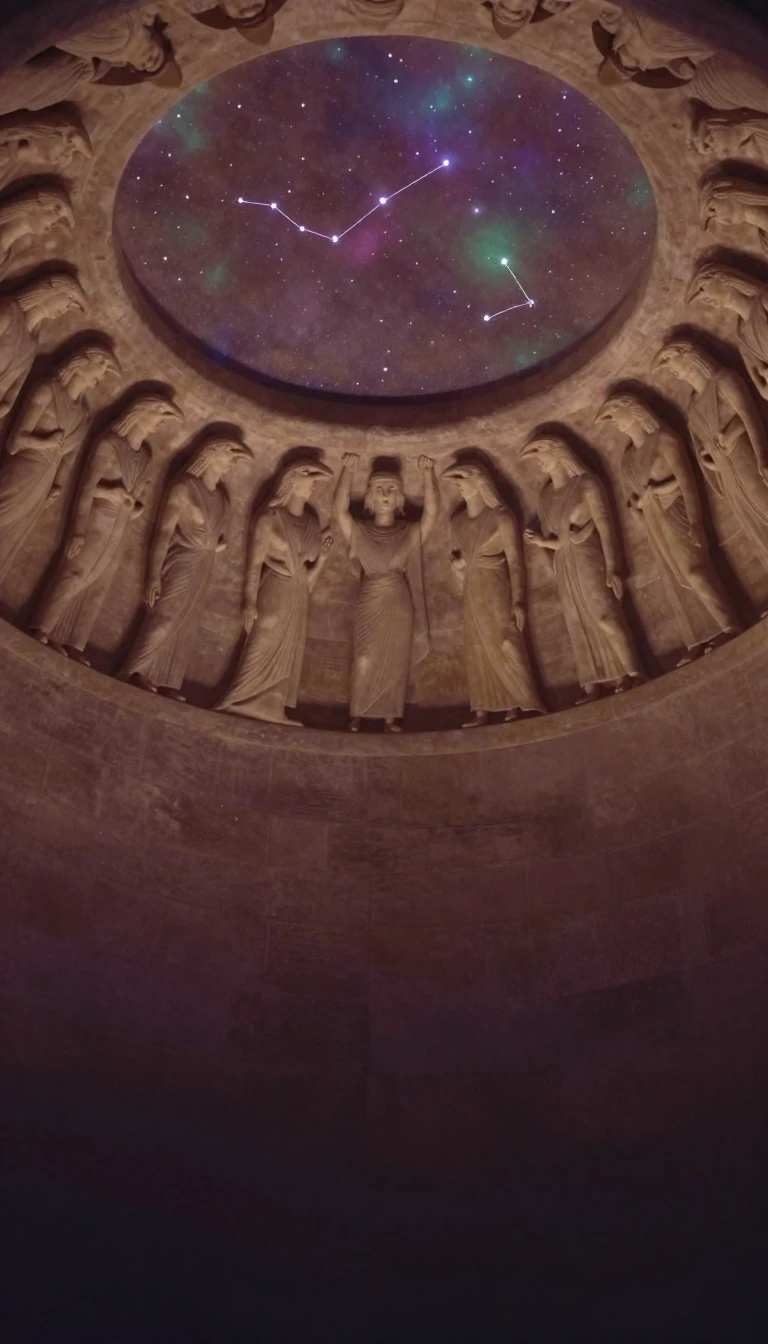 In Shaktism the ultimate reality is a goddess, not a godFor roughly 305 million Hindus, the highest power in the universe is feminine. Shaktism reveres Shakti, divine energy personified as the Great Goddess, in forms from fierce Kali t…
 Sharia's root meaning is the path to a watering placeBefore it named Islamic law, sharia described the track herders took to reach permanent water. In a desert, that is a powerful image of a God-given way of life. The word is also d…
 Japan has around 100,000 Shinto shrines but no Shinto creedShinto has no founder, no central authority and no single doctrine. What holds it together is the kami, spirits believed to dwell in mountains, rivers and even the honoured dead. …
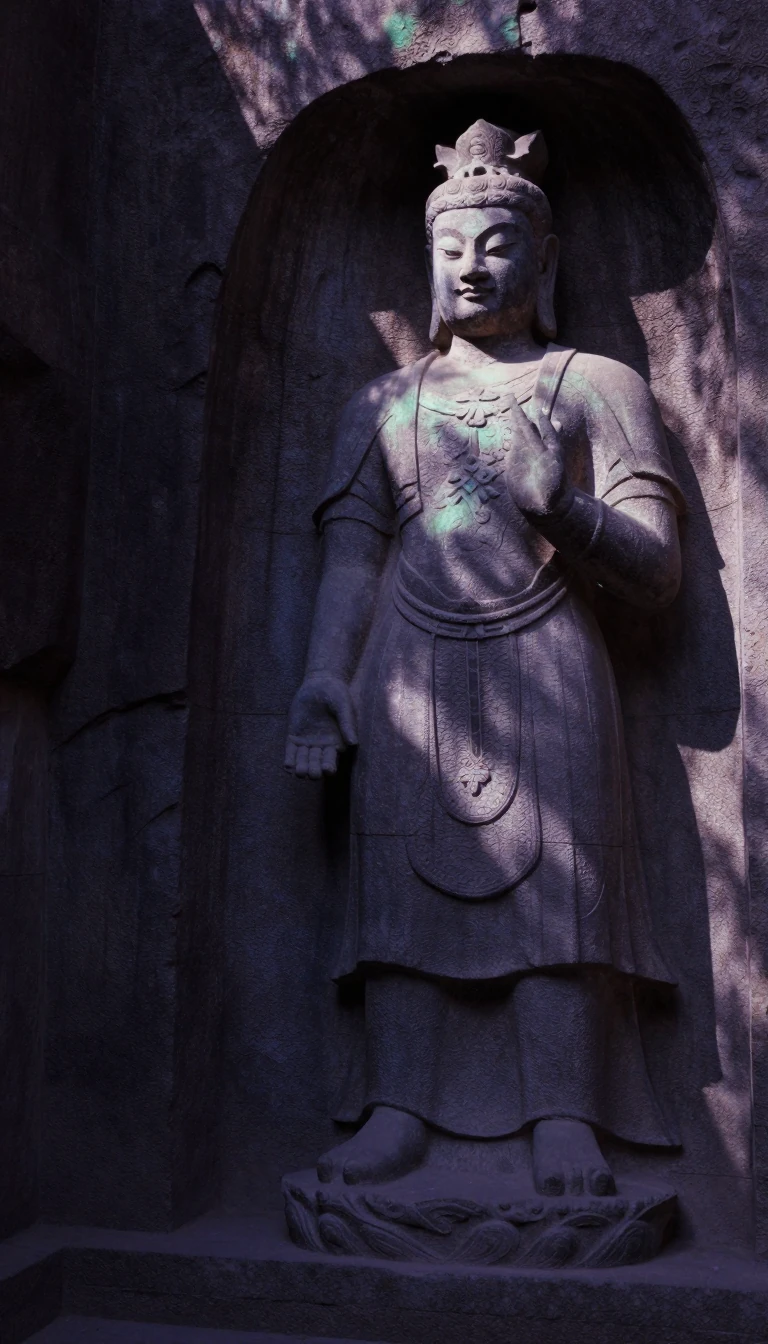 Hinduism's Destroyer is also the patron of yoga and the artsShiva wears a serpent round his neck, a crescent moon in his hair and a third eye that can burn whatever it looks at. He is the Destroyer of the Hindu trinity, yet also a family m…
 In Buddhism, splitting a monastery takes at least nine monksA schism is a split within a group, and religions treat it very differently. Theravada monastic law defines one precisely: nine or more monks breaking away to hold their own cerem…
 Romans treated their myths as history, and their heroes were mostly humanNineteenth-century scholars claimed Rome had barely any myths of its own, only borrowed Greek ones. That verdict says more about Romantic taste than about Rome. Roman legends are …
 A prince shopped for a faith, then married an emperor's sisterAccording to the medieval chronicle, Grand Prince Vladimir sent envoys to compare religions before choosing Byzantine Christianity. He then seized Chersonesus in Crimea and demand…
- A saint can be holy without being sacred, and the difference mattersSacred and holy sound interchangeable, but in Christian usage they point at different things. Holiness usually belongs to people and relationships; sacredness attaches to objects,…
 Why offer gifts to gods? Anthropologists have argued about it for 150 yearsOffering something up to a deity is among humanity's oldest religious acts, found from ancient Greece to the Aztecs and the Yoruba. Explaining it has proved harder. Thinkers have …
 In the New Testament, every ordinary Christian was called a saintToday a saint means an exceptional figure, formally recognised after a lengthy process. The earliest Christian letters used the word very differently. Paul addressed whole congreg…
 Judaism and Christianity mean very different things by being savedSalvation sounds like a single idea, yet the two faiths that share a scripture diverge sharply over it. Christianity places it wholly in Jesus's death on the cross. Judaism reject…
 India's goddess of learning started out as a riverSaraswati, patron of knowledge, music and speech, first appears in the Rigveda as a sacred river of northwest India, hailed as the best of mothers and goddesses. Over centuries th…
 Satan began as God's courtroom prosecutor, not his cosmic enemyIn the oldest Hebrew texts, 'the satan' is a title, not a name: an accuser who works for God, testing Job's loyalty with permission from above. Horns, hooves and pitchfork came mo…
 The word 'Satanist' was invented as an insult between rival ChristiansFor centuries almost nobody called themselves a Satanist. The label first surfaced in the 1500s as a smear that Catholics and Protestants hurled at each other. Self-declared Satan…
 Vedic sages rejected a simple heaven-or-hell afterlife as unfairRebirth sits at the heart of Hinduism, Buddhism, Jainism and Sikhism, yet it also surfaces among Pythagoras and Plato, Kabbalists, the Druze and Celtic druids. In India, early thi…
- For ancient Romans, 'religio' could describe an elephant gazing at the skyThe world has roughly 10,000 distinct religions, yet four of them plus the nonreligious cover 97.6 percent of humanity. Stranger still, the word itself once had little to do with …
 Roman religion ran on a deal: I give so that you giveRomans credited their empire to piety, but their faith asked little in the way of belief. What mattered was performing prayers and sacrifices correctly under a bargain summed up a…
 People have changed religion to dodge taxes and army serviceChanging faith is usually pictured as a crisis of the soul, but history shows plenty of practical motives: avoiding taxes, escaping conscription, winning a political voice, or mar…
- Sanskrit has no word for religion, which troubles the scholars studying itReligious studies examines faith from the outside, borrowing tools from anthropology, sociology, psychology and history instead of any one creed. Its awkward secret is that nobody…
 In Greek myth, Zeus struck down a healer for raising the deadRising from death sounds like the ultimate reward, but the ancient Greeks mostly disliked the idea. When Asclepius used herbs to revive the dead, Zeus killed him. Meanwhile, Egypt…
 Many 'ancient' royal ceremonies in Britain date from the late 1800sRituals turn up everywhere, from coronations and funerals to a simple handshake, and even elephants and crows perform them. Their power often rests on a claim to great age that is…
- Some American synagogues once held their Sabbath services on SundayReform Judaism began in 19th-century Germany as an attempt to fit an ancient faith to modern life. In the United States it went further than anyone in Europe dared: prayers almost…
 Calvinism was named by its Lutheran opponents, and Calvin disliked the labelLutherans coined the word Calvinism in the 1550s, and not as a compliment. Calvin himself objected, and modern scholars call the label misleading, since the movement began with Hu…
 The English word priest began life meaning simply an elderPriest descends, through Latin, from the Greek presbyter, an elder of a Jewish or Christian community. The proper Latin term for a sacrifice-offering priest was sacerdos. English …
 Biblical prophets mostly issued warnings, not fixed forecasts of the futureWe picture prophets predicting what must happen. Old Testament prophecy usually worked more like an ultimatum: turn away from a particular wrong, or suffer a particular result. Th…
 Official Catholic teaching on purgatory mentions neither a place nor firePopular imagination pictures purgatory as a fiery waiting room between earth and heaven. Yet when the Catholic Church first defined the doctrine in 1274, it said nothing about a t…
- The character for qi hides a pot of steaming riceQi, the vital force of Chinese philosophy, literally means vapour, air or breath. Its oldest written form was three wavy lines on Shang oracle bones. Around the Han dynasty, scrib…
 The Quran's very name means recitation, and it is still learned by heartQur'an comes from an Arabic verb for reading aloud or reciting. Fittingly, Muslims believe it arrived orally, delivered to Muhammad through the angel Gabriel over about 23 years. …
 Rama's name can mean both dark as night and utterly delightfulIn the Atharva Veda the Sanskrit word rama means dark or black; in other Vedic texts it means charming and lovely. The hero who carries the name is honoured as Vishnu's seventh av…
 The Ramayana's first and last books were probably added laterValmiki's epic runs to roughly 24,000 couplets in seven books, but scholars think only the middle five belong to the oldest layer. The opening Balakanda and closing Uttara Kanda d…
 Rastafari took its name from an Ethiopian emperor's title before his coronationBefore he was crowned Haile Selassie in 1930, the future emperor of Ethiopia was Ras Tafari Makonnen, ras being a noble rank like duke. Jamaican preachers such as Leonard Howell h…
 Pilgrims were walking to holy places long before Christianity named the practiceThe word pilgrim comes from the Latin peregrinus, someone who has come from far away. Yet sacred journeys are far older than the Latin term: Greeks trekked to the oracles at Delph…
 Counting gods is harder than it looks, even for expertsPolytheism simply means worshipping more than one deity, but deciding which faiths qualify is surprisingly slippery. Many Hindus call their beliefs monotheistic, Irish Christians …
 Pope once meant any senior bishop; Rome only claimed it laterThe title comes from the Greek pappas, father, and early Christians in the East gave it to bishops generally. The first known use honoured a patriarch of Alexandria, Heraclas. Onl…
 Before ruling the sea, Poseidon outranked Zeus on Mycenaean clay tabletsMost people know Poseidon as the trident-wielding sea god. Bronze Age scribes saw him differently: on Linear B tablets his name turns up more often than that of Zeus, he was chief…
 Kneeling with clasped hands may have come from feudal homage, not scriptureEarly Christians prayed standing, gazing upward with arms spread wide, much as their pagan neighbours did. The familiar pose of kneeling with hands pressed together seems to have …
 Augustine changed his mind about predestination, and Christianity split along the fault lineIf God knows everything in advance, can anyone truly choose? Predestination tries to answer that riddle. Before 396, Augustine thought grace rewarded people who said yes to God. A…
- For most of human history, faith left no words, only caves and stonesOver 99 per cent of prehistory falls within the Paleolithic, a stretch lasting more than two and a half million years with no writing at all. Religion appears for certain only aro…
- Presbyterians are named not for a belief but for how they run churchPresbyterianism takes its name from presbyters, the elders who govern it through layered assemblies rather than bishops. Born from Calvin's Geneva and carried home by John Knox, i…
 Parvati's name means she of the mountain, daughter of the HimalayasParvati is the Hindu goddess whose birth was meant to coax the ascetic Shiva into marriage. Daughter of the mountain king Himavan, mother of Ganesha and Kartikeya, she is both Gau…