 Intellect Plus
Ecology
391 cards. Each one is a 40-second story with a five-minute read behind it. Page 5 of 7.
 The silent collapse of our biological support system is costing us trillions every yearBiodiversity is not just about rare animals; it is the foundation of our food, medicine, and climate stability. As species vanish at rates up to 100 times the natural baseline, we…
 Why do species live where they do? The science of mapping life on EarthBiogeography is the study of how life is distributed across our planet. It explores why certain species thrive in specific regions, how these patterns shift over time, and the com…
 Why nature’s own inhabitants are the most reliable sensors for our changing environmentWe often rely on technology to monitor environmental health, yet the most sensitive sensors are already living in the wild. By observing how specific organisms respond to stress, …
 Why do organisms leave home? The high-stakes gamble of biological dispersalDispersal is more than just moving; it is a fundamental life strategy. Whether by wind, water, or sheer physical effort, organisms risk their lives to reach new habitats. This mov…
 Why do some species coexist while others are driven to local extinction?In the complex web of nature, competition for limited resources is a constant force. While superior competitors often eliminate weaker ones, ecosystems frequently maintain balance…
 Why your life cycle is fundamentally different from that of a fern or fungusLife cycles are not just about birth and death; they are precise biological blueprints for how organisms manage their genetic material. While humans exist almost entirely as diplo…
 Why top predators carry the highest toxic burden in an ecosystemBiomagnification is the silent process where toxins grow more concentrated as they climb the food chain. While a small fish might hold a trace amount of mercury, the shark that ea…
 Biological communities are not just random collections of species but complex, structured interaction networks.A biological community is more than a list of local species; it is a dynamic web of interactions. From the sun-drenched surface of a forest to the volcanic depths of the ocean flo…
 Why conservation biology is a discipline with a deadline for our planetConservation biology is an interdisciplinary field born from the urgent need to protect Earth's biodiversity. Facing potential extinction rates orders of magnitude higher than the…
 Decomposers are not just external digesters; they are the essential architects of soil fertilityWe often mistake decomposition for external digestion, picturing fungi dissolving matter from the outside in. Yet, the term describes an ecosystem role, not a specific biological …
- Without these unsung recyclers, the planet would be buried in layers of dead wood.Detritivores are the earth's primary cleanup crew, transforming decaying matter into life-sustaining nutrients. While we often confuse them with decomposers like bacteria and fung…
 Why nature needs disaster: how fire, storms, and death reset the ecological clockAn ecological disturbance is any force—biological or not—that kills organisms and reshapes their environment. While often viewed as destructive, these events are fundamental to li…
 Why resilience is more than just bouncing back to how things used to beEcological resilience is often misunderstood as simple stability. In truth, it is a complex, multi-level process that allows life to resist or recover from shocks. By integrating …
- Can we truly reverse environmental collapse, or are we just building novel ecosystems?Ecological restoration aims to repair damaged landscapes, but it is far more than just planting trees. It is a complex, iterative process of balancing biodiversity, climate goals,…
 When ecosystems pass their tipping point, they rarely return to their former stateEcosystem collapse is not just the death of individual species; it is a fundamental transformation of an environment's identity. Once an ecological system crosses a critical thres…
 Why nature is more than just scenery: the hidden value of ecosystem servicesNature does not just exist; it works. From pollinating our crops to buffering us against floods, ecosystems provide essential outputs that sustain human welfare. Because these ser…
 Why energy flows more efficiently through aquatic ecosystems than through terrestrial onesEnergy moves through ecosystems in a one-way path, losing heat at every step. While the fundamental rules of thermodynamics apply everywhere, the efficiency of this transfer diffe…
 Why nature is not a simple chain but a complex, interconnected web of lifeA food chain is a linear path, but nature is a tangled web. Most organisms eat multiple species, and many shift their diets throughout their lives. This complexity means energy do…
 Why the world is losing its wild spaces at an alarming, unsustainable rateHabitat destruction is the primary threat to 85 percent of endangered species. From the clearing of tropical rainforests to the draining of vital wetlands, human expansion for agr…
 Why the space between habitat patches matters more than the patches themselvesWhen ecosystems are sliced into isolated islands, we often focus on the size of the remaining land. However, modern research reveals that the quality of the surrounding environmen…
- A host is not just a victim; it is a complex biological partner.In biology, a host is any larger organism providing shelter or nourishment to a smaller guest. While we often associate this with parasitic harm, the relationship can be mutualist…
 Why isolated habitats like mountain peaks and city parks follow the same ecological rulesThe theory of island biogeography suggests that whether you are looking at a remote oceanic island or a fragmented forest, the number of species living there is a predictable bala…
 Why the way we use land is the missing link in climate scienceLand change science treats the Earth as a single, coupled human-environment system. By mapping how urbanization and deforestation interact with global climate shifts, this interdi…
 Microbial communities are not just passive observers but active architects of global ecosystem stabilityMicrobes do not merely exist in their environments; they actively engineer them through complex, often predatory, interactions. From nanotubes that extract nutrients to pheromones…
- Your body is a bustling city of trillions, and you are the mayor.Inside you lives a vast, hidden society of trillions of microorganisms. This microbiome acts like a vital supporting organ, influencing everything from your immune system to your …
- Are organisms passive victims of evolution, or are they the architects of their own survival?Standard evolutionary theory views species as passive objects shaped by their environment. Niche construction theory flips this, arguing that organisms actively modify their surro…
- Plants are the world's primary biomass factories, converting sunlight into the fuel for life.Every living thing on Earth relies on a hidden, sun-powered engine. Primary producers, mostly land plants and marine phytoplankton, transform inorganic molecules into the organic …
 Why plants evolved to hitchhike, float, and bribe animals to move their offspringPlants are immobile, yet their survival depends on escaping the shadow of their parents. To avoid competition for sunlight and resources, they have engineered a sophisticated arra…
- Cities are not just concrete jungles; they are complex, living ecological systems.Urban ecology examines how organisms thrive within human-dominated landscapes. From the cooling power of upwind forests to the unintended biological invasions triggered by develop…
 How explorers mapped the mysterious source of Africa's last great wetland wildernessThe Okavango Delta is a vast, swirling labyrinth of waterways in the Kalahari Desert, yet its true source remained a mystery for centuries. To protect this vital ecosystem, a team…
- Ten fundamental truths about the complexity of global land systemsResearchers synthesizing decades of land system science have identified ten fundamental truths about how we use Earth's surface. Their review highlights that land use is central t…
 A unified framework for modeling animal survival using capture-recapture dataResearchers who study wildlife populations often struggle to track exactly when an individual animal dies, as they cannot follow every marked creature constantly. To solve this, s…
 Plant and animal networks organize around a central core of interactionsResearchers analyzing 52 mutualistic networks found that species interactions are not random. Instead, they discovered a highly nested structure where specialist species interact …
- Global insect populations are declining across many different lineages and environmentsA review of global insect data found that populations are declining across flying, ground, and aquatic lineages. While much of the existing data comes from well-studied regions li…
 Is a forest with 100 species actually more diverse than one with 10?Biodiversity isn't just a headcount. A site with many species might be less diverse than a smaller site if one species dominates the landscape. Scientists use diversity indices to…
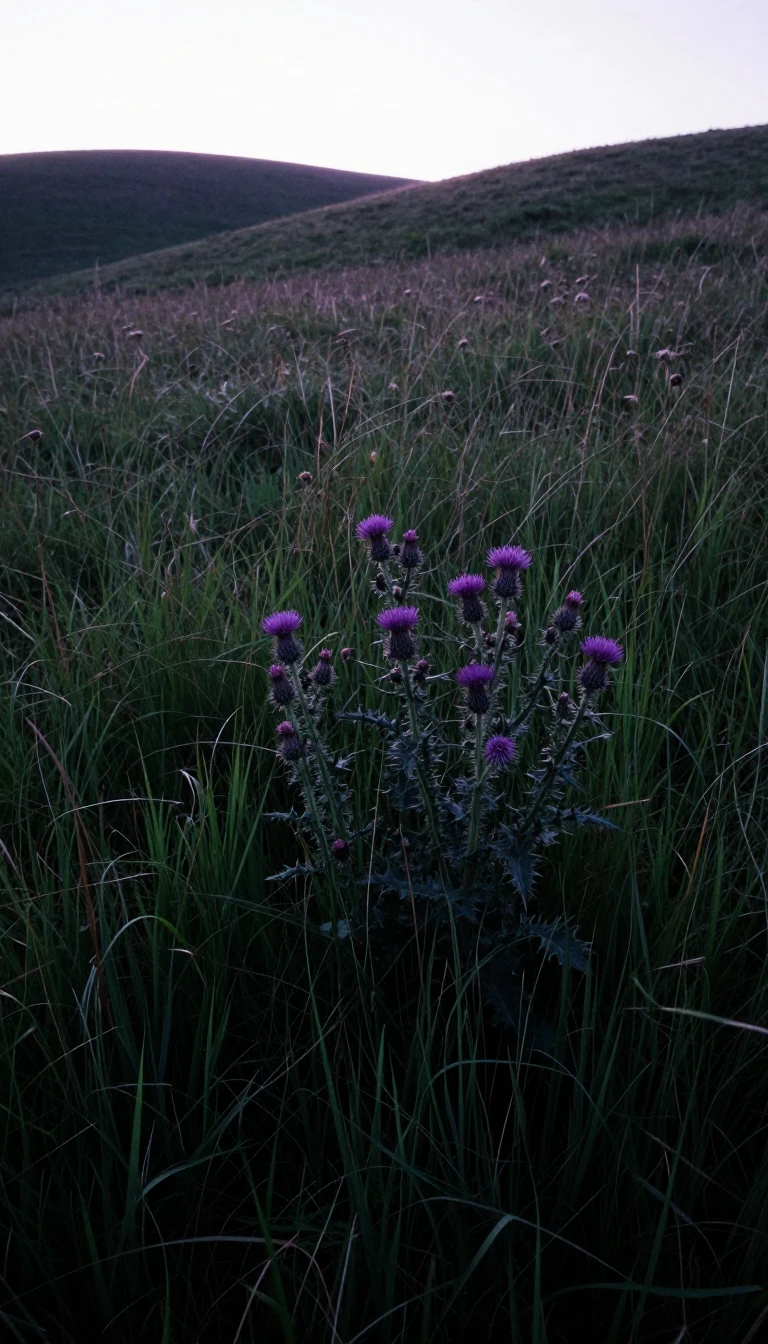 The resilient weed that blooms in the scars of warKnown as the corn poppy, Papaver rhoeas thrives in disturbed soil. This ability turned a common agricultural weed into a powerful symbol of remembrance after World War I, as red f…
- Global tree restoration could store massive amounts of carbon from the atmosphereResearchers mapping global canopy cover found that 4.4 billion hectares of tree cover could exist under our current climate. By adding 0.9 billion hectares of trees to areas that …
 Massive insect biomass loss signals a significant threat to species diversityResearchers who analyzed hoverfly populations across six German nature reserves found that large declines in total insect biomass are predictive of a drop in species diversity. By…
 New technologies and shifting scientific perspectives are reshaping how we understand harmful algal bloomsA review of harmful algal bloom (HAB) science found that increasing impacts on public health, fisheries, and ecosystems are driving significant shifts in scientific understanding.…
- Diverse crops and organic matter can partially replace nitrogen fertilizersA meta-analysis of 30 long-term experiments across Europe and Africa found that ecological intensification practices—such as increasing crop diversity and adding organic matter—ca…
- Global plant growth increased as climate changes eased environmental constraintsResearchers analyzing 18 years of satellite observations and climate data found that global terrestrial net primary production increased by 6% between 1982 and 1999. This growth, …
- Honey bees support human health and ecosystems through diverse rolesResearchers who reviewed the multifaceted impact of honey bees found that these insects serve as vital links between human and ecosystem health. Beyond their well-known role in po…
 Tropical moist forests have lost 17% of their cover since 1990Researchers monitoring tropical moist forests over three decades found that 17% of this vital ecosystem has disappeared since 1990. By analyzing pantropical forest cover changes f…
 Non-English research provides a more complete picture of global biological invasion costsResearchers who compared global databases of invasive species costs found that including non-English scientific literature significantly expands our understanding of the problem. …
- New global map reveals only 5% of Earth's land has tall treesResearchers have developed a high-resolution global map of vegetation height using deep learning. By combining space-borne LiDAR data with optical satellite imagery, they found th…
- Pesticide exposure in pollen is associated with reduced bumble bee colony performanceResearchers observing 316 bumble bee colonies across 106 agricultural sites in eight European countries found that various pesticides present in collected pollen are associated wi…
- Human land use has fundamentally reshaped global ecosystems for over 10,000 yearsA review of archaeological and paleoecological evidence shows that human activities have been transforming Earth's ecology for millennia. From early hunting and foraging to modern…
- Rising Australian forest burned areas are linked to climate changeResearchers who analyzed decades of satellite and ground-based data found that forest burned areas in Australia are increasing. The study observed a linear increase in annual burn…
 Urban expansion drives native species loss and biological homogenizationResearch reviewing urban-gradient studies found that urban development causes high local extinction rates, often eliminating most native species. As cities expand, widespread nonn…
 Moth population trends vary significantly across different global regions and habitatsResearchers observing global moth populations found that biodiversity trends are highly complex and inconsistent. While some regions like Europe show alarming decreases in abundan…
- Declining pollinator populations are linked to a drop in insect-dependent plant speciesResearchers studying bee and hoverfly populations in Britain and the Netherlands found that local bee diversity has decreased since 1980. This decline in pollinators appears to co…
- Microscopic prokaryotes hold a massive share of Earth's living carbon and nutrientsResearchers estimating global microbial populations found that prokaryotes represent a staggering portion of Earth's biological wealth. Their total cellular carbon is estimated to…
- A tiny fraction of tree species makes up half of Amazonian forestResearchers who analyzed data from over half a million trees across the Amazon Basin found that a small number of species dominate the landscape. While the region is famous for it…
 Plants use complex chemical metabolites to defend against various herbivore attacksA review of plant biology found that plants produce secondary metabolites (PSMs) as sophisticated defense tools. These chemicals are synthesized in response to injury, helping pla…
 Ten essential rules for successful and sustainable large-scale reforestation effortsResearchers reviewing recent ecological studies have proposed ten golden rules to guide reforestation. They found that while tree-planting initiatives aim to capture carbon, poorl…
- High land-use intensity significantly reduces pollinator biodiversity in urban and pasture areasResearchers who modeled the global impact of land use on pollinators found that while low-intensity changes can sometimes benefit biodiversity, high-intensity human activity gener…
- Soil moisture fluctuations drive most global variations in land carbon uptakeResearchers using climate model simulations found that changes in soil moisture are responsible for 90 per cent of the year-to-year variability in how much carbon land ecosystems …
- Climate change acts as a powerful amplifier for the environmental footprint of agricultureA review of agricultural impacts found that climate change is intensifying the environmental damage caused by farming. Beyond the pressures of a growing global population, rising …
- Soil microbial diversity helps maintain multiple essential ecosystem functionsResearchers analyzing large-scale global databases found that microbial diversity in soil is positively linked to multifunctionality. By examining data from 78 global drylands and…
- Understanding the complex drivers behind the global spread of invasive plantsResearchers reviewing decades of ecological theory found that plant invasions are driven by a complex interplay of factors. Rather than looking at simple geography, the review hig…