 Intellect Plus
Physics
1,748 cards. Each one is a 40-second story with a five-minute read behind it. Page 14 of 30.
 How the BBC transformed its commercial arm into a global media powerhouseFor decades, the BBC has balanced public service with commercial ambition. By monetizing its vast library of programming and brands, the corporation created a subsidiary designed …
 How a small English market town once shaped the highest levels of national politicsAppleby-in-Westmorland is a quiet Cumbrian settlement known for its Norman castle and scenic surroundings. Yet, this remote market town was once a powerful pocket borough, holding…
 How Apple transformed a simple media player into a global video aggregation hubThe Apple TV app began as a basic replacement for the iTunes video library, but it has evolved into a massive, cross-platform ecosystem. By centralizing subscriptions and tracking…
 The master spy who was undone by his own cutting-edge surveillance technologyColonel Alfred Redl built the Austro-Hungarian Empire's most sophisticated counter-intelligence network, pioneering fingerprint databases and photographic surveillance. Yet, this …
 How one man single-handedly shaped the national identity of Texas in the twentieth century.Amon G. Carter was more than a newspaper publisher; he was the self-appointed architect of Fort Worth's image. From securing major industrial headquarters to defining the Texas co…
 How a remote volcanic island became a laboratory for the world's most delicate restoration.Anacapa Island, a rugged volcanic fragment off the California coast, was once overrun by invasive rats that decimated native seabird populations. To save the island's unique ecosy…
 How a meatpacking giant turned slaughterhouse waste into a global hygiene empireArmour and Company began as a Chicago meatpacking titan, but its most enduring legacy emerged from the byproduct of its own butchery. By repurposing animal fats into soap and addi…
 The high-stakes physics of a cross-border aerial dogfightWhen India and Pakistan engaged in 2019, the results were dictated by more than just politics. From the trajectory of preemptive strikes to the tragic mechanics of friendly fire, …
 A 68-meter turn-around sparked a high-stakes military standoffIn 2017, a simple road extension in a remote mountain pass triggered a tense military face-off between China and India. What began as construction equipment moving southward escal…
 Why your airline seat is shrinking even as passengers grow wider over timeAirline seats are marvels of engineering, balancing fire resistance, weight, and comfort. Yet, as passengers have grown larger, the industry has trended toward slimline designs an…
 Why does a quiet Cheshire village hide a legend of sleeping knights and wizards?Alderley Edge is more than a wealthy enclave for footballers and businesspeople. Beneath its affluent surface lies a rugged sandstone escarpment steeped in ancient mining history …
 How a Dublin-based leasing giant became the world's largest owner of commercial aircraftAerCap controls a massive fleet of thousands of aircraft, engines, and helicopters, serving hundreds of airlines globally. From its origins in 1970s Ireland to its recent multi-bi…
 A teenager brought a homemade clock to school and ended up in handcuffsIn 2015, fourteen-year-old Ahmed Mohamed was arrested after bringing a disassembled digital clock to his Texas high school. While he intended to impress his teachers, the device s…
- Why airlines prefer to rent their fleets rather than buy them outrightModern aviation relies on a massive, hidden financial engine: aircraft leasing. Airlines lease planes to avoid the crushing capital costs of ownership and to scale capacity rapidl…
 Aircraft liveries are more than just paint; they are complex, high-stakes corporate branding tools.Beyond aesthetics, aircraft liveries function as sophisticated mobile billboards. Evolving from simple bare-metal designs to complex, multi-layered branding, these schemes now inc…
 Is the 3000-metre race a middle-distance sprint or a test of long-distance endurance?The 3000-metre run occupies a strange middle ground in athletics. It requires the aerobic capacity of a long-distance runner, yet demands the intense lactic acid tolerance of a mi…
- How a single, improbable fourth-down conversion redefined a high-stakes NFL playoff rivalryIn a 2004 divisional playoff game, the Philadelphia Eagles faced a desperate fourth-and-26 situation with just over a minute remaining. Against the odds, they converted, forcing o…
 Sound waves can hold objects in mid-air, defying gravity without any physical contact.Acoustic levitation uses high-intensity ultrasonic waves to suspend matter against gravity. Once a niche laboratory curiosity, the technology has evolved from static hovering to d…
 How a century-old actors' union became the moral compass of the American stageFounded in 1913 by 112 theater professionals, the Actors' Equity Association evolved from a fledgling labor group into a powerful force for artistic integrity. From defying McCart…
 How a global pandemic forced the world's largest rugby league tournament to shift gearsThe 2021 Rugby League World Cup was meant to be a landmark event, but COVID-19 forced a year-long delay. When it finally arrived in 2022, it broke new ground by hosting men's, wom…
- Why the 60-metre sprint is the ultimate test of pure explosive human powerThe 60-metre dash is a specialized sprint that strips away the endurance demands of longer races to focus entirely on raw acceleration. While rarely seen outdoors, it serves as th…
 Adolphe Adam: The composer who lost everything in a failed opera house gambleAdolphe Adam was a titan of 19th-century French music, best known today for the ballet Giselle and the carol O Holy Night. Yet, his career was defined by a spectacular financial c…
 How a mid-season slump transformed into an improbable eight-game winning streak for the PackersAfter a dismal 4-6 start in 2016, the Green Bay Packers faced a bleak outlook. Yet, quarterback Aaron Rodgers predicted they could run the table, sparking a remarkable turnaround.…
- Why the 1000-metre run remains a rare and challenging middle-distance track eventThe 1000-metre race occupies a curious space in athletics. Neither a pure sprint nor a long-distance endurance test, this middle-distance event demands a unique blend of speed and…
- Why the 10K road race remains the ultimate test for professional and amateur runnersThe 10K is a unique athletic paradox. It is long enough to demand serious endurance, yet accessible enough for untrained participants to enjoy. While professional elites chase wor…
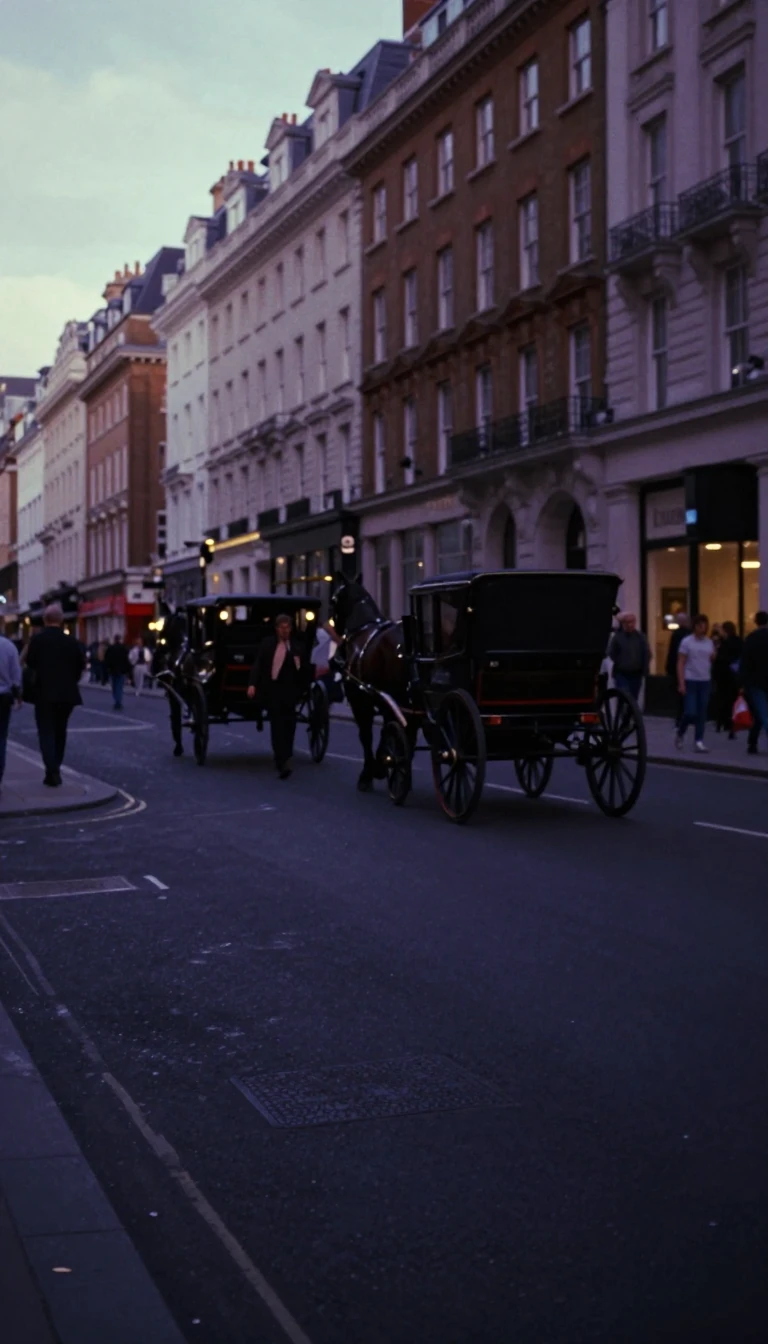 The London townhouse that once housed future royalty before becoming a wartime ruinBefore its destruction during the Blitz, 145 Piccadilly served as a grand Mayfair residence for the Duke and Duchess of York. Beyond its royal occupants, this five-storey structur…
- Why the 150-metre sprint remains a rare, high-stakes anomaly in professional track athleticsThe 150-metre sprint is a ghost event in track and field. Unrecognized by World Athletics and rarely contested, it exists primarily as a high-stakes exhibition. From million-dolla…
 Berlin’s 2009 World Championships set a new standard for global athletic participation and records.The 2009 World Championships in Athletics transformed Berlin into a global stage, drawing nearly 2,000 athletes from 201 nations. Beyond the competition, the event pioneered envir…
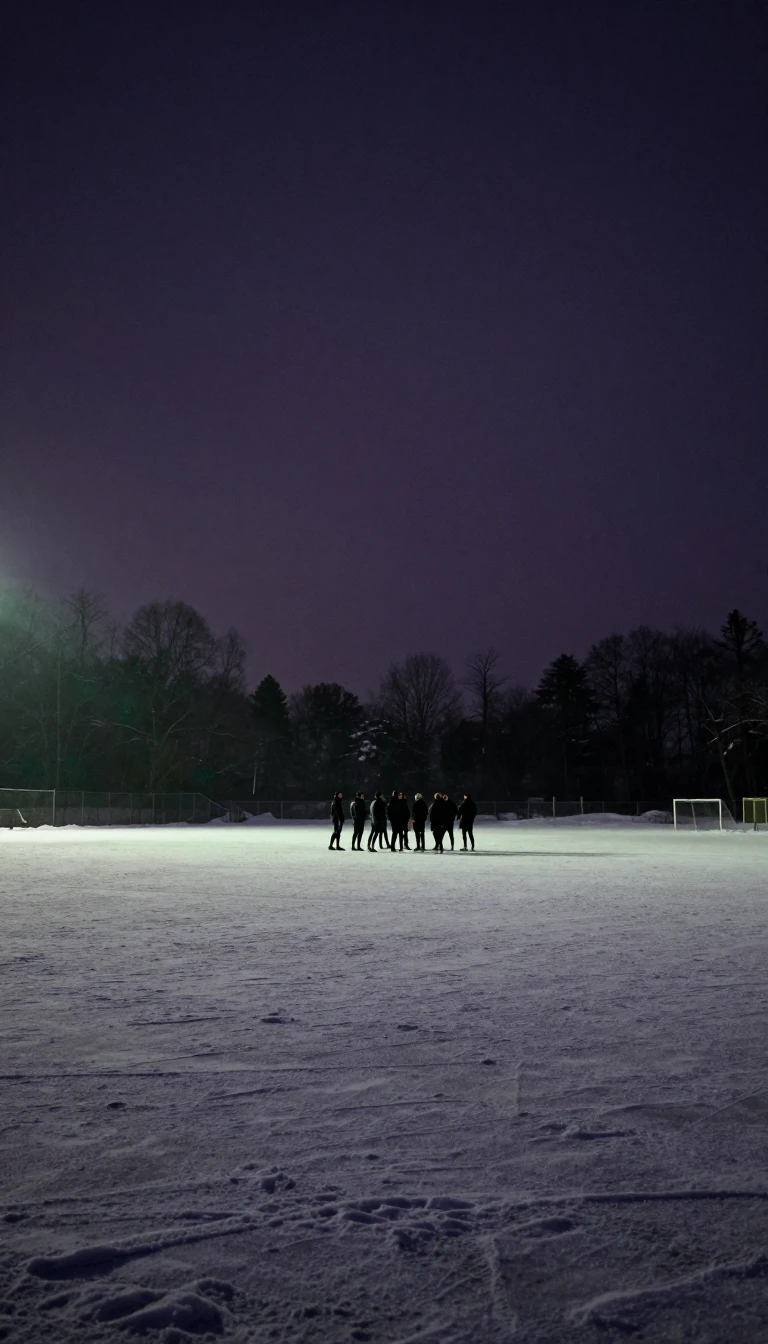 How the 1967 Green Bay Packers survived the coldest game in NFL historyIn the 1967 NFL Championship, the Green Bay Packers faced the Dallas Cowboys in temperatures of minus 13 degrees Fahrenheit. The extreme cold rendered the stadium's turf heating s…
 Toronto's photonic approach to quantum computing is rewriting the rules of light-based processingQuantum computing is often associated with supercooled circuits, but one Canadian firm is betting on light. By leveraging squeezed states of light rather than traditional single p…
 How one Maratha leader forced the British Empire to negotiate on equal termsYashwantrao Holkar was a formidable military strategist who resisted British expansion in India with such tenacity that he became the only ruler to secure a peace treaty on his ow…
- A Polish city is physically growing larger every year thanks to the Baltic SeaŚwinoujście is a unique maritime city spread across three islands in northwestern Poland. Beyond its strategic port and historic fortifications, the city possesses a rare geologic…
 How a Northern Irish coachbuilder pioneered the low-floor bus and embraced the hydrogen revolution.Founded in 1946, Wrightbus evolved from rebodying lorries to becoming a global force in bus manufacturing. By mastering low-floor chassis technology in the 1990s, the company tran…
- Sultan Yaqub and the land reforms that shook the foundations of the Aq QoyunluSultan Yaqub ruled the Aq Qoyunlu dynasty from 1478 to 1490, maintaining stable borders while fostering a vibrant culture of poetry and science. Yet, his ambitious attempt to cent…
 From CIA operative to anti-war icon: the radical transformation of William Sloane CoffinWilliam Sloane Coffin began his adult life as a pianist and a Cold War intelligence officer organizing paramilitary missions against the Soviet Union. Yet, he eventually became on…
 A Russian region holds the oldest known human camps and a Nobel physics legacy.Voronezh Oblast is more than a fertile agricultural heartland. Beneath its black earth lie the earliest traces of modern humans in Europe, dating back 40,000 years. This same regi…
- Value at risk is a boundary, not a crystal ball for financial disaster.Value at risk, or VaR, estimates the maximum loss a portfolio might face over a set period under normal conditions. While it provides a structured way to quantify risk, it is fund…
 How a small coastal village became the heart of India's journey into deep spaceIn 1962, a quiet site in Thumba was chosen for rocket launches because of its unique position on the geomagnetic equator. Today, that location is the Vikram Sarabhai Space Centre,…
 Did a U.S. Senator really sabotage scientific progress with a satirical award?William Proxmire, a long-serving Wisconsin senator, became infamous for his Golden Fleece Award, which mocked government spending he deemed wasteful. While he claimed to be a cham…
 How an electrical engineer navigated the complex financial systems of global banking leadershipVikram Pandit began his career building electronic trading platforms at Morgan Stanley before rising to lead Citigroup through the 2008 financial crisis. His tenure was marked by …
 What does the name of this Australian town actually mean in Indigenous languages?Warragul is a town in Victoria, but its name carries a contested history. While often translated as wild dingo from the Darug language, historical records suggest settlers used th…
 How a former coal company headquarters became a hub for modern scientific researchThe University of Scranton has transformed from a small 1888 college into a modern Jesuit institution. Its campus evolution reflects a broader shift in academic infrastructure, mo…
 By rotating two layers of graphene, physicists can turn insulators into superconductors at will.Twistronics is the study of how the angle between stacked two-dimensional materials fundamentally alters their electrical behavior. By rotating graphene layers to a precise magic …
- A Victorian mansion in London hides a bizarre, gilded frieze of fifty-four literary characters.Built in 1895 for William Waldorf Astor, Two Temple Place is a Neo-Tudor stronghold on the Thames. Beyond its Portland stone facade lies an opulent interior where mahogany carving…
- How a fringe political party built a global intelligence network on pure paranoiaThe U.S. Labor Party, founded in 1973, began as a Marxist group but morphed into a syncretic, extreme-right organization. Led by Lyndon LaRouche, it operated a 24-hour teletype li…
- Why Ireland's oldest university and its only college are legally one and the same.Founded in 1592 by Queen Elizabeth I, the University of Dublin exists as a public research institution with a singular structure. While it functions as a collegiate university, it…
 A town built to be demolished, Twizel survived to become a thriving tourist hub.Founded in 1968 as a temporary base for hydroelectric construction, Twizel was designed to be dismantled once the work finished. Instead, residents fought to save their home from …
 The two-cent piece was a short-lived Civil War solution that introduced a national motto.Born from the economic chaos of the American Civil War, the two-cent piece was a temporary fix for a nation lacking small change. Though it vanished from circulation within a deca…
 How U. R. Ananthamurthy used literature to challenge the rigid structures of Indian societyA pioneer of the Kannada Navya movement, U. R. Ananthamurthy was a literary giant who dissected the psychological tensions within traditional Brahmin families. Beyond his celebrat…
 From Cold War allies to regional rivals: the complex evolution of U.S.-Turkey relationsOnce a cornerstone of Western containment strategy, the U.S.-Turkey relationship has morphed into a volatile, uneven partnership. While both nations remain NATO allies, deep-seate…
 London's first skyscraper was designed to mimic a bank's logo from the sky.Tower 42, formerly the NatWest Tower, redefined the London skyline in 1980. Its unique cantilevered structure, designed to resemble the bank's three-chevron logo, was a feat of en…
 How a Cold War standoff over two narrow waterways reshaped global military alliances forever.After World War II, the Soviet Union pressured Turkey to share control of the Bosporus and Dardanelles. This intimidation campaign, intended to secure ice-free naval access, backf…
 How a British country estate became a secret listening post for Nazi secretsDuring World War II, Trent Park was transformed into a clandestine intelligence center. By installing hidden microphones in the rooms of captured German generals, British military…
 Layered chromium triiodide crystals exhibit massive tunneling magnetoresistance, reaching an extraordinary 10,000% magnitude.Tunneling magnetoresistance is a quantum phenomenon where electrical resistance shifts based on the magnetic alignment of a junction. While traditional devices use complex thin-fi…
 Before engines, global trade relied on human and animal power pulling boats along towpaths.Long before modern shipping, inland waterways were the arteries of commerce. When wind failed or channels narrowed, barges were hauled by teams of men or horses walking along dedi…
- Why tax authorities scrutinize the prices companies charge their own foreign subsidiariesWhen multinational corporations trade with their own branches, they set the prices. To prevent these internal transactions from distorting taxable income, governments use transfer…
 Why a weak tropical storm became the most expensive disaster in Texas historyTropical Storm Allison was never a hurricane, yet it caused catastrophic flooding and billions in damages. By stalling over the Gulf Coast, this slow-moving system defied expectat…
 How a small Ohio town became an early pioneer of the electric ageLong before electricity was a household standard, Tiffin, Ohio, made history by embracing the new technology. In 1884, a local church became the first public structure globally to…
- A retired Rear Admiral is now leading the charge to normalize UAP researchTimothy Gallaudet, a former high-ranking naval oceanographer, has transitioned from military command to the forefront of the search for unidentified anomalous phenomena. By advoca…
 Is Britain’s most influential news show actually a secret signal for nuclear submarine commanders?BBC Radio 4's Today programme shapes the national political agenda every morning, but its reach may extend to the ocean floor. Historian Peter Hennessy suggests that if the show v…