 Intellect Plus
Cards starting with W
29,907 cards. Page 137 of 499.
 Why a 106-year-old fruitcake is a scientific treasure in Antarctica's frozen wildernessVictoria Land is more than just a vast, icy expanse in eastern Antarctica. From ancient meteorites that reveal the origins of our Solar System to NASA-studied lichens and remarkab…
 Why a 10th-century Viking king is the namesake of your modern wireless headphones.Bluetooth was originally a placeholder name, intended to be replaced by something more professional like RadioWire or PAN. But when a trademark search revealed those names were al…
 Why a 12-gauge shotgun is actually larger than a 16-gauge firearmThe term gauge is a counterintuitive relic of history. It measures a firearm's bore by the number of lead spheres of that diameter required to weigh one pound. Consequently, the s…
 Why a 12th-century French abbey rejected decoration to focus on the divineFounded in 1118 by Saint Bernard of Clairvaux, the Abbey of Fontenay stands as a masterpiece of Cistercian austerity. By stripping away ornamentation and focusing on light and pro…
 Why a 12th-century Korean historian felt his contemporaries were dangerously ignorant of their roots.In 1146, Kim Pu-Shik completed the Samguk sagi, the first government-compiled history of Korea. Distressed that elite scholars knew Chinese philosophy but nothing of their own nat…
 Why a 12th-century monk found his salvation in cherry blossoms instead of BuddhaBorn into a world of collapsing power and existential dread, the poet-monk Saigyō abandoned his noble life to wander Japan. He became a bridge between eras, crafting a legacy of m…
 Why a 12th-century monk rejected royal power to redefine the path to enlightenmentJinul, the most influential figure in Korean Seon Buddhism, walked away from a prestigious administrative career to live in mountain seclusion. By prioritizing self-reliance and s…
 Why a 13th-century Hindu king was nicknamed after a long, flowing tailNarasingha Deva I was a formidable Eastern Ganga monarch who halted Islamic expansion into India. While legends once suggested his nickname Langula implied a physical deformity, h…
 Why a 14-day war between neighbors reshaped the Balkans and toppled a dynastyIn 1885, Serbia launched a surprise invasion of Bulgaria, expecting a quick victory. Instead, the conflict became a humiliating defeat that exposed the dangers of autocratic leade…
 Why a 140-year-old staining technique remains a cornerstone of modern medical diagnosticsDeveloped in 1884 to make bacteria visible in lung tissue, the Gram stain remains a primary tool for identifying infections. By exploiting fundamental differences in bacterial cel…
 Why a 14th-century peasant revolt still haunts the imagination of the ruling classIn the summer of 1358, northern French peasants rose against a nobility they perceived as failing, sparking a brief, violent rebellion known as the Jacquerie. Though suppressed wi…
 Why a 15-year development struggle resulted in a critical and commercial disappointmentThe 1999 romantic drama Random Hearts, starring Harrison Ford and Kristin Scott Thomas, spent over a decade in development hell before reaching screens. Despite its high-profile t…
 Why a 150-year-old collection of dry coral is vital for our ocean's futureThe American Museum of Natural History holds over 4,000 dry coral specimens, some dating to the 1870s. While these skeletons are visually striking, they serve a critical scientifi…
 Why a 1529 political protest against a German emperor birthed a global religious movement.Protestantism began not as a unified church, but as a defiant political act. When German princes rejected an imperial decree banning Martin Luther’s writings, they were labeled Pr…
 Why a 15th-century birth date redefined an entire religious calendarFor centuries, Sikh dates were tied to lunar cycles and Hindu traditions. In the late 20th century, this shifted toward a tropical solar system rooted in the birth of Guru Nanak D…
 Why a 15th-century Italian ruler chose art over traditional political powerLeonello d'Este, Marquess of Ferrara from 1441 to 1450, defied the power-hungry legacy of his predecessors. Instead of focusing on territorial expansion, he transformed his city i…
 Why a 15th-century Italian widow became the patron saint of impossible causesRita of Cascia lived a life defined by tragedy, from an abusive marriage to the loss of her sons. Yet, she transformed these hardships into a legacy of peace and devotion. Today, …
 Why a 16-digit code is the most important tool in a researcher's careerIn a world of shared names, typos, and shifting institutional affiliations, proving you wrote that seminal paper is surprisingly difficult. The Open Researcher and Contributor ID,…
 Why a 1676 Virginian revolt against the governor led to the birth of slavery.Bacon's Rebellion was an armed uprising of diverse laborers against the colonial elite. While it failed to drive out Native Americans or topple Governor William Berkeley, it terri…
 Why a 1685 recipe for Turkish meat contains no spices and no saltIn 17th-century England, recipes were often vague, unhelpful, and surprisingly plain. When recreating a dish from Robert May’s 1685 cookbook, one finds a recipe that lacks measure…
 Why a 1690 skirmish on the River Boyne still shapes Northern Irish politics todayThe Battle of the Boyne was a pivotal clash between King James II and William III, securing Protestant rule in Ireland. While the military encounter was relatively small, its lega…
 Why a 16th-century French philosopher wanted to strip mathematics of its proofsPetrus Ramus was a radical educator who believed theoretical mathematics had lost its way. By prioritizing practical application over rigorous proof, he sought to overhaul the uni…
 Why a 16th-century mathematician believed the stars were God's divine warning systemCaspar Peucer was a brilliant Wittenberg professor who bridged the gap between Renaissance mathematics and mystical astrology. While he pioneered rigorous geographical calculation…
 Why a 16th-century patricide turned a Roman noblewoman into an enduring cultural icon.Beatrice Cenci was a young noblewoman who, after suffering years of abuse, conspired to murder her violent father. Her 1599 execution by the Papal state sparked public outrage and…
 Why a 16th-century warlord’s base became a bustling hub at the heart of JapanStrategically located in the center of Japan, Gifu has been a pivot point for power for centuries. From the unification efforts of Oda Nobunaga to its modern identity as a manufac…
- Why a 1765 tax on playing cards and dice ignited the American RevolutionIn 1765, Britain attempted to solve its post-war debt by directly taxing American colonial paper goods. The move backfired spectacularly. Instead of filling the treasury, it spark…
 Why a 1776 siege of Basra reshaped the power balance in the Middle EastThe Ottoman–Persian War of 1776–1779 was driven by trade dominance, religious tensions, and regional power struggles. When Zand forces besieged the vital port of Basra, they trigg…
 Why a 17th-century anatomist is the true father of modern geologyNicolas Steno began his career dissecting cadavers, but his observations of the natural world eventually reshaped our understanding of the Earth itself. Addison Anderson explores …
- Why a 17th-century border dispute over Moldavia nearly toppled the Ottoman SultanThe Polish–Ottoman War of 1620–1621 was sparked by competing spheres of influence and rogue Cossack raids. What began as a regional struggle over Moldavia escalated into a massive…
 Why a 17th-century cloth merchant tried to turn England into a communist communeAfter his business collapsed during the English Civil War, Gerrard Winstanley turned to the soil. Leading a group known as the Diggers, he attempted to reclaim common land for the…
 Why a 17th-century Dutch tavern signal became a global military spectacle in ScotlandThe Royal Edinburgh Military Tattoo draws hundreds of thousands to Edinburgh Castle each August. While it now features international performers and modern projection mapping, its …
 Why a 17th-century epic poem remains the pinnacle of Croatian Baroque literatureIvan Gundulić defined the Croatian Baroque with his stirring epic, Osman. Written in the 17th century, the work captured the dramatic clash between the Ottoman Empire and Christia…
 Why a 17th-century Jesuit priest became the ultimate guide for modern power players.Baltasar Gracián, a Spanish Baroque philosopher, mastered the art of worldly wisdom long before self-help became a genre. His sharp, aphoristic style influenced thinkers like Scho…
 Why a 17th-century Korean philosopher argued his nation stood outside Chinese Confucian rulesHŏ Mok was a polymath who defied the rigid political orthodoxy of the Joseon Dynasty. By challenging the era's dominant scholars on ritual mourning, he asserted that Korea possess…
 Why a 17th-century pastor sparked a revolution by demanding more than just dry doctrine.Philipp Jakob Spener, the father of Pietism, grew distressed by the cold, intellectual rigidity of Lutheranism. He sought to transform Christianity from a scholastic system into a…
- Why a 17th-century physician thought animal blood could cure human madnessIn 1667, Jean-Baptiste Denys pioneered blood transfusion by injecting sheep blood into humans. He believed that the perceived purity of animals could replace the corrupted blood o…
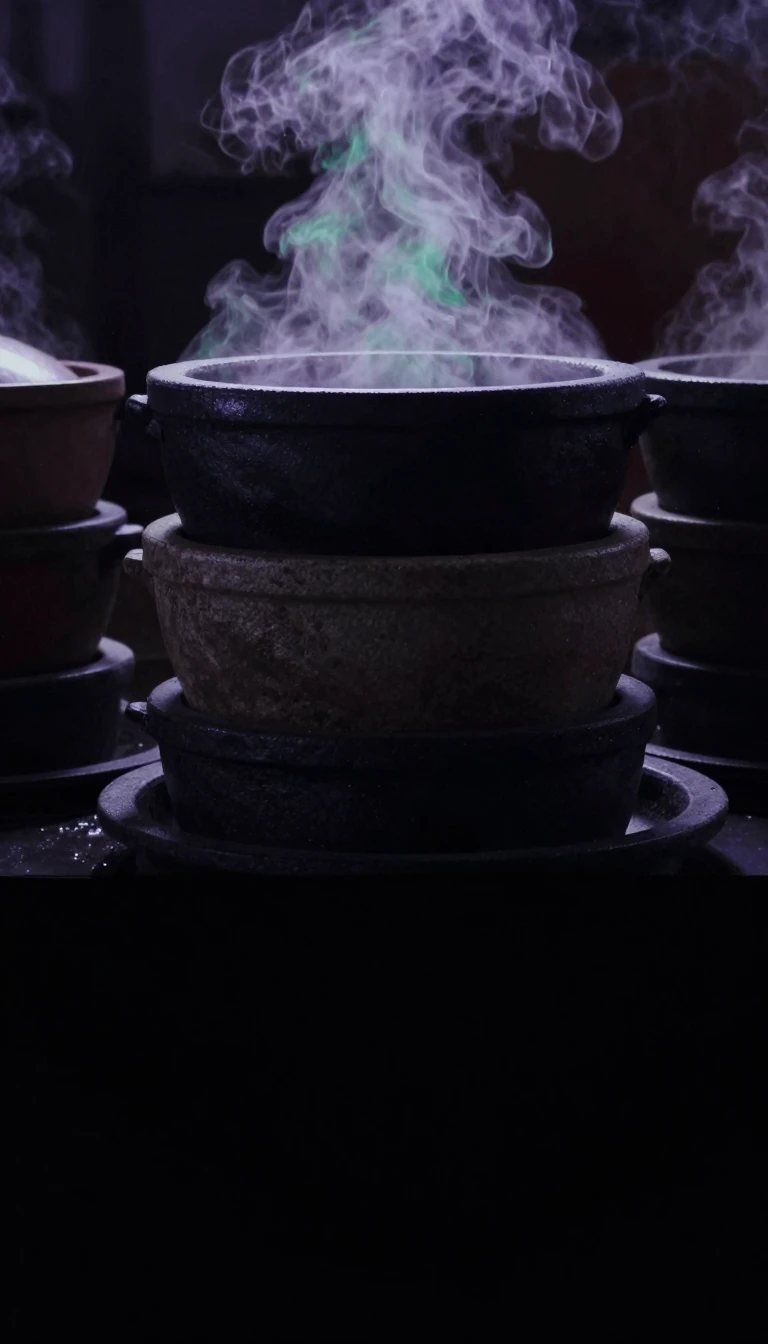 Why a 17th-century physics experiment is the secret to perfect high-altitude cookingPressure cookers do more than save time; they manipulate the laws of thermodynamics to cook food at temperatures impossible in an open pot. By trapping steam to raise the boiling …
 Why a 17th-century Punjabi poet is the unlikely hero of modern political activistsBulleh Shah was a revolutionary mystic who defied religious authorities and imperial power. Today, his poetry transcends its Sufi origins, influencing everyone from socialist acti…
 Why a 17th-century still life feels like a film noirArtist Roland Flexner explores the atmospheric tension of Jacques de Gheyn II's "Vanitas Still Life." This episode of The Artist Project invites you to see a classic masterpiece t…
 Why a 17th-century war ended with a peace treaty called shameful and shittyFought from 1675 to 1679, the Scanian War saw Denmark-Norway attempt to reclaim provinces lost to Sweden. Despite initial military successes and naval dominance, the conflict conc…
 Why a 17th-century Welsh physician became a secret influence on modern science fictionHenry Vaughan was a metaphysical poet who renounced his early secular work to pursue a life of spiritual revelation and medicine. Though often overshadowed by his mentor George He…
 Why a 1903 novel about a missing heir remains a literary puzzle todayHenry James considered The Ambassadors his finest work, yet its publication history is a tangled mess of missing chapters and editorial confusion. Beyond the drama of its creation…
 Why a 1904 St. Louis bullfight ended in a chaotic public riotThe 1904 St. Louis World's Fair featured a bullfight intended to be a profitable attraction, but it quickly devolved into a scandal, legal battle, and riot. This video explores th…
 Why a 1905 art critic accidentally named the most vibrant movement in modern historyWhen a critic saw bold, strident colors displayed alongside a classical sculpture, he dubbed the artists wild beasts. This insult became the name for Fauvism, a short-lived but re…
 Why a 1905 industrial alloy still protects the world's most extreme machinesCreated over a century ago, Monel is a nickel-copper alloy prized for its near-invincibility against corrosive environments. From the depths of the ocean to the intense heat of ro…
 Why a 1905 tragedy about New York high society still haunts modern readers todayEdith Wharton’s The House of Mirth chronicles the slow, agonizing social disintegration of Lily Bart, a penniless beauty navigating the Gilded Age. As she fails to secure a wealth…
 Why a 1914 British cake recipe uses a surprising reverse creaming techniqueDiscover the Rough Robin Cake, a vintage treat from a 1914 domestic science manual. This video explores early 20th-century British baking methods, including the use of rice flour …
- Why a 1918 battle named for a biblical site became a masterclass in deception.The Battle of Megiddo was a decisive Allied victory in World War I, yet the name is arguably misleading; little fighting occurred near the ancient fortress. Instead, General Edmun…
 Why a 1920s football trophy looks like an egg to modern eyesThe Egg Bowl is a storied college football rivalry between Mississippi State and Ole Miss. Its name comes from the Golden Egg, a brass trophy commissioned in 1927 to stop fans fro…
 Why a 1920s gasoline brand is named after a specific speed and roadThe iconic Phillips 66 name was not a random marketing choice. It emerged from a 1927 naming committee meeting where three distinct factors aligned: the fuel's specific gravity, t…
 Why a 1920s German naturopath believed human health depended on eliminating all body mucusArnold Ehret, a German naturopath, built a cult-like following by claiming that all disease stems from mucus-forming foods. He argued that the body is an air-gas engine and that w…
 Why a 1924 Olympic heat wave permanently changed the future of cross country runningBorn from 19th-century schoolboy games of Hare and Hounds, cross country running evolved into a grueling test of endurance. But after a catastrophic 1924 Olympic race left competi…
 Why a 1927 Arkansas 'Mexican Stew' contains neither tacos nor authentic regional spiceIn 1927, a community cookbook from Cotton Plant, Arkansas, featured a recipe for Mexican Stew that defies modern expectations. Far from traditional regional cuisine, this dish rev…
 Why a 1927 chocolate cake was defined as solidThis video demonstrates a chocolate cake recipe from a 1927 newspaper supplement. It explores the specific techniques of the era, including the use of real chocolate and the prepa…
 Why a 1927 cinematic masterpiece is now effectively vanished from human historyIn 1927, The Magic Flame arrived in theaters as a grand circus-themed reimagining of Romeo and Juliet. Directed by Henry King and produced by Samuel Goldwyn, it was a high-profile…
 Why a 1927 horror masterpiece features a man who amputates his own armsIn the silent era, Lon Chaney starred as a carnival knife-thrower who hides a dark secret: he is not actually armless. To win the love of a woman with a phobia of men's hands, he …
 Why a 1928 silent film about a disfigured clown remains a cinematic masterpiece todayUniversal Pictures invested over $1,000,000 into The Man Who Laughs, a haunting adaptation of Victor Hugo's novel. Directed by German Expressionist Paul Leni and starring Conrad V…
 Why a 1928 silent film caused a riot and triggered international government bansStreet Angel was a technical marvel of the late silent era, featuring a synchronized score and sound effects. Yet, its depiction of Naples sparked such outrage that it led to the …
 Why a 1928 Soviet film invented a British occupation of Mongolia that never happenedVsevolod Pudovkin’s final revolutionary masterpiece, Storm over Asia, depicts a Mongol trapper becoming a puppet ruler for the British military. While the film is a landmark of So…
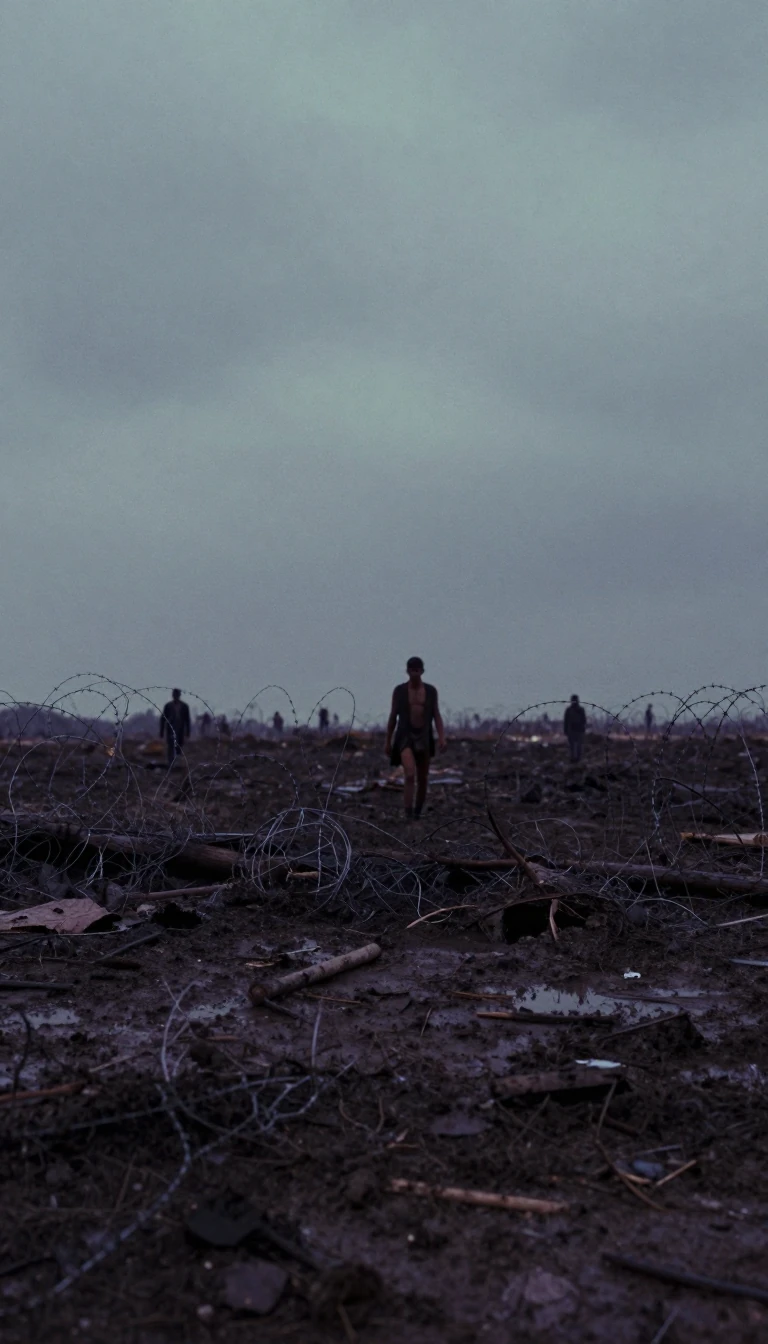 Why a 1929 novel about World War I remains the ultimate antiwar masterpieceErich Maria Remarque’s All Quiet on the Western Front stripped away the romantic veneer of combat to reveal the hollow reality of the trenches. By focusing on the psychological er…