 Intellect Plus
Cards starting with W
29,907 cards. Page 174 of 499.
 Why an antique microwave might outperform your modern kitchen applianceModern technology often feels like a step backward in durability. This video explores a vintage microwave oven that remains surprisingly advanced, challenging our assumptions abou…
 Why an Apollo 12 astronaut traded his lunar suit for a painter's brush.Alan Bean was the fourth human to walk on the Moon, yet he felt his most important work began after retiring from NASA. He spent 18 years as an astronaut before dedicating his lif…
 Why an arborist is fighting to change how we value native timberMost fallen trees are simply chipped into mulch, their potential lost to waste. But one specialist is using his expertise in arboriculture to rescue valuable wood, transforming sa…
 Why an armistice is not the same thing as ending a warAn armistice is a formal agreement to stop fighting, but it is rarely the final chapter of a conflict. While it halts active combat, it is merely a temporary arrangement—a modus v…
 Why an art forger had to confess to fraud to surviveHan van Meegeren didn't just forge paintings; he manipulated the highest levels of power. This video explores how he deceived the Nazis and the art world, leading to one of the mo…
 Why an artist obsessed with video games is fixated on the harpsichordAmerican artist Cory Arcangel explores the unexpected connections between historical instruments and modern digital media in this episode of The Artist Project.
 Why an atheist Marxist directed the most acclaimed cinematic portrait of Jesus ChristPier Paolo Pasolini, a self-described atheist and communist, created a masterpiece of religious cinema in 1964. By rejecting Hollywood artifice for Italian neorealism and casting …
 Why an Australian children's cartoon is capturing the hearts of adultsExplore how the global phenomenon Bluey uses authenticity and relatable family dynamics to connect with viewers of all ages, offering more than just simple entertainment for kids.
 Why an Australian electronic artist calls her computer her greatest collaboratorFor Nina Wilson, the computer is more than a tool; it is a primary instrument and a lifelong partner. Her debut album, I Love My Computer, weaves a sonic tapestry of hyperpop and …
 Why an Austrian scythe outperforms modern power tools for orchard grass managementManaging an orchard of 30 fruit trees requires consistent grass maintenance. This video demonstrates why switching from a mechanical strimmer to a traditional Austrian scythe is m…
 Why an autism diagnosis is a tool for support rather than a life sentenceReceiving an autism spectrum disorder diagnosis can feel overwhelming, yet it is often the first step toward clarity. While the label may trigger fear, it serves as a practical me…
 Why an early head start might actually hold your career backDoes focusing on one skill too soon limit your potential? Journalist David Epstein explores why a broad sampling period—trying many different things—can be more effective for long…
 Why an electric truck might be a smarter home backup than a PowerwallThe Ford F-150 Lightning offers a clever alternative to home battery systems. By using Ford Intelligent Backup Power, you can leverage your vehicle's massive battery capacity to k…
 Why an electrician's nightmare is hiding in your front yardA homeowner's DIY lamppost project serves as a masterclass in what not to do. Watch as master electrician Heath Eastman identifies dangerous code violations and explains how to pr…
 Why an elephant's greatest fear might be a tiny swarmIn parts of Africa, humans and elephants are locked in a desperate struggle for shrinking resources. One solution isn't a wall of steel or high-voltage wire; it is a buzzing barri…
 Why an embroidered handkerchief might be more powerful than a protest marchTraditional activism often relies on high-energy confrontation, which can be overwhelming for many. Sarah Corbett suggests a different path: craftivism. By using handicrafts to en…
 Why an emergency fund is the essential foundation for your personal financial health.Building an emergency fund is rarely considered exciting, yet it serves as the critical base for your entire financial life. This video explains why prioritizing this unglamorous …
 Why an entomologist spent decades intentionally getting stung by hundreds of insectsJustin O. Schmidt created a formal pain index to test a bold evolutionary theory: that the development of toxic, painful stings was the secret ingredient allowing insects to evolv…
 Why an ESA scientist used LEGO bricks to plan a comet missionSpace missions require precise orbital choreography. Engineers must calculate exactly how to point solar panels toward the Sun and antennas toward Earth. To visualize these comple…
 Why an EU treaty protects the specific vocabulary of Austrian GermanWhile most languages share a standard, Austrian German holds a unique legal status. From potatoes to Brussels sprouts, certain food terms are protected by international law, ensur…
 Why an explorer once mistook this North Carolina lagoon for the Pacific OceanSpanning 80 miles, the Pamlico Sound is the largest estuarine lagoon on the North American East Coast. Its vast, shallow expanse once tricked a 16th-century explorer into believin…
 Why an Indian actor dropped his surname to challenge deep-seated social divisionsBorn in Delhi in 1983, actor Divyenndu rose from minor roles to become a prominent figure in Indian cinema and streaming. In 2019, he made a deliberate choice to remove his surnam…
- Why an indie rock band named themselves after a failed 1825 Russian insurrectionThe Decemberists are known for their literary lyrics, whimsical stage reenactments, and an aesthetic rooted in history and folklore. Formed in Portland in 2000, the band has spent…
 Why an internship might be your most strategic move back to workReturning to a career after a significant break can feel daunting. Career reentry expert Carol Fishman Cohen explores why taking an internship is often the smartest way to bridge …
- Why an Iraqi journalist threw his shoes at a United States president in 2008On December 14, 2008, Iraqi journalist Muntadhar al-Zaidi interrupted a Baghdad press conference to hurl his footwear at George W. Bush. While the act became a global symbol of pr…
 Why an island in Sydney Harbour is called PinchgutGibbeting, or hanging in chains, meant displaying an executed criminal's body in public as a warning. Britain wrote it into law in 1751 and abolished it in 1834. The practice left…
 Why an Octopus Arm Is Essentially a Brain That Can Taste and SmellAn octopus does not just use its eight arms to grab or move; it uses them to sense the world. Each of the hundreds of suckers lining those arms functions like a tongue or a nose, …
 Why an office clerk and a cleric share the same ancestor wordClerk once meant a person ordained to ministry. In the Middle Ages almost nobody but priests could read or write, so the words for churchmen and for literate record-keepers grew f…
 Why an open fracture is a medical emergency requiring urgent multidisciplinary interventionAn open fracture is more than a broken bone; it is a high-acuity injury where the bone pierces the skin, creating a direct pathway for infection. Because these injuries often invo…
 Why an oversized air conditioner might be freezing your homeWhen your air conditioning system shuts down due to ice buildup, the culprit isn't always a mechanical failure. Sometimes, the problem is actually too much power. Learn how improp…
 Why an unexpected hedgehog might be your best language teacherEver wondered why Duolingo teaches you that a groom is a hedgehog? It is not a glitch. This bizarre strategy uses psychological reward prediction errors to make learning stick, tu…
- Why an unorganized electrical panel is more than just a messy eyesoreA chaotic breaker box isn't just sloppy; it is a safety hazard. Knowing exactly which switch controls which outlet is essential for troubleshooting and electrical work. Whether yo…
 Why anaerobic exercise is the high-intensity engine behind your body's most explosive movementsAnaerobic exercise breaks down glucose without oxygen to fuel short, intense bursts of activity. While often associated with muscle fatigue and lactic acid, this metabolic process…
 Why analytical mechanics is the secret weapon for solving the universe's most complex problemsNewtonian mechanics relies on tracking individual forces on every particle, a method that quickly becomes impossible for complex systems. Analytical mechanics bypasses this by usi…
 Why anarcha-feminists argue that true liberation requires dismantling both the state and patriarchy.Anarcha-feminism posits that patriarchy and the state are two expressions of the same coercive system. By merging anarchist anti-authoritarianism with feminist analysis, this move…
 Why ancestral gardening techniques might be our best defense against food insecurityAs global food systems face increasing pressure, science is looking backward to move forward. This video explores how traditional home gardening methods, backed by modern research…
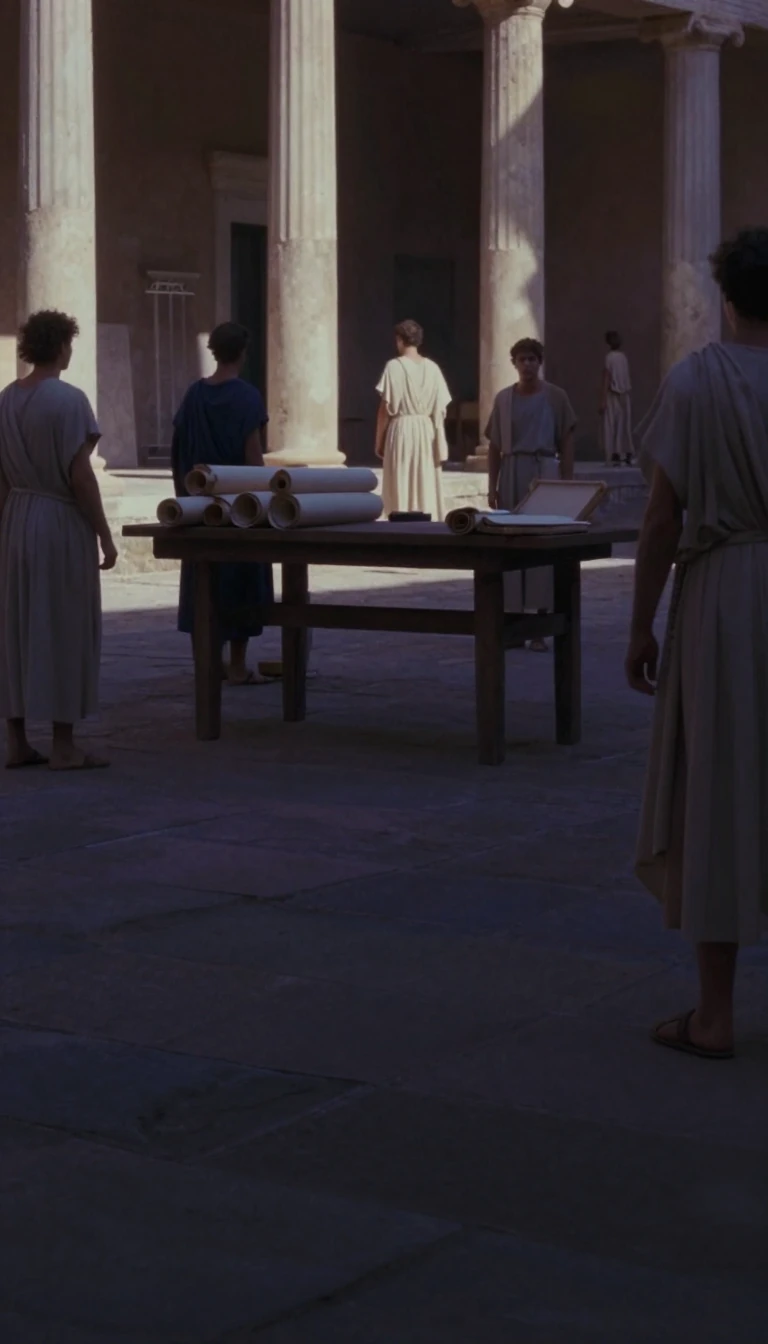 Why ancient alchemists forged the name of a famous philosopher to gain authorityScholars identify Pseudo-Democritus as the anonymous mind behind foundational alchemical texts falsely attributed to the pre-Socratic thinker Democritus. These lost works, written…
 Why ancient Aramaic translations of the Bible became more than just simple word swapsAs Aramaic replaced Hebrew as the common language of Jews in Palestine, the Targum emerged as a vital bridge. What began as a simple oral translation for the congregation evolved …
 Why ancient artisans used mercury to create the illusion of solid goldGilding is the art of applying a thin layer of gold to surfaces like wood or metal, offering the prestige of gold at a fraction of the cost. While modern methods are safe, histori…
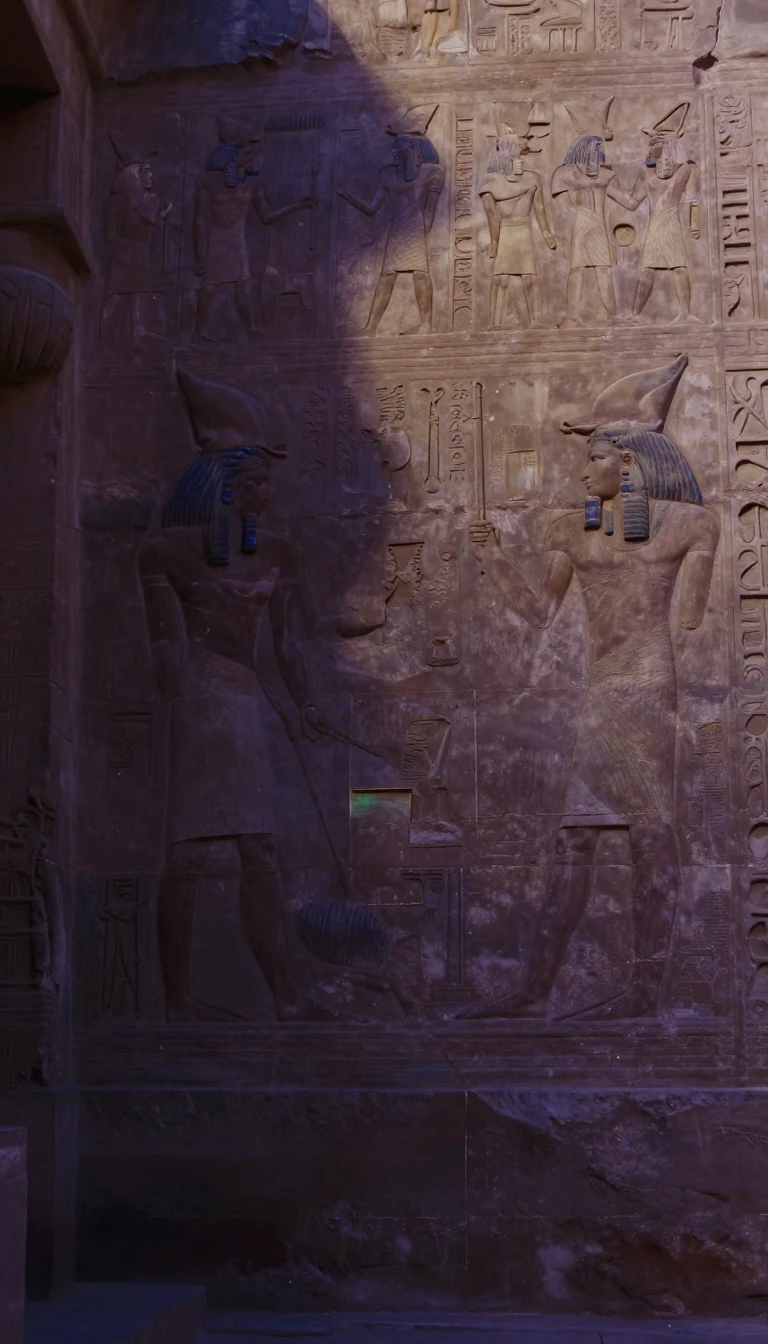 Why ancient artists turned to animal bones to create their most enduring masterpiecesLong before ivory became a luxury status symbol, bone carving served as a vital medium for human expression. From prehistoric figurines to medieval caskets, this accessible materi…
 Why ancient astrologers viewed the seven wandering stars as divine architects of human lifeLong before telescopes, ancient observers identified seven celestial bodies moving against the fixed stars. These planets, including the Sun and Moon, were not merely distant rock…
 Why ancient Athenians believed that random selection was more democratic than votingIn ancient Athens, elections were often viewed as oligarchic, favoring the wealthy and the ambitious. To ensure true equality, citizens turned to sortition—the selection of offici…
- Why ancient Athens mocked the Boeotians as dullards despite their immense cultural and political powerBoeotia was a powerhouse of ancient Greece, producing legendary poets like Pindar and Hesiod and military geniuses like Epaminondas. Yet, Athenians famously dismissed them as prov…
 Why ancient China's most practical school of thought vanished after achieving peace.Mohism was a rigorous, utilitarian philosophy that championed impartial care and scientific inquiry. Its followers were master siege-defense engineers who traveled the warring sta…
 Why ancient Chinese artisans spent lifetimes carving a stone harder than steelFor millennia, Chinese culture elevated jade above gold, imbuing the stone with moral virtues like wisdom and bravery. Because jade is too tough to cut with metal tools, artisans …
 Why ancient Chinese citizens once endured a month of fireless, cold-food livingThe Cold Food Festival began as a midwinter ritual of total fire abstinence, a practice so severe it caused widespread illness and death. While later legends linked the taboo to t…
 Why ancient Chinese folklore blamed strange, unexplainable disasters on supernatural yaoguaiYaoguai are not simple demons. These ambiguous, shapeshifting creatures of Chinese mythology represent the weird and the unnatural, often emerging from remote wildernesses when th…
 Why ancient Chinese thinkers viewed the universe as a cycle of five moving phases.Wuxing is often mistranslated as five static elements, but it is actually a dynamic system of five moving phases. Far from being physical substances, these agents represent proces…
 Why ancient cities and modern engineering often rely on highly composite numbersA highly composite number is a positive integer with more divisors than any smaller positive integer. These numbers are not just mathematical curiosities; their unique structure m…
 Why ancient civilizations believed this deep-sea creature was a powerful, protective talismanPrecious coral is more than just a vibrant jewelry material. For millennia, cultures from Rome to India have prized its deep red skeleton, attributing to it mystical, medicinal, a…
 Why ancient civilizations built their most formidable fortresses on jagged, isolated rocky outcrops.A promontory is more than just a scenic projection of land; it is a masterclass in natural defensive engineering. By occupying high ground surrounded by water or river confluences…
 Why ancient civilizations carved entire temples and cities directly into solid mountain rockRock-cut architecture is the art of excavating buildings and sculptures from natural stone rather than constructing them from blocks. From the tombs of ancient Egypt to the elabor…
 Why ancient civilizations synchronized the moon's phases with the sun's annual journeyLunisolar calendars reconcile two celestial rhythms that refuse to align. By tracking lunar months while anchoring the year to the solar cycle, these systems ensure seasons remain…
 Why ancient civilizations used metals to fight off invisible bacterial threatsLong before humans understood the existence of bacteria, they utilized specific metals to combat microbial effects. This episode of SciShow explores the historical and scientific …
 Why ancient civilizations viewed the winter solstice as a vital turning point for humanity.The winter solstice marks the shortest day and longest night of the year. This video explores how ancient cultures across the globe observed this astronomical event, viewing it as…
 Why ancient civilizations were obsessed with the spirits of the departedBelief in an afterlife was universal across ancient cultures, giving rise to chilling ghost stories that persist today. This video explores legendary hauntings from Egypt, China, …
 Why ancient conspiracy theories are the original fake news of human historyConspiracy theories are not a modern invention of the internet age. From moral panics in classical Athens to the destruction of the Knights Templar, humans have long used rumors t…
 Why ancient cultures believed the death of a god was necessary for the harvestAcross human history, the cycle of plant life was often personified by deities who lived, died, and were reborn. These figures, ranging from Mesopotamian gods to Egyptian rulers, …
 Why ancient cultures looked at the night sky and saw exactly seven heavensAcross Mesopotamia, Judaism, and Islam, the cosmos was often envisioned as a tiered structure of seven distinct heavens. This recurring number likely stems from the seven visible …
 Why ancient cultures placed coins in the mouths of their dead for eternityThe myth of Charon’s obol suggests a simple ferryman’s fee for the afterlife, but archaeology reveals a far more complex reality. From gold-leaf amulets to ship-burial hoards, the…