 Intellect Plus
Cards starting with W
29,907 cards. Page 279 of 499.
 Why Japan’s iconic sun flag is both a sacred symbol and a modern controversyThe Japanese flag, known as the Hinomaru, is a minimalist masterpiece of white and red. While its roots stretch back to ancient sun worship and the legendary goddess Amaterasu, it…
 Why Japan’s Land of Abundance is a global powerhouse of geothermal energyKnown as the Land of Abundance, Ōita Prefecture on the island of Kyūshū is far more than a tourist destination. While famous for its vast network of hot springs, it is also a quie…
 Why Japan’s legal system prioritizes community harmony over the cold letter of the lawJapan’s legal system is a unique fusion of indigenous traditions and imported Western frameworks. While it adopted continental European codes in the 19th century, the country rema…
 Why Japan’s legendary shapeshifting raccoon dogs are more than just comical forest monstersThe bake-danuki is a supernatural figure in Japanese folklore, known for its ability to shapeshift and deceive. While often depicted as a comical, belly-drumming trickster, these …
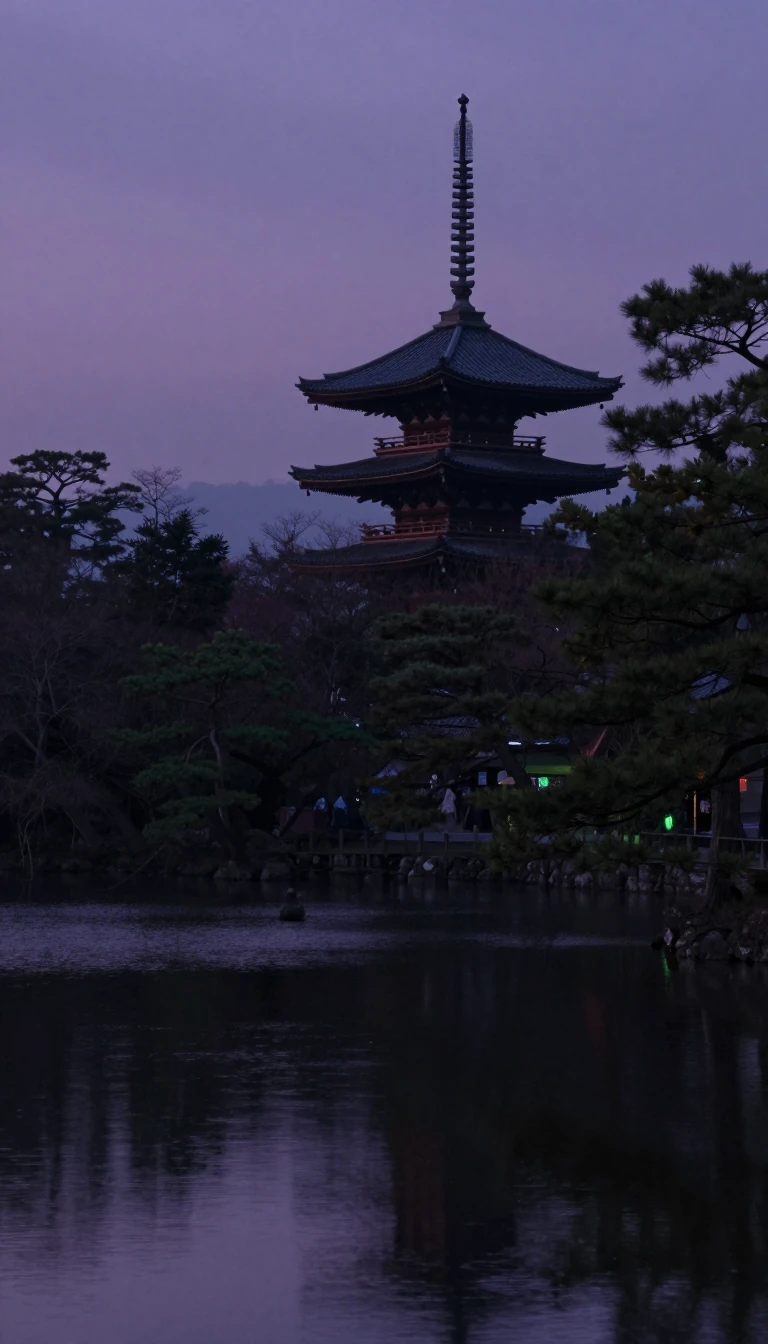 Why Japan’s most feared vengeful spirits are still enshrined in the heart of TokyoIn Japanese folklore, an onryō is a spirit so consumed by hatred that it transcends death to wreak havoc on the living. These vengeful ghosts, often depicted as wronged women, do …
 Why Japan’s most iconic New Year’s Eve tradition is a battle of the sexesEvery New Year's Eve, Japan tunes into Kōhaku Uta Gassen, a massive musical showdown where the country's top singers are split into red and white teams. This televised spectacle, …
- Why Japan’s most landlocked capital city is known as the City of WaterLocated over 100 kilometers from the coast, Maebashi is the most inland prefectural capital in Japan. Despite its distance from the sea, this city at the base of Mount Akagi earns…
 Why Japan’s most legendary idol vanished at the absolute peak of her fameAt age 21, Momoe Yamaguchi walked away from a massive career as a singer and actress. She retired in 1980, right when she was responsible for over a quarter of her agency's total …
 Why Japan’s most notorious criminal syndicates are rapidly fading into obscurityOnce a dominant force in Japanese society, the yakuza are experiencing a historic collapse. Membership has plummeted by 70 percent since 1990, leaving behind an aging, shrinking o…
 Why Japan’s most popular deity is a shape-shifting, rice-bearing, corporate-friendly enigmaInari Ōkami is the Japanese kami of everything from rice and sake to industry and prosperity. With over 40,000 shrines across Japan, this elusive figure is famously personalized b…
 Why Japan’s most popular romantic comedy is actually a high-stakes psychological battlefieldIn the elite Shuchiin Academy, two brilliant students are locked in a silent war. Despite their mutual attraction, both believe that confessing love first is a sign of weakness. T…
 Why Japan’s most sacred imperial treasures remain hidden from the public eyeJapan’s Imperial Regalia—a sword, a mirror, and a jewel—are the ultimate symbols of divine authority. They are so revered that they are never seen, even by the Emperor during his …
- Why Japan’s most sacred mountain site is a masterpiece of architecture and ancient forestryNestled in the Tochigi Prefecture, the Shrines and Temples of Nikkō represent a profound fusion of religious tradition and natural splendor. This UNESCO World Heritage site, desig…
 Why Japan’s most successful adult manga magazine features a dog or cat on every coverBig Comic Original is a Japanese seinen manga magazine that has captivated older adult readers since 1972. With its signature saddle-stapled format and iconic covers featuring ani…
 Why Japan’s national bird is a symbol of harmony and a master of survivalThe green pheasant is more than just Japan’s national bird; it is a resilient survivor that outcompetes its common cousins. From its role in folklore as an earthquake predictor to…
 Why Japan’s Nikkei 225 index defied textbook models for over three decadesThe Nikkei 225 is a price-weighted index of Japan’s most liquid companies, but its history is anything but standard. From a record-shattering bubble in 1989 to a 34-year recovery …
 Why Japan’s oldest wooden structures are a masterclass in Buddhist cosmology and sacrificeIn Nara Prefecture, the Hōryū-ji area preserves some of the world’s oldest wooden architecture, dating back to the 7th and 8th centuries. Beyond their age, these monuments functio…
- Why Japan’s Paleolithic Inhabitants Were Thousands of Years Ahead of Their TimeJapan’s ancient history is far more than a footnote in Asian migration. With over 10,000 well-dated sites, the archipelago reveals a sophisticated society that mastered unique tec…
- Why Japan’s Rinzai Zen School Became the Preferred Spiritual Path of the Samurai ClassKnown for its rigorous training and sharp, martial spirit, Rinzai Zen shaped Japanese governance and culture for centuries. From the shogunate to the tea ceremony, this school of …
 Why Japan’s stop signs are triangles instead of octagonsMost of the world recognizes an octagon as the universal shape for stopping. Japan, however, uses an inverted red triangle. This unique choice is the result of a century of shifti…
 Why Japan’s Yambaru National Park is a global treasure of biodiversity and historyEstablished in 2016, Yambaru National Park protects the lush, northern forests of Okinawa Island. This unique ecosystem, home to rare species like the Yambaru long-armed scarab be…
- Why Japanese aristocrats and samurai once spent hours daily painting their teeth jet black.For centuries, black teeth were the height of beauty and a symbol of maturity in Japan. Far from a mere cosmetic choice, the practice of ohaguro served as a dental sealant, a mark…
- Why Japanese baseball fans sing and dance while others sit in silenceIn Japan, baseball is more than a game; it is a national phenomenon. While American fans often enjoy a relaxed atmosphere, Japanese stadiums pulse with energy as spectators sing a…
 Why Japanese casting directors say when in doubt, just call Koichi YamaderaKnown as the man with the seven-colored voice, Koichi Yamadera is a titan of Japanese voice acting. From voicing every member of a quintet in a single game to serving as the offic…
 Why Japanese castles were built for show rather than just for warJapanese castles evolved from simple wooden stockades into grand, palace-like symbols of feudal power. While they were designed to withstand arquebus fire, their most vital role w…
 Why Japanese families display an elaborate imperial court in their homes every MarchHinamatsuri, or Doll's Day, transforms homes into miniature Heian-period courts. While modern observers see decorative heirlooms, these displays originated as ritual purifications…
 Why Japanese gardens are designed to be seen from a single, fixed pointJapanese gardens are not merely landscapes; they are carefully curated philosophical statements. By prioritizing evergreen structures over fleeting flowers and using rocks to repr…
 Why Japanese knotweed is the UK's most notorious and challenging invasive plant speciesRHS Horticultural Advisor Nick Turrell explains how to identify Japanese knotweed across different seasons and outlines effective management strategies for homeowners and professi…
- Why Japanese numerals group by ten thousand instead of the Western thousandJapanese numerals follow a unique logic that diverges from Western conventions. While we group numbers by thousands, Japanese counts by myriads, or units of 10,000. This system, r…
 Why Japanese phonology remains one of the most debated systems in modern linguisticsJapanese sound structure defies simple categorization. Scholars struggle to agree on the number of phonemes, the nature of its timing units, or how to classify its unique moraic c…
 Why Japanese pitch accent is more about the drop than the melodyIn Tokyo Japanese, meaning is not carried by the pitch of a word, but by the precise location of a sudden drop. Unlike tonal languages where pitch contours define words, Japanese …
 Why Japanese potters intentionally seek out imperfections and misshapen forms in their workIn Western art, a crack or a misshapen edge is often a flaw. In Japan, these accidental effects are celebrated. By prioritizing the impress of the human hand and the beauty of nat…
 Why Japanese students eat this fried pork bowl before their most important examsKatsudon is more than a hearty meal of breaded pork cutlet over rice. Its name is a linguistic lucky charm, turning the dish into a ritual for students seeking victory. Beyond the…
- Why Japanese swords were stored in plain wooden scabbards instead of ornate mountsThe iconic samurai sword is often seen in ornate koshirae, but these elaborate fittings were actually harmful to the blade over time. To preserve the steel, owners relied on the s…
- Why Japanese worshippers leave wooden plaques to communicate their deepest desires to the godsEma are small wooden plaques used in Japan to send prayers to the kami. Once a luxury for the wealthy, these offerings have evolved from live horses into artistic symbols, and tod…
 Why Javagal Srinath remains India's most significant fast-bowling pioneer in modern cricket historyFor over nine years, Javagal Srinath carried the burden of India's pace attack alone. As the only Indian fast bowler to claim over 300 One Day International wickets, he redefined …
 Why jazz is considered the definitive musical contribution of the United StatesExplore the origins and significance of jazz through the perspective of the National Museum of American History. This overview highlights the cultural weight of the genre and poin…
 Why Jean Baudrillard argued that the Gulf War never actually took placeJean Baudrillard, a provocative French thinker, famously claimed the first Gulf War was not a war at all. He argued that modern society is so saturated with signs, media images, a…
 Why Jean Sibelius’s only violin concerto was once considered a total disasterJean Sibelius’s Violin Concerto in D minor is now a celebrated masterpiece, yet its 1904 premiere was a failure. The composer’s original version was so technically demanding that …
 Why Jean-Auguste-Dominique Ingres painted a woman with five extra vertebrae in her backWhen Jean-Auguste-Dominique Ingres unveiled his 1814 masterpiece, critics were horrified by its anatomical impossibilities. They claimed the figure lacked bones, muscle, and life.…
 Why Jean-Claude Van Damme played twins to escape the martial arts movie trapIn 1991, Jean-Claude Van Damme sought to reinvent his image by starring as identical twins in the action film Double Impact. By playing two distinct personalities, he hoped to pro…
 Why Jean-François Lyotard argued that our grand stories about progress are fundamentally brokenJean-François Lyotard defined the postmodern condition as an incredulity toward meta-narratives. He argued that humanity has outgrown the grand, universal stories—like the promise…
 Why Jean-Luc Godard’s Pierrot le Fou became the ultimate portrait of a failing marriageReleased in 1965, this French New Wave classic follows a man escaping his bourgeois life for a crime-filled road trip. Beyond its pop-art aesthetic and vibrant colors, the film se…
 Why Jean-Luc Nancy argued that true community cannot be a finished work of artFrench philosopher Jean-Luc Nancy challenged modern political thought by redefining community. He argued that society is not a project to be manufactured or a singular identity to…
 Why Jeff Beck was the guitarist that other legendary guitarists studied withOften called a guitarist's guitarist, Jeff Beck redefined the electric guitar as a voice rather than just a rhythm instrument. His career spanned from the Yardbirds to pioneering …
 Why Jeff Bezos and Bill Gates are not as similar as they appearWhile Jeff Bezos and Bill Gates share a similar profile as tech entrepreneurs from the same small town, their fortunes are fundamentally different. This video examines the nuances…
 Why Jeremy Brett’s Sherlock Holmes remains the definitive screen portrayal of the detectiveGranada Television’s 1984 adaptation of Sherlock Holmes is widely considered the most faithful screen version of Arthur Conan Doyle’s canon. Starring Jeremy Brett, the series achi…
 Why Jeremy Paxman’s most famous interview question was actually a desperate stalling tacticJeremy Paxman became a household name for his relentless, aggressive interrogation of political figures. Yet, his most iconic moment—repeatedly asking a Home Secretary the same qu…
 Why Jerry Saltz believes the modern art world has become an open, Wikipedia-style conversation.Jerry Saltz, a Pulitzer-winning critic, has spent decades demystifying the art world. From his early days in artist-run galleries to his massive, unfiltered social media presence,…
 Why Jerry Seinfeld’s arch-nemesis Newman was never intended to be a recurring characterNewman began as a one-off plot device, a suicidal friend for Kramer who existed only as a voice. Yet, Wayne Knight’s performance was so compelling that the show’s creators transfo…
 Why jet engines sometimes blow forward to help an aircraft stop on the groundThrust reversal is a critical safety feature that redirects engine exhaust forward to assist wheel braking. While it is not required for aircraft certification, airlines rely on i…
 Why Jet Fuel Keeps Flowing in the ColdJet fuel can freeze, so its behaviour in the cold depends on tested freezing-point specifications, in-flight temperature data, refining trade-offs and aircraft systems that handle…
 Why Jet Li’s 2001 action thriller rejected the era’s reliance on digital visual effects.In an age defined by the wire-fu spectacle of The Matrix and Charlie's Angels, Jet Li insisted on a grounded, visceral approach for his 2001 film Kiss of the Dragon. By stripping …
 Why Jewish communities dance with the Torah to celebrate its completion and restartSimchat Torah is a vibrant autumn festival marking the end and immediate recommencement of the annual Torah reading cycle. Far from a somber study session, the holiday spills out …
 Why Jewish mythology transformed the ancient world by placing God directly into human history.Unlike neighbors who viewed time as a repeating seasonal cycle, Jewish mythology introduced a radical concept: a God who acts within linear history. This shift transformed divine …
- Why Jewish tradition mandates sanctifying Shabbat with a cup of wine or grape juiceKiddush, meaning sanctification, is a ritual blessing over wine or grape juice that marks the holiness of Shabbat and Jewish holidays. Rooted in the biblical command to remember t…
 Why Jews spend a week in fragile, open-roofed huts every autumnSukkot is a seven-day festival that blends an ancient agricultural harvest celebration with a commemoration of the Israelites' desert journey. By moving from permanent homes into …
 Why Jiang Wei’s Eleven Failed Military Campaigns Ultimately Hastened the Fall of Shu HanBetween 240 and 262 CE, General Jiang Wei launched eleven ambitious military campaigns against the rival state of Cao Wei. Unlike his predecessor Zhuge Liang, Jiang Wei struggled …
 Why Jiangnan became the beating heart of China’s historical prosperity and tradeLiterally meaning South of the River, Jiangnan is a fertile, water-rich region that transformed from an ancient agricultural frontier into China’s industrial and economic powerhou…
 Why Jim Jarmusch kept the ending of his 2005 comedy-drama intentionally unresolvedIn Broken Flowers, an aging Don Juan receives an anonymous letter claiming he has a son. He embarks on a cross-country journey to confront his past, but the film refuses to provid…