 Intellect Plus
Cards starting with W
29,907 cards. Page 278 of 499.
 Why Jackie Chan pivoted from high-octane action to a romantic comedy in 1999Jackie Chan spent his career defined by death-defying stunts, but he longed for something more personal. With the 1999 film Gorgeous, he finally broke away from his action-only mo…
 Why Jackie Chan’s 1995 Racing Thriller Thunderbolt Remains a High-Octane Action MasterpieceThunderbolt is a high-speed action film that blends automotive racing with intense criminal drama. Starring Jackie Chan, the movie follows a mechanic who is forced into a dangerou…
 Why Jackie Chan’s 1996 action spectacle remains a high-water mark for Hong Kong cinemaBefore his Hollywood crossover fully matured, Jackie Chan delivered First Strike, a globe-trotting espionage thriller that redefined the Police Story franchise. Beyond the death-d…
 Why Jackie Chan’s First American Movie Was a Frustrating Stunt for the StarIn 1980, Jackie Chan attempted to conquer Hollywood with The Big Brawl. Despite the involvement of the team behind Enter the Dragon, the production proved stifling. Chan lacked cr…
 Why Jackson, Mississippi is facing one of America's worst water crisesA series of infrastructure failures has left the residents of Jackson, Mississippi, unable to rely on their city's water supply. This video examines the sequence of events, from d…
 Why Jacques Tati’s debut comedy remains a masterpiece of visual storytelling and technological satireIn his 1949 directorial debut, Jacques Tati plays a bumbling mailman in a sleepy French village. After watching a spoof documentary about American efficiency, he attempts to moder…
 Why Jacques Tati’s masterpiece mocked the cold, geometric obsession of postwar modern livingIn 1958, Jacques Tati released Mon Oncle, a visual comedy skewering the era's infatuation with mechanical efficiency and sterile modern architecture. Through the eyes of the lovab…
 Why Jaime Balmes argued that no single formula can explain the entire universeSpanish philosopher Jaime Balmes rejected the idea that one pillar could support all human knowledge. Instead, he proposed a tripartite system of truth—subjective, rational, and o…
 Why Jainism forbids potatoes and onions to protect infinite microscopic soulsJain vegetarianism is not merely a diet but a rigorous metaphysical framework designed to minimize karmic damage. By classifying life based on sensory capacity, Jains avoid foods …
 Why Jains spend eight days in intense reflection and seeking universal forgivenessParyushana is an annual Jain festival centered on spiritual renewal, fasting, and community. Originating from ancient monsoon retreats, it encourages followers to deepen their pra…
 Why Jakarta chose light rail over a high-speed monorailJakarta's transit history is defined by a pivot from a suspended monorail to a light rapid transit system. This shift wasn't just about engineering; it was a strategic move to avo…
 Why James Baldwin believed the American dream is tied to the Black experienceDirected by Raoul Peck, the 2016 documentary I Am Not Your Negro uses James Baldwin’s unfinished manuscript to examine the history of American racism. Narrated by Samuel L. Jackso…
 Why James Cagney’s most volatile gangster role remains a cinematic masterclass in psychological intensityIn 1949, James Cagney returned to Warner Bros. to play Cody Jarrett, a psychotic criminal with a dangerous mother fixation. The resulting film, White Heat, redefined the gangster …
 Why James Dyson believes that failure is the most important metric for creative successJames Dyson is famous for his bagless vacuum, but his path to innovation was paved with 5,127 failed prototypes. He argues that schools should grade children on their failures rat…
 Why James Stewart’s most iconic friend was an invisible six-foot rabbitIn the 1950 film Harvey, James Stewart plays Elwood P. Dowd, an amiable man whose constant companion is a giant, invisible rabbit. Based on Mary Chase’s Pulitzer Prize-winning pla…
 Why January 1st holds no magic for your personal goalsWaiting for a new calendar year to change your life is a common trap. This video features bestselling author Gretchen Rubin, who explains why the best moment to begin a new habit …
 Why January 1st was chosen to mark the start of the yearWe celebrate the arrival of the New Year every January 1st, but this date wasn't always the standard. Before the Julian calendar changed everything, the year began in March. Disco…
 Why January 5, 1973, changed the way we travel through airports forever.Modern airport security protocols are not a timeless fixture of travel. This video explores the specific historical turning point in the United States that established the screeni…
 Why January is the most underrated month for every home gardenerGardening is often viewed as a seasonal pursuit, but January offers unique opportunities for growth. This video reframes the coldest month as a vital period for planning and prepa…
- Why Japan excludes certain letters from its vehicle license platesIn many countries, vanity plates are a matter of personal style. In Japan, the choice of characters on a license plate is governed by strict cultural and practical logic. Certain …
 Why Japan finally adopted the Hepburn system for romanizing its language after 158 yearsFor over a century, Japan’s romanization was a tug-of-war between systematic linguistic accuracy and intuitive English-style phonetics. While the government favored the rigid Kunr…
- Why Japan formally rejected Poland's declaration of war during the Second World WarWhen Poland declared war on Japan alongside the Allied powers, Japan did not ignore the move. Instead, the Japanese government issued a formal refusal, asserting that no state of …
 Why Japan just ended the world's last negative interest rate regimeAfter seventeen years, the Bank of Japan has finally raised interest rates, marking a historic shift in global monetary policy and the end of an era for the world's last remaining…
 Why Japan Rings Buddhist Bells 108 Times to Welcome the New YearAs the clock strikes midnight on December 31, Buddhist temples across Japan ring their bells 108 times. This ritual, known as Joya no Kane, is designed to purge the 108 worldly te…
 Why Japan still measures its world in ancient units despite a century of metricationJapan officially adopted the metric system nearly a century ago, yet traditional units remain deeply embedded in daily life. From the size of a tatami mat to the volume of a sake …
 Why Japan uses three different systems to write its language in Latin scriptJapanese is traditionally written with kanji and kana, but the use of Latin script—known as rōmaji—is surprisingly common. From early Jesuit dictionaries to modern computer input …
 Why Japan's ambitious decade-long quest to build a commercial jet ultimately crashed and burnedAfter ten years of development and nearly nine billion dollars in investment, Japan's attempt to launch its first indigenous commercial aircraft in half a century came to a sudden…
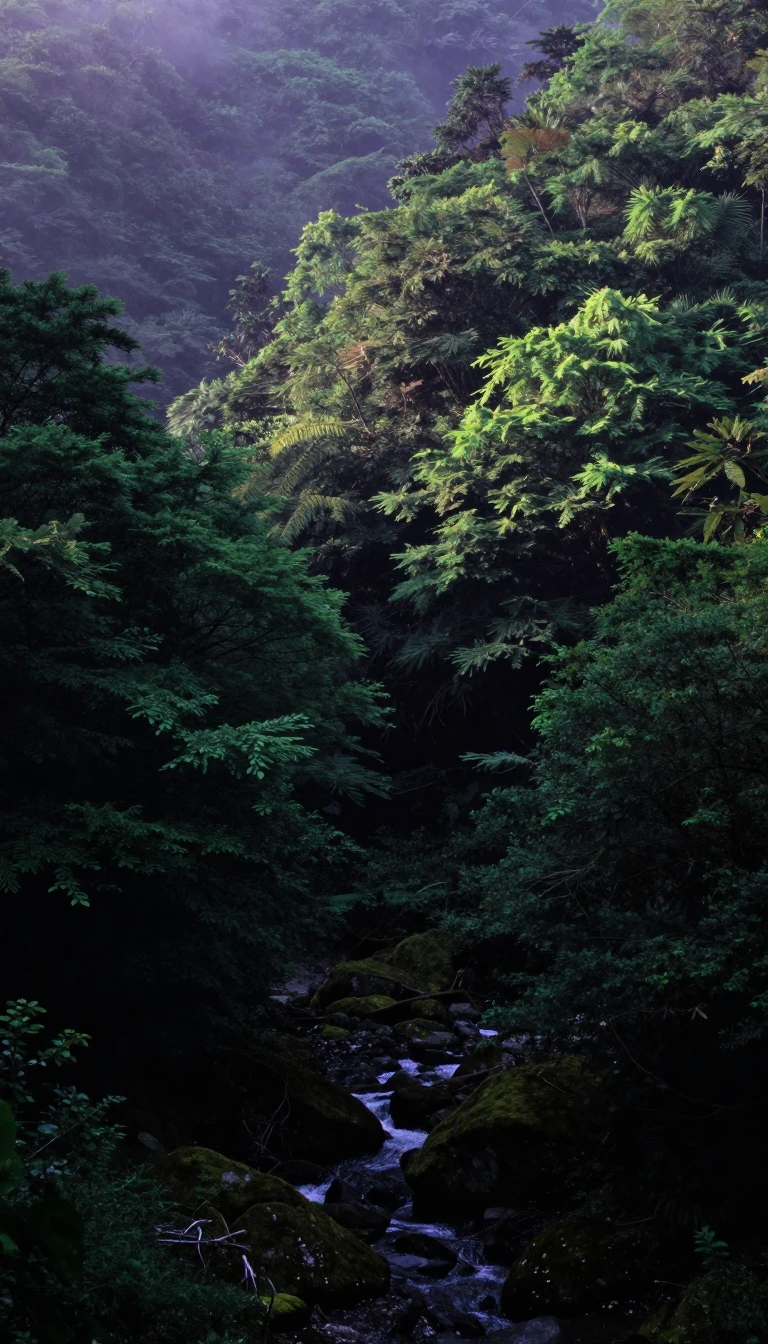 Why Japan's Ancient Mountain Trails Are More Than Just A Scenic Hiking DestinationHidden within the dense forests of the Kii Peninsula lies a profound cultural landscape. This UNESCO World Heritage site is not merely a collection of shrines, but a complex netwo…
 Why Japan's Central Bank Became the World's Most Unlikely Stock Market WhaleBy December 2020, the Bank of Japan had become the largest shareholder of Japanese stocks. Over a decade, it funneled hundreds of billions into Tokyo-listed ETFs to combat economi…
 Why Japan's department store basements are a world-class culinary destinationJ. Kenji López-Alt explores the vibrant world of depachikas, the elaborate underground food halls found beneath Japanese department stores. This video documents a visit to a Kyoto…
 Why Japan's early claim to a spot on the periodic table failedResearchers once believed they had identified elements 43 and 75, which would have secured Japan a place on the periodic table decades earlier. This video examines the history of …
 Why Japan's favorite fried noodle dish was born from a 1918 economic crisisYakisoba is a staple of Japanese street food, yet its origins are surprisingly pragmatic. Born from the necessity of a food shortage, this stir-fried dish replaced expensive ingre…
 Why Japan's former Prime Minister Yukio Hatoyama was nicknamed The AlienYukio Hatoyama, a Stanford-educated engineer from a political dynasty, became Japan's prime minister in 2009. Known for his eccentric manner and unconventional views, he attempted…
 Why Japan's giant monster films are more than just mindless destructionKaiju, the Japanese term for strange beasts, evolved from ancient legends into a sophisticated cinematic language. While Western audiences often view these films as simple monster…
 Why Japan's Heian period prioritized aesthetic refinement over political or economic powerWhile most eras are defined by wars and trade, Japan's Heian period was defined by beauty. From the streets of Heiankyo to the pages of the world's first novels, this era saw a cu…
- Why Japan's Land of Sunshine is a masterclass in urban resilience and reinventionKnown as the Land of Sunshine for its record-breaking lack of rain, Okayama is more than a climate anomaly. From its origins as a 16th-century feudal stronghold to its modern stat…
 Why Japan's latest lunar landing attempt ended in a crashThe ispace M2 lunar lander has likely crash-landed on the Moon. This video examines the technical failures behind the mission, comparing its descent to previous attempts and highl…
- Why Japan's least populated prefecture holds the nation's highest concentration of centenariansShimane Prefecture, tucked between the Sea of Japan and the Chūgoku Mountains, is a quiet outlier. As Japan's second-least populous prefecture, it defies modern urban density. Yet…
 Why Japan's most famous fortress was designed to be a confusing, deadly mazeHimeji Castle is Japan's largest and most pristine feudal fortress, yet its most ingenious feature is not its brilliant white walls. It is a deliberate, disorienting labyrinth of …
 Why Japan's most important railway hub is technically not in the Shinagawa districtDespite its name, Shinagawa Station sits firmly in the Takanawa and Konan neighborhoods of Minato, Tokyo. This historic transit node, which opened in 1872, has evolved from a simp…
 Why Japan's most influential private university is obsessed with the number 125Founded in 1882, Waseda University is a powerhouse of Japanese leadership, producing prime ministers, CEOs, and literary icons. Its identity is deeply rooted in the founder's theo…
 Why Japan's most successful baseball team is both beloved and intensely dislikedThe Yomiuri Giants are the New York Yankees of Japan, boasting 22 Japan Series titles and a massive, nationwide following. Yet, their dominance and corporate backing have sparked …
- Why Japan's mountainous Yamagata Prefecture is a hidden treasure of history and extreme weatherTucked away in the Tōhoku region, Yamagata Prefecture is a land of dramatic contrasts. From the sacred peaks of the Three Mountains of Dewa to the world-record snowfall in its val…
 Why Japan's northernmost point is not actually the northernmost point of the countryCape Sōya is famous as the northern tip of Hokkaidō, yet it holds a geographical secret. While visitors flock to its iconic monument, the true northern boundary of Japanese-contro…
- Why Japan's only hiragana-named capital city rejected its own kanji in a public pollSaitama City is a unique anomaly in Japan. Despite being a major prefectural capital, its name is written entirely in hiragana script. This choice defied public opinion, which fav…
 Why Japan's only rubber-tired subway system runs with its windows wide openThe Sapporo Municipal Subway is a transit anomaly. As the only fully rubber-tired subway system in Japan, it relies on a unique central rail guidance system. Because heavy winter …
 Why Japan's post-war scarcity birthed the world's most efficient manufacturing philosophyLean manufacturing is not just about cutting costs; it is a system designed to eliminate everything that does not add value for the customer. Born from necessity in post-war Japan…
 Why Japan's Prime Minister holds more executive power than most parliamentary leadersUnlike counterparts in other constitutional monarchies where the monarch remains the nominal chief executive, Japan’s prime minister is the undisputed head of government. By const…
- Why Japan's Shirakami-Sanchi is a living time capsule of the ancient worldSpanning the mountains of northern Honshu, Shirakami-Sanchi preserves the largest virgin beech forest in East Asia. Unlike forests globally that succumbed to glaciation, this rugg…
- Why Japan's top baseball league is a corporate-owned powerhouse with a unique ghost-win systemNippon Professional Baseball is Asia's wealthiest sports league, yet it operates under a distinct corporate model where teams are named after their owners. From the legendary V9 d…
 Why Japan’s air defenses failed to stop the devastating Allied bombing campaign of 1945By 1945, Japan’s cities were defenseless against American firebombing. Despite early preparations, the nation’s military lacked the radar, high-altitude interceptors, and coordina…
- Why Japan’s beloved buckwheat noodles were once a vital health food for city dwellers.Long before they became a staple of Japanese fast food, soba noodles were a strategic nutritional solution. In the Edo period, these buckwheat-based strands helped Tokyo’s populat…
- Why Japan’s calendar is a living, breathing document of imperial and social changeJapan’s national holidays are not merely fixed dates on a calendar. Governed by a 1948 law that has been amended eleven times, the system is a dynamic structure that shifts to acc…
 Why Japan’s deepest bay became the real-life inspiration for a cinematic monsterSuruga Bay is a geological marvel, plunging to extreme depths thanks to the collision of two massive tectonic plates. Yet, this Pacific inlet is equally famous for a darker legacy…
 Why Japan’s domestic cars are a laboratory for global innovationJapanese carmakers often treat their home market as a high-tech testing ground. Because local owners prioritize cutting-edge features over long-term ownership, manufacturers are f…
 Why Japan’s favorite mayonnaise is a global cult obsessionKewpie mayonnaise is not just a condiment; it is a cultural phenomenon. Distinguished by its rich, custardy texture and intense umami profile, this Japanese staple has transcended…
 Why Japan’s gamble for a Pacific empire collapsed into a desperate fight for survivalJapan entered World War II hoping to secure a self-sufficient economic bloc by seizing Southeast Asian resources. Instead, the nation found itself trapped in a protracted conflict…
 Why Japan’s iconic cherry blossoms are blooming earlier than at any point in historyFor over a millennium, the timing of Japan's cherry blossom season remained remarkably steady. Today, that rhythm is shifting. Driven by rising global temperatures and urban heat,…
 Why Japan’s iconic insect-themed superheroes are more than just monster-fighting cyborgsCreated by Shotaro Ishinomori in 1971, the Kamen Rider franchise features motorcycle-riding heroes who transform using specialized belts. Beyond the explosive Rider Kicks and mons…
 Why Japan’s iconic rice cake is a masterpiece of starch chemistry and traditionMochi is more than a seasonal treat; it is a complex gel of amylopectin and water. From ancient spiritual rituals to modern industrial assembly lines, this glutinous rice cake has…