 Intellect Plus
Art
5,849 cards. Each one is a 40-second story with a five-minute read behind it. Page 81 of 98.
Subtopics: Art crime · Art history · Art museums · Arts: General · Baroque · Calligraphy · Ceramics · Children's literature · Classic literature · Colour · Concepts of fiction and narrative · Conceptual art · Conservation · Craft · Cultural venues · Dada · Detective fiction · Directors, producers and screenwriters · Dye · Entertainers · Expressionism · Fantasy literature · Fictional and legendary characters · Film and television · Filmmakers and theatre directors · Forgery · Fresco · History painting · Illustration · Impressionism · Literature · Medieval art · Michelangelo · Modern art · Mosaics & stained glass · Oil painting · Optics · Painting · Paris salon · Performing arts · Photography · Pigments · Poetry · Poets · Portraiture · Post impressionism · Printmaking · Renaissance · Romanticism · Science fiction literature · Sculpture · Shakespeare · Spanish golden age · Street art · Symbolism · Textiles · Theatre · UK & Ireland: arts · Van gogh · Vermeer · Victorian · Visual artists · Visual arts
 Is Doctor Doom a symbol of death or a study in human arrogance?Created in 1962, Doctor Doom evolved from a simple comic book villain into a complex, tragic monarch. Whether viewed as an allegory for Cold War dictators or a manifestation of pe…
 Why the comic strip is a centuries-old medium of political and moral storytellingWe often mistake comic strips for mere lighthearted entertainment, but their roots run deep into propaganda, religious satire, and social critique. Long before the modern newspape…
 How a failed businessman’s stationery obsession launched a legendary animation careerChuck Jones, the architect of Looney Tunes, did not start as a master. He credits his artistic foundation to his father’s repeated business failures, which left the family with mo…
 Beyond the wiener dog nickname lies a fearless hunter with a complex, contested history.Known for their long bodies and badger-hunting origins, Dachshunds are more than just sausage-shaped companions. From their role as German national symbols to their surprising app…
 How a small Ozark town became a global hub for American art and retail.Bentonville, Arkansas, has evolved from a quiet hunting ground and agricultural settlement into a bustling international business center. While best known as the birthplace of Wal…
 How a restless engineering dropout turned photography into a respected fine art formAlfred Stieglitz was more than a photographer; he was a relentless force who forced the art world to take the camera seriously. By championing modernism and running legendary gall…
 Amedeo Modigliani: The Artist Whose Birth Once Saved His Family From Financial RuinBorn into a collapsing business empire, Amedeo Modigliani’s arrival into the world provided a legal shield against creditors. This Italian painter, later famous for his haunting, …
 The architect was once a master builder, indistinguishable from the engineer.The title architect comes from the Greek for chief builder, yet for most of history, the profession did not exist as a distinct academic discipline. Before the 18th century, build…
 Can a sophisticated intellectual truly champion the raw, untutored art of the streets?Jean Dubuffet rejected traditional beauty to pioneer art brut, a movement celebrating the raw creativity of psychiatric patients and children. Yet, his own scholarly writings on t…
- Why did the founder of Surrealism once suggest firing blindly into a crowd?André Breton, the architect of Surrealism, sought to merge dream and reality into an absolute state of existence. Yet, his radical pursuit of the unconscious often spilled into co…
 How the Academy Award for Best Original Score evolved through decades of genre debatesSince 1935, the Academy has struggled to define what makes a film score worthy of an Oscar. From splitting categories by genre to setting strict percentages for original music, th…
 Is Tulu one of the oldest living languages in the Dravidian family?Spoken by nearly 1.8 million people in southwestern India, Tulu is a distinct Dravidian language that may have branched off from its roots 2,500 years ago. While it thrives in ora…
 Busking is an ancient global tradition that shapes urban culture and public lifeFrom the streets of ancient Rome to modern subway stations, busking has served as a vital, often misunderstood, form of public performance. Whether through circle shows or walk-by…
 Why the Muppets are not just puppets but a revolution in television framingCreated by Jim Henson in 1955, the Muppets redefined puppetry by ditching the traditional stage. By using the television screen itself as a natural frame, Henson allowed these cha…
 Renaissance humanism was not a secular movement but a quest for ancient Christian purity.Modern readers often mistake Renaissance humanism for a secular, non-religious philosophy. In reality, it was a scholarly program designed to revitalize Christianity by returning …
 Rowan Atkinson is a master of physical comedy with an engineering degreeBefore he became the world's most famous silent clown, Rowan Atkinson was an engineering student at Newcastle University. While he is best known for the selfish, child-like Mr. Be…
 The picaresque novel: a genre defined by rogues, survival, and a lack of plotBorn in the Spanish Golden Age, the picaresque novel follows lowborn adventurers who survive by their wits in a corrupt world. These episodic tales feature cynical outsiders who n…
 From railway paperbacks to academic titan: the 188-year evolution of RoutledgeFounded in 1836, Routledge began by selling inexpensive fiction to rail travelers. Today, it stands as a global powerhouse in academic publishing, managing over 140,000 titles. It…
 The 1964 Monokini was an artistic protest, not a commercial fashion trend.Designed by Rudi Gernreich to challenge societal shame, the monokini was never intended for public wear. Though it sparked global outrage, arrests, and intense media scrutiny, the…
 Eugene O’Neill’s autobiographical masterpiece captures the shattering reality of a single, agonizing day.Written between 1939 and 1941, Long Day’s Journey into Night is a raw, unflinching portrait of a family trapped by addiction, resentment, and unfulfilled dreams. Set during one da…
 Why the ubiquitous acronym LOL is actually a sophisticated tool for social navigationWhile LOL stands for laughing out loud, it rarely signals genuine laughter. Instead, this digital shorthand functions as a pragmatic particle, a linguistic tool used to soften sta…
 Why botanical illustration remains essential in an era of high-resolution photographyBotanical artist Lucy T Smith explains why traditional illustration techniques are still vital for scientific understanding. This video explores the unique value of hand-drawn pla…
 Why authenticity in photography is not created but discovered through presenceThree professional photographers share their methods for capturing genuine moments. By observing their work in Canada, you will learn how trust, connection, and deep presence allo…
 Why one of the world's most famous paintings was stolen not once, but twice.Museum heists often feel like scenes from a blockbuster film. This video explores the remarkable true stories behind eight major art thefts, focusing on how these iconic pieces we…
 Did photography really kill painting, or did it force a creative revolution?When photography emerged in the 19th century, painters feared their profession was doomed. Instead of dying, the medium underwent a radical transformation. This video examines how…
 Transforming cold, rigid metal into delicate, lifelike botanical sculpturesMeet Jason Waterhouse, an artist who shapes metal into intricate plant forms. This segment from Gardening Australia explores the intersection of fine art and horticulture, showcas…
 How Lindy Lee used mathematical principles to build her massive Ouroboros sculptureEddie Woo explores the intersection of art and engineering in Lindy Lee’s Ouroboros. This immense stainless-steel sculpture, inspired by the ancient serpent symbol, serves as a ca…
- Why artist Kerry James Marshall believes close looking is a radical act of creation.Artist Kerry James Marshall discusses his unique approach to connoisseurship at The Met. By examining art history through a critical lens, he explains how deliberate observation i…
 How did the artistic paths of Emily and John Singer Sargent diverge?Explore the watercolor legacy of Emily Sargent alongside her famous brother and mother. This talk examines the creative dynamics of the Sargent family and the systemic obstacles t…
- How the Met Reassembled a Masterpiece Scattered Across CenturiesFor the first time in centuries, Raphael’s Colonna Altarpiece is whole again. Once sold off piece by piece by nuns in the 1660s, this Renaissance treasure has been painstakingly r…
 Why the author of The Aesthetics of Resistance first mastered the canvasPeter Weiss is famous for his radical plays and massive novels, but his creative journey began with brushes and paint. This lecture explores how his early artistic training and hi…
 Why a simple domestic task in a 17th-century painting remains deeply captivatingActress and singer Ana Gasteyer explores Johannes Vermeer's Young Woman with a Water Pitcher. She discusses how her appreciation for art grew from a desire to understand history a…
- How Jeffrey Gibson reimagines the intersection of Central Park and Fifth AvenueArtist Jeffrey Gibson and curator Sara Reisman discuss the creative process, the resilience of nature, and the installation of four figurative sculptures on The Met facade. This c…
 How do garments and fine art reveal the history of the human body?Andrew Bolton, Curator in Charge of The Costume Institute, leads a tour of the 2026 exhibition Costume Art. This showcase examines the relationship between clothing and the body b…
- Why history painting was once considered the absolute pinnacle of Western artArt historian Kathryn Calley Galitz examines the evolution of history painting, a genre long regarded as the highest form of artistic achievement. This overview traces the traditi…
 How a lifelong friendship shaped the artistic choices in Ann Patchett's latest novelWriter Ann Patchett and her longtime friend Marti Fischer revisit the Metropolitan Museum of Art, where they first bonded as students. The video follows their walk through the Eur…
- How Lillian Bassman turned fashion photography into abstract art using bleach and brushesLillian Bassman transformed the aesthetic of Harper's Bazaar by pushing photography toward abstraction. This film uses archival recordings, vintage prints, and collages to reveal …
 Is the human body the original musical instrument?Explore the Musical Bodies exhibition at The Met, where curators and technologists examine how our physical forms and musical instruments have mirrored each other throughout histo…
 How history painting evolved from depicting ancient myths to capturing the immediate present.Art historian Kathryn Calley Galitz explores how eighteenth-century artists began documenting contemporary events. This shift in focus, moving away from traditional historical sub…
 How European masters captured the elusive behavior of light on canvasArt historian Sir Ernst Gombrich explores the physics of light in painting. This video examines how artists distinguish between direct illumination and the way light bounces off s…
 Why does a woman standing under a flowering tree haunt Nepalese art history?The salanbhanjika motif—a young woman posed beneath a blooming tree—remains a central enigma in Nepalese art. Scholar Gautama V. Vajracharya examines why this image persisted in N…
 How Jackson Pollock’s Autumn Rhythm captures the essence of staying true to oneself.Jackson Pollock’s 1950 masterpiece Autumn Rhythm: Number 30 is a complex work that invites deep observation. This video features Met curator Brinda Kumar, who explains the artist'…
 How ancient Egyptian art shaped the haunting figures of Alberto GiacomettiThis curator talk explores the exhibition at The Metropolitan Museum of Art that places Alberto Giacometti’s iconic sculptures within the Temple of Dendur. Discover how the work o…
 How medieval tapestries reveal our enduring, complex relationship with the natural worldCurators Elizabeth Dospěl Williams and Shirin Fozi examine a medieval tapestry featuring lush landscapes, mythical creatures, and wild figures. This discussion explores how histor…
- How artists manipulate light to shape our perception of reality and divinityArt historian Sir Ernst Gombrich explores the technical and psychological power of light in art. Filmed in his London home, this 1989 lecture examines how painters use illuminatio…
- How contemporary Iraqi artists are reimagining the legacy of ancient Mesopotamian ruinsArtist Hanaa Malallah and curator Kiersten Neumann discuss the intersection of modern Iraqi art and the country's deep archaeological history. This conversation examines how creat…
- How three contemporary Sudanese artists engage with the ancient cultural legacy of NubiaArtists Azza El Siddique, Salah Elmur, and Dina Nur Satti discuss their creative practices. They explore how their modern work draws inspiration from and connects to the historica…
- The Thinker is not just a universal symbol of eternal contemplation.Auguste Rodin's famous sculpture is often misunderstood as a generic representation of deep thought. This video explores the specific identity behind the figure and its original i…
 Why reportage art captures the human truth that headlines often missArtist George Butler argues that slowing down to sketch conflict zones reveals personal stories that fast-paced news cycles overlook. By documenting individuals affected by war, h…
- How Millions of Smithsonian Artifacts Became a Digital Artist's Creative PlaygroundDigital artist Refik Anadol explains how he utilizes the Smithsonian's massive open-access archive to fuel his data-driven installations. Discover how these public collections ser…
 Why Lucian Freud demanded thousands of hours from his subjects to capture their truthLucian Freud was a master of figurative art who treated portraiture as an endurance sport. By demanding punishing, extended sittings from friends and family, he sought to strip aw…
 A monumental tribute to sacrifice, spanning 1.3 kilometers of Romanian soilCommissioned to honor soldiers who defended Târgu Jiu in 1916, Constantin Brâncuși’s sculptural ensemble is a masterpiece of 20th-century art. Stretching along a west-to-east axis…
 Why prehistoric artists in Spain painted humans running with legs spread 180 degrees apartAcross the ravines of eastern Spain, over 700 rock shelters preserve a unique visual record of prehistoric life. Unlike the static animals of the Ice Age, these paintings capture …
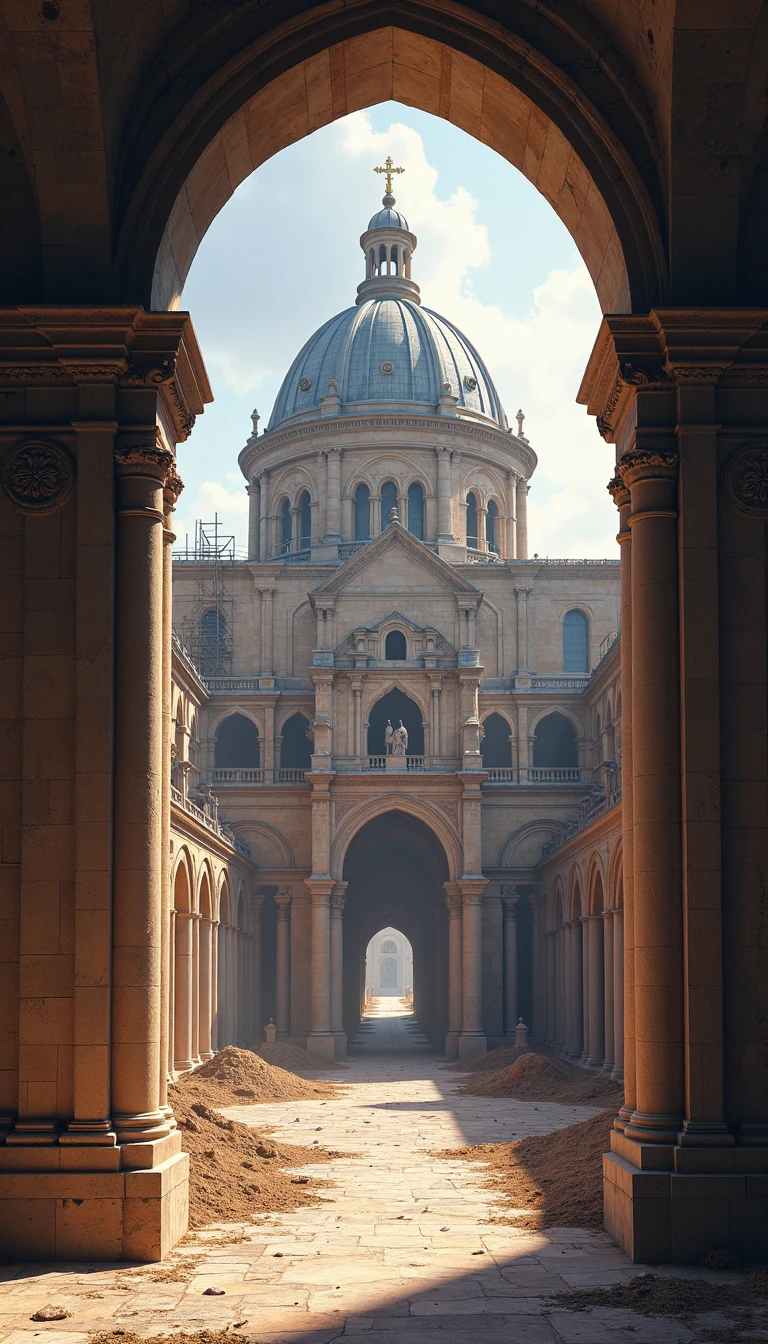 Why this Czech pilgrimage church is built entirely around the number fivePerched on a hill in Žďár nad Sázavou, this UNESCO-listed masterpiece defies traditional religious architecture. Architect Johann Santini Aichel fused Baroque and Gothic styles to…
- How a series of fourteenth-century frescoes in Padua redefined the course of Western art.In 2021, UNESCO recognized a collection of eight buildings in Padua, Italy, as a World Heritage Site. These structures house revolutionary fresco cycles painted between 1302 and 1…
- Why a small wooden cat in a Japanese shrine became a national treasureTucked away in the East corridor of the Nikkō Tōshō-gū Shrine sits the Nemuri-neko, or sleeping cat. This unassuming wood carving by the legendary Hidari Jingorō represents far mo…
 Why twelve stone nobles stand guard inside a German cathedralNaumburg Cathedral houses a collection of thirteenth-century sculptures so realistic they redefined European art. These twelve life-sized donor figures, including the famous Margr…
- How Victor Horta transformed Brussels into the cradle of the Art Nouveau movementIn the late 19th century, architect Victor Horta shattered traditional building norms with a radical new aesthetic. By prioritizing open floor plans and the seamless integration o…
 Carved into limestone, these thousands of Buddhist statues define a pinnacle of Chinese artSpanning over six centuries, the Longmen Grottoes near Luoyang house 100,000 statues within 2,345 caves. From tiny figures to a 57-foot Buddha, this UNESCO World Heritage site cap…
 Why this Hellenistic masterpiece blends ancient archaic styles with dynamic, modern movementDiscovered in a Pergamene dining room in 1886, the Dancer of Pergamon is a marble enigma. Dated to between 150 and 125 BC, this statue masterfully juxtaposes rigid, archaic-style …