 Intellect Plus
Art
5,849 cards. Each one is a 40-second story with a five-minute read behind it. Page 77 of 98.
Subtopics: Art crime · Art history · Art museums · Arts: General · Baroque · Calligraphy · Ceramics · Children's literature · Classic literature · Colour · Concepts of fiction and narrative · Conceptual art · Conservation · Craft · Cultural venues · Dada · Detective fiction · Directors, producers and screenwriters · Dye · Entertainers · Expressionism · Fantasy literature · Fictional and legendary characters · Film and television · Filmmakers and theatre directors · Forgery · Fresco · History painting · Illustration · Impressionism · Literature · Medieval art · Michelangelo · Modern art · Mosaics & stained glass · Oil painting · Optics · Painting · Paris salon · Performing arts · Photography · Pigments · Poetry · Poets · Portraiture · Post impressionism · Printmaking · Renaissance · Romanticism · Science fiction literature · Sculpture · Shakespeare · Spanish golden age · Street art · Symbolism · Textiles · Theatre · UK & Ireland: arts · Van gogh · Vermeer · Victorian · Visual artists · Visual arts
 Why looking at art is a skill that requires a specific set of tools.Most people spend only a few seconds observing a piece of art. This video provides a structured approach to art history, teaching you how to analyze works by understanding the spe…
 A Shakespearean tragedy reimagined as a surreal, anachronistic fever dreamJulie Taymor’s 1999 adaptation of Titus Andronicus isn't your standard historical drama. It blends Ancient Rome with Mussolini’s Italy and motorcycle outriders to create a fractur…
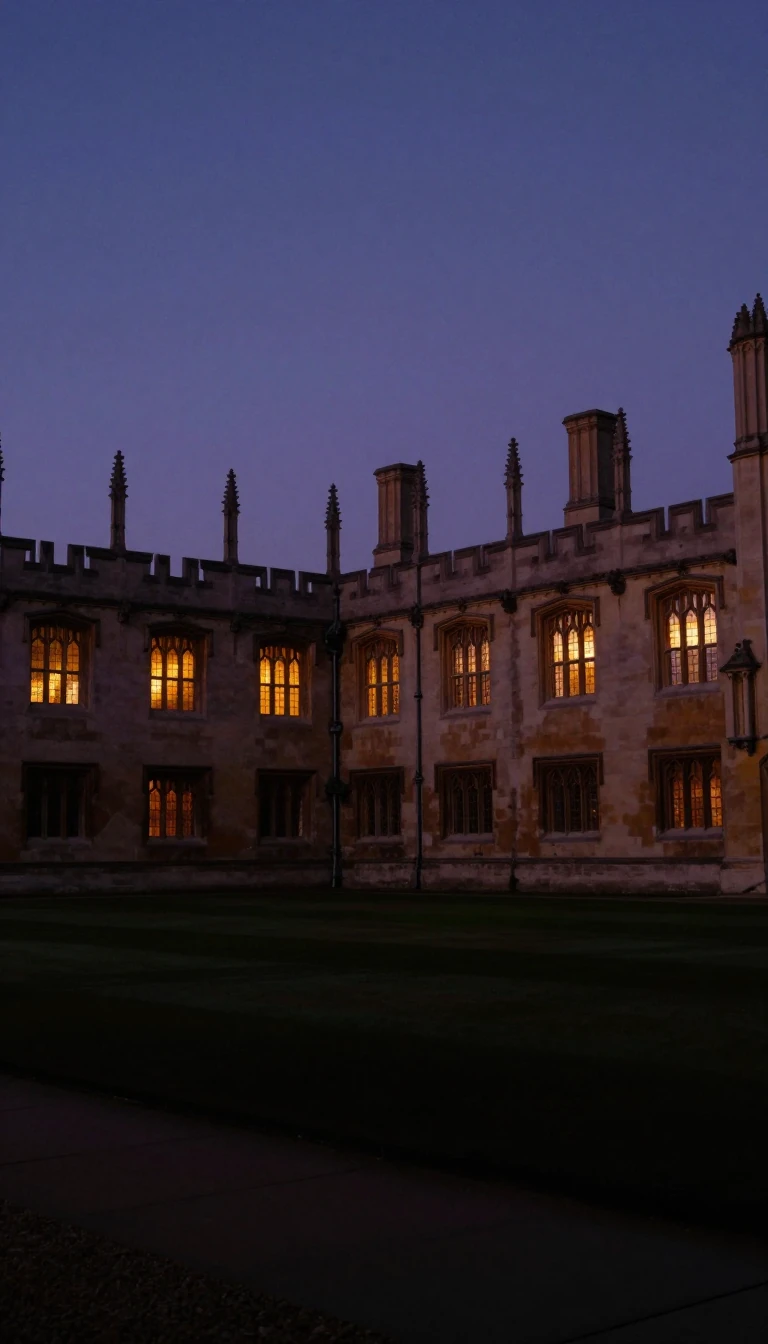 Britain's oldest public museum once housed a dodo and Guy Fawkes's own lanternThe Ashmolean Museum in Oxford is a storied institution that evolved from a 17th-century cabinet of curiosities into a world-class center for art and archaeology. From the remnant…
 Why Art Films Prioritize Aesthetic Expression Over the Conventional Hollywood Storytelling FormulaArt films are not merely movies; they are deliberate departures from the commercial machinery of mainstream cinema. By favoring authorial vision, experimental narrative structures…
 How a shared courtly aesthetic once united the art of medieval EuropeBetween 1390 and 1420, European art underwent a remarkable synchronization. From Prague to London, artists adopted a shared language of elongated figures, ornate decoration, and f…
 How Joseph Cornell turned postage stamps and peeling paint into a haunting memorialJoseph Cornell’s 1954 box construction, Ann—in Memory, is a sculpture that defies the traditional monument. By layering exotic postage stamps, aged newsprint, and flaking paint, C…
 How Annie Leibovitz captured the intimate, often controversial, soul of modern celebrity cultureFrom the final portrait of John Lennon to high-stakes fashion shoots, Annie Leibovitz has defined the visual language of fame for over five decades. Her work balances artistic amb…
 How a moody, shadow-drenched photograph redefined the visual identity of rock and rollWhen the Beatles released their second album in 1963, they defied industry norms by refusing to smile on the cover. Inspired by artistic photography from their Hamburg days, the b…
 The photographer who captured the legends and became a legend herselfBefore she was a rock musician or a vegetarian entrepreneur, Linda McCartney was a trailblazing photographer. From the covers of Rolling Stone to the backstage of Shea Stadium, sh…
 From Quebec drama to sci-fi epics: the rise of Denis VilleneuveVilleneuve is one of the rare directors who successfully bridged the gap between intimate, French-language dramas and massive, high-concept Hollywood blockbusters. By blending a s…
 Jean Rhys turned a literary footnote into a masterpiece of postcolonial and feminist fiction.In Jane Eyre, Bertha Mason is merely the madwoman in the attic. In Wide Sargasso Sea, Jean Rhys gives her a name, a history, and a tragic descent. This 1966 novel reimagines the C…
 Wilkie Collins pioneered the modern detective novel while battling addiction and Victorian social norms.Before he became a titan of Victorian literature, Wilkie Collins was a bullied schoolboy forced to tell stories to survive. He later transformed mystery fiction, crafting the blue…
 How a precocious child from Alabama became a titan of American literary journalismTruman Capote was a self-taught writer by age five and a literary sensation by twenty-three. From his controversial debut to his pioneering true-crime masterpiece, Capote reinvent…
 Why a lone man on a mountain peak became the ultimate symbol of contemplationCaspar David Friedrich’s 1818 masterpiece, Wanderer Above the Sea of Fog, features a man standing on a precipice, back to the viewer. This iconic Rückenfigur composition invites u…
 Once a royal residence, Whitehall is now the beating heart of British political power.Before it became the metonym for the British civil service, Whitehall was a sprawling royal palace where Henry VIII lived and died. Today, this short London thoroughfare serves as…
 Ted Hughes: The Poet Laureate Who Found Divinity in the Harshness of NatureWidely regarded as one of the twentieth century's most significant writers, Ted Hughes transformed the English poetic landscape with his raw, animalistic imagery. Yet, his life wa…
 How a wartime intelligence officer turned Welsh folklore into a legendary coming-of-age fantasy seriesLloyd Alexander’s five-part Chronicles of Prydain remains a cornerstone of children's literature. Born from his experiences in Wales during World War II, the series follows Taran,…
 Why does a spirited young woman lose her freedom after inheriting a vast fortune?In Henry James's masterpiece, Isabel Archer seeks to affront her destiny, only to find herself trapped in a suffocating marriage. Her journey from an independent American expatria…
 The ancient practice of tithing: from agricultural tax to modern voluntary religious givingOriginally a mandatory tenth-part contribution of agricultural produce, the tithe has evolved significantly over millennia. While once a rigid requirement for supporting religious…
 Why Roald Dahl’s Big Friendly Giant was once a secret folkloric characterBefore he was the star of his own 1982 novel, the Big Friendly Giant was merely a bedtime story told to a young boy. Roald Dahl expanded this minor character into a global phenome…
 Shakespeare’s shortest play turned a chaotic day of mistaken identity into a cultural idiom.William Shakespeare’s The Comedy of Errors is a masterclass in farce, featuring two sets of identical twins separated at birth. When their paths cross in Ephesus, the resulting co…
 Scotland’s literary history is a multilingual tapestry woven across sixteen centuries of shifting power.Far from a single tradition, Scottish literature emerged from a collision of Brythonic, Gaelic, Latin, French, and Scots. From the sixth-century elegies of the Gododdin to the glo…
 How Sebastian Barry weaves Irish history into the lives of his fictional familiesBorn in Dublin, novelist and playwright Sebastian Barry has spent his career exploring the fractured loyalties of Irish history. By tracing the lives of interconnected characters …
 How Sam Taylor-Johnson captures the thin, blurred line between laughter and human anguishFrom the Young British Artists movement to Hollywood biopics, Sam Taylor-Johnson has spent decades dissecting the human condition. Her work often dwells in the ambiguity of emotio…
 Is Shakespeare's most infamous villain actually a tragic victim of systemic religious prejudice?Shylock, the Jewish moneylender from The Merchant of Venice, has been portrayed as everything from a cackling monster to a deeply wounded man. While his name became a synonym for …
 How a fictional South Indian town became a global literary landmark for R. K. NarayanR. K. Narayan created Malgudi, a fictional town that mirrored the social shifts of India across six decades. With a simple, unpretentious style, he captured the lives of ordinary …
 How a brutalist concrete landmark became the beating heart of British serious dramaThe Royal National Theatre in London is a polarizing architectural icon that houses three distinct stages. Founded by Laurence Olivier in 1963, it evolved from a long-held dream o…
 Irish novelist Sally Rooney navigates the intersection of global politics and literary stardom.Sally Rooney has become a defining voice of her generation, selling over 6 million books worldwide. Yet, her career is increasingly defined by her uncompromising political stances…
 How the Pulitzer Prize for Fiction evolved from moral gatekeeping to literary prestigeThe Pulitzer Prize for Fiction began with rigid, moralistic requirements about portraying American life. Over decades, the criteria shifted from enforcing specific cultural values…
 Why the term playwright was originally intended as a biting, professional insultThe word playwright does not actually come from the verb to write. It describes a craftsperson who builds dramatic structures, much like a wheelwright. When Ben Jonson coined the …
 How a comedy writer became one of Britain's most influential humanitarian activistsRichard Curtis is best known for defining the modern romantic comedy with hits like Four Weddings and a Funeral and Love Actually. Yet, his off-screen legacy is equally profound, …
 P. D. James turned decades of bureaucratic drudgery into a celebrated literary careerBefore she became a titan of detective fiction, P. D. James spent years working in hospital administration and the Home Office. This immersion in the machinery of the state provid…
 How a fan-owned club reclaimed its spiritual home after a thirty-year exileAfter the original Wimbledon F.C. relocated to Milton Keynes in 2003, supporters formed AFC Wimbledon to keep the club alive. Their ultimate goal was to return to Merton, near the…
 How a Victorian painter created his most intricate masterpieces from inside a psychiatric hospitalRichard Dadd was a rising star of the Victorian art world until a mental breakdown led him to murder his father. Confined to psychiatric hospitals for over four decades, he produc…
 Oliver Reed: The Hellraising Actor Who Became an Emblematic Icon of British CinemaKnown for his masculine image and volatile lifestyle, Oliver Reed was a powerhouse of British film for over four decades. From Hammer Horror villain to an Academy Award-winning en…
 Is Nestor of Pylos a wise counselor or a dangerous, long-winded relic of antiquity?In Homeric epics, Nestor is the ultimate elder statesman, a clear-voiced orator whose advice is treated as gospel. Yet, his counsel often leads to disaster, and his tendency to do…
- How Kenneth Branagh Turned Shakespeare Into a $43 Million Hollywood Romantic Comedy HitIn 1993, Kenneth Branagh defied skeptical financiers to bring Shakespeare to the screen with a star-studded, sun-drenched adaptation of Much Ado About Nothing. Despite criticism o…
 How a Shakespearean tragedy became a global phenomenon set in rural Uttar PradeshVishal Bhardwaj’s 2006 crime drama Omkara reimagines Othello within the brutal power struggles of a political gang in Meerut. While the film earned critical acclaim for its raw pe…
- Can a fictional letter to Shakespeare's heroine spark a real-life romance in modern Italy?The 2010 film Letters to Juliet explores the phenomenon of real-world correspondence sent to Verona's most famous romantic icon. Inspired by a non-fiction book, the story follows …
 How a 1963 Western comedy became a legal battleground for copyright and restorationJohn Wayne’s 1963 film McLintock! was intended as a creative departure, allowing the star to express personal views on politics and family. Yet, the movie is perhaps better known …
 How Shakespeare’s Macbeth found a new home in the gritty Mumbai underworldVishal Bhardwaj’s 2003 film Maqbool reimagines a classic tragedy within the shadows of the Indian criminal landscape. By blending dark, operatic intensity with satirical police co…
 How a Japanese manga about high school musicians became a massive cultural phenomenonK-On! began as a modest four-panel manga series about four students struggling to keep their school music club alive. It evolved into a multi-million dollar franchise, capturing g…
 Why Broadway dimmed its lights for a legend who mastered the art of solitudeJulie Harris was a titan of the American stage, holding a record-breaking five Tony Awards for acting. Beyond her accolades, she was a master of method acting who famously isolate…
 The secret life of William Shakespeare's father, a small-town official and illicit wool dealer.John Shakespeare was more than just a glover in Stratford-upon-Avon. He was a high-ranking magistrate, a property mogul, and an illegal wool trader who navigated the complex socia…
 Why mid-century British artists turned their gaze toward the humble kitchen sink.In the 1950s, a gritty cultural movement rejected the escapism of drawing-room dramas to document the raw, often unsightly realities of working-class life. Named after the domesti…
 Why Shakespeare’s most beloved rogue was forced to change his nameSir John Falstaff is Shakespeare’s ultimate comic creation, a fat, boastful knight who lives for drink and mischief. Yet, the character was originally named John Oldcastle, a real…
- Is Klingon a real language, or just a collection of Star Trek sound effects?Designed to sound alien, Klingon evolved from a dozen words into a full-fledged language with its own grammar and lexicon. While once limited to spacecraft and warfare, it has exp…
 How a kidnapped prince returned to Scotland to dismantle his own family's powerCaptured by English pirates at age eleven, James I spent eighteen years in captivity before returning to Scotland as king. He found his nation dominated by the Albany Stewarts, hi…
 Was the legendary Kingdom of Fife actually a sovereign realm?Often called the Kingdom of Fife, this Scottish peninsula carries a regal reputation. From the ancient Pictish kingdom of Fib to the Earls who held the right to crown monarchs, th…
- A child prodigy who helped define Victorian art, then became its most controversial success.John Everett Millais entered the Royal Academy at eleven, co-founded the Pre-Raphaelite Brotherhood, and later became the first artist to receive a hereditary title. Yet, his shif…
 Irvine Welsh turns the gritty reality of Scottish housing schemes into a shared literary universe.Irvine Welsh is a Scottish writer best known for his 1993 debut, Trainspotting. His work explores the harsh realities of working-class life, from drug addiction to social alienati…
 How a failed diplomat became the architect of the modern lost world adventureH. Rider Haggard was a colonial administrator who pivoted to fiction after failing his army exams. His tales of ancient civilizations and daring explorers defined the lost world g…
- Why Ireland’s oldest literature was written in the margins of illuminated manuscriptsIrish literature spans over 1,400 years, evolving from ancient monastic scribbles to a global powerhouse of English-language modernism. While the world celebrates its famous novel…
 Isaac Bashevis Singer wrote in Yiddish, but his stories reached a global audience.The Nobel laureate Isaac Bashevis Singer was a master of the short story who famously wrote exclusively in Yiddish. Despite his language choice, his work—filled with demons, mysti…
 How a former taxman and punk musician became a titan of Scottish crime fictionSir Ian Rankin never intended to write crime novels. Before his Inspector Rebus series sold over 35 million copies, he worked as a swineherd, a taxman, and a musician. Today, he i…
 Why Shakespeare’s most famous bomb-maker idiom is actually a clever, multi-layered punThe phrase hoist with his own petard describes someone undone by their own scheme. While we use it to describe ironic failure, the original Shakespearean context is a brutal milit…
 Does history turn on the genius of individuals or the momentum of the masses?The Great Man theory posits that history is essentially the biography of heroes—unique individuals whose intellect and leadership dictate the course of human events. While once a …
 How a Shakespearean Tragedy Became a Controversial Political Thriller Set in 1995 KashmirDirector Vishal Bhardwaj transformed Hamlet into a gritty, modern-day political drama set amidst the insurgency-hit Kashmir of 1995. The film, which explores themes of revenge and…
 A Duke with royal blood and a penchant for spectacle met a brutal end.Edward Stafford, the 3rd Duke of Buckingham, was a man of immense wealth and Plantagenet lineage who dazzled the Tudor court with his lavish displays. Yet, his proximity to the th…
 Geʽez: The Ancient Liturgical Language That Still Echoes Through Modern Ethiopian SemiticGeʽez is an ancient South Semitic language from Ethiopia and Eritrea. While no longer spoken daily, it remains the vital liturgical foundation for several Orthodox and Catholic ch…