 Intellect Plus
Ideas & Philosophy
17,867 cards. Each one is a 40-second story with a five-minute read behind it. Page 163 of 298.
Subtopics: Abrahamic religions · Artificial intelligence · Attention · Classic philosophy · Cognitive biases · Consciousness · Cooperation · Cynicism · Decision making · Decision theory · Descartes · Dharmic religions · Dreams · Eastern philosophy · Eastern religions · Epistemology · Ethics · Evidence · Existentialism · Fairness · Famous psychology experiments · Free will · Game theory · Greek mythology · Historians · Identity · Infinity · Justice · Logic · Logical fallacies · Mathematics · Medieval philosophy · Mind · Mythology · Mythology of the ancient world · Other religions · Paradoxes · Philosophers · Philosophers, historians, political and social scientists · Philosophy · Philosophy of mind · Philosophy of science · Political philosophy · Probability · Psychology · Reality · Religion · Religion and spirituality · Religious figures · Self knowledge · Statistics · Stoicism · Strategy · Taoism · Thought experiments · Trivia & curiosities · Truth · Utopias & ideal worlds · Wellbeing · World religions · Writers
 How a 23-year-old philosopher redefined the ultimate nature of reality in ancient ChinaWang Bi died before he turned twenty-four, yet he left an intellectual legacy that shaped centuries of Chinese thought. By reinterpreting foundational classics through the lens of…
- Wang Fuzhi: The Ming Loyalist Who Challenged Neo-Confucian Orthodoxy from the ShadowsLiving in hiding after the Manchu invasion of China, Wang Fuzhi spent his life crafting a radical philosophical system. He rejected the prevailing neo-Confucian focus on abstract …
 The 19th-century Chinese scholar who urged his nation to learn from the barbarians.Wei Yuan was a Qing official who realized that Western military dominance required a radical shift in strategy. After the First Opium War, he argued that China must study foreign …
 The Tang Dynasty chancellor who survived his own political enemy becoming the emperor.Wei Zheng was a high-ranking advisor to the man who lost the throne to the future Emperor Taizong. Instead of executing him, the new emperor recognized his integrity and made him …
 The high school teacher who fundamentally shaped the foundations of modern mathematical logicWilhelm Ackermann spent his career teaching at a gymnasium, yet he was a titan of logic who worked alongside David Hilbert. He pioneered the epsilon calculus, identified the famou…
 Can a liberal state grant group rights without betraying individual freedom?Will Kymlicka argues that liberalism and minority rights are not enemies. By distinguishing between external protections and internal restrictions, he proposes a framework where s…
 How a Dutch lawyer became the primary architect of Newtonian physics in EuropeWillem 's Gravesande was a legal professional who transformed into a scientific luminary. By championing experimental demonstrations over pure theory, he turned Leiden University …
 How a polymath printer and clockmaker sparked the age of modern electrochemistryWilliam Nicholson was a restless Victorian-era polymath who moved from the high seas to the printing press. While he is remembered as a prolific editor and inventor, his most prof…
 Why a medieval philosopher was accused of heresy for reading Plato and AristotleWilliam of Conches was a 12th-century intellectual who sought to reconcile Christian faith with the natural sciences. By treating ancient texts as allegories, he pushed the bounda…
 The medieval monk who saved Aristotle from being lost to history foreverWilliam of Moerbeke was a prolific translator whose direct Greek-to-Latin versions of Aristotle and Proclus became the standard for centuries. By bypassing the indirect Arabic-to-…
 Why a Twelfth-Century Mystic’s Best Work Was Mistakenly Attributed to St. Bernard for CenturiesWilliam of Saint-Thierry was a brilliant Benedictine abbot and mystic whose profound spiritual writings were so highly regarded that they were frequently misattributed to his clos…
 Why did Charles Darwin find a clergyman's watchmaker analogy so profoundly impressive?William Paley was an 18th-century Anglican clergyman whose mechanical view of the universe became a cornerstone of Western thought. His famous watchmaker analogy argued that compl…
 The man who invented the IQ score warned us never to use it alone.William Stern coined the intelligence quotient to help measure mental development, yet he spent his career cautioning that a single number could never capture the complexity of a …
 The Irish philosopher who coined surplus value and helped shape Karl Marx's economic theoriesWilliam Thompson was an Irish landowner turned socialist who challenged the foundations of capitalism long before Marx. He pioneered the term surplus value, advocated for women's …
 A brilliant mathematician who lost his university chair for questioning the Holy Trinity.William Whiston succeeded Isaac Newton as Lucasian professor at Cambridge, yet his career collapsed when he publicly challenged the doctrine of the Trinity. A pioneer of experimen…
 Can history itself be the primary revelation of God to the human race?Wolfhart Pannenberg, a towering figure in modern theology, argued that history is not merely a sequence of events but the unfolding self-revelation of God. By centering his work o…
 Why the legendary general Wu Qi executed his own soldier for winning a battleWu Qi, a titan of Warring States military strategy, prioritized absolute obedience over individual heroics. He believed a commander must act as the brain of an army, treating sold…
 Did an ancient Greek novelist use a tragic romance to mock Stoic philosophy?Xenophon of Ephesus wrote one of the earliest novels, the Ephesiaka, a tale of star-crossed lovers that predates Romeo and Juliet. Yet beneath the pirates, slavery, and shipwrecks…
 The Vedic sage who claimed the cows before he even won the debateYajnavalkya was a provocative, brilliant figure in the Upanishads who famously declared himself the greatest scholar in the room—then proved it. Beyond his legendary debates, he p…
 Why did Confucius mourn his favorite student more than any other person?Yan Hui was not just a student to Confucius; he was the philosopher's greatest hope for a peaceful world. By age twenty-nine, his hair had turned white, and his early death left h…
 Why this polymath scientist argued that religious faith is a demand, not a comfortYeshayahu Leibowitz was a brilliant biochemist and neurophysiologist who became Israel's most provocative public intellectual. He argued that true religious belief has nothing to …
 Can a diagram turn a ruler into a sage? Yi Hwang thought so.Yi Hwang, the Joseon period scholar featured on the South Korean 1,000 won note, believed that sagehood was an attainable goal for anyone. His seminal work, Ten Diagrams on Sage L…
 Yi I was the Joseon scholar who tried to save Korea from impending warA brilliant child prodigy who mastered Confucian classics by age seven, Yi I became a central political figure in 16th-century Korea. Known as Yulgok, he was a pragmatic reformer …
- How a radical prisoner’s tiny classroom ignited the transformation of modern JapanYoshida Shōin was a masterless samurai who spent his final years in and out of prison for sedition. Yet, from a cramped room in his family home, he mentored the young revolutionar…
 The Renaissance polymath who bridged the gap between medieval medicine and modern scienceYuriy Drohobych was a 15th-century intellectual who mastered astronomy, medicine, and philosophy. As rector of Bologna University and physician to the Polish king, he helped shape…
 A philosopher turned politician who reshaped Israel's intelligence and economic policyYuval Steinitz transitioned from a career in academic philosophy to a pivotal role in Israeli governance. As a Knesset member and minister, he applied logical rigor to parliamenta…
 How a lost historian survives through the work of an anonymous monkZacharias Rhetor was a 5th-century bishop whose original writings vanished into history. Yet, we know his work today because an anonymous monk in Amida incorporated his ecclesiast…
 The forgotten philosopher who shaped the ideology of the Syrian Ba'ath PartyZaki al-Arsuzi was a pivotal yet overlooked architect of Ba'athist thought. While rivals like Michel Aflaq gained wider fame, al-Arsuzi’s radical theories on language and Arab ide…
 Why a legendary philosopher insisted on slaughtering a pig to keep a simple promiseZengzi, a central figure in Confucian thought, believed that integrity began at home. When his wife jokingly promised their son pork to stop him from crying, Zengzi insisted on fo…
 The Epicurean philosopher who nearly dismantled the foundations of Euclidean geometryZeno of Sidon was a brilliant head of the Epicurean school who used his deep understanding of mathematics to attack the very axioms of Euclid. While his goal was to undermine geom…
- How a Daoist hermit turned a simple rice tax into a lasting religious dynastyIn the second century, Zhang Daoling transformed Daoism from a loose collection of practices into a structured, organized movement. By promising longevity and physical health thro…
 A brilliant strategist who conquered a kingdom, only to lose everything in a mutiny.Zhong Hui was a prodigy of the Three Kingdoms era, rising from an elite family to become a master tactician for the state of Wei. After orchestrating the successful conquest of Sh…
 The grandson of Confucius who bridged the gap between ancient wisdom and cosmic orderKong Ji, known as Zisi, was more than just the grandson of Confucius. He was a pivotal philosopher who expanded Confucian thought into the realm of universal relativity. By integr…
 Was this ancient critic a misunderstood genius or the original internet troll?Zoilus of Amphipolis earned the nickname Homeromastix, or the Homer whipper, for his relentless attacks on the legendary poet. While history remembers him as a malignant slanderer…
 Why do we follow the crowd even when evidence suggests we should know better?The bandwagon effect is a psychological phenomenon where individuals adopt behaviors or beliefs simply because others are doing so. Driven by a desire to fit in or a need for ment…
- Why do governments and corporations use language to hide the truth from you?Doublespeak is the art of using language to distort reality, turning layoffs into downsizing and bombing into servicing the target. While often associated with George Orwell, this…
 Can we calculate the greatest good by using reason and evidence to help others?Effective altruism is a movement that applies impartial reasoning to philanthropy. By prioritizing causes based on impact rather than tradition, proponents seek to maximize the go…
 Is ego death a spiritual awakening, a psychological crisis, or a chemical illusion?Ego death describes the complete loss of subjective self-identity. Whether framed as a profound mystical transformation, a necessary phase in the hero's journey, or a temporary ch…
 Is the Odyssey a map of the real world or a moral landscape?Odysseus’s ten-year voyage home is literature’s most famous maritime obstacle course. While Troy and Ithaca are fixed, real-world points, the stops in between blur the line betwee…
- Why Zen masters treated spiritual enlightenment like a public legal court caseFar from being nonsensical riddles, Zen koans originated as formal public records of judicial precedents. In the Song dynasty, masters used these stories to test students, eventua…
 Can a language be engineered to make independent thought literally impossible for its speakers?George Orwell envisioned a future where the state controls reality by shrinking vocabulary. In his 1949 novel Nineteen Eighty-four, Newspeak is a tool designed to eliminate the po…
 Why your sexual identity is a psychological construct rather than a biological certaintySexual identity is not a fixed reflection of your biology or behavior, but a complex, evolving self-concept. While historical models viewed this development as a struggle exclusiv…
- Subversion is the art of dismantling a nation from within without firing a shot.Unlike war or diplomacy, subversion operates in the shadows to erode a state's power. It functions like a virus, infiltrating institutions and manipulating public morale to weaken…
- Why Emanuel Swedenborg’s 18th-century theology rejected the traditional Trinity for a singular divine human.Emanuel Swedenborg, an 18th-century Swedish polymath, argued that Christianity had lost its spiritual essence, descending into a hollow, external faith. He proposed a radical path…
 Can you be perfect in this life? John Wesley said yes, but not how you think.John Wesley, the 18th-century founder of Methodism, redefined Christian perfection not as a state of flawlessness, but as a maturity of character. By emphasizing prevenient grace …
 Why is there something rather than nothing, and does the question even matter?The fundamental question of metaphysics asks why existence persists instead of total void. From ancient philosophers to modern quantum physicists, thinkers have debated whether th…
 Are the Taoist immortals known as xian literal beings or metaphorical ideals of perfection?In Chinese tradition, the xian are transcendent figures who defy the limits of mortality. Often described as mountain-dwelling sages who subsist on air, these beings occupy a comp…
- Did an aerial battle occur over 16th-century Nuremberg or was it just propaganda?In April 1561, a broadsheet by Hans Glaser reported a terrifying celestial conflict above Nuremberg. Witnesses allegedly saw spheres, crosses, and cylinders fighting in the sky at…
 A convulsive fit and a mystery teamsheet: the chaos behind the 1998 World Cup final.Hours before the 1998 World Cup final, Brazil’s star striker Ronaldo was mysteriously omitted from the official teamsheet. The ensuing confusion in the commentary box was only the…
 Does the human soul have a physical weight of exactly 21 grams?The title of the 2003 film 21 Grams refers to a 1907 experiment that attempted to prove the soul's existence by measuring weight loss at the moment of death. While the scientific …
 How the invention of the chariot reshaped the ancient world in the second millennium BCThe second millennium BC began with stable, donkey-reliant civilizations like Egypt and Babylon. By its midpoint, everything changed. Indo-European invaders arrived on horseback-p…
 The Complex Public Legacy of the Chief Imam of the Grand Mosque in MakkahAbdul-Rahman Al-Sudais is a globally recognized Quranic reciter and the influential leader overseeing the Two Holy Mosques. While he has frequently championed inter-faith dialogue…
 Why the Academy Award for Best Original Screenplay is a masterclass in creative ambiguity.The line between an original idea and an adaptation is thinner than you think. While the Academy Award for Best Original Screenplay honors scripts not based on prior material, the…
 Acedia: The ancient 'noonday demon' that turns human ambition into hollow indifferenceOnce feared by desert monks as a spiritual malaise, acedia is a state of listless apathy that transcends mere laziness. It is a profound, restless inability to care, often manifes…
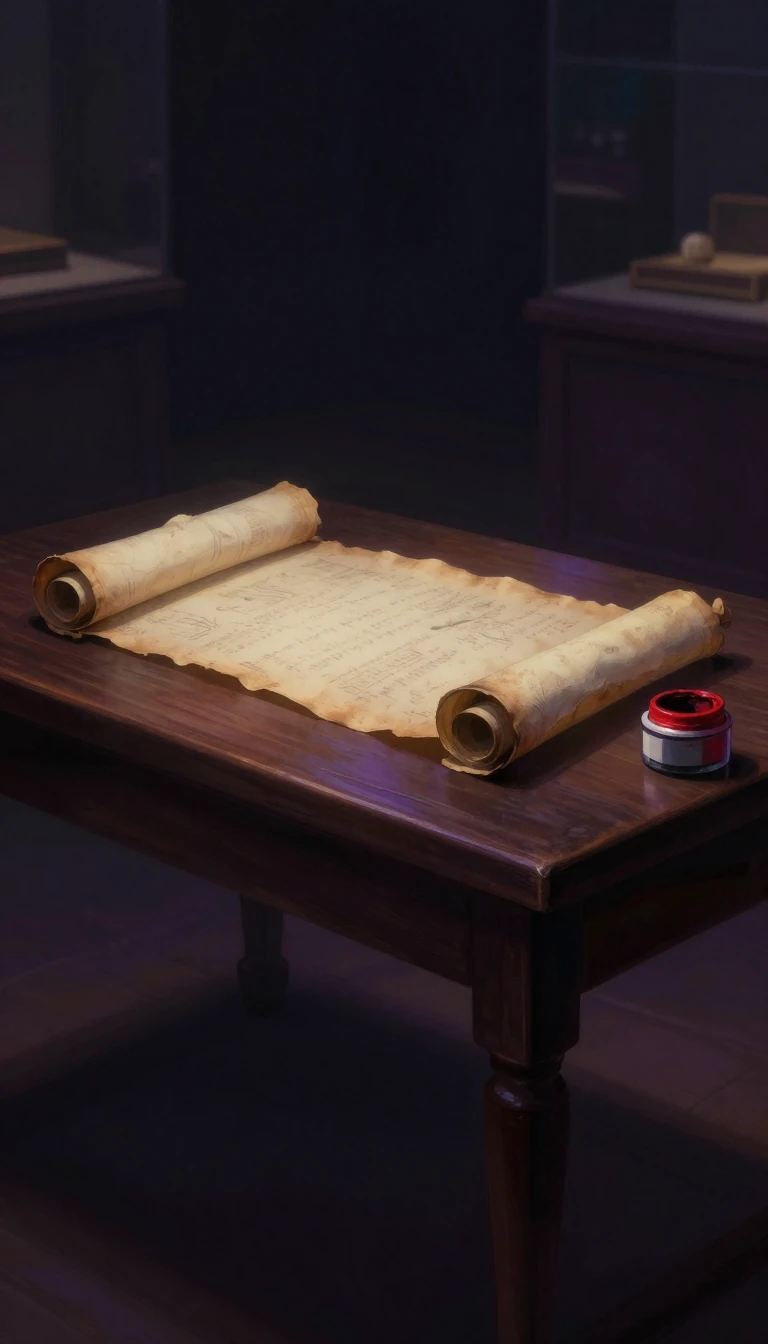 Beyond simple word games, acrostics served as ancient steganography and sophisticated literary signatures.An acrostic is more than a child's spelling exercise. From the first-century Sator Square to the complex, hidden messages embedded in Virgil’s epics, these structures have functio…
 Can a modern blockbuster adapt an ancient epic without sparking a national firestorm?Adipurush, a 2023 retelling of the Hindu epic Ramayana, became one of India’s most expensive films. Yet, despite a massive budget and high-profile cast, it triggered intense backl…
 Was Ahalya a victim of divine deception or an adulteress seeking forbidden pleasure?In Hindu mythology, Ahalya is the wife of a sage, famously cursed for an affair with the king of gods, Indra. While ancient texts debate her culpability, modern interpretations ha…
 Is the biblical King Ahasuerus a historical figure or a literary composite of Persian royalty?Ahasuerus appears in the Hebrew Bible as a powerful ruler, yet historians struggle to pin him to a single identity. While modern scholars often equate him with Xerxes I, ancient t…
 How a 19th-century Indian scholar built a global movement of 200 million followersAhmed Raza Khan Barelvi was a prolific Islamic scholar who founded a movement to defend traditional Sufi practices against reformist challenges. From his base in Bareilly, he auth…
 Is India's largest student organisation a political force or a grassroots movement?With over 7.6 million members, the Akhil Bharatiya Vidyarthi Parishad claims to be a non-political student movement. Yet, its history is deeply intertwined with national politics,…