 Intellect Plus
Ideas & Philosophy
17,867 cards. Each one is a 40-second story with a five-minute read behind it. Page 173 of 298.
Subtopics: Abrahamic religions · Artificial intelligence · Attention · Classic philosophy · Cognitive biases · Consciousness · Cooperation · Cynicism · Decision making · Decision theory · Descartes · Dharmic religions · Dreams · Eastern philosophy · Eastern religions · Epistemology · Ethics · Evidence · Existentialism · Fairness · Famous psychology experiments · Free will · Game theory · Greek mythology · Historians · Identity · Infinity · Justice · Logic · Logical fallacies · Mathematics · Medieval philosophy · Mind · Mythology · Mythology of the ancient world · Other religions · Paradoxes · Philosophers · Philosophers, historians, political and social scientists · Philosophy · Philosophy of mind · Philosophy of science · Political philosophy · Probability · Psychology · Reality · Religion · Religion and spirituality · Religious figures · Self knowledge · Statistics · Stoicism · Strategy · Taoism · Thought experiments · Trivia & curiosities · Truth · Utopias & ideal worlds · Wellbeing · World religions · Writers
 Can a computer truly think like a human expert, or just follow rules?Expert systems were the original pioneers of artificial intelligence, designed to replicate human decision-making in specialized fields. By combining vast knowledge bases with log…
 How the Fast & Furious franchise launched a car into orbit for its ninth installmentThe ninth mainline entry in the Fast & Furious saga, F9, pushes the franchise to new heights—literally. By sending characters into space via a rocket car, the film leans into its …
 How to predict the future of your product by systematically imagining its total failure.Failure Mode and Effects Analysis (FMEA) is a rigorous design tool that forces teams to confront the unthinkable. By mapping every potential point of failure before a product is b…
 The surprising South American roots of the modern Falkland Islander identityWhile often viewed through a purely British lens, the Falkland Islands possess a complex, multicultural heritage. Beyond the sheep farms and colonial history, the islands' identit…
 Ovid’s Fasti: A poetic calendar that survived exile and centuries of scholarly debateOvid’s Fasti is a six-book Roman poem that functions as a calendar, blending mythology, astronomy, and ritual. Written while the poet was in exile, it has been dismissed as an art…
 Did a siege in 1347 trigger the Black Death across Europe via biological warfare?The Crimean port of Feodosiya, once known as Kaffa, holds a dark distinction in history. During a 1346 siege, invading forces reportedly catapulted plague-ridden corpses over the …
 Ferenc Szálasi: The Eccentric Fascist Who Led Hungary into Its Final Wartime CatastropheFerenc Szálasi, a former military officer turned fanatical leader of the Arrow Cross Party, seized power in Hungary during the final stages of World War II. His brief, brutal regi…
 How a 1971 musical about a Ukrainian milkman became a global cinematic triumphDirected by Norman Jewison, the film adaptation of Fiddler on the Roof transformed a Broadway stage musical into a gritty, realistic epic. Despite the decline of the musical genre…
 Zoroastrian fire temples are not designed to glorify the building but to house fire.Zoroastrian fire temples are functional, often nondescript structures built to house sacred flames. Far from being mere monuments, these temples are classified by the grade of fir…
 Did the Council of Constantinople actually write the creed we recite today?For centuries, scholars assumed the Niceno-Constantinopolitan Creed was a direct expansion of the 325 AD Nicene Creed. Modern evidence suggests a more complex origin, revealing th…
 How did a single ruler forge the first unified Egyptian state in antiquity?The dawn of the First Dynasty represents the pivotal moment when Upper and Lower Egypt coalesced under one crown. Centered in Thinis, this era launched the Early Dynastic Period. …
 The anonymous ancient letter that almost became a permanent part of the New TestamentWritten by the Church in Rome to address a volatile power struggle in Corinth, the First Epistle of Clement was once considered sacred text. Though it ultimately missed the final …
 When Pope Pius IX declared he was the tradition, he redefined the Catholic Church.In 1869, the First Vatican Council gathered to confront modern secularism. It ended with a controversial dogma: papal infallibility. While the majority sought to solidify the Pope…
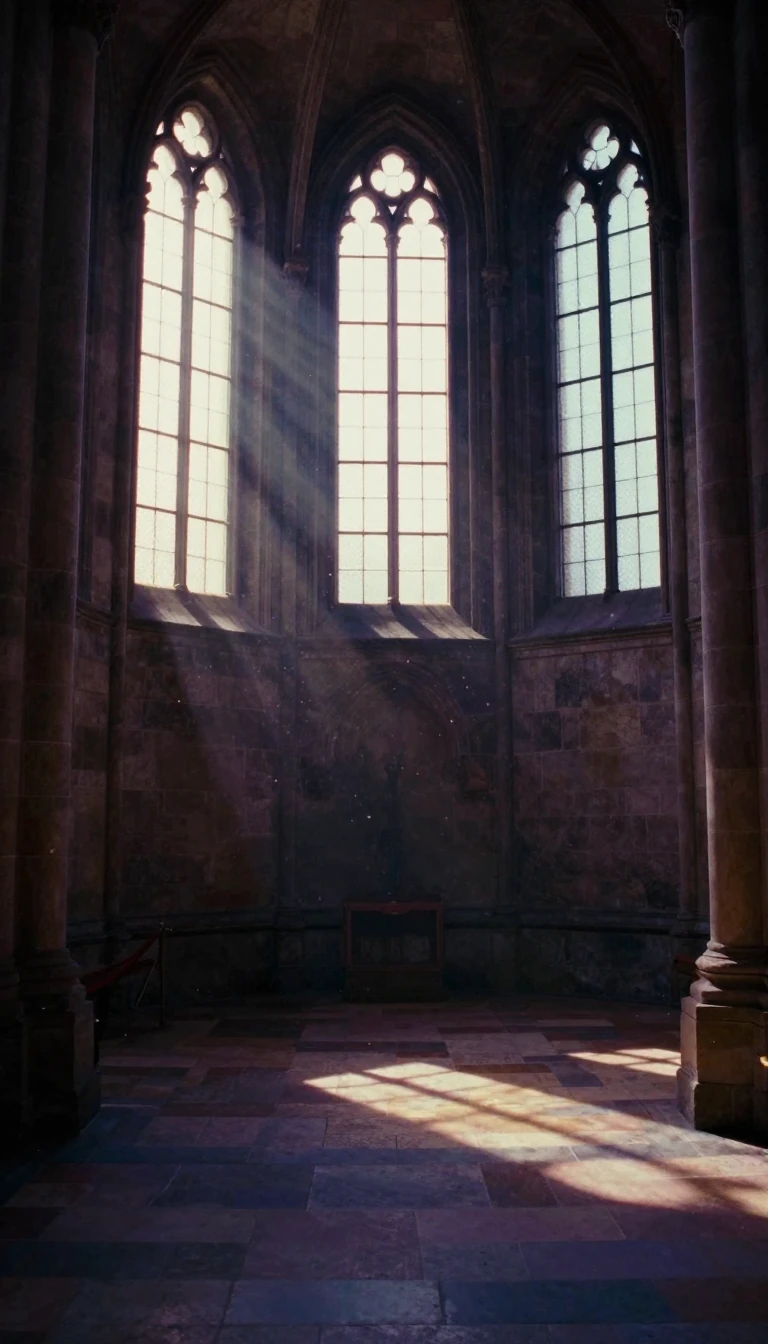 Are humans born with an innate, pre-programmed knowledge of the divine?In Islamic tradition, fitra is the primordial nature every human possesses at birth—an internal compass oriented toward the oneness of God. While life’s distractions often bury th…
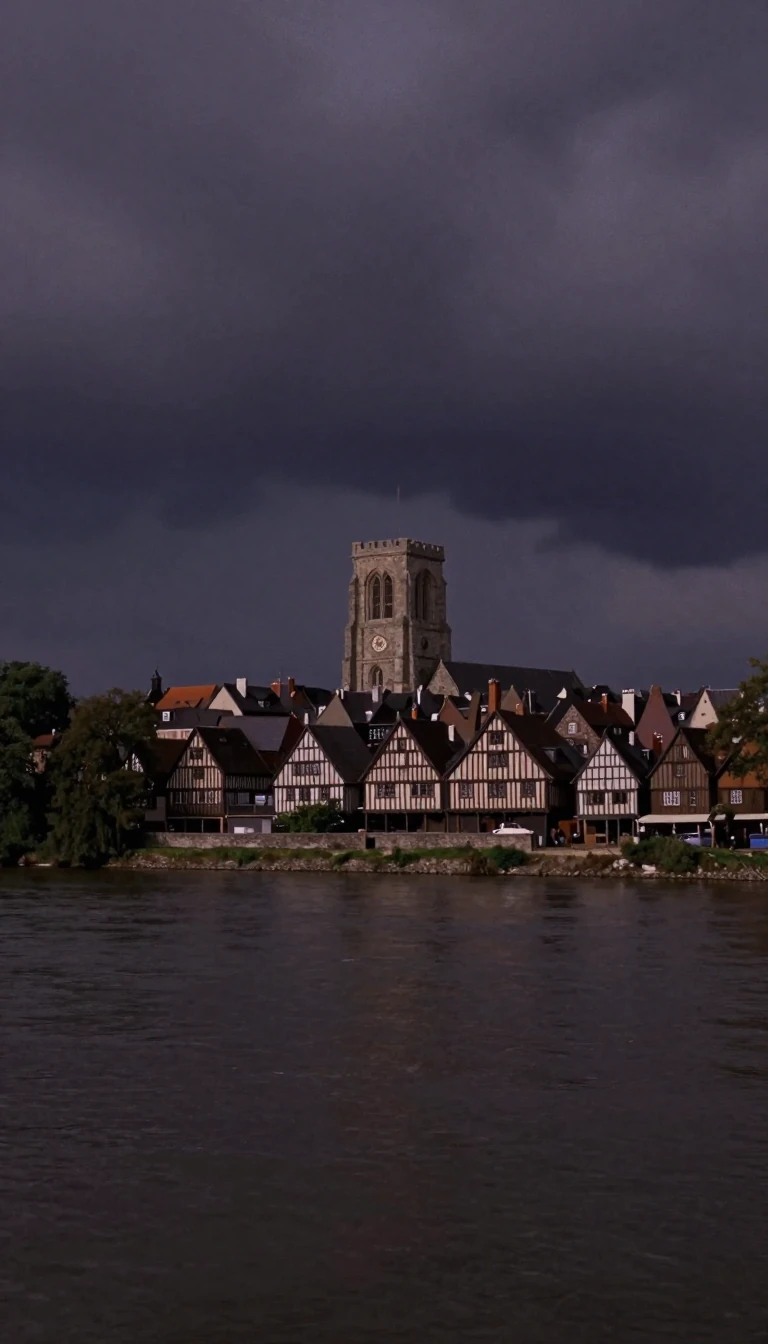 How a bohemian pub crawl gave a central London district its enduring nameFitzrovia was never an official administrative unit, yet it became one of London’s most recognizable districts. Born from the 18th-century estate of the Dukes of Grafton, the area…
 Can human reason alone prove the existence of God? Thomas Aquinas thought so.In his 13th-century masterpiece, Summa Theologica, Thomas Aquinas proposed five logical arguments to demonstrate divine existence. By observing the natural world—from moving objec…
 How a tone-deaf socialite became the most famous opera singer in New York CityFlorence Foster Jenkins was a wealthy socialite who possessed zero musical ability yet commanded sold-out crowds. Despite being notoriously off-pitch and rhythmically challenged, …
- Can a truly terrible singer be a courageous artist worth remembering?The 2016 film Florence Foster Jenkins explores the life of a New York heiress whose lack of vocal talent was matched only by her unwavering passion. Directed by Stephen Frears and…
 Can a deity made of pasta effectively challenge the teaching of intelligent design?The Flying Spaghetti Monster began as a satirical protest against teaching intelligent design in American classrooms. By demanding equal time for his own noodly deity, Bobby Hende…
 Why the forbidden fruit of Eden is almost certainly not an appleThe iconic image of an apple in the Garden of Eden is a linguistic accident, not a biblical fact. While Western tradition clings to the fruit as a symbol of temptation, ancient te…
 Why medieval Europeans turned to a team of fourteen saints during the Black DeathWhen the Black Death ravaged the Rhineland in the 14th century, desperate believers turned to a collective of fourteen saints known as the Holy Helpers. Believed to provide powerf…
 Why modern cities still grant the medieval right to herd sheep across their bridgesOnce a vital legal status separating free citizens from feudal vassals, the Freedom of the City has evolved into a purely symbolic honour. From military units marching with bayone…
- Why your language can never be perfectly precise, no matter how hard you try.Friedrich Waismann, a key figure of the Vienna Circle, identified a fundamental flaw in human communication: open texture. He argued that empirical terms are inherently porous, me…
 Is your mind just a sophisticated computer program running on biological hardware?Functionalism suggests that mental states are defined by their causal roles rather than their physical makeup. If a machine or an alien brain performs the same functions as a huma…
 Was this legendary Jewish sage the secret bridge between ancient law and early Christianity?Gamaliel I stands as a towering figure in both Jewish and Christian history. A first-century master of the Oral Law, he is remembered for his lenient rulings and his pivotal role …
 How a French cigarette brand became the ultimate symbol of intellectual and artistic coolLaunched in 1910, Gauloises evolved from a patriotic wartime staple into a global icon of bohemian sophistication. Favored by thinkers like Sartre and artists like Picasso, the br…
 How a humble administrative clerk became the absolute dictator of the Soviet UnionThe office of General Secretary began as a mundane, bureaucratic role intended only for filing and personnel management. Yet, through the strategic use of party appointments and t…
 How a fifth-century consecrated virgin became the enduring, shape-shifting patron saint of ParisGenevieve, a woman of modest origins who navigated the volatile politics of late antiquity, evolved into Paris's most resilient cultural symbol. From calming storms to negotiating…
 Geomancy: How Ancient Cultures Used Sand, Seeds, and Soil to Predict the FutureLiterally meaning earth divination, geomancy is a global tradition of interpreting patterns in the natural world. From sketching random dots in the sand to arranging seeds in math…
 From failed law student to Hollywood action star: the transformation of Gerard ButlerBefore he was a Spartan king or a secret service agent, Gerard Butler was a trainee lawyer who was fired just one week before qualifying. His journey from a troubled youth in Scot…
 How an obscure, struggling beer hall debating society birthed the Nazi PartyFounded in 1919 as a tiny Munich fringe group, the German Workers' Party was initially little more than a disorganized circle of railway workers. It only transformed into a potent…
 Why the ancient Germanic dragon was often just a very large, venomous snakeIn early Germanic mythology, dragons were not the winged, fire-breathing beasts of modern fantasy. They were known as worms, serpents, or adders—long, legless creatures that guard…
 Giacomo Puccini’s only comic opera was a daring departure from his tragic, romantic roots.Known for moving audiences with tragic heroines in works like La Bohème and Tosca, Giacomo Puccini surprised the world with Gianni Schicchi. Premiering in 1918, this one-act comed…
- How a lifelong communist became the most powerful president in modern Italian historyGiorgio Napolitano rose from the ranks of the Italian Communist Party to become Italy's longest-serving president. Often dubbed King Giorgio by critics, he transformed a tradition…
 Can a 54-volume library teach you how to think about the world's greatest ideas?In 1952, educators Mortimer Adler and Robert Hutchins launched a massive editorial project to curate the Western canon. Their goal was not just to collect books, but to map the Gr…
 Why Britain’s most ambitious railway built a track too wide for the rest of England.Engineered by Isambard Kingdom Brunel, the Great Western Railway was a marvel of Victorian ambition. To achieve unprecedented speeds, Brunel designed a unique 7-foot broad gauge, …
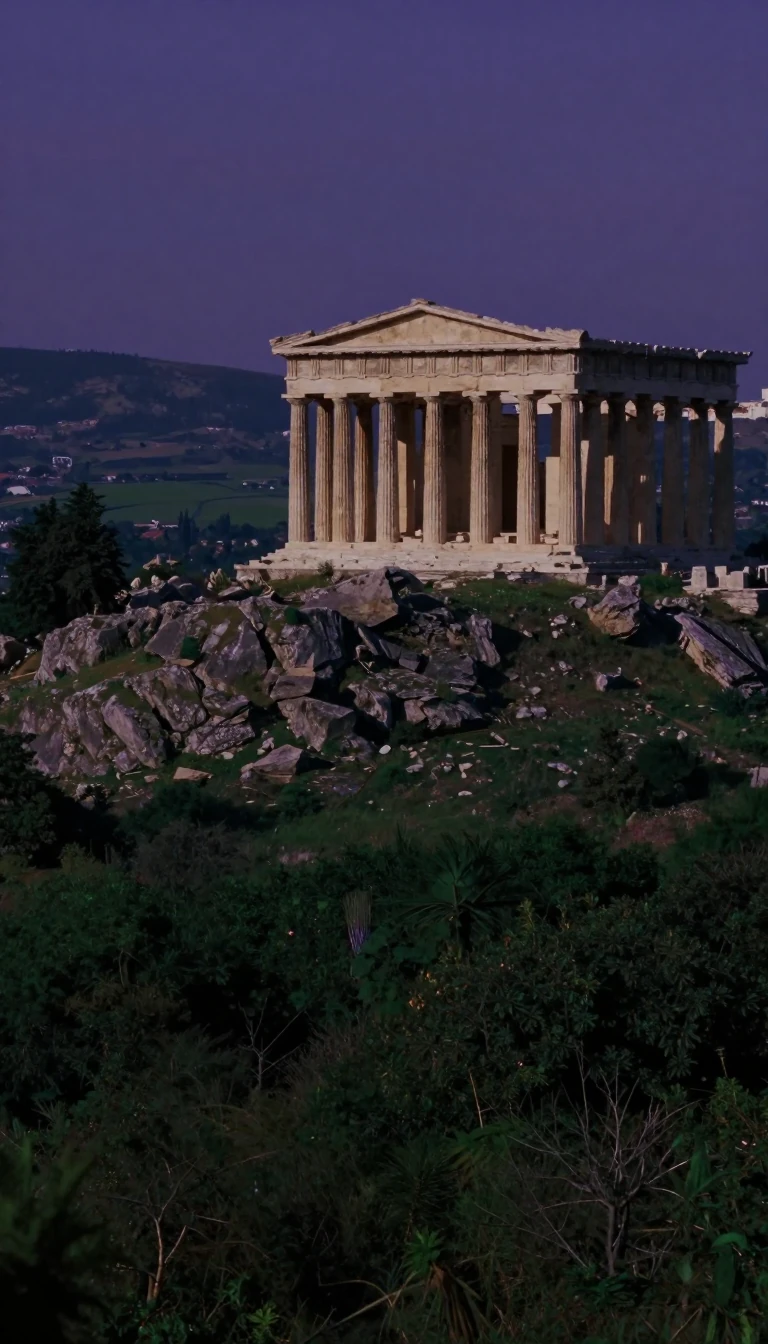 Why ancient mystery cults were the ultimate secret societies of the Greco-Roman worldMystery cults were exclusive religious schools that demanded absolute secrecy from their initiates. Flourishing alongside state religion, these groups offered private rituals, fro…
 More than just background noise, the Greek chorus was the soul of ancient drama.Far from mere extras, the Greek chorus was a powerhouse of song, dance, and civic identity. These performers acted as the audience's emotional mirror, bridging the gap between myt…
 Before Zeus and the Olympians, who were the gods that built the universe?Greek mythology did not begin with Zeus. Long before the familiar Olympians, primordial deities emerged as the fundamental forces of existence. These entities were not human-like …
- Is the Green Man an ancient British icon or a global architectural traveler?The Green Man, a face sprouting foliage, is often hailed as a symbol of British folklore and rebirth. Yet, historians argue this mysterious figure is neither strictly ancient nor …
 Is the hive mind a loss of self or the ultimate evolution of consciousness?In science fiction, the group mind is a powerful plot device where multiple consciousnesses merge into one. While often portrayed as a terrifying loss of individual identity, some…
 The 1933 Haavara Agreement: A Controversial Economic Lifeline for German Jews Fleeing PersecutionSigned in 1933, the Haavara Agreement allowed German Jews to escape Nazi persecution by transferring assets to Palestine through the purchase of German goods. While it facilitated…
 Your gut feelings are not entirely your own: meet the sociological concept of habitus.Habitus describes the deeply ingrained habits, skills, and dispositions we acquire through our social background. It acts as an internal compass, shaping how we perceive the world…
 How a roguelike video game turned Greek mythology into a masterpiece of branching narrativeSupergiant Games transformed the repetitive nature of roguelike gameplay into a storytelling engine. By centering the experience on Zagreus, the prince of the Underworld, they cra…
 Hadley Richardson was the quiet force behind Ernest Hemingway’s early literary successBefore he was a global icon, Ernest Hemingway was an aspiring writer supported by his first wife, Hadley Richardson. She provided the financial stability and emotional confidence …
 Why the world’s most famous song of praise is actually a two-word commandHallelujah is not a single word, but a Hebrew imperative meaning praise Yah. While often used as a spontaneous expression of joy, its liturgical history is deeply structured, rang…
 Is your tragic flaw actually just a simple mistake?We often define the tragic hero by a fatal character defect, but the Greek term hamartia suggests something far more neutral. Derived from the act of missing a target, it may desc…
 Why the past refuses to stay buried in our modern cultural landscapeWe often feel haunted by futures that never arrived. This sensation, where the past lingers in the present like a ghost, is called hauntology. Originally a philosophical tool to e…
- The Hundred-Handed Giants: Mythical Guardians or Ancient Personifications of the Sea?In Greek mythology, the Hecatoncheires were three monstrous giants, each boasting fifty heads and one hundred arms. While famous for helping Zeus defeat the Titans, these enigmati…
- Was the Queen of Troy a daughter of a king or a river god?Hecuba, the tragic Queen of Troy, remains one of antiquity's most debated figures. Ancient scholars could not even agree on her parentage, leading the Roman emperor Tiberius to ob…
- Was the Hunger Chancellor the last bulwark of the Weimar Republic or its undertaker?Heinrich Brüning, Germany's chancellor from 1930 to 1932, attempted to combat the Great Depression through aggressive deflation. His austerity measures, which earned him the nickn…
 The Gestapo Chief Who Vanished: Why Heinrich Müller Remains History's Most Elusive NaziHeinrich Müller, the architect of the Holocaust and head of Hitler's Gestapo, disappeared in May 1945. Despite extensive postwar hunts by Allied intelligence, he was never capture…
 When Alexander the Great died, his generals turned the world into a brutal chessboard.The Hellenistic age began with the sudden collapse of a vast empire. Following Alexander the Great’s death in 323 bce, his ambitious generals abandoned his grand plans, choosing i…
 Why a world-renowned Harvard professor traded his academic career for a life of service.Henri Nouwen was a celebrated theologian at Yale and Harvard, yet he felt profoundly lost. He eventually abandoned his prestigious academic life to live and work at L'Arche Daybre…
 Were the legendary golden apples of the Hesperides actually just beautiful, golden-colored sheep?In Greek mythology, the Hesperides were nymphs tasked with guarding a sacred orchard of golden apples. Yet, ancient accounts offer a startlingly different interpretation: the 'app…
 Hinduism is a polycentric tapestry, not a religion with a single central authority.Hinduism lacks a governing body, a prophet, or a binding holy book. Instead, it functions as a collection of fuzzy, overlapping traditions known as sampradayas. Because these bran…
- Why presidential rankings are more than just a popularity contest among academic historiansSince the mid-20th century, scholars have attempted to quantify presidential greatness. While rankings often highlight the same titans—Lincoln, Washington, and Franklin D. Rooseve…
 How a merchant-class philosophy became the dominant spiritual force of ancient IndiaBorn in the 6th or 5th century BCE, Buddhism emerged as a Middle Way between extreme indulgence and self-mortification. By aligning with trade routes and securing royal patronage,…
 How a 19th-century Adventist splinter group evolved into a global, centralized religious movementBorn from the failed apocalyptic predictions of the 1870s, the Jehovah's Witnesses transformed from a loose collection of independent Bible students into a highly disciplined, glo…
- From ancient garrisons to mystical movements, the shifting story of Egypt’s Jewish communities.The history of Jews in Egypt spans millennia, evolving from ancient frontier soldiers to a vibrant, diverse population. While often associated with the biblical Exodus, the commun…