 Intellect Plus
Ideas & Philosophy
17,867 cards. Each one is a 40-second story with a five-minute read behind it. Page 259 of 298.
Subtopics: Abrahamic religions · Artificial intelligence · Attention · Classic philosophy · Cognitive biases · Consciousness · Cooperation · Cynicism · Decision making · Decision theory · Descartes · Dharmic religions · Dreams · Eastern philosophy · Eastern religions · Epistemology · Ethics · Evidence · Existentialism · Fairness · Famous psychology experiments · Free will · Game theory · Greek mythology · Historians · Identity · Infinity · Justice · Logic · Logical fallacies · Mathematics · Medieval philosophy · Mind · Mythology · Mythology of the ancient world · Other religions · Paradoxes · Philosophers · Philosophers, historians, political and social scientists · Philosophy · Philosophy of mind · Philosophy of science · Political philosophy · Probability · Psychology · Reality · Religion · Religion and spirituality · Religious figures · Self knowledge · Statistics · Stoicism · Strategy · Taoism · Thought experiments · Trivia & curiosities · Truth · Utopias & ideal worlds · Wellbeing · World religions · Writers
 Did a Jet Engine Fly in 1910, Decades Before the Official Record?Henri Coanda unveiled a propeller-less aircraft at a 1910 Paris exhibition, claiming it was the world's first jet. This video examines the engineering of his unique turbo-propulso…
 Could Doc Brown really have manufactured ice in the Wild West of 1885?In Back to the Future Part III, Doc Brown keeps a complex ice machine in his 1885 blacksmith shop. This video investigates whether the technology of that era truly allowed for art…
 Why a murder trial turned a bizarre party stunt into a global pop-culture trope.The image of a woman emerging from a giant cake is a staple of bachelor parties and classic media. While it seems like a harmless, if strange, trope, its origins are rooted in a n…
 AI is generating scientific breakthroughs, but it lacks the ability to understand whyArtificial intelligence is accelerating scientific discovery by simulating particle collisions and predicting complex protein structures. Yet, these systems often operate through …
 How microscopy and invisible light reveal the hidden mechanics of a healthy heartBiophysicist Izzy Jayasinghe and astrophysicist Alfredo Carpineti discuss their work at the intersection of cardiac health and light. This talk explores how advanced microscopy ob…
 Why science still cannot explain the mystery of human consciousnessMichael Pollan examines the 22 competing scientific theories of consciousness and explains why current models fail to capture the essence of the human mind. This talk explores the…
 Is our musical scale a mathematical necessity or merely a cultural habit?Oceanographer Helen Czerski and science writer Philip Ball investigate the physics behind sound. From the hidden acoustics of the deep ocean to the history of musical tuning, this…
 Is the present moment an illusion, and does it render our choices meaningless?Science writer Jo Marchant examines the block universe model, which suggests time is fixed and free will is illusory. She explores whether quantum mechanics provides a loophole fo…
 Why the Brooklyn Bridge remains an endless source of inspiration for photographersExplore the Brooklyn Bridge through the lens of history. This photographic walk examines how a once-ambitious engineering dream transformed into a global symbol of New York City, …
 How Raphael became a titan of the Italian Renaissance alongside Leonardo and MichelangeloExplore the life and work of Raphael in this overview of the first comprehensive exhibition of his art in the United States. Discover how he evolved from his beginnings in Urbino …
- How museum experts mount a massive 29-foot seventeenth-century masterpiece for public displayGo behind the scenes with the team at The Met as they prepare a historic textile for a major upcoming exhibition. This look at the installation process reveals the specialized car…
 How do professional songwriters actually craft the music we listen to every day?This video explores the collaborative reality behind songwriting. By featuring insights from working musicians, it demystifies the creative process and explains how artists work t…
 How did snakes evolve to swallow prey much larger than their own heads?Snakes have spent 150 million years perfecting the art of consuming meals that seem physically impossible. This video examines the unique anatomical adaptations that allow these l…
 Could a random lottery fix the deep flaws in our modern democratic systems?Elections are designed to give every citizen an equal voice, yet they frequently suffer from corruption, intense partisanship, and voter misinformation. This video examines sortit…
 Why do children create imaginary companions and what skills do they gain?Children often invent fictional friends to share secrets, play games, and navigate imaginary worlds. This video examines the psychology behind pretend play, exploring why kids cre…
- Why the most effective playgrounds for child development might actually be the most dangerousTraditional playgrounds are often predictable, featuring standard slides and swings that offer little novelty. Science suggests that risky play, characterized by thrilling uncerta…
 Can a prince truly hide from death behind the walls of his abbey?Prince Prospero believes he can outsmart a devastating plague by retreating into a fortified abbey with his court. This video explores Edgar Allan Poe's classic tale, examining th…
 How do investigators uncover evidence that remains invisible to the naked eye?When a crime scene appears messy, investigators look beyond the obvious. This video explains how forensic teams use specialized tools like Luminol to detect hidden traces, such as…
 Why peek-a-boo is the most important game you ever played as a babyPeek-a-boo is a near-universal ritual that transcends cultures, from Italy to Japan. This video explores why this simple interaction is more than just a game, acting as a foundati…
 How did Venice survive 1,500 years on a foundation of mud and wood?Venice is an engineering marvel born from necessity. This video explores how 6th-century refugees transformed unstable marshy mudflats into a thriving trade hub, creating a resili…
 Why play-based learning was the primary way children learned for most of history.For centuries, children mastered the world through self-directed play rather than formal instruction. This video examines the historical role of play in education, exploring how o…
 Are strict grammar rules actually necessary or just historical accidents?Arika Okrent examines the origins of three famous English grammar rules, including the use of the singular they, to determine if these conventions are essential or merely arbitrar…
- Why professional songwriters believe your best ideas often begin as bad onesProfessional songwriters reveal how embracing mistakes, collaboration, and experimentation are essential to the creative process. This video series offers insights into fine-tunin…
 Is pre-rinsing your dishes actually necessary for a cleaner load in the dishwasher?Modern dishwashers were born from the frustration of a socialite who grew tired of chipped china. This video explores the internal mechanics of the machine and provides practical …
 Is sumo wrestling actually ancient, or is it a modern invention?Sumo is celebrated globally as a grand display of strength and a direct link to Japan's past. However, many of the traditions we associate with the sport today are surprisingly re…
 Why does a simple herb trigger such intense euphoria in our feline companions?Catnip transforms stoic cats into wriggling, drooling, and playful creatures after just one sniff. This video explores the biological triggers behind this strange reaction and inv…
 Why millions of fungal species remain hidden in plain sight todayFungi are far more than simple mushrooms or kitchen staples. From radiation-eating organisms to those capable of mind control, the fungal kingdom performs essential ecological rol…
 Master the four essential components that transform a speaker into a great storyteller.This animated guide from the Public Speaking 101 series breaks down the four core elements of effective storytelling. By mastering these components, you can better connect with yo…
 Why does Plato compare a democratic state to a ship in a storm?Plato’s Ship of State thought experiment illustrates the dangers of leadership without expertise. This video examines a vessel where the crew ignores skilled navigators in favor o…
 Why is saffron, the world's most expensive spice, nicknamed red gold?Saffron consistently commands prices exceeding 600 USD per ounce, far outpacing other culinary seasonings. This video explores the unique biological characteristics of the spice a…
 How do massive kelp forests thrive in the ocean's darkest, deepest reaches?Kelp forests are light-dependent organisms, yet they grow to massive sizes nearly 90 meters below the surface. This video explores the surprising adaptations that allow these unde…
 Cassandra: The cursed prophet who saw the future but was never believedCassandra of Troy was granted the gift of prophecy by Apollo, only to have it twisted into a cruel hex. This video explores the Greek tragedy of a woman who could see the future w…
- Master the art of breaking down complex ideas for any audience to understand.This video, part of the Public Speaking 101 series, identifies the essential building blocks required to communicate intricate concepts effectively. Learning to articulate complex…
 How to reclaim your focus in an increasingly distracted modern worldModern life pulls our attention in countless directions, making sustained focus feel nearly impossible. Shannon Odell outlines four practical strategies to manage these constant d…
- Why does walking through a doorway often cause you to forget your current task?Ever entered a room only to find your mind suddenly blank? This common memory lapse is known as the doorway effect. Gabriel Radvansky explains the mechanics behind why changing yo…
 Why a 1930 tax designed to help the economy triggered a global trade collapse.Tariffs are taxes on imported goods, but their impact often extends far beyond the initial policy. This video examines how these trade barriers function and the economic chain rea…
- Can the wisdom of ancient philosophy help us thrive among the stars?Living a good life requires more than just survival, whether on Earth or in orbit. By blending philosophical inquiry with the technical rigors of space exploration, experts are dr…
 Why two million women released from prison each year need a safe place to land.Susan Burton, who experienced the cycle of incarceration herself, shares her mission to provide housing and support for women leaving the prison system. Her work challenges conven…
- Can mischief and engineering marvels turn every science classroom into a field trip?Former NASA engineer Mark Rober argues that curiosity is contagious. By blending play, wonder, and a touch of mischief, he aims to replace dry textbooks with engaging experiences,…
 Five ways the universe might end and what that means for our present livesCosmologist Katie Mack joins host Debbie Millman to discuss the ultimate fate of the cosmos. From the lingering glow of the Big Bang to the five potential scenarios for the end of…
- Why the most effective change in democracy happens outside of government institutionsCitizen strategist Jon Alexander argues that meaningful societal progress is driven by ordinary people collaborating in their communities rather than relying on politicians. This …
 How can everyday acts of social bravery dismantle the culture of bullying?Social psychologist Amy Cuddy examines the mechanics of how bullying takes root and spreads. Drawing from her personal experience as the target of a smear campaign and years of re…
 Can homegrown technology solve the looming educational crisis for Africa's youth?With nearly half of the world's young people projected to be African by 2030, the continent faces a critical need to overhaul outdated educational systems. Social entrepreneur Rap…
 Can listening to every citizen replace the traditional role of a politician?Ryosuke Takashima, Japan's youngest-ever mayor, argues that leadership is not about political maneuvering but about gathering diverse perspectives. By actively engaging everyone f…
- How to stop being defensive when you receive difficult feedback at workLeadership expert Chris Wheatley shares a personal experience of receiving hard truth from a colleague. He outlines a four-step framework designed to help you process critical fee…
 Can we recover the lost art of meaningful human connection in modern life?Journalist Joshua Johnson and social entrepreneur Blake Mycoskie discuss the challenges of modern interaction, including the male loneliness crisis. They offer two straightforward…
 Can we hear the echoes of the Big Bang through ancient cosmic sound waves?Astronomer Mark Whittle explores the acoustic signature of the early universe. By analyzing primordial gas patterns, he demonstrates how the infant cosmos pulsed with sound, and c…
 Why your discomfort with the unknown might be the key to your personal growthCognitive scientist Maya Shankar and author Simone Stolzoff explore why humans struggle with uncertainty. This conversation examines how our natural fear of not having answers can…
 Why your obsession with productivity might be preventing you from actually livingHorticulturist Rebecca McMackin and author Catherine Price discuss the psychological relief found in abandoning the need for constant control. They explore why engaging in unprodu…
 Why have thousands of brilliant female composers been erased from our musical history?Classical singer Gabriella Di Laccio explores the systemic silencing of women in music. After discovering an encyclopedia filled with thousands of unknown female composers, she la…
 Can physical artifacts reveal the evolving meaning of American freedom across two centuries?Secretary Bunch explores the American Aspirations exhibition, examining iconic objects that trace the nation's pursuit of its founding ideals. From the desk used to draft the Decl…
 How African American artists use visual expression as a powerful tool for social change.This guided tour explores how painters, photographers, and sculptors have used their work to document protest, process grief, and foster resilience within the African American com…
 Why the Smithsonian preserves the starship Enterprise alongside real spacecraft and historical artifactsAs Star Trek reaches its 60th anniversary, the Smithsonian National Air and Space Museum highlights how fictional props like Mr. Spock’s ear tips and the starship Enterprise model…
 How do experts determine the exact age of a mysterious, unlabeled vintage photograph?Conservator Shannon Brogdon-Grantham explains the forensic techniques used to date early photography. By analyzing materials and employing microscopic examination, experts can pla…
 Could being shorter be the key to a more sustainable future for humanity?This clip from the QI series Ridiculous explores the hypothetical benefits of smaller stature. It examines the intriguing premise of how physical size might influence our long-ter…
 How one community has worked to bridge divisions in Ireland since 1965This video features an interview with Alex Wimberly, the leader of the Corrymeela Community. It explores the group's ongoing efforts to foster reconciliation in Ireland from their…
- Who was performing the best standup comedy five centuries ago?This clip from the television show QI explores the historical roots of standup comedy. It features host Sandi Toksvig alongside guests Alan Davies, Maisie Adam, David Mitchell, an…
 Can your time on the field or dance floor boost your professional career?Physical activity does more than improve your health; it builds a versatile toolkit of transferable skills. By examining the journey of Leanne Pero and structured learning modules…
- Can you master complex subjects without formal qualifications or a tuition fee?The Open University is dismantling traditional barriers to education through OpenLearn, a massive repository of free learning. By offering over 900 courses alongside thousands of …
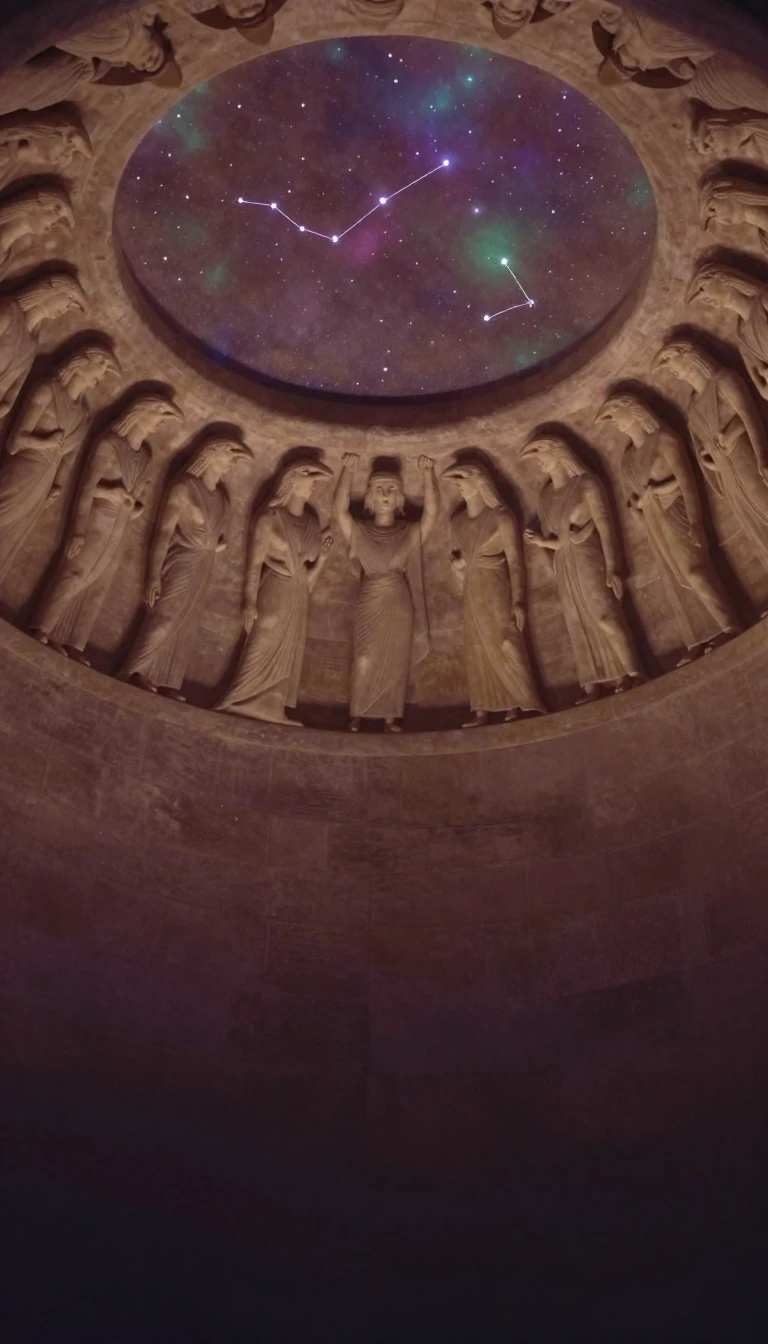 Why do cultures across history dream of a lost, perfect Golden Age?From ancient Greek myths to modern fantasy, humanity consistently looks backward to a primordial era of peace and abundance. Whether defined by metal-based cycles or moral decay, …