 Intellect Plus
Ideas & Philosophy
17,867 cards. Each one is a 40-second story with a five-minute read behind it. Page 60 of 298.
Subtopics: Abrahamic religions · Artificial intelligence · Attention · Classic philosophy · Cognitive biases · Consciousness · Cooperation · Cynicism · Decision making · Decision theory · Descartes · Dharmic religions · Dreams · Eastern philosophy · Eastern religions · Epistemology · Ethics · Evidence · Existentialism · Fairness · Famous psychology experiments · Free will · Game theory · Greek mythology · Historians · Identity · Infinity · Justice · Logic · Logical fallacies · Mathematics · Medieval philosophy · Mind · Mythology · Mythology of the ancient world · Other religions · Paradoxes · Philosophers · Philosophers, historians, political and social scientists · Philosophy · Philosophy of mind · Philosophy of science · Political philosophy · Probability · Psychology · Reality · Religion · Religion and spirituality · Religious figures · Self knowledge · Statistics · Stoicism · Strategy · Taoism · Thought experiments · Trivia & curiosities · Truth · Utopias & ideal worlds · Wellbeing · World religions · Writers
 Why your heart might be younger than the rest of your bodyIn wealthier societies, the heart was once the fastest-aging organ, often failing in otherwise healthy older adults. However, a massive shift in public health and medicine over th…
 How the American Anti-Slavery movement rose to victoryExplore the origins and eventual triumph of the American Abolition movement in this focused examination of a pivotal moment in world history.
 Was the movement to abolish slavery primarily an English language phenomenon?Professor Alec Ryrie investigates whether the push to end slavery across Europe was uniquely driven by the English-speaking world, exploring the linguistic and cultural dimensions…
 Medieval monks believed their music could physically mend broken bodiesIn the twelfth century, a cripple reportedly crawled into a French abbey and walked out moments later. To the medieval mind, this wasn't just a miracle; it was the measurable powe…
 How inexperience shaped the Suez CrisisExplore the pivotal role of Selwyn Lloyd, the Foreign Secretary appointed by Winston Churchill, during the Suez Crisis. Professor Vernon Bogdanor examines how Lloyd's lack of expe…
 How British and American Misunderstandings Sparked the Suez CrisisThe Suez Crisis was not an inevitable geopolitical clash. Professor Vernon Bogdanor explores how specific diplomatic errors and mutual misunderstandings between the UK and the US …
 The geopolitical tremors that triggered the Suez CrisisProfessor Vernon Bogdanor breaks down the complex historical sequence of events that culminated in the Suez Crisis. This lecture provides essential context for understanding one o…
 How two Irish mathematicians broke the fundamental laws of arithmeticIn the nineteenth century, mathematicians William Rowan Hamilton and George Boole did something radical: they freed algebra from the rigid constraints of arithmetic. By inventing …
 The City of London's Guildhall: A Palace for a King without a CrownThe government of the City of London predates Parliament itself. For centuries, the Guildhall has served as a rival to the Palace of Westminster, functioning as a sovereign space …
 For the medieval singer, the audience was never just humanIn the Middle Ages, a performance was not a private human exchange but a public spiritual event. For the medieval vocalist, the divine was a tangible participant in the room. To u…
 Unpacking the atmospheric weight of Sylvia Plath's 'Sheep in Fog'Professor Belinda Jack provides a critical analysis of one of Sylvia Plath's most evocative poems. This lecture explores the literary nuances of 'Sheep in Fog' within the context …
 Unpacking the layers of Sylvia Plath's 'Miss Drake Proceeds to Supper'In this lecture, Professor Belinda Jack provides a critical analysis of Sylvia Plath's poem 'Miss Drake Proceeds to Supper', exploring the poet's intricate work.
 Is faith inherently irrational or a different kind of logic?This lecture examines the tension between scientific evidence and religious belief. It moves beyond the
 Was ancient chant an early form of healthcare?Explore the historical intersection of music and medicine. Professor Christopher Page examines how chanting functioned as a primitive healthcare system and what the experience was…
 Why medical errors are the equivalent of weekly airplane crashesImagine the public outcry if twenty large jet airliners crashed every single week with no survivors. This is the staggering scale of preventable deaths caused by medical errors in…
 When Medieval Music Was Intense Enough to Summon DemonsExplore the chilling intersection of medieval performance and the supernatural. Professor Christopher Page recounts historical accounts of performances so powerful they were belie…
 The medieval city was a collection of small walled precinctsModern London is a sprawling conurbation, but its medieval predecessor was a fragmented landscape of distinct, walled areas. To understand today's power structures and architectur…
 Why do we demand a premium for the risk of stocks?Investors often demand higher returns for owning equities compared to safe assets like bonds. This 'equity premium' is rooted in a fundamental human desire: the need to smooth out…
 Should the state have the power to dictate how we study history?As more nations implement 'memory laws' to regulate historical narratives, Professor Timothy Garton Ash examines whether state coercion actually combats historical distortions or …
 Why Medieval Londoners valued moving spectacles over permanent monumentsTo understand the architecture of medieval London, you must first understand its obsession with movement. Simon Thurley explores how the city's design was shaped by a cultural pre…
 The fragility of galaxies reveals the secrets of our cosmic originsGalaxies are not the permanent, indestructible monuments of the night sky. They are delicate structures that can be shattered and reshaped. By studying these cosmic disruptions, a…
 Why the UK Parliament chose Gothic architecture over the style of the White HouseIn 1835, Britain faced a massive architectural dilemma: how to rebuild the Palace of Westminster. The choice wasn't just about aesthetics; it was a high-stakes battle over nationa…
 The Milky Way is a graveyard of stellar fossilsTo understand our galaxy's birth, astronomers are acting as archaeologists. By hunting for ancient stellar fossils in our local neighborhood, they can analyze chemical signatures …
 The enduring resonance of a medieval lullabyExperience an authentic performance of a medieval carol that has survived centuries. This recording, featured in a Gresham College lecture, offers a rare window into the musical h…
 A medieval lullaby reveals the evolution of English spiritualismProfessor Christopher Page performs an authentic medieval carol that captures a profound moment of spiritual intimacy. This rare recording offers a window into how the English lan…
 The Universe left behind a fossil from its first momentsProfessor Joseph Silk explores how we can observe the earliest stages of the universe. This lecture uses the Cosmic Microwave Background to reveal what happened just after the Big…
 Why knowing what is right is rarely enough to change your behaviorPsychologist Dan Ariely explores the gap between our intentions and our actions. This talk examines why humans consistently make poor choices despite having the knowledge to do be…
 Why is the world's most destructive threat so often ignored?Despite the existence of over 10,000 nuclear weapons, public discourse often overlooks the reality of this threat. Nuclear security expert Emma Belcher provides a practical framew…
- Why feeling like a fraud might be your secret weaponMany high-achievers suffer from impostor syndrome, the persistent fear of being exposed as a fraud. In this talk, Mike Cannon-Brookes explores how this common insecurity can actua…
- Can biological data reveal the ingredients of a truly moving story?Creative technologist Heidi Boisvert explores how our brains and bodies unconsciously react to media, seeking to identify the specific narrative elements that drive empathy and so…
 Why true repentance requires much more than just feeling remorseIn this moving TED talk, playwright Eve Ensler explains why a sincere apology must go deeper than simple regret. She shares how she turned her personal history of abuse into a pra…
 Why the solutions to global crises are often found in developing nationsFrom verifying medicine authenticity to driving the global energy transition, emerging economies are pioneering critical innovations. While the world focuses on high-tech fixes, e…
- Is dating a colleague a professional risk or a natural connection?From the ethics of secrecy to the biological pull of proximity, organizational psychologist Amy Nicole Baker examines the complexities of office romance and why we are often drawn…
- The 'Black Ball' problem: How our own inventions could end usPhilosopher Nick Bostrom explores the existential risks posed by rapid technological advancement. This conversation identifies the specific vulnerabilities humanity faces as our i…
- Why the way you give determines how much joy you feelHelping others is a proven path to happiness, but not all acts of kindness are created equal. Social psychologist Elizabeth Dunn explores why the specific way we choose to give ma…
- Why the current era requires a shift from safety to fearlessnessIn this TED talk, Pat Mitchell argues that the modern world demands a specific type of courage. She explores why women—and their allies—must move beyond seeking safety to becoming…
 Does our obsession with capturing photos rob us of the moment?In this meditative TED talk, Erin Sullivan explores whether the instinct to photograph amazing sights impacts our ability to truly experience them.
- The psychology of 'Eighth-Grader Syndrome' and the masks we wearWhy do some people cling to grandiose delusions of supernatural power? In Japanese culture, this is known as 'Chūnibyō' or Eighth-Grader Syndrome. While it often manifests as emba…
- The kindergarten student acting like a problem child is actually a supernatural protectorTo her teachers, five-year-old Kaya is a disruptive force in the classroom. But there is a hidden reason for her erratic behavior. Behind the scenes, she is using powerful psychic…
 Mark Twain on a life well lived“Let us endeavor so to live that when we come to die even the undertaker will be sorry.” (Mark Twain, Pudd'nhead Wilson)
 The legal ethics of defending the banned and the controversialCan a lawyer represent an organization accused of terrorism without compromising their own principles? Salman Khurshid faced this exact dilemma when he defended the Students Islam…
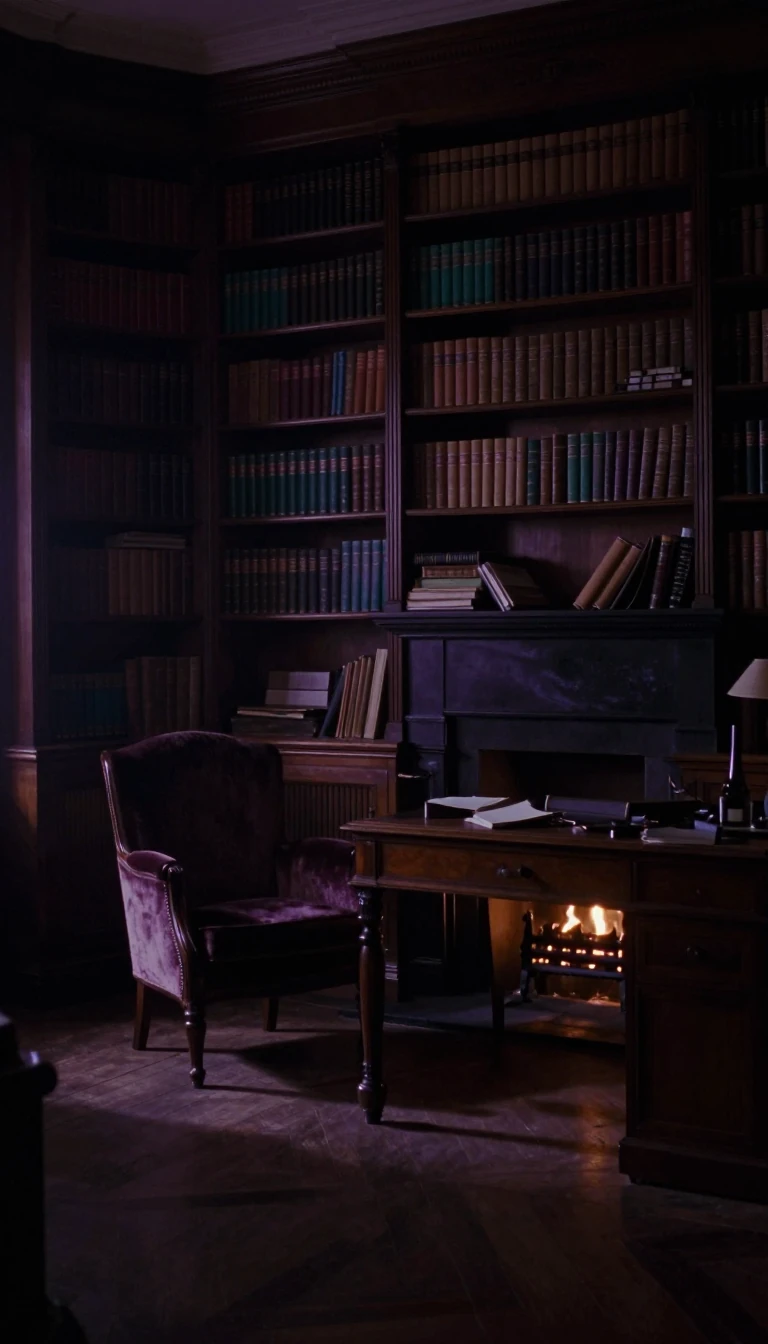 A Victorian ghost story might be a modern drug hallucinationWhat if the entire history of Sherlock Holmes is just one man's fever dream? In this special episode, the boundaries between 19th-century London and the present day collapse, sugg…
 The amendment that nationalized the Bill of RightsFor decades, the Bill of Rights only restricted the federal government, leaving state actions largely unchecked. The 14th Amendment changed everything by pulling those protections…
 Beyond the headlines: The scholar-president’s vision for a sovereign AfghanistanWhile media coverage often focuses on conflict, Ashraf Ghani’s leadership was defined by a different ambition. A scholar of anthropology and political science, Ghani sought to mov…
 How the Senate acts as a gatekeeper for the federal judiciaryThe U.S. Constitution prevents any single branch from wielding absolute power through a system of checks and balances. One critical mechanism is the Senate's power to approve or r…
 How one academic shaped London's maritime industry over three decadesFor 35 years, Professor Costas Grammenos has witnessed the massive evolution of London's maritime cluster. From designing specialized master's degrees to leading academic centers,…
 Modern political campaigns: the rising cost and complexity of winning electionsWinning a modern political campaign in the United States is no longer just about policy. It involves a sophisticated ecosystem of consultants, massive financial outlays, and the s…
- The constitutional bridge that brought the Bill of Rights to the statesFor much of American history, the Bill of Rights only shielded citizens from the federal government, not the states. This changed through a judicial doctrine that transformed how …
- The mathematical wave that determines where a particle might existIn the submicroscopic world, particles do not follow predictable paths. Instead, they exist as a series of probabilities. To understand this strange reality, physicists rely on a …
 To see the beginning of time, we must go to the MoonOur most powerful telescopes can only see so far back into history. To witness the universe before the first stars ignited—a period known as the dark ages—we need a vantage point …
 The chaotic origin of Black Friday has nothing to do with profitsWe are taught that Black Friday marks the moment retailers move from the red into the black. In reality, the name was born from police frustration and urban gridlock, not accounti…
- Why our solar system's clockwork forces us to add a leap dayThe seasons do not align perfectly with our numbers. Because the solar year and lunar cycles fail to fit into neat, round-number relationships, we must use mathematical adjustment…
- The 1787 Constitution never actually defined who was allowed to voteWhile we often view voting rights as an ancient pillar of American democracy, the original Constitution was silent on the matter. The power to oversee federal elections was left t…
 How a legendary mathematical partnership reshaped the modern worldIn the first half of the 20th century, a singular collaboration dominated the English mathematical landscape. Through intense partnership and unexpected genius, these mathematicia…
- How soldiers briefly abandoned the trenches for a Christmas miracleIn the middle of the First World War, a remarkable episode occurred on the Western Front. Despite orders from commanding officers, soldiers threw aside their weapons to hold a mak…
 Concrete is not a material; it is a finished recipe.Most people use these terms interchangeably, but they represent two very different stages of construction. This video clarifies the distinction between a binding agent and the fin…
 Why is the paper we use for hygiene almost always white?We use it daily on our most sensitive areas, yet we rarely consider its origins. This video explores the history and manufacturing of a ubiquitous household essential.
 Our galaxy's name is a literal translation of a celestial roadThe English name for our galaxy is a linguistic journey through history. This video explores how the term evolved from ancient Greek descriptions into the Latin and English words …
- The Salem witch trials did not involve burning people at the stakeWhile popular culture often depicts witches being executed by fire, the historical reality of the Salem witch trials was quite different. This video examines the legal constraints…
 How a single NBA matchup in Minneapolis captured a struggling league's audienceIn November 1948, the newly merged NBA was fighting for survival. This video explores a pivotal game in Minneapolis that showcased the league's brightest stars during its uncertai…