 Intellect Plus
Technology
10,995 cards. Each one is a 40-second story with a five-minute read behind it. Page 122 of 184.
Subtopics: 3D printing & manufacturing · AI & machine learning: practical · Aircraft · Automata · Aviation · Batteries · Binary · Biotechnology · Bridges · Cameras & imaging · Cars · Chemical engineering · Chips · Codes · Compression · Computing · Computing and information technology · Computing history · Cryptography · Cybersecurity · Electric vehicles · Electronics · Energy · Engineering · Everyday tech · Famous patents · Future Frontier · How it works · How Things Work: GPS to the Phone · How Things Work: Jets, Propellers and Ships · Industry · Infrastructure · Internet · Inventions · Inventors · Machinery and tools · Maths · Media and communication · Medical technology · Medieval clockmaking · Mercedes-Benz Engineering · Military technology · Motorbikes · Navigation and timekeeping · Networks · Nuclear power · Optical technology · Physics · Pioneers · Programming · Programming languages · Radar · Radio · Researched · Robotics: practical · Robots · Rockets · Security · Semiconductors · Ships & boats · Skyscrapers · Smartphones · Software · Sound & audio technology · Spaceflight · Super-series Wave 1: Car To Wheels · Super-series Wave 1: From Power Station To Pc · Super-series Wave 1: The Journey Of Crude Oil · Technology today · Technology: General · Textiles · Trains & locomotives · Transportation · UK & Ireland: inventions · Video game technology · Web · Wireless
 Why the invisible chaos of gas particles dictates the physics of our worldGases are defined by the vast, empty space between their particles, making them invisible and highly compressible. While we often model them as simple, ideal systems, the reality …
 Why every programmer starts their journey by saying hello to the entire worldThe tradition of the Hello, world program is a rite of passage for coders, serving as both a syntax introduction and a vital sanity check. While it seems simple, this humble greet…
 Why your skin erupts in itchy, raised welts for no apparent reasonHives, or urticaria, affect 20% of people in their lifetime. While often linked to allergies, half of all cases remain a mystery. From cold temperatures to emotional stress, the t…
 Why the aviation industry's most critical safety device is never actually blackDespite their ominous nickname, flight recorders are painted bright orange to ensure they are easily spotted in wreckage. These robust devices, which capture cockpit audio and fli…
 The Warthog: How a Cold War relic became the most durable plane in historyDesigned to survive the unthinkable, the A-10 Thunderbolt II is an anomaly in modern aviation. While other jets prioritize speed and stealth, this rugged machine was built to take…
 From dedicated channels to smart recommendations, how the TV guide evolved into your screen.Before interactive menus, television viewers relied on dedicated channels that scrolled through static, non-interactive listings. Today, electronic program guides have transformed…
 How Brazil’s Embraer E-Jet family redefined the economics of regional air travel worldwideDesigned to bridge the gap between small regional planes and mainline jets, the Embraer E-Jet family transformed short-haul aviation. By offering the comfort of larger aircraft in…
 The electron is a fundamental particle that defines the chemistry of our entire universe.Far from just a spark of electricity, the electron is a subatomic powerhouse. It is nearly 2,000 times lighter than a proton, yet its movement and configuration dictate how atoms …
 The tiny, nimble Skyhawk that defied expectations to become a legendary combat workhorseDesigned to be half the weight of Navy specifications, the Douglas A-4 Skyhawk became a masterclass in minimalist engineering. This compact jet proved that simplicity could outper…
 Why your screen resolution is a mess of marketing, math, and movie historyDisplay resolutions are not just random numbers. They are a tug-of-war between technical constraints, evolving aspect ratios, and the shifting needs of cinema and office work. Fro…
 How a 1993 game about fighting demons on Mars changed computing history foreverWhen id Software released Doom in 1993, the game crashed university networks and became an overnight phenomenon. By separating its engine from its data, the developers inadvertent…
 The Douglas DC-8 was a late-blooming jetliner that eventually broke the sound barrier.Douglas was the undisputed king of piston-engine aviation after World War II, yet it hesitated to enter the jet age. While rival Boeing surged ahead with the 707, Douglas played c…
 Derived from the Grecian foxglove, this ancient heart medication has a surprisingly narrow safety margin.Isolated in 1930, digoxin remains a vital tool for managing heart failure and atrial fibrillation. Yet, this potent cardiac glycoside is defined by its narrow therapeutic index, w…
 How a small market town in County Durham helped launch the modern railway ageDarlington is more than a historic market settlement. It was the cradle of the 19th-century railway revolution, where pioneering steam technology and mass-production techniques we…
 How a mechanical beast defeated the Enigma's trillion-fold complexityThe German Enigma machine was a cryptographic marvel, capable of trillions of settings. To break it, the Allies didn't just need brilliant minds; they needed the Bombe—an electro-…
 Can a machine truly create art, or is it just a sophisticated statistical mimic?OpenAI's DALL-E models transform text into imagery, blending concepts and styles with surprising nuance. While these systems solve complex visual tests and reshape design, they al…
 The de Havilland Comet: How the world's first jetliner took flight and then fellIn 1952, the de Havilland Comet revolutionized air travel with its quiet, vibration-free jet engines and luxurious cabin. It promised a new era of speed, yet within a year, catast…
 Digital rights management turns your purchased goods into rented, temporary, and fragile digital assets.Digital rights management (DRM) governs how you access, modify, and distribute copyrighted works. While copyright holders argue these tools protect intellectual property, they oft…
 Cortisol is not just a stress hormone; it is a master regulator of life.Often maligned as the villain behind modern stress, cortisol is actually a vital steroid hormone essential for metabolism, immune function, and even fetal development. While chron…
 The Comac C919 is China's ambitious attempt to challenge the global narrow-body airliner market.Launched in 2008, the C919 represents a significant industrial push by China to compete directly with the Airbus A320 and Boeing 737. Despite facing technical hurdles, supply chai…
- The Comac C909: A Chinese Regional Jet Reborn From Its ARJ21 OriginsFormerly known as the ARJ21, the Comac C909 is a regional jet that has sparked intense debate regarding its design lineage. While Comac maintains the aircraft is an indigenous cre…
 How a 1988 Writers Guild strike accidentally birthed a television institutionCops premiered in 1989 as a low-cost solution for a network desperate for unscripted content. By stripping away narration, music, and scripts, producers John Langley and Malcolm B…
- Why Christ Church rings its bell 101 times every night at 9:05 PMChrist Church, Oxford, is a unique institution that functions as both a college and a cathedral. Its famous bell, Great Tom, tolls 101 times each evening. This ritual, rooted in t…
 The race for color television was won by a standard that saved the past.Before color television became a living room staple, engineers fought a bitter battle over compatibility. While early systems required bulky, spinning filters that made existing b…
 The secret electronic giant that cracked Hitler's most complex wartime codesBefore modern computing, British engineers built a room-sized machine to break the German Lorenz cipher. By replacing mechanical parts with thousands of vacuum tubes, Colossus bec…
 How Britain’s InterCity 125 became the world’s fastest diesel train on a budgetFaced with tight budgets and an inability to electrify the entire rail network, British engineers in the 1970s created a high-speed icon. By splitting power between two lightweigh…
 How a Canadian regional jet reshaped short-haul flight through clever engineering and clever compromises.The Bombardier CRJ700 series transformed regional aviation by stretching the successful CRJ200 into a larger, more capable jet. From its 1999 maiden flight to its eventual product…
 How Bombardier built a business jet to outfly the competition without fly-by-wire technologyWhen Bombardier launched the Global Express in the 1990s, it chose a conventional mechanical flight control system over modern fly-by-wire. By prioritizing reliability and passeng…
 The Boeing RC-135: A Cold War spy plane still dominating modern skies today.Born from the 1960s, the Boeing RC-135 family has evolved from simple photographic platforms into the world's most sophisticated airborne intelligence gatherers. These modified St…
 How a business jet became the backbone of the modern regional airline industryBorn from the fuselage of a private Challenger jet, the Bombardier CRJ100 and CRJ200 transformed regional travel. By stretching a business aircraft to seat 50 passengers, Bombardi…
 How the US Navy turned a rejected fighter prototype into its primary carrier backboneThe F/A-18E/F Super Hornet was born from post-Cold War budget cuts and a desperate need for a reliable, multi-role aircraft. Often called the Rhino, this enlarged redesign of the …
 How a business jet concept nicknamed Fat Albert became a global aviation powerhouseBorn from a sketchy concept by aviation inventor Bill Lear, the Challenger 600 series nearly bankrupted its manufacturer. Yet, through government backing and a design built for fu…
 How Boeing transformed its 737 into the high-performance Next Generation seriesFacing stiff competition from the technologically advanced Airbus A320, Boeing launched the 737 Next Generation program in 1993. This massive overhaul redesigned the wing, engines…
 How the Boeing 747-400 revolutionized long-haul travel before the era of twinjetsThe Boeing 747-400 was the most successful variant of the iconic jumbo jet, introducing a two-crew glass cockpit and advanced aerodynamics that defined an era. While it once domin…
 How a mid-sized twinjet redefined the economics of short and medium-range air travelDesigned to replace the aging 727, the Boeing 757 became a workhorse of the skies by combining advanced aerodynamics with fuel-efficient engines. Though initially conceived as a s…
- How the Boeing 767 redefined global travel by shrinking the wide-body jetlinerLaunched in 1978, the Boeing 767 was a gamble on efficiency that transformed aviation. By introducing a smaller, twin-aisle fuselage and a pioneering two-crew glass cockpit, it en…
- The Boeing E-3 Sentry: How a 1970s Radar Platform Revolutionized Modern Aerial WarfareWith its iconic rotating dome, the Boeing E-3 Sentry transformed the battlefield by enabling aircraft to look down and track low-flying targets over land. This airborne command ce…
- How the Boeing 777 became the world's most successful wide-body twinjet airlinerBorn from a clean-sheet design to bridge a gap in Boeing's fleet, the 777 revolutionized aviation. It was the first commercial aircraft developed entirely through computer-aided d…
 The Boeing 717: A modern masterpiece that arrived just a moment too lateBorn from the legendary DC-9 lineage, the Boeing 717 was a marvel of 100-seat efficiency. Despite its advanced glass cockpit, fly-by-wire controls, and fuel-sipping Rolls-Royce en…
- How a single sensor error grounded the world's most popular narrow-body jet fleetThe Boeing 737 MAX was designed to dominate the skies, but a flawed flight control system turned it into a global liability. After two tragic crashes claimed 346 lives, the entire…
- How a 1960s design choice created the world's most enduring commercial jet aircraftThe Boeing 737 was born from a need to supplement the 727 on short routes. By relocating engines from the tail to the wings, engineers lowered the fuselage, simplifying passenger …
 Why Sony’s technically superior Betamax lost the war against the more popular VHS formatBetamax offered higher resolution and professional-grade features, yet it was soundly defeated by VHS. Sony’s refusal to license its technology early on allowed JVC to build a mas…
- BitTorrent turns the internet into a giant, decentralized library of shared digital files.Instead of downloading from a single, overloaded server, BitTorrent splits files into tiny pieces, allowing users to trade data directly with one another. This peer-to-peer swarm …
 How one Danish computer scientist built the foundation for modern high-performance software engineeringBjarne Stroustrup transformed computing by creating C++, a language that bridged the gap between low-level machine control and high-level object-oriented design. From his early re…
 How Boeing solved the 737's ground clearance problem with a unique engine designTo upgrade the 737 with efficient, high-bypass turbofan engines, Boeing faced a major hurdle: the aircraft's low-slung fuselage left little room for large engines. Engineers devis…
 The Soviet giant that still dominates the world of heavy-lift strategic air transportDesigned in the 1980s to solve a critical Soviet airlift shortage, the Antonov An-124 Ruslan remains the world's heaviest operating cargo aircraft. This four-engined behemoth feat…
 Why 1080p is the most misunderstood standard in modern digital display technologyYou likely see the 1080p label on everything from smartphones to gaming consoles, but the term is often a marketing mask. While it promises Full HD, it frequently hides technical …
- Why your 4K television might not actually be 4K resolution at allThe term 4K is a marketing powerhouse, but it is often used loosely. While cinema standards demand a horizontal resolution near 4,000 pixels, many consumer televisions and devices…
- Aaron Swartz was a digital prodigy who fought to make information free for everyoneBefore his tragic death at 26, Aaron Swartz helped build the modern web, from RSS feeds to Reddit. Yet, he is best remembered for his radical activism, including a high-stakes leg…
 How a bedroom project in 2012 permanently changed the trajectory of artificial intelligenceIn 2012, three researchers trained a neural network in a bedroom using two consumer-grade graphics cards. Their model, AlexNet, shattered records in a major image recognition comp…
- The Antonov An-225 Mriya: Why the world's largest aircraft became a symbol of resilience.Designed in the 1980s to carry the Soviet Buran spacecraft, the Antonov An-225 Mriya was a singular engineering marvel. With a maximum takeoff weight of 640 tonnes, this six-engin…
 Is nanotechnology the future of manufacturing or just a new way to handle materials?Nanotechnology promises to manipulate matter at the atomic level, yet most current commercial applications rely on bulk nanomaterials rather than precise molecular assembly. We ex…
 Why the fax machine refuses to die in the age of high-speed internetDespite being rendered largely obsolete by email and the web, the fax machine remains a stubborn fixture in medical and legal offices worldwide. From Japan to the United Kingdom, …
 Why up to 70% of adolescent boys experience temporary breast tissue developmentGynecomastia is the most common benign disorder of male breast tissue, affecting 35% of men. While often associated with social stigma, it is frequently a normal physiological res…
 Why the most effective life-saving device in your car was once rejected by driversSeat belts are primary restraint systems that cut the risk of fatal or severe crash injuries by approximately 50 percent. Yet, when first offered as a factory option in 1949, cust…
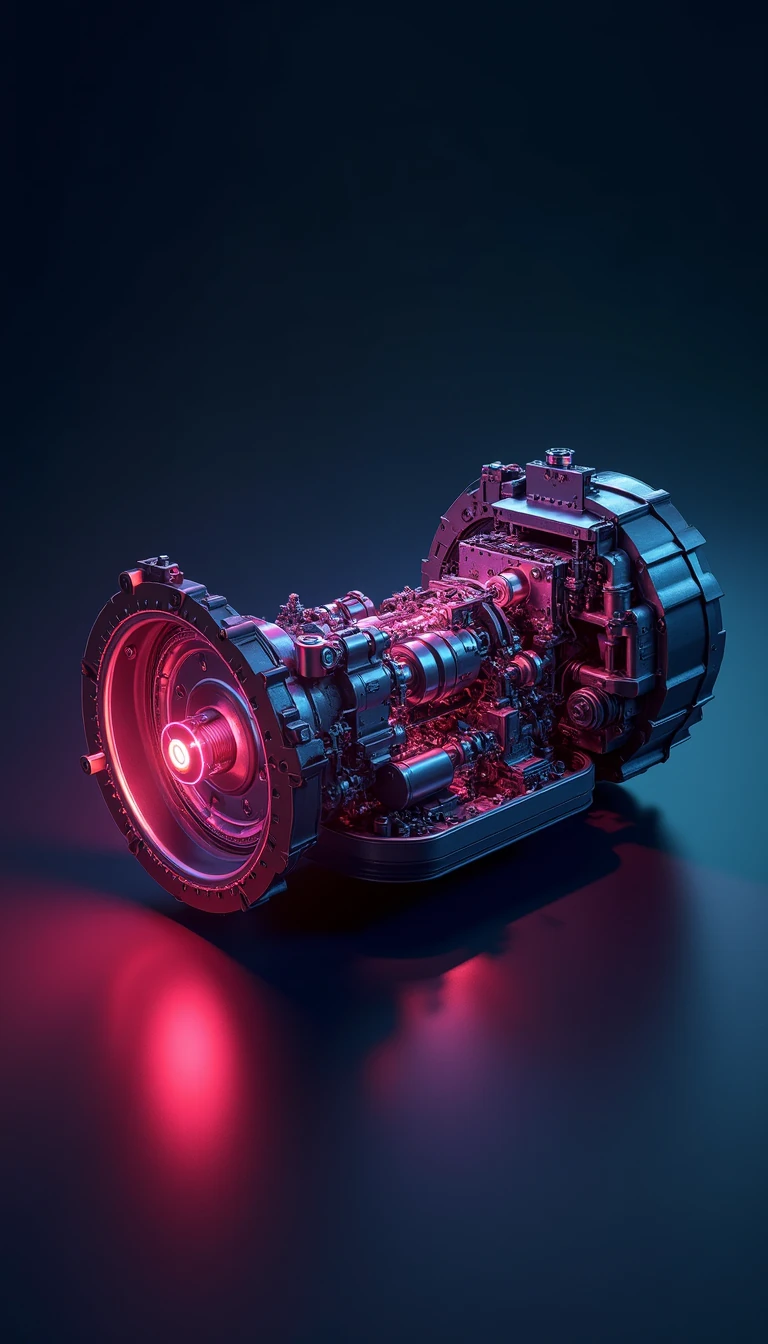 How a dual-clutch gearbox automates two manual transmissions into one seamless driving experienceA direct-shift gearbox, or DSG, functions by housing two independent manual transmissions within a single unit. By alternating between two clutches, it achieves rapid gear shifts …
- Your speedometer is likely lying to you, and that is by design.Ever notice your car speedometer feels slightly optimistic? It is not a malfunction. Manufacturers calibrate them to read higher than your actual speed to ensure you never inadver…
 From depot hacks to performance machines, the station wagon is an engineering marvel.Once humble utility vehicles ferrying passengers from train stations, station wagons evolved into sophisticated family haulers and high-performance icons. Defined by their extende…
 How a humble hatchback became the third best-selling automobile in human historySince 1974, the Volkswagen Golf has evolved through eight generations to become a global automotive icon. Replacing the legendary Beetle, this versatile platform has spanned econo…
- How a chemist’s simple observation about transistors defined the future of the modern worldGordon Moore never intended to create a law. In 1965, he simply noticed that the number of components on a chip doubled annually. This modest forecast became the guiding star for …