 Intellect Plus
Technology
10,995 cards. Each one is a 40-second story with a five-minute read behind it. Page 60 of 184.
Subtopics: 3D printing & manufacturing · AI & machine learning: practical · Aircraft · Automata · Aviation · Batteries · Binary · Biotechnology · Bridges · Cameras & imaging · Cars · Chemical engineering · Chips · Codes · Compression · Computing · Computing and information technology · Computing history · Cryptography · Cybersecurity · Electric vehicles · Electronics · Energy · Engineering · Everyday tech · Famous patents · Future Frontier · How it works · How Things Work: GPS to the Phone · How Things Work: Jets, Propellers and Ships · Industry · Infrastructure · Internet · Inventions · Inventors · Machinery and tools · Maths · Media and communication · Medical technology · Medieval clockmaking · Mercedes-Benz Engineering · Military technology · Motorbikes · Navigation and timekeeping · Networks · Nuclear power · Optical technology · Physics · Pioneers · Programming · Programming languages · Radar · Radio · Researched · Robotics: practical · Robots · Rockets · Security · Semiconductors · Ships & boats · Skyscrapers · Smartphones · Software · Sound & audio technology · Spaceflight · Super-series Wave 1: Car To Wheels · Super-series Wave 1: From Power Station To Pc · Super-series Wave 1: The Journey Of Crude Oil · Technology today · Technology: General · Textiles · Trains & locomotives · Transportation · UK & Ireland: inventions · Video game technology · Web · Wireless
 Why almost every country on Earth uses the same paper, except for North AmericaThe A4 paper you use is a mathematical marvel designed for efficiency. By maintaining a constant aspect ratio of the square root of two, ISO 216 allows you to fold, scale, and pri…
 Why your brain insists on seeing faces in clouds, toast, and even Mars rocksPareidolia is the human tendency to impose meaning on random stimuli, turning clouds into animals or shadows into faces. This isn't just imagination; it is a hardwired cognitive s…
 How a radical 19th-century movement evolved into the modern European political establishmentSocial democracy began as a revolutionary Marxist doctrine, but it transformed into a moderate force that abandoned violence for the ballot box. Today, the Party of European Socia…
 Passive House is not just a style, but a rigorous, measurable engineering standard.Forget the aesthetic of solar panels or rustic wood. A Passive House is a high-performance machine designed to slash energy consumption by up to 95 percent. By prioritizing airtig…
 Why the government hired hackers to break into its own secure computer systemsIn the 1960s, as time-sharing computers emerged, security experts realized these systems were dangerously vulnerable. To understand the risks, they formed elite tiger teams tasked…
 The percent sign is a global standard, yet its spacing rules are wildly inconsistent.While the percent sign (%) is universally recognized as a fraction of 100, its typographical treatment varies drastically across languages and technical fields. From mandatory spa…
 How light carves the microscopic architecture of every modern computer chipPhotolithography is the precise engine behind the semiconductor industry. By using light to project intricate patterns onto silicon, engineers can etch complex circuits at the nan…
 Why the rhythm of nature and the sound of music share a hidden frequencyPink noise is more than just a sound like a waterfall; it is a fundamental statistical signature found throughout the natural world. From the beating of your heart to the fluctuat…
 How a Massachusetts city became the center of a massive environmental cleanup projectPittsfield, Massachusetts, once a booming industrial hub for General Electric, faced a daunting legacy: the contamination of the Housatonic River with polychlorinated biphenyls. T…
 Why modern metro stations are increasingly sealed behind glass and steel barriersPlatform screen doors do more than prevent falls. By physically isolating tracks from passenger areas, these systems enable climate control, reduce noise, and allow for fully auto…
 How a brand named after twine helped save the Chrysler Corporation from total collapseLaunched in 1928 to challenge Ford and Chevrolet, Plymouth was Chrysler’s answer to the low-priced market. While it began as a budget-friendly alternative, the division became a v…
 How a Pittsburgh bank grew from a local trust into a national financial powerhouseTracing its roots to 1845, PNC Financial Services evolved from a small Pittsburgh trust company into one of the largest banks in the United States. Through a long history of strat…
 From Swedish racing circuit to global electric vehicle brand, the evolution of PolestarBorn from a 1996 racing team, Polestar transformed from a Volvo performance tuner into a standalone electric vehicle manufacturer. Today, this asset-light company navigates comple…
 The macabre trial where a deceased pope was exhumed to face his enemiesIn 897, the Vatican staged one of history's most bizarre spectacles: the Cadaver Synod. Pope Stephen VI ordered the nine-month-old corpse of his predecessor, Formosus, to be exhum…
 The Porsche 550: A legendary racing machine that defined the mid-engine sports car eraProduced in a limited run of only 90 units between 1953 and 1956, the Porsche 550 Spyder dominated its class with a radical mid-engine layout. It was a dual-purpose machine, equal…
 The Porsche 964 was an 85% reinvention of the iconic 911 sports car.Produced between 1989 and 1994, the 964 marked a radical departure for Porsche. It introduced all-wheel drive, Tiptronic transmissions, and modern coil-spring suspension to the 91…
- The Porsche 996 saved the 911 from extinction by breaking every golden rule.Facing bankruptcy in the 1990s, Porsche abandoned its air-cooled heritage to modernize the 911. By sharing components with the entry-level Boxster and adopting mass-production tec…
 The Porsche 997: How an Evolutionary Sports Car Redefined the 911 ExperienceThe 997 generation of the Porsche 911 bridged the gap between classic heritage and modern performance. By ditching controversial styling for a return to iconic oval headlights and…
- How a Mitsubishi patent helped Porsche build its most successful sports car everTo solve the inherent vibrations of a four-cylinder engine, Porsche engineers turned to a 1904 invention by British engineer Frederick Lanchester. By licensing a balance shaft sys…
- The Porsche 968 was the final evolution of a lineage that nearly saved the company.Born from a financial crisis, the Porsche 968 emerged in 1991 as a radical overhaul of the aging 944. Though it shared a platform, engineers replaced or modified 80 percent of its…
 How Porsche transformed the 981 into a masterclass of mid-engine sports car engineeringThe 981 generation of the Porsche Boxster and Cayman redefined the brand's mid-engine performance. By increasing torsional rigidity by 40 percent and adopting a longer wheelbase, …
- How Porsche transformed its mid-engine platform into a generation of performance iconsThe 987 generation redefined Porsche's mid-engine lineup, spawning the Boxster roadster and the Cayman fastback. By sharing a platform yet carving out distinct identities, these c…
 How a cancelled Le Mans prototype became a legendary road-legal supercarBorn from the ashes of a scrapped racing project, the Porsche Carrera GT evolved from a secret Formula One engine into one of the most celebrated sports cars of the 2000s. With it…
- How a controversial SUV became the backbone of Porsche's modern commercial successWhen Porsche launched the Cayenne in 2002, critics were skeptical of a luxury brand building an off-road vehicle. Yet, the SUV defied expectations, evolving through four generatio…
- How Porsche engineered a luxury electric sports car to defy battery performance degradationThe Porsche Taycan was designed to solve a common electric vehicle frustration: performance drop-off. By utilizing a sophisticated 800-volt architecture and a two-speed rear trans…
 How Portugal’s calculated neutrality became a vital strategic asset for the Allied war effortWhile Europe fell to occupation, Portugal maintained a delicate neutrality under António de Oliveira Salazar. By balancing the Anglo-Portuguese Alliance with the threat of Axis ag…
 The spinning shaft that powers modern industry—and why it demands total respectA power take-off (PTO) is the mechanical bridge between an engine and the tools it drives. From tractors to fire trucks, this spinning shaft transmits raw power to everything from…
 How a grocery store inspired the encryption that baffled the FBI and US government.In 1991, Phil Zimmermann released Pretty Good Privacy to protect political activists. It became so effective at securing data that the US government launched a criminal investigat…
 Why ancient Pueblo architecture relied on ladders for security and social structureThe term pueblo describes both a people and their unique, multi-storied apartment structures. Built from adobe and stone, these dwellings were designed for defense, often requirin…
 How pulse-code modulation turned the world of sound into simple, noise-free digital codePulse-code modulation is the silent engine behind modern digital audio. By transforming continuous waves into a stream of constant-amplitude pulses, this technique strips away the…
 Radio Free Asia: A Cold War relic or a vital tool for global information?Established in 1994 to counter information monopolies in Asia, Radio Free Asia has long operated at the intersection of journalism and foreign policy. From its inception to its dr…
 How does the United States manage its most hazardous and long-lasting radioactive waste?Radioactive waste is not a single substance but a complex spectrum of materials requiring distinct safety protocols. From low-level debris to high-level spent fuel, the U.S. gover…
 How a risky, big-rig design saved the Dodge Ram from obscurity in the 1990sBy the early 1990s, Dodge pickups were struggling, with sales rarely topping 100,000 units. A bold design pivot, inspired by semi-trailer trucks and classic Studebakers, transform…
 From Bronze Age obsidian to the modern cartridge, how we shave has evolved significantly.For thousands of years, humans have used sharpened shells, flint, and metal to remove body hair. While the straight razor dominated for centuries, the 20th century introduced the …
- Why React only updates the parts of your website that actually changeReact is a JavaScript library that transforms how we build user interfaces by focusing on components rather than entire pages. By using a virtual DOM to calculate only the necessa…
 Why Europe's map is a moving target that defies simple geographical bordersEurope is the world's second-smallest continent, yet its borders are notoriously fluid. There is no universal agreement on where one region ends and another begins. From Cold War …
 Why the regulators meant to protect you often end up serving big business insteadRegulatory capture happens when the agencies tasked with overseeing industries become tools for those same industries. It is rarely about simple bribery today; instead, it is a so…
 How a rejected design sketch became the centerpiece of Renault’s electric futureWhen designer François Leboine first presented a small electric car mockup to Renault’s CEO in 2020, it was promptly rejected. Yet, the concept struck a chord, eventually evolving…
- How a modest family car became Europe’s first small multi-purpose vehicle success storyRenault expected to sell 450 Scénics a day, but demand surged to 2,500. Originally a niche concept, this vehicle redefined the family car market, evolving from a Mégane-based MPV …
 How computers transform abstract mathematical coordinates into the vivid images on your screenRendering is the digital alchemy of turning raw data into visual art. Whether generating a high-speed frame for a video game or a photorealistic scene for cinema, rendering engine…
 How a high-speed dragster crash fundamentally altered Richard Hammond's life and memoryIn 2006, television presenter Richard Hammond survived a catastrophic 288 mph crash while filming a stunt. The incident left him with a severe brain injury, causing long-term memo…
 Why the most effective AI strategies often ignore human intuition entirelyRichard S. Sutton, a pioneer of modern reinforcement learning, argues that decades of AI research prove a counterintuitive truth: general methods that leverage massive computation…
- Are ridesharing apps actually solving urban transit, or just creating new, invisible costs?Ridesharing promised to revolutionize urban mobility through algorithmic efficiency. While these platforms have transformed employment and reduced taxi medallion values, they have…
 Once a toxic industrial drain, the River Mersey is now a thriving wildlife corridor.For decades, the Mersey was synonymous with industrial pollution, its waters choked by the byproducts of factories. Today, it stands as one of the UK's cleanest rivers. From the r…
- How a private venture engine became the heartbeat of Allied air powerDeveloped without government funding, the Rolls-Royce Merlin began as a risky private project in 1933. It evolved from a temperamental prototype into the legendary engine that pow…
 How a physics graduate built the internet's first major anonymous black marketRoss Ulbricht, an Eagle Scout and physics graduate, created Silk Road, a darknet marketplace that used Tor and Bitcoin to facilitate anonymous trade. Operating under the pseudonym…
 How a massive Russian state conglomerate pivoted from industrial decay to military expansionEstablished in 2007 to rescue hundreds of failing enterprises, Rostec evolved from a struggling collection of debt-ridden factories into a sprawling defense powerhouse. Today, thi…
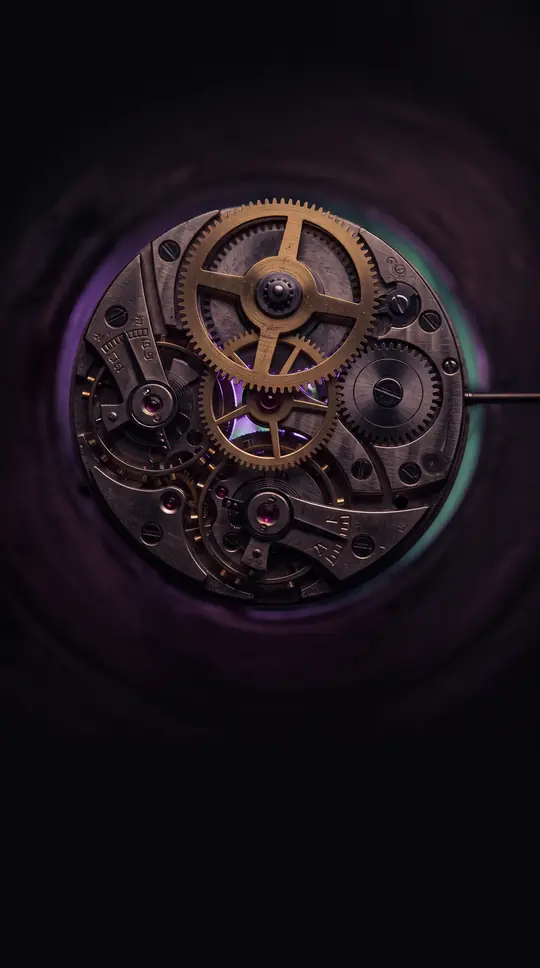 The mechanical genius behind the rotary dial that defined a century of communicationBefore digital touchscreens, the rotary dial was a marvel of analog engineering. By using a spring-loaded governor to regulate electrical pulses, this circular device transformed …
 The century-long journey of the Rover brand from bicycles to a dormant legacyLaunched in 1904 as an evolution of a bicycle manufacturer, the Rover marque defined British motoring for over a century. Through mergers, nationalisation, and international partn…
 The chaotic, contested history of the humble RSS icon on your browserRSS allows you to monitor websites without manually checking them, yet its origins are defined by a decade of corporate abandonment and bitter infighting. What began as a simple N…
 The phrase rule of thumb has nothing to do with domestic violence laws.You have likely heard that this common idiom originated from an archaic legal allowance for husbands to strike their spouses with a rod no thicker than their thumb. This is a pers…
 How Sony and Philips created the digital standard for your home theater audioS/PDIF is the unsung hero of home audio, quietly moving digital sound between your devices. Developed by Sony and Philips, this interface uses optical or coaxial cables to deliver…
- The Saab 9-5 was a Swedish executive car that once outperformed the Porsche 911.Produced from 1997 to 2012, the Saab 9-5 was an engineering marvel that introduced ventilated seats and advanced safety features like active head restraints. Despite its innovativ…
 How a former lumber giant became a surprising hub for modern clean energy innovationSaginaw, Michigan, once defined by its massive white pine forests and automotive dominance, is reinventing itself. While the city grapples with the legacy of industrial decline, i…
 How did early Christians reconcile the death of Jesus with their hopes for salvation?Christianity centers on the belief that Jesus provides a path to eternal life, yet the mechanism of this salvation remains a subject of intense theological debate. From ancient ra…
 From wartime exploitation to global automotive giant: the complex history of the Schaeffler GroupThe Schaeffler Group is a titan of industrial engineering, known for its precision bearings and automotive components. Yet, its rise from a mid-century startup to a global powerho…
 Why the Schottky diode is the secret to high-speed modern electronicsUnlike standard diodes that rely on slow minority carriers, the Schottky diode uses a metal-semiconductor junction to achieve near-instantaneous switching. This unique design mini…
 Why Leonardo da Vinci’s anatomical sketches are still influencing modern heart surgery todayLeonardo da Vinci was a master of observation whose scientific curiosity extended far beyond his famous paintings. By dissecting dozens of human bodies, he mapped the body's inter…
 Can a legacy off-road icon survive its rebirth as an all-electric challenger?Scout Motors is reviving a legendary American nameplate to compete with modern off-road titans. Backed by Volkswagen but operating independently, the company is betting on a direc…
 Why the modern screensaver is a functional misnomer for your digital displayOriginally designed to prevent permanent phosphor burn-in on CRT monitors, screensavers are now largely aesthetic relics. While they once protected hardware, using them on modern …