 Intellect Plus
Ideas & Philosophy
17,867 cards. Each one is a 40-second story with a five-minute read behind it. Page 191 of 298.
Subtopics: Abrahamic religions · Artificial intelligence · Attention · Classic philosophy · Cognitive biases · Consciousness · Cooperation · Cynicism · Decision making · Decision theory · Descartes · Dharmic religions · Dreams · Eastern philosophy · Eastern religions · Epistemology · Ethics · Evidence · Existentialism · Fairness · Famous psychology experiments · Free will · Game theory · Greek mythology · Historians · Identity · Infinity · Justice · Logic · Logical fallacies · Mathematics · Medieval philosophy · Mind · Mythology · Mythology of the ancient world · Other religions · Paradoxes · Philosophers · Philosophers, historians, political and social scientists · Philosophy · Philosophy of mind · Philosophy of science · Political philosophy · Probability · Psychology · Reality · Religion · Religion and spirituality · Religious figures · Self knowledge · Statistics · Stoicism · Strategy · Taoism · Thought experiments · Trivia & curiosities · Truth · Utopias & ideal worlds · Wellbeing · World religions · Writers
 You are not a person, but a collection of five shifting, empty heaps.Buddhism suggests your sense of self is a persistent illusion. Instead of a solid soul, you are a temporary bundle of five aggregates—form, sensation, perception, mental formation…
 Why the animated skeleton remains our most versatile cultural symbol of death and lifeFrom the grim reaper of medieval art to the comic relief of modern video games, the animated skeleton is a global chameleon. It serves as a terrifying harbinger of doom, a satiric…
 Why the Navajo skin-walker is far more than a simple monster of horror fictionIn Navajo tradition, the skin-walker is a malevolent figure representing the absolute inversion of community values. Often reduced to a creature of modern horror, these sorcerers …
 Can you worship five gods at once? The Smarta tradition says yes.The Smarta tradition of Hinduism offers a unique solution to sectarian conflict: the equality of all deities. By treating five major gods as equally valid paths to the same impers…
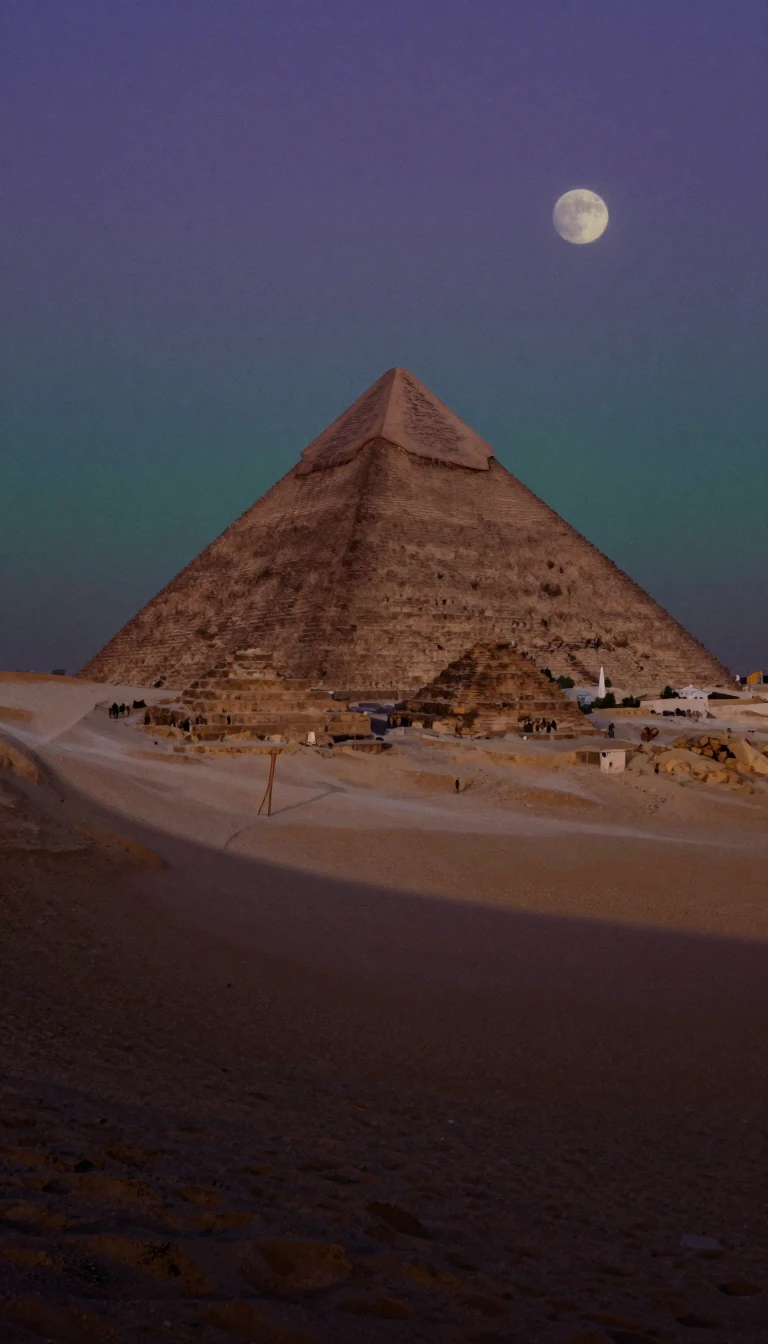 Why the ancient Egyptians worshipped a creature as dangerous as the Nile crocodileIn the pantheon of ancient Egypt, few figures are as striking as Sobek. Represented as a crocodile or a crocodile-headed human, this deity embodied the raw power of the Nile. Whil…
 Social anxiety is more than just shyness; it is a persistent, overwhelming fear.Many people feel nervous before a party, but for those with social anxiety, the fear is constant and debilitating. It often emerges during the teenage years, impacting relationshi…
 Why we constantly measure our lives against others and how it shapes usWe are hardwired to evaluate our own abilities and opinions by comparing them to those around us. This drive, first formalized by Leon Festinger in 1954, acts as a hidden mechanis…
 Why your habits and emotions might actually be contagious, spreading through your social networkSocial contagion describes how behaviors and feelings ripple through groups without direct pressure. While early research focused on mobs and hysteria, modern science reveals that…
 Why your brain treats social rejection exactly like physical painHumans are wired to detect exclusion as a survival threat. When you are ignored or shunned, your brain activates the same neural pathways used to process physical injury. This evo…
 Social skills are not just manners; they are the tools for navigating human reality.Social skills are far more than etiquette. They are goal-oriented competencies that allow us to communicate, build relationships, and protect ourselves. Whether you are negotiatin…
 How a Scottish poet used ancient Gaelic traditions to confront the modern world's crisesSorley MacLean transformed Scottish Gaelic poetry by fusing its oral heritage with the political intensity of the twentieth century. Though he published sparingly, his work bridge…
 Why modern culture has traded the profound weight of sorrow for transient sadnessSorrow is more than just sadness; it is a long-term state defined by resignation. While Romantic poets once cultivated sorrow as a badge of depth, modern society has largely dampe…
 How a young poet’s trauma transformed into the radical language of European constructivismSrečko Kosovel died at 22, leaving behind a massive, hidden archive of experimental work. Witnessing the horrors of World War I and the political erasure of his native Karst regio…
 Why did ordinary college students become brutal prison guards in just six days?In 1971, a simulated prison study at Stanford University spiraled into chaos. College students assigned as guards began abusing their peers, forcing the experiment to end prematur…
 Stephen Spender and the myth of the revolutionary Auden generationStephen Spender rose to prominence in the 1930s as a voice of political conscience. While often grouped with W. H. Auden as part of a radical literary movement, the reality was fa…
 Why the term subconscious is often a telltale sign of intellectual misunderstandingWhile the subconscious is a staple of self-help literature, it is largely absent from rigorous psychoanalytic discourse. Freud famously abandoned the term, arguing it lacked the p…
 Surya: How the Sun God evolved from a Vedic force to a global iconSurya is more than just the Sun in Hinduism; he is a complex deity whose identity shifted through centuries of cultural exchange. From his origins in ancient Vedic hymns to his ad…
 Susanna Centlivre was the eighteenth century's most successful female playwright, yet history nearly forgot her.Born in 1669, Susanna Centlivre rose from humble, uncertain origins to become the second most prominent woman of the English stage. Despite facing intense prejudice against female…
 The ancient Indian technique of distilling complex wisdom into tiny, memorizable threads of text.Sutras are far more than religious scriptures. Originating in ancient India, these condensed aphorisms functioned as intellectual shorthand, designed to be memorized and passed do…
 The Sutta Pitaka: An ancient basket of thousands of teachings from the BuddhaThe Sutta Pitaka is the foundational doctrinal collection of the Buddhist canon. Comprising thousands of discourses attributed to the Gautama Buddha, this vast body of literature …
 Does an intrinsic essence exist, or is everything just a collection of conditions?The Sanskrit term svabhava, meaning own-being, sits at the heart of centuries of Indian philosophical debate. While some traditions view it as an indestructible, essential nature …
 Is your mind aware of itself, or is that just a persistent illusion?Buddhist thinkers have spent centuries debating svasaṃvedana, the theory that consciousness possesses a reflexive, self-illuminating nature. While some schools argue this awarenes…
 How a Sierra Leonean poet turned the trauma of exile into a literary mapSyl Cheney-Coker has spent most of his adult life living outside his native Sierra Leone. This perpetual state of displacement shaped his radical, erudite poetry and his ambitious…
 Why your brain prioritizes helping those who seem most deserving of your supportSympathy is more than a feeling; it is a complex social mechanism rooted in evolution. By shifting your perspective to another's distress, your brain triggers a System 1 response …
- Was the Norse god Týr originally the supreme deity of the ancient Germanic peoples?Known today as the one-handed god of war who sacrificed his limb to bind the wolf Fenrir, Týr may be a shadow of a much greater figure. Etymological evidence suggests his name onc…
 Takeo Arishima: The Japanese Novelist Who Renounced His Inheritance for Socialist IdealsBorn into a wealthy samurai family, Takeo Arishima became a central figure of the Shirakaba literary movement. Yet, his life was defined by a restless search for meaning, shifting…
 How a 1929 novel about exploited crab fishermen became a modern Japanese bestseller.Takiji Kobayashi was a proletarian writer whose brutal murder by police at age 29 turned him into a martyr. Decades later, his masterpiece, The Crab Cannery Ship, unexpectedly sur…
 Why did early Americans invent giants to explain the vast, inhospitable frontier they inhabited?Tall tales are stories told with a straight face, despite their impossible, exaggerated nature. More than just simple lies, these narratives served as a cultural coping mechanism …
 Tan'gun: The Bear-Born King Who Founded Korea and Still Shapes Its National IdentityTan'gun is the legendary progenitor of Gojoseon, Korea's first kingdom. Born of a divine prince and a bear transformed into a woman, his story has evolved from ancient myth to a p…
 How a Ming Dynasty playwright used dreams to challenge the rigid politics of his time.Tang Xianzu, a disillusioned official, transformed Chinese theatre by prioritizing human desire over Confucian orthodoxy. Through his Four Dreams, he explored the tension between …
 Can you achieve immortality by avoiding grains and absorbing cosmic energy through your breath?Taoist dietary traditions are far more than simple meal plans. From the ancient practice of bigu, which involves abstaining from grains to reach immortality, to the modern emphasi…
 Is Tara a goddess, a Buddha, or a mirror of your own mind?Tara is one of the most revered figures in Buddhism, acting as a savior who rescues beings from both physical and spiritual peril. Whether seen as a compassionate deity or a manif…
 A physician turned writer, Taslima Nasrin has lived in exile for three decadesTaslima Nasrin, a Bangladeshi-born physician and author, has spent over thirty years in exile due to her fierce feminist critiques and challenges to religious dogma. From fatwas a…
 Tathātā: Why the deepest truth of existence is simply that things are as they areIn Buddhist philosophy, the term tathātā—often translated as suchness or thusness—describes the intrinsic nature of reality. It is a state free from dualistic thinking and concept…
 How ancient Jain philosophy maps the soul's journey toward ultimate liberationWritten between the 2nd and 5th centuries, the Tattvartha Sutra serves as the foundational philosophical text for all major Jain traditions. This concise manual of 350 aphorisms o…
- Is Tefnut the personification of moisture or a fiery celestial force in Egyptian myth?Tefnut, the ancient Egyptian deity and feminine counterpart to the air god Shu, remains a figure of scholarly debate. While often associated with moisture, her mythological role i…
 How one poet ignited a revolution in the heart of Japanese traditional verseIn 1894, a young writer named Tekkan Yosano issued a bold call to dismantle the rigid conventions of traditional Japanese poetry. By championing originality over stale imitation, …
 Are you born with a fixed behavioral style that dictates your life's trajectory?Temperament refers to the inborn, biologically based traits that shape how you experience the world. While these consistent behavioral patterns are most visible in childhood, they…
- Hidden in plain sight: how Tibetan masters encoded teachings for future generations to discoverIn the Vajrayana tradition, terma are hidden treasures—teachings or objects secreted away by masters centuries ago to be unearthed by specific revealers, or tertöns, when the time…
 In Tibetan Buddhism, some practitioners are believed to discover ancient, hidden spiritual treasures.A tertön is a figure in Tibetan Buddhism tasked with unearthing terma—hidden texts, objects, or experiences. These treasures, allegedly concealed by Padmasambhava and his consort …
 Théodore de Banville: The Master of Rhyme Who Revived Forgotten French Poetic FormsA central figure in 19th-century French literature, Théodore de Banville bridged the gap between Romanticism and Symbolism. While he admired Victor Hugo, he demanded technical per…
 Théophile Gautier: The Flamboyant Critic Who Transformed French Literature Through Art and DanceA legendary figure of 19th-century France, Théophile Gautier moved from a rebellious youth in a scarlet waistcoat to a pillar of the artistic establishment. As a poet, journalist,…
 How a Burmese Poet Used Satire to Outsmart Colonial Censors and Define a NationThakin Kodaw Hmaing was more than a literary genius; he was the moral compass of 20th-century Burma. By mastering traditional verse to mask biting political critiques, he evaded c…
 The Book of Revelation describes three distinct beasts, but their true identities remain debated.The Book of Revelation features a dragon, a beast from the sea, and a beast from the earth. While often interpreted as the Antichrist and a false prophet, these figures are shroud…
 Why Germany's Greatest Realist Novelist Did Not Start Writing Fiction Until Age Fifty-EightTheodor Fontane spent decades as an apothecary and a journalist, only turning to the novels that defined his legacy late in life. A sharp observer of Prussian society, he used his…
 Thomas Dekker was the tireless, debt-ridden voice of London's bustling Elizabethan streets.A prolific playwright and pamphleteer, Thomas Dekker captured the vibrant, gritty reality of London life like no other. Despite his immense output and talent for colloquial speech…
 Was Ireland's national bard a radical revolutionary or a darling of the British elite?Thomas Moore was the nineteenth century's most celebrated Irish poet, yet he lived a life of profound contradiction. While he championed Irish resistance through his lyrics, he si…
 Thomas Wolfe was once the literary world's greatest hope—then its most ridiculed author.A titan of the Southern Renaissance, Thomas Wolfe was hailed by Sinclair Lewis as a potential world-class genius. Yet, after his premature death at 37, his reputation collapsed un…
 The Tudor diplomat who brought the sonnet to England and survived the TowerSir Thomas Wyatt was more than a courtier; he was a pioneer who reshaped English verse. While navigating the lethal politics of Henry VIII’s court, he introduced the sonnet to Eng…
 The three fundamental truths of existence according to the ancient Buddhist traditionBuddhism identifies three universal characteristics that define all existence: impermanence, unsatisfactoriness, and the absence of a permanent self. By failing to grasp these rea…
- The Taoist Three Treasures: A Counterintuitive Guide to Living a Longer, Better LifeIn the Tao Te Ching, Laozi outlines three essential virtues for navigating existence: compassion, frugality, and humility. While these may seem like signs of weakness or folly to …
 The monk who created the world's most famous libertine, the legendary Don Juan.Tirso de Molina was a Spanish Golden Age dramatist and Mercedarian friar who balanced theological rigor with a flair for the stage. He is best known for introducing Don Juan to li…
 Why the Aztec rain god Tlaloc promised a watery paradise to the sick and drownedTlaloc was a central figure in Aztec cosmology, governing rain, fertility, and the terrifying power of storms. Unlike the warriors who ascended to the heavens, those who died from…
 Is the true self an unchanging essence or merely a trick of the mind?In Hinduism, the Atman is the innermost, eternal essence of a living being, distinct from the body and mind. While often translated as soul, it represents a deeper, unchanging Sel…
 Did Tom Wolfe and the New Journalists destroy the concept of journalistic objectivity?In the 1960s, a group of writers including Tom Wolfe began applying fiction techniques to nonfiction reporting. By prioritizing vivid scenes and personal voice over traditional in…
 How a Swedish psychologist used poetry to unlock the mysteries of the human mindTomas Tranströmer, a Nobel laureate who balanced a career as a psychologist with a life of verse, transformed the mundane into the profound. After a debilitating stroke in 1990, h…
 Can you cultivate radical compassion by breathing in the suffering of the world?Tonglen is a Tibetan Buddhist practice that challenges our instinct to avoid discomfort. By intentionally breathing in the pain of others and breathing out peace, practitioners ai…
- Torquato Tasso: The Renaissance genius who balanced epic ambition with a fractured mindTorquato Tasso was the late Renaissance's most celebrated poet, famous for his epic Jerusalem Liberated. Yet, his life was a turbulent cycle of brilliant literary achievement, int…
 Why you unconsciously project your past onto the people you meet todayTransference is the psychological phenomenon where you displace old feelings, desires, or fantasies onto someone in your present life. Whether you are mistrusting a new acquaintan…
- Was the forbidden tree in Eden a source of moral wisdom or total power?The tree of the knowledge of good and evil remains one of history's most debated symbols. While often reduced to a simple moral test, scholars and traditions interpret its fruit a…