 Intellect Plus
Ideas & Philosophy
17,867 cards. Each one is a 40-second story with a five-minute read behind it. Page 193 of 298.
Subtopics: Abrahamic religions · Artificial intelligence · Attention · Classic philosophy · Cognitive biases · Consciousness · Cooperation · Cynicism · Decision making · Decision theory · Descartes · Dharmic religions · Dreams · Eastern philosophy · Eastern religions · Epistemology · Ethics · Evidence · Existentialism · Fairness · Famous psychology experiments · Free will · Game theory · Greek mythology · Historians · Identity · Infinity · Justice · Logic · Logical fallacies · Mathematics · Medieval philosophy · Mind · Mythology · Mythology of the ancient world · Other religions · Paradoxes · Philosophers · Philosophers, historians, political and social scientists · Philosophy · Philosophy of mind · Philosophy of science · Political philosophy · Probability · Psychology · Reality · Religion · Religion and spirituality · Religious figures · Self knowledge · Statistics · Stoicism · Strategy · Taoism · Thought experiments · Trivia & curiosities · Truth · Utopias & ideal worlds · Wellbeing · World religions · Writers
 How one man’s historical fiction helped forge the national identity of FinlandZachris Topelius was a polymath whose literary works and historical vision shaped the Finnish nation. As a professor, poet, and novelist, he channeled the legacy of Sir Walter Sco…
 Is the iconic image of Zen meditation a modern invention for Western audiences?Zazen, the seated meditation central to Zen Buddhism, is often imagined as a timeless, universal practice. Yet, scholars argue its modern prominence is a recent construction, shap…
 Why Zbigniew Herbert believed the past is a necessary measure of the presentPolish poet Zbigniew Herbert became a symbol of uncompromised resistance against communist rule. By rejecting grand historical systems, he championed the individual's duty to stan…
 Zinaida Gippius: The Androgynous Symbolist Who Tried to Save Russia Through Mystical IntellectualismA central figure of Russian modernism, Zinaida Gippius was a poet, critic, and religious provocateur who defied conventions. Known for her androgynous style and sharp intellect, s…
 The word aeon is a linguistic chameleon, shifting from eternity to a billion years.We use the term aeon to describe everything from the vast, billion-year stretches of geologic time to the fleeting, two-millennium cycles of occult tradition. Whether it represent…
 Why we struggle to define the world: from ancient logic to modern dataClassification is more than just sorting; it is the fundamental human attempt to impose order on reality. Whether through the rigid logic of ancient philosophers or the statistica…
 Why the difference between a mistake and an error defines our modern worldWe often use error and mistake interchangeably, but they are distinct concepts. An error is a deviation from accuracy or a system's set point, while a mistake is a fault born of c…
 Is eternity a literal infinite duration or simply a permanent, unchanging present moment?The concept of eternity has shifted from ancient philosophical definitions of agelessness to modern cosmological models of an ever-expanding universe. Whether viewed through the l…
 Taxonomy is more than just naming species; it is the universal architecture of thought.We often think of taxonomy as a dry biological exercise of naming plants and animals. Yet, it is a fundamental human practice of ordering the world. From ancient medicinal catalog…
 Why copying is the foundation of both human progress and biological survivalCopying is more than just duplication; it is a fundamental mechanism for preserving knowledge, art, and life itself. From the meticulous hand-written manuscripts of medieval monks…
 Can absolute power ever be used to liberate the people it rules over?Enlightened absolutism suggests that a single, unchecked leader can act as a catalyst for progress. By adopting Enlightenment principles, monarchs like Catherine the Great sought …
 Why the most dangerous freedom of all is the one inside your own headFreedom of thought is the silent engine behind every other liberty, yet it remains uniquely impossible to police. While governments can burn books or silence speech, the internal …
 Errico Malatesta and the radical belief that government is both harmful and unnecessaryErrico Malatesta was a pivotal Italian anarchist who spent his life championing a society built on mutual aid rather than state coercion. From teenage rebellion to decades of inte…
 Why a book about Jewish martyrs became a battleground for Christian salvation doctrines2 Maccabees recounts the brutal persecution of Jews under Antiochus IV Epiphanes. While it was once a standard part of the biblical canon, it later became a flashpoint during the …
 Why the Seventh Dalai Lama is the most revered figure in Tibetan historyKelzang Gyatso, the seventh Dalai Lama, navigated a tumultuous era of civil war, foreign occupation, and political upheaval. Despite these pressures, he emerged as a prolific scho…
 Aṣẹ is the vital force that binds the Yoruba universe together through changeIn Yoruba thought, everything from gods and ancestors to rivers and spoken words possesses a natural, autonomous power called aṣẹ. It is the essential life force that catalyzes ch…
 The science fiction master who wrote his best stories by waking up every 90 minutes.A. E. van Vogt was a titan of science fiction's Golden Age, yet his creative process was anything but conventional. By training himself to wake every 90 minutes to record his drea…
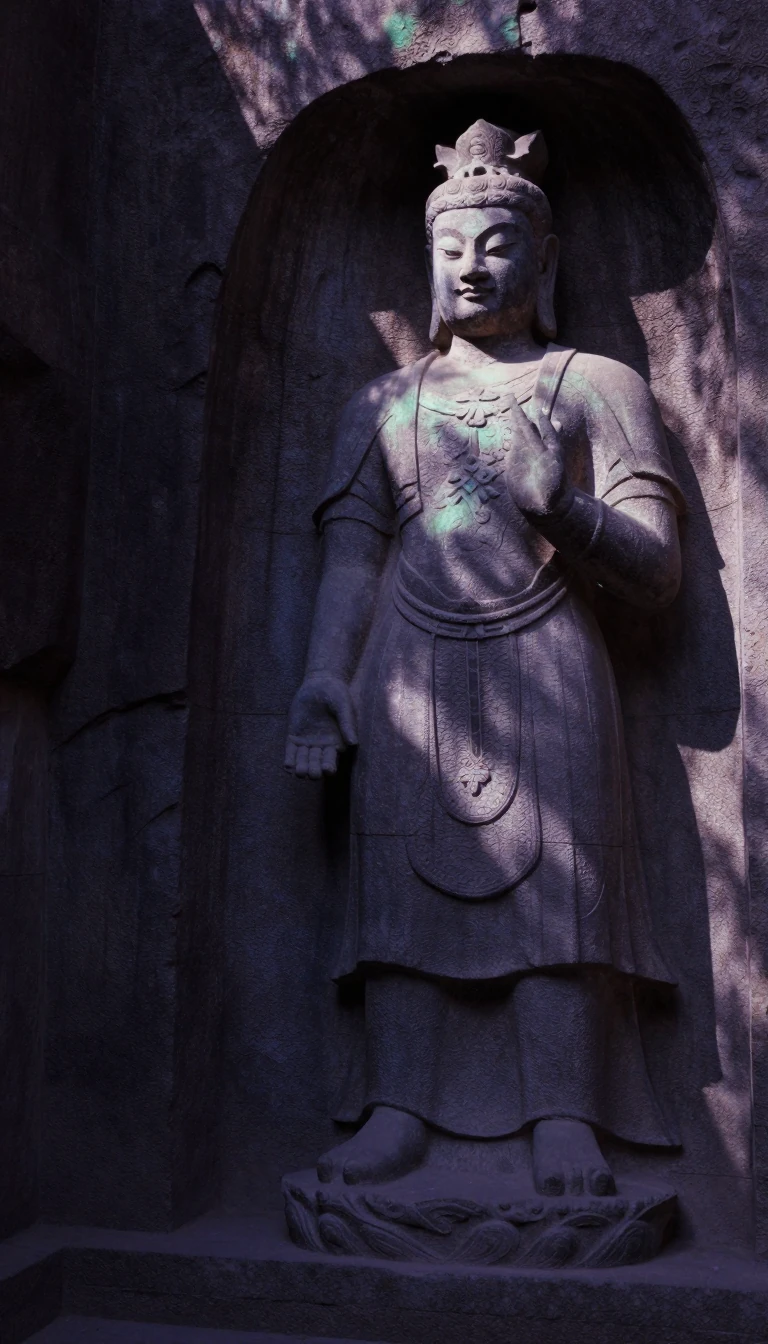 Aśvaghoṣa: The Indian poet whose verses were so profound they entranced even horsesAśvaghoṣa was a legendary Indian poet and dramatist who lived around the 2nd century CE. Renowned as the greatest Sanskrit poet before Kālidāsa, his influence spanned from India t…
 The restless priest whose forbidden novel became the most reprinted in French historyAntoine François Prévost, known as the Abbé Prévost, lived a life as turbulent as his fiction. A Jesuit novice, soldier, and Benedictine monk, he fled to England to escape his sup…
 More than just a sanctuary, the medieval abbey was a self-sufficient industrial powerhouse.Far from mere places of quiet contemplation, abbeys functioned as sophisticated, walled-in towns. These religious complexes integrated complex agricultural systems, specialized wo…
 How a sixteenth-century Moroccan mystic became the voice of daily wisdom across the MaghrebBorn in 1506, Abd al-Rahman al-Majdoub was a Sufi poet whose verses transcended his era to become the bedrock of Moroccan proverbs. While he lived through the rise of the Saadi dy…
 The poet who ruled an empire for one day before his tragic executionAbdallah ibn al-Mu'tazz was a prince of the Abbasid dynasty, a brilliant literary critic, and a hedonistic poet. In 908, he was thrust into a desperate political coup, crowned cal…
 How an Egyptian farm boy became the world's most celebrated voice of the QuranAbdul Basit 'Abd us-Samad was a master of breath control and emotional resonance who transformed Quranic recitation into a global phenomenon. Known as the Golden Throat, he captiv…
 Why Nobel Laureate Abdulrazak Gurnah wrote his first novels out of pure homesicknessBorn in the Sultanate of Zanzibar, Abdulrazak Gurnah arrived in England as a refugee in 1968. He began writing in his twenties to process his displacement, eventually transforming…
 The Kashmiri polymath who synthesized the divine into a coherent philosophical systemAbhinavagupta was a 10th-century mystic and philosopher whose work unified the disparate schools of Kashmir Shaivism. A master of aesthetics, music, and logic, he transformed comp…
- How one rabbi bridged the divide between secular Zionism and traditional Jewish orthodoxyAbraham Isaac Kook, the first Ashkenazi Chief Rabbi of British Mandatory Palestine, remains a polarizing figure. While he was a pillar of traditional Torah study, he famously embr…
 Why the theologian Martin Luther King Jr. called a prophet was a radical mysticAbraham Joshua Heschel, a Polish-born rabbi who fled the Holocaust, redefined the Jewish encounter with the Divine. By shifting focus from cold law to the "Divine Pathos," he argu…
 What if the ultimate reality is not a thing, but a self-knowing activity?The Absolute is a philosophical heavyweight, representing a reality that is perfectly self-sufficient and free from all external conditions. While often associated with the divine…
 The warrior who requested to be buried beneath the walls of ConstantinopleAbu Ayyub al-Ansari was a close companion of Muhammad who lived a life defined by military service and deep faith. Even in his final days as an elderly man, he joined a siege agai…
- A medieval Andalusian scholar who challenged the greatest minds of his eraAbu Bakr ibn al-Arabi was a brilliant Maliki jurist who traveled from Seville to Baghdad to master Islamic law and theology. A student of the legendary al-Ghazali, he became a cri…
 The Forgotten Architect of Sunni Theology Who Defined Faith for Millions of BelieversAbu Mansur al-Maturidi was a ninth-century scholar from Samarkand whose theological framework became a cornerstone of Sunni Islam. Often overshadowed by his contemporary al-Ashari…
- Abu Musa al-Ash'ari: The Forgotten Architect of Early Islamic Governance and LawA companion of Muhammad, Abu Musa al-Ash'ari was a pivotal figure in the expansion of the early Muslim state. From commanding armies in the conquest of Persia to governing the gar…
 Is the right thing to do simply whatever creates the most happiness right now?Act utilitarianism argues that your moral duty is to maximize pleasure and minimize pain in every specific situation. By focusing solely on the consequences of individual actions,…
 Why attacking the messenger is a classic failure of logic and critical thinkingAn ad hominem attack sidesteps the substance of a debate by targeting the person instead of the argument. While often dismissed as a simple insult, this tactic is a formal fallacy…
 Adam Kadmon is not the first human, but the divine blueprint for all existence.In Kabbalah, Adam Kadmon is a primordial, incorporeal figure that predates the physical world. Far from being a man of flesh and blood, this 'Most High Man' represents pure divine…
 From Roman Rites to Royal Courts: The Evolving Physicality of Human AdorationAdoration is more than a feeling; it is a historical language of the body. From the ancient Roman practice of kissing one's own hand to the Persian custom of striking the earth wi…
 Did a single man's prayers manifest the arrival of a divine spiritual leader?Advaita Acharya, a central figure in the Gaudiya Vaishnava movement, believed society had become dangerously materialistic. His solution was a radical act of devotion: thirteen mo…
 Beyond Right and Wrong: How Islamic Jurisprudence Categorizes Every Human ActionIn Islamic law, human behavior is not merely binary. Through the framework of Ahkam, every action is classified into one of five distinct categories, ranging from mandatory duties…
- Can a Buddhist monk truly claim that religion does not exist at all?Buddhadasa Bhikkhu, a radical Thai reformer, argued that the highest understanding of truth transcends all religious labels. By rejecting traditional concepts of rebirth and ritua…
 Why does the Islamic concept of the afterlife demand justice for the suffering?In Islamic theology, the afterlife, or al-Akhirah, is more than a final destination; it is the essential mechanism for cosmic justice. Because the virtuous often suffer while the …
- Without this seventh-century poet, one-third of the Arabic language might have vanished forever.Born into nobility in 641 AD, al-Farazdaq became a titan of classical Arabic verse. His life was a whirlwind of exile, forced marriages, and legendary literary feuds. Yet, his inf…
 I am a man to be heard, not seen: The master of Arabic literary artifice.Al-Hariri of Basra was a short, bearded official who transformed the maqama into a virtuosic art form. His fifty stories of a confidence trickster became the most celebrated Arabi…
- How one scholar bridged the gap between strict Islamic law and mystical Sufi traditionBorn into a privileged Arab family in 10th-century Iran, Al-Qushayri transformed from a country squire into a towering intellectual. He mastered both the rigid requirements of Sha…
 Is Alain Mabanckou the Samuel Beckett of Africa, or something entirely new?Born in Congo-Brazzaville, Alain Mabanckou has become one of the most successful French-language writers today. Known for his sharp, often dark, and comic prose, he challenges tra…
- Why Britain's most prolific playwright spends only ten percent of his time writingSir Alan Ayckbourn has written 91 full-length plays, yet he insists that writing occupies a mere fraction of his working life. A titan of regional theatre, he spent decades as the…
 Can a physicist bridge the gap between the cold logic of science and human meaning?Alan Lightman is a rare polymath who holds joint faculty positions in science and the humanities. As both an astrophysicist and a celebrated author, he explores the intersection o…
 Can a society thrive on cooperation rather than the cold logic of individual competition?Aleksey Khomyakov, a 19th-century Russian intellectual, rejected both capitalism and socialism as Western failures. He proposed a radical alternative: sobornost, a concept of orga…
 The Italian librettist who helped define the birth of early opera in MantuaAlessandro Striggio the Younger remains a pivotal figure in music history, best known for his collaboration with Claudio Monteverdi. By crafting the libretto for Orfeo in 1607, he…
 How a clerk turned playwright single-handedly built the Russian national theatre repertoireAlexander Ostrovsky, a former court clerk, transformed Russian drama by documenting the lives of merchants and the provincial intelligentsia. His work, often censored for its unfl…
 Alfred Jarry: The French Provocateur Who Invented Absurdism and the Science of ExceptionsBefore Dada or Surrealism, there was Alfred Jarry. A diminutive, bicycle-riding eccentric who lived in a horizontally partitioned apartment, Jarry transformed a schoolboy prank in…
 The tenth Shia Imam lived under house arrest for two decades in Samarra, Iraq.Ali al-Hadi, the tenth of the Twelve Imams, spent twenty years under Abbasid surveillance in the garrison town of Samarra. Despite being treated as a prisoner, he maintained a cla…
 The silent powerhouse of Iraq: How Grand Ayatollah Sistani reshaped a nation's political futureAs the dean of the Hawza in Najaf, Grand Ayatollah Ali al-Sistani has become the most influential figure in post-invasion Iraq. By advocating for popular sovereignty and democrati…
 Alice Bailey and the Tibetan: The Origins of the New Age MovementAlice Bailey was a prolific writer who claimed her twenty-five books were telepathically dictated by a Master of Wisdom known as Djwal Khul. Her esoteric teachings, which introduc…
 Alice Walker: From Pulitzer-Winning Literary Icon to a Figure of Intense Public ControversyAlice Walker broke barriers as the first Black woman to receive the Pulitzer Prize for Fiction. Yet, her legacy is now deeply fractured. While she remains a celebrated voice for w…
 How a Scottish wig-maker sparked a literary revolution and bridged centuries of verseAllan Ramsay was an unlikely literary titan. Starting as an Edinburgh wig-maker, he evolved into a pivotal figure of the Enlightenment, reviving vernacular Scots poetry and establ…
 Why the first and last letters of the alphabet define the divine in scriptureThe phrase Alpha and Omega, appearing in the Book of Revelation, serves as a profound title for God and Christ. By invoking the start and finish of the Greek alphabet, this symbol…
- How a failed lawyer became the patron saint of confessors and moral theologiansAfter losing his first major court case, Alphonsus Liguori abandoned a promising legal career to serve the marginalized. He went on to revolutionize Catholic moral theology, rejec…
 Why do billions of people end their prayers with the same ancient Hebrew word?Across Judaism, Christianity, and Islam, the word amen serves as a universal seal of affirmation. While often dismissed as a simple closing, this linguistic relic carries thousand…
 How a forgotten eighteenth-century textbook helped forge the American identity and its founding documentsBefore the American Revolution, a specific brand of moral philosophy swept through colonial colleges. Developed by Samuel Johnson, this American Practical Idealism shaped the mind…
- Why did critics once call this Nigerian literary giant's work primitive and broken?Amos Tutuola rose to international fame in the 1950s for his surreal, folklore-infused novels. While Western audiences were enchanted by his unique voice, he faced harsh backlash …