 Intellect Plus
Ideas & Philosophy
17,867 cards. Each one is a 40-second story with a five-minute read behind it. Page 198 of 298.
Subtopics: Abrahamic religions · Artificial intelligence · Attention · Classic philosophy · Cognitive biases · Consciousness · Cooperation · Cynicism · Decision making · Decision theory · Descartes · Dharmic religions · Dreams · Eastern philosophy · Eastern religions · Epistemology · Ethics · Evidence · Existentialism · Fairness · Famous psychology experiments · Free will · Game theory · Greek mythology · Historians · Identity · Infinity · Justice · Logic · Logical fallacies · Mathematics · Medieval philosophy · Mind · Mythology · Mythology of the ancient world · Other religions · Paradoxes · Philosophers · Philosophers, historians, political and social scientists · Philosophy · Philosophy of mind · Philosophy of science · Political philosophy · Probability · Psychology · Reality · Religion · Religion and spirituality · Religious figures · Self knowledge · Statistics · Stoicism · Strategy · Taoism · Thought experiments · Trivia & curiosities · Truth · Utopias & ideal worlds · Wellbeing · World religions · Writers
 The Roman poet who weaponized the stage and paid the price in exileGnaeus Naevius was a fiery, patriotic dramatist who turned the Roman stage into a political battlefield. By mocking the powerful Metellus family, he faced imprisonment and eventua…
 Why the title Father for God carries vastly different meanings across the world's faithsCalling God Father is a practice spanning millennia, yet it signifies everything from a simple metaphor for a creator to a metaphysical, eternal relationship. While some tradition…
 Why the title God the Son is a theological development rather than biblical scriptureThe term God the Son is central to mainstream Christian belief, yet it is absent from the pages of the Bible. This designation emerged through centuries of debate as early thinker…
 Why an ancient Chinese philosopher insisted that white horses are not horsesGongsun Long, a member of the School of Names during the Warring States period, famously baffled his contemporaries with logical paradoxes. By challenging the relationship between…
 Is the concept of good an absolute truth or merely a cultural invention?Across human history, the idea of good has shifted from simple regional customs to complex moral absolutes. While some philosophers view it as the ultimate source of truth and kno…
 Are good deeds the price of admission to heaven or just the fruit of faith?In Christian theology, the relationship between faith and good works is a central, long-debated tension. While some traditions argue that salvation is a free gift received through…
 Gorakhnath: The elusive yogi who shaped the spiritual landscape of medieval IndiaGorakhnath was a legendary Hindu saint and mahasiddha whose influence spans centuries and borders. From the eponymous city of Gorakhpur to the mountains of Nepal, his legacy as a …
 Was the ancient master of persuasion a serious philosopher or a brilliant, ironic jester?Gorgias of Leontini was the ultimate Athenian influencer, teaching ambitious young men how to win public debates. Yet, beneath his reputation as a master rhetorician lies a frustr…
 How a former Disneyland painter became the architect of a global detective empireBefore he created the world-famous detective Conan, Gosho Aoyama was painting backgrounds for Pirates of the Caribbean at Tokyo Disneyland. Today, his long-running manga series Ca…
 Graham Swift: The Quiet English Master Who Rejects Research to Fuel His ImaginationGraham Swift is a quintessentially English novelist who rose to prominence with his 1983 masterpiece Waterland. Despite his acclaim, he famously eschews research, viewing it as a …
 How a Scottish comic writer turned superhero stories into complex, reality-bending metaphysical puzzles.Grant Morrison transformed the comic book industry by injecting countercultural philosophy, chaos magic, and nonlinear narratives into mainstream superhero titles. From reinventin…
 Why did Jesus combine two ancient laws into one supreme moral mandate?When asked to identify the greatest commandment, Jesus of Nazareth bypassed the era's divisive debates over ritual law. Instead, he unified two existing scriptures into a singular…
 The Great Commission: How a Single Commandment Shaped the Global Spread of ChristianityIn the final moments of his ministry, Jesus Christ issued a directive that would define the trajectory of a global faith. Known as the Great Commission, this instruction to baptiz…
 Is the Great Tribulation a future apocalypse or a historical event from AD 70?Christianity offers three distinct interpretations of the Great Tribulation. Some see it as a future period of global suffering preceding the Second Coming. Others argue it occurr…
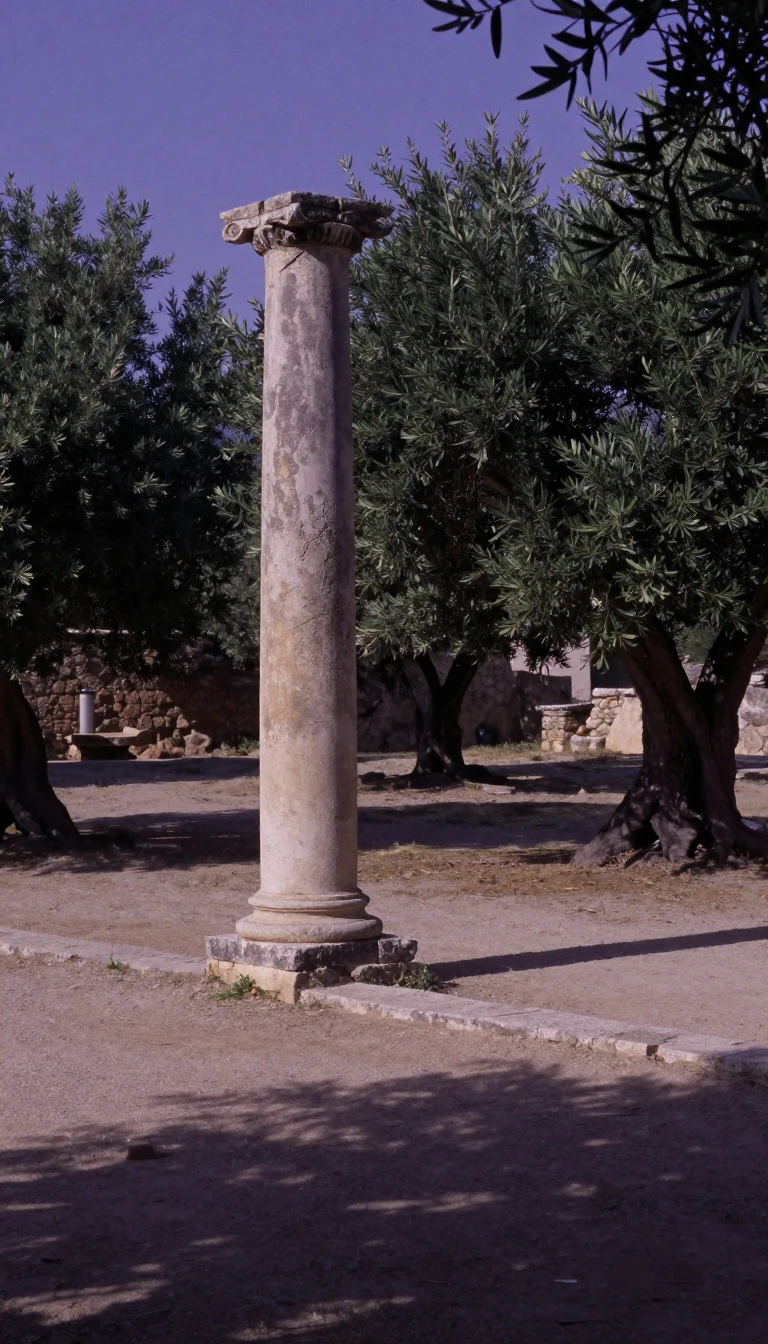 Ancient Greeks worshipped the dead as heroes to secure their cities and appease spiritsIn ancient Greece, hero cults were not just about honoring legendary figures; they were a strategic tool for state propaganda and a way to interpret mysterious Bronze Age ruins. B…
 Why the term Greek Orthodox describes far more than just the nation of GreeceThe label Greek Orthodox is often misunderstood. While it refers to the Church of Greece, it also encompasses a vast, ancient tradition rooted in the Byzantine Empire. From the Ec…
 The rigorous discipline of becoming a Hafiz: memorizing thousands of verses in Classical ArabicA Hafiz is a person who has committed the entire Quran to memory. This feat involves mastering 114 chapters and over 77,000 words in Classical Arabic. Beyond the intellectual achi…
 Can a philosopher repent for supporting war by inventing a new way of thinking?Hajime Tanabe, a titan of the Kyoto School, spent his life bridging Western science and Eastern Buddhism. Yet, his legacy is haunted by his wartime support for Japanese militarism…
 Hakuin Ekaku: The Monk Who Transformed Zen Through the Power of Great DoubtHakuin Ekaku, the reviver of Japanese Rinzai Zen, believed that enlightenment was not the finish line but a starting point. By emphasizing the "great doubt" and the necessity of w…
 The hamsa is an ancient protective hand symbol that transcends religious and cultural boundaries.Across North Africa and the Middle East, the palm-shaped hamsa serves as a potent defense against the evil eye. While often associated with Islamic, Jewish, and Christian traditio…
 How the Hanafi school became the largest legal tradition in the Islamic worldEmerging from the intellectual hubs of ancient Iraq, the Hanafi school transformed Islamic jurisprudence through systematic reasoning. By balancing the Quran and tradition with an…
 The Hanbali School: Why the Smallest Sunni Legal Tradition Remains So Influential TodayAs the smallest of the four major Sunni schools of jurisprudence, the Hanbali tradition accounts for barely 2% of the global Muslim population. Yet, its emphasis on literal script…
 Harold Robbins: The Master of Fiction Who Invented His Own Life StoryHarold Robbins sold over 750 million books by blending high society, sex, and melodrama. Yet, the man behind the best-sellers was arguably his own greatest creation. From fabricat…
 The eleventh Shia Imam lived under constant house arrest, yet shaped a global faith.Hasan al-Askari spent his life in the garrison town of Samarra, held under strict Abbasid surveillance. Despite his isolation and early death at twenty-eight, his legacy became th…
 How a successful jewel merchant became the archetype of Islamic world-renouncing asceticismHasan al-Basri was once a prosperous businessman traveling to Byzantine courts. A single, haunting encounter with the reality of mortality transformed him into a celebrated preach…
 Did a 14th-century Jewish philosopher anticipate the scientific revolution by dismantling Aristotelian physics?Hasdai Crescas, a Spanish Jewish thinker, challenged the dominant Aristotelian worldview of his era. By rejecting the impossibility of a vacuum and the limits of space, he propose…
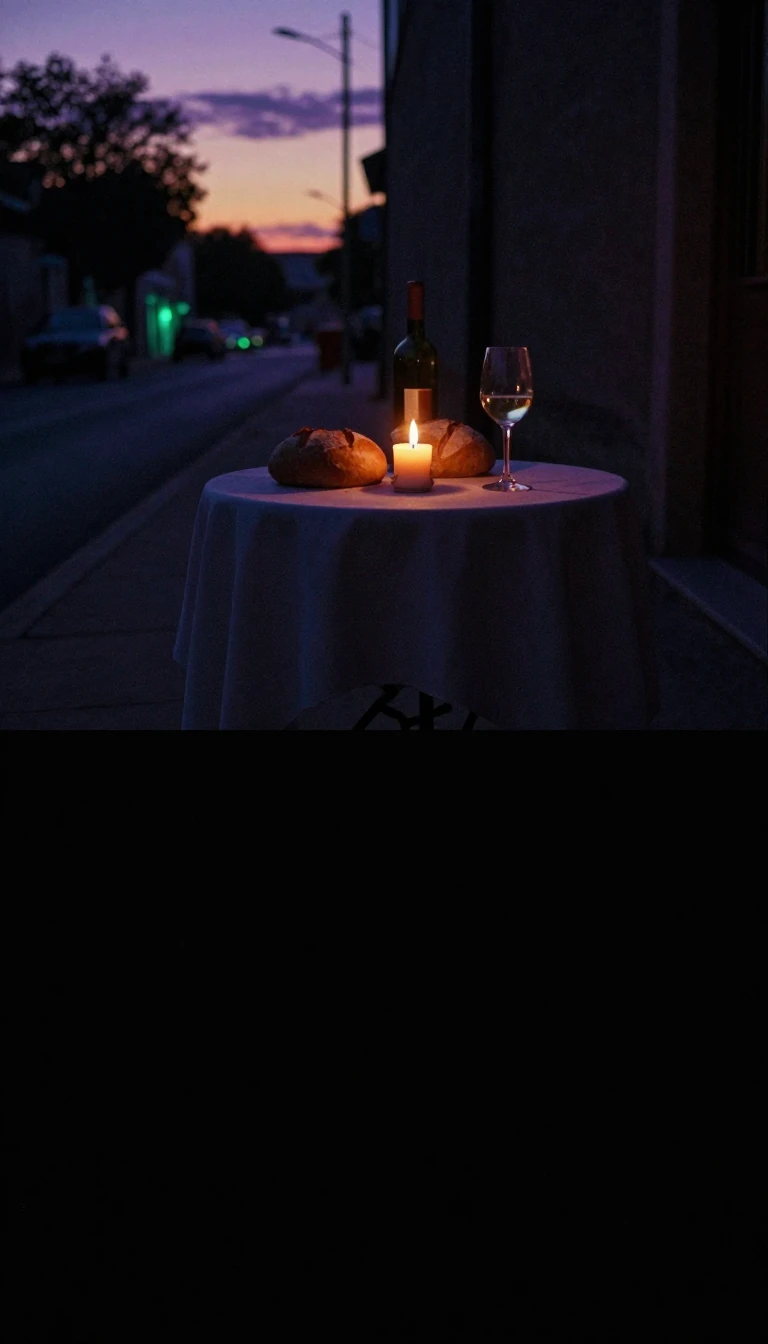 Havdalah is a multi-sensory ritual designed to bridge the gap between sacred and ordinary.Marking the end of Shabbat, the Jewish ceremony of Havdalah engages all five senses to transition into the new week. Through wine, spices, fire, and song, participants create a sy…
- In Mandaeism, the Supreme God is not the direct creator of our earthly world.For Mandaeans, Hayyi Rabbi—or The Great Life—is the eternal, supreme force from which all existence emanates. While He is the ultimate source of all light and life, the creation o…
 How a disgraced inquisitor's personal vendetta defined the early modern witch huntHeinrich Kramer, a Dominican friar, was once forced out of Innsbruck for his erratic behavior and failure to prove his accusations. Yet, his subsequent attempt to validate his met…
 How a deaf historian shaped the aggressive nationalism of the German EmpireHeinrich von Treitschke was a powerful voice in 19th-century Germany, advocating for authoritarian rule and Prussian expansion. Despite suffering from near-total deafness, his rhe…
 Is Helen Garner a novelist or a reporter who simply publishes her private journals?Helen Garner is a titan of Australian letters, yet her career is defined by a persistent, polarizing debate. Critics often argue her work is merely raw, unvarnished autobiography,…
- Was Henri Meilhac the most influential French playwright you have never heard of?Henri Meilhac was the engine behind the golden age of French comic opera, collaborating on over fifty works with Ludovic Halévy. While he is often overshadowed by the composers he…
 Henry Miller: The Outlaw Novelist Who Transformed American Literature Through Banned, Uncensored ProseHenry Miller shattered literary norms with semi-autobiographical novels that blended surrealism, philosophy, and explicit sexuality. Long banned in the United States, his work bec…
 Was the public intellectual a casualty of the shift toward modern academic specialization?Henry Steele Commager was a titan of 20th-century American history, publishing 40 books and 700 essays. He believed historians had a duty to address the general public, not just o…
 Can physical breathing techniques lead to a direct experience of the divine light?Hesychasm is a centuries-old Eastern Christian tradition that seeks divine quietness through uninterrupted prayer. By involving the entire human being—mind, body, and soul—practit…
- The Catholic Church hierarchy is a complex blend of spiritual mission and juridical power.For centuries, the Roman Catholic Church has balanced two identities: a mystical body of believers and a rigid, juridical society. While modern theology emphasizes fellowship and …
 How a Babylonian woodcutter became the most influential architect of modern Jewish thought.Hillel the Elder transformed Jewish law by championing flexibility over rigid literalism. A humble scholar who arrived in Jerusalem as an adult, his interpretive rules and focus o…
 How a rejected manga artist became a global icon through JoJo's Bizarre AdventureHirohiko Araki faced constant rejection early in his career, yet he persisted to create one of history's best-selling manga series. His work transcends traditional comics, influen…
- Is the whole truly greater than the sum of its individual parts?Holism challenges the reductionist view that systems are merely collections of components. From quantum physics to linguistics and biology, proponents argue that complex systems p…
 What defines the authority of a priest, bishop, or deacon in Christian tradition?Holy orders represent the ordained ministries of bishop, priest, and deacon. While some denominations view this as a sacramental rite—a living, organic link to the apostles—others…
 Honoré d'Urfé: The man who taught 17th-century France how to talk about loveBefore he became a literary sensation, Honoré d'Urfé was a prisoner of war who found solace in the classics. His sprawling pastoral romance, L'Astrée, transformed the French cultu…
 Did Horatio Alger actually write about rags-to-riches, or is that a myth?The Horatio Alger myth suggests poor boys strike it rich through grit alone. In reality, his novels rarely promised vast wealth. Instead, his heroes typically achieved modest midd…
- How a philosopher from the middle of nowhere challenged the dream of machine intelligenceHubert Dreyfus, a UC Berkeley professor born in Terre Haute, Indiana, became a formidable critic of artificial intelligence. By applying the insights of continental philosophers l…
 How a Nigerian police officer became the father of modern Yoruba theatreHubert Ogunde transitioned from a colonial constable to Nigeria's most influential dramatist by revolutionizing local performance. By replacing traditional masked troupes with pro…
- Hugo von Hofmannsthal: The Austrian prodigy who declared language a failed tool for realityHugo von Hofmannsthal was a literary sensation by seventeen, yet he famously questioned the power of words to describe the world. From his early poetic mastery to his later, compl…
 Can you reach the center of the world by traveling north of Yen?Hui Shi, a Warring States philosopher, challenged reality with paradoxes that blurred the lines between time, space, and identity. From claiming he arrived at his destination yest…
 The legendary poet who accepted payment in live chicks for his love versesJosé de la Cruz, known as Huseng Sisiw, was a self-taught literary giant in colonial Philippines. Despite his humble origins and lack of formal schooling, he mastered multiple lan…
 Is the Quran’s inimitability a linguistic miracle or a product of its historical context?The doctrine of I'jaz asserts that the Quran is a divine miracle, possessing a literary perfection that no human can replicate. This challenge to produce a similar text has define…
 Why the road to Auschwitz was paved with indifference, not just hatredHistorian Ian Kershaw transformed our understanding of Nazi Germany by shifting focus from Hitler’s personality to the everyday lives of ordinary citizens. He argues that while th…
 Is worship just prayer, or is it a total way of living your life?In Islam, the concept of ibadah is often translated as worship, but its roots run much deeper than ritual. While it encompasses the foundational pillars of the faith, many scholar…
 The 19th-century jurist who redefined Islamic law by embracing the changing tides of custom.Ibn Abidin, a Damascus-based mufti and Ottoman state official, remains the definitive authority on Hanafi jurisprudence. While tradition demanded strict adherence to past rulings,…
 Was the influential scholar Ibn Kathir a secret adherent of the Ash'ari school?Ibn Kathir is a titan of Sunni Islam, revered for his massive historical records and Quranic commentary. Yet, his theological identity remains a battlefield. While some modern sch…
 Was this medieval Islamic scholar a Sufi mystic or a fierce anti-mystic critic?Ibn Qayyim al-Jawziyya is often painted as a rigid opponent of Sufism, yet his own writings are deeply rooted in mystical themes. A prolific 14th-century jurist, he navigated the …
 How a historian and activist redefined the study of racism in modern AmericaBorn Ibram Henry Rogers, the scholar now known as Ibram X. Kendi has become a central figure in American discourse on racial justice. Through his influential books and academic le…
 Are ideas unchanging forms of reality or just mental echoes of our lived experiences?The definition of an idea has shifted for millennia, oscillating between Plato’s realm of eternal, immaterial forms and the empiricist view that they are merely mental composites …
- How a 16th-century soldier's recovery transformed into a rigorous system for modern decision-makingIgnatian spirituality is not about retreat from the world, but a disciplined method for engaging it. Born from the experiences of Ignatius of Loyola, this framework uses reflectio…
 Can a community ever be infallible? The Islamic doctrine of Ijma explained.In Islamic jurisprudence, Ijma represents the consensus of the community on points of law. While Sunni scholars often cite prophetic traditions to argue that the faithful cannot c…
 Is faith a static belief or a dynamic practice that grows and changes?In Islamic theology, iman is far more than a simple mental assent. It is a profound, multi-dimensional commitment involving the heart, the tongue, and the limbs. While often trans…
 Why human beings believe that specific words can physically alter the fabric of realityFrom ancient Mesopotamian exorcisms to modern fantasy fiction, the incantation remains a persistent human impulse. Whether spoken, sung, or chanted, these formulas rely on the con…
 Are you a distinct entity or just a series of interconnected, changing processes?We define the individual as a unique person with rights and goals, yet biology and philosophy offer conflicting portraits. From the Buddhist concept of no-self to the existentiali…