 Intellect Plus
Ideas & Philosophy
17,867 cards. Each one is a 40-second story with a five-minute read behind it. Page 205 of 298.
Subtopics: Abrahamic religions · Artificial intelligence · Attention · Classic philosophy · Cognitive biases · Consciousness · Cooperation · Cynicism · Decision making · Decision theory · Descartes · Dharmic religions · Dreams · Eastern philosophy · Eastern religions · Epistemology · Ethics · Evidence · Existentialism · Fairness · Famous psychology experiments · Free will · Game theory · Greek mythology · Historians · Identity · Infinity · Justice · Logic · Logical fallacies · Mathematics · Medieval philosophy · Mind · Mythology · Mythology of the ancient world · Other religions · Paradoxes · Philosophers · Philosophers, historians, political and social scientists · Philosophy · Philosophy of mind · Philosophy of science · Political philosophy · Probability · Psychology · Reality · Religion · Religion and spirituality · Religious figures · Self knowledge · Statistics · Stoicism · Strategy · Taoism · Thought experiments · Trivia & curiosities · Truth · Utopias & ideal worlds · Wellbeing · World religions · Writers
 Why does almost every ancient language link the concept of spirit to human breath?Across millennia and continents, the word for spirit consistently mirrors the word for breath. From the Latin spiritus to the Hebrew ruach and Chinese qi, humanity has long equate…
 Are spiritual gifts supernatural powers or simply divine enablements for the common good?In Christian theology, charisms are extraordinary capacities believed to be bestowed by the Holy Spirit. Far from being personal accolades, these gifts are intended to build up th…
 Why do humans perform repetitive actions to reach beyond the physical world?Spiritual practice is the deliberate, regular performance of activities designed to cultivate inner development or induce transcendent experiences. Often described as walking a pa…
 Why do we accept government? The philosophical answer lies in our natural state.Before laws and borders, what defined human existence? Philosophers like Hobbes and Locke used the state of nature as a thought experiment to justify political authority. By imagi…
 A reluctant archbishop who became the first president of Russia's Holy SynodStefan Yavorsky rose from a humble monastery leader to the highest office in the Russian Church in just seven months. Despite his rapid ascent under Peter I, he remained a relucta…
 Are humans the masters of the Earth or its divinely appointed caretakers?Stewardship is the theological belief that humans are entrusted by a higher power to manage the world and its resources. While historically focused on the financial maintenance of…
 Why attacking a fake version of your opponent's argument is a losing strategyA straw man fallacy occurs when you replace an opponent's position with a weaker, distorted version, then defeat that fabrication instead of the real argument. While it creates th…
 Was the leader of a global faith meant to be a permanent figurehead?In 1850, the Báb appointed 19-year-old Subh-i-Azal to lead his followers. Yet, within decades, his influence vanished, eclipsed by his half-brother, Baháʼu'lláh. Was this appointm…
 Are you a unified self or just a bundle of fleeting perceptions?The divide between the subject—the observer—and the object—the observed—is a cornerstone of Western thought. Yet, from Descartes to modern neuroscience, philosophers have struggle…
 Sue Grafton's alphabet mystery series will never reach Z, ending permanently at Y.After years of writing screenplays, Sue Grafton channeled her bitter divorce fantasies into the Kinsey Millhone series. While she planned to conclude with Z Is for Zero, her death…
 Sun Myung Moon built a global empire on a vision of divine family unity.Founder of the Unification Church, Sun Myung Moon was a polarizing figure who claimed a messianic mission to unite humanity. From mass weddings to massive business investments and…
 Is the Sunnah simply the life of Muhammad, or an ancient, evolving legal tradition?While often equated with the hadith—the recorded sayings and actions of the Prophet—the term sunnah originally carried a far broader meaning. Far from being a static set of rules,…
 The Quran is organized by length, not by the timeline of its divine revelations.The 114 chapters of the Quran, known as surah, defy standard editorial logic. They are not ordered by theme or chronology, but by size. This unique structure creates a text where …
 Why Indian philosophy challenges the inevitability of Western logical and metaphysical distinctionsSurendranath Dasgupta, author of the monumental five-volume A History of Indian Philosophy, argued that Indian thought offers more than just historical curiosity. By examining pro…
 Why T. H. Green believed the state exists to help you become yourselfT. H. Green was a Victorian philosopher who argued that true freedom is not the ability to do whatever you want, but the power to realize your potential. He believed that society …
 Tafsir is the centuries-old Islamic tradition of uncovering the Quran's deeper, hidden meanings.Tafsir, or Quranic exegesis, is far more than simple translation. It is a rigorous, scholarly discipline that balances linguistic precision, historical context, and theological re…
 How a Moroccan philosopher became a defining voice of the French literary establishmentBorn in Fes and writing in French, Tahar Ben Jelloun transformed from a student rebel into a celebrated intellectual. His work bridges the gap between North African heritage and F…
 Tajwid is the precise, ancient system for reciting the Quran with perfect, measured clarity.To recite the Quran correctly is to honor a tradition of exact pronunciation dating back to the prophet Muhammad. Tajwid provides the technical rules for how every letter must be …
 Can ancient Confucian values survive in a world obsessed with modern, abstract progress?Tang Chun-i, a pivotal figure in 20th-century New Confucianism, believed the answer lay in the heart-mind. By bridging traditional Chinese ethics with modern challenges, he sought…
 Taoism is not a single religion but a diverse tapestry of ancient Chinese thought.Often reduced to the Daodejing, Taoism is actually a heterogeneous collection of philosophies and practices that evolved over centuries. It emphasizes living in harmony with the D…
 Is following established religious tradition a sign of wisdom or a path to stagnation?In Islamic jurisprudence, taqlid represents the act of accepting legal decisions without knowing their underlying basis. While some view this as essential for maintaining order an…
- Tawhid is the Islamic principle of absolute oneness that defines the nature of God.Tawhid, the foundational doctrine of Islam, asserts that God is indivisibly one and unique. This concept of absolute monotheism shapes every aspect of a believer's life, from dail…
 Does the complex order of the universe prove the existence of an intelligent creator?The teleological argument suggests that the natural world's intricate functionality is not a product of blind chance, but evidence of design. From ancient Greek philosophers to mo…
 Is telepathy a genuine human ability or just a series of clever parlor tricks?Telepathy, the purported transmission of thoughts without physical interaction, has captivated the public for over a century. Yet, despite decades of rigorous testing, the scienti…
 Televangelism is not just broadcasting; it is a calculated evolution of urban revivalism.Televangelism is often dismissed as a modern media spectacle, but its roots reach back to the 19th century. By blending the sales-driven techniques of urban revivalists with the r…
 The revolutionary librettist who shaped the early operatic masterpieces of Giuseppe VerdiTemistocle Solera was more than just a wordsmith for the stage. A fervent participant in the anti-Austrian resistance, his life was defined by political imprisonment and a restles…
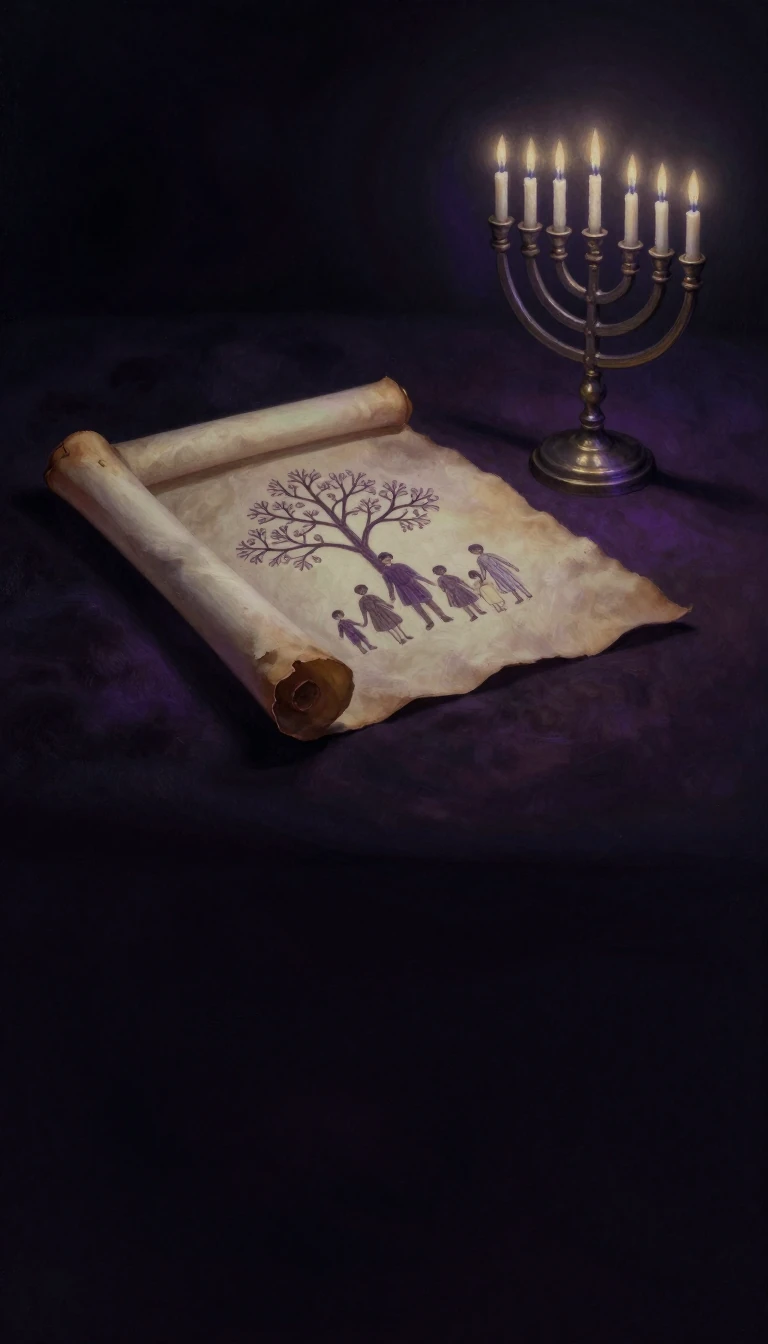 The seven-branched menorah: a sacred golden relic lost to the tides of historyThe Temple menorah, a seven-branched candelabrum of pure gold, served as the central light of ancient Jewish worship. After the Roman destruction of Jerusalem in 70 CE, the artifa…
 Tenrikyo: A Japanese Religion Where the Body Is Borrowed and Joy Is MandatoryFounded in 1838 by Miki Nakayama, Tenrikyo teaches that humans are created to live the Joyous Life. Followers view their bodies as borrowed vessels from God the Parent, and see li…
 Terrence McNally: The Bard of American Theater Who Bridged Human DividesA five-time Tony Award winner, Terrence McNally transitioned from avant-garde provocateur to a mainstream voice for human connection. His career spanned six decades, evolving from…
 Thaumaturgy is the ancient art of using esoteric knowledge to manipulate the physical world.Often dismissed as mere superstition, thaumaturgy is the practical application of magic to produce tangible, observable results. From ancient Egyptian priests to Renaissance schol…
- The gospel was a political term for imperial peace long before it became religious.Before it defined the Christian message, the gospel was a secular concept of good news. In the Roman Empire, it celebrated the birth or victory of a savior-emperor who brought pea…
 Were the Sitwell siblings literary revolutionaries or merely masters of the public spectacle?In the early 20th century, Edith, Osbert, and Sacheverell Sitwell formed a formidable artistic clique in London. By challenging the prevailing Georgian poetry movement, they carve…
 Did Muhammad promise Paradise to ten specific companions, or is the list political?Sunni tradition celebrates ten early Muslims guaranteed entry into Paradise. Yet, historical analysis suggests these lists were fluid, evolving to serve political agendas. From ea…
 Is the void a true nothingness or the hidden engine of our entire reality?From ancient Greek atomism to modern quantum mechanics, the void has haunted human thought. Whether viewed as the necessary space for matter to move, a spiritual gateway to enligh…
 Thea Astley was the only woman of her generation to consistently dominate Australian fiction.For over forty years, Thea Astley navigated a male-dominated literary landscape with a sharp wit and a raspy voice. A four-time Miles Franklin Award winner, she turned the small-t…
 Theocritus: The Ancient Greek Poet Who Invented the Pastoral GenreBorn in Sicily around 300 BC, Theocritus transformed the landscape of ancient literature by creating pastoral poetry. While little is known of his life, his influence remains prof…
 If God is all-powerful and all-good, why does the world contain so much suffering?Theodicy is the philosophical attempt to reconcile the existence of an omnipotent, benevolent deity with the reality of evil. From ancient texts to modern logic, thinkers have str…
 Theodore Dreiser: The American Naturalist Who Turned Ambition Into A Dangerous National DiseaseTheodore Dreiser transformed American literature by documenting the brutal collision between raw human desire and rigid social structures. Often criticized for his heavy, unpolish…
 What happens when the divine steps into the observable world of human perception?A theophany is more than a spiritual feeling; it is a tangible, often visible, encounter with a deity. From ancient Greek myths to modern accounts, these manifestations serve to d…
 Why do some universities split philosophy into two distinct, separate academic disciplines?Philosophy is often taught as a singular pursuit, yet many institutions categorize it into two branches: theoretical and practical. This division, rooted in ancient thought, shape…
 Why do humans believe? From armchair speculation to the deep study of meaningFor centuries, thinkers have tried to pin down the origin and purpose of religion. Early scholars relied on distant reports to build universal theories, while later anthropologist…
- Theurgy is the ancient art of using ritual to unite the human with divinity.Often called divine magic, theurgy is a practice designed to bridge the gap between the mortal soul and the transcendent One. By employing specific prayers, symbols, and ritualize…
 The shortest book in the Bible is a private letter about a church feudThe Third Epistle of John is a brief, personal note from an anonymous elder to a man named Gaius. It contains no mention of Jesus or Christ, focusing instead on the politics of ho…
 A teenage poet forged a medieval legacy, then died in a London attic.Thomas Chatterton was a brilliant, impoverished youth who captivated the Romantic era by inventing a 15th-century monk named Thomas Rowley. His elaborate literary forgeries fooled…
 Why the most famous poet of the 18th century published only thirteen poems.Thomas Gray was the dominant poetic voice of his era, yet he was notoriously self-critical and terrified of failure. Despite his immense popularity, he produced a remarkably sligh…
 Why is the world's most acclaimed living novelist also its most famous ghost?Thomas Pynchon is a titan of postmodern literature, celebrated for dense, paranoid, and encyclopedic novels like Gravity's Rainbow. Yet, he remains notoriously reclusive, having s…
- Tian: How an Ancient Chinese Concept Defined the Cosmos, Morality, and Imperial PowerTian is one of the oldest terms for heaven or the cosmos in Chinese thought. Far more than a sky, it functioned as a supreme moral authority, a blueprint for earthly order, and th…
 How a Sufi order born in Algeria became a spiritual powerhouse across West AfricaThe Tijaniyyah is the largest Sufi order in West Africa, defined by its emphasis on individual education and daily mystical practice. From its 18th-century Algerian roots, it expa…
 For Tim Winton, the landscape is not just a setting, it is the author.Tim Winton does not just write stories; he submits to the environmental logic of the Australian coast. For this celebrated novelist, characters are merely projections of the land …
 Is trance a glitch in the mind or a sophisticated tool for human consciousness?Trance is often dismissed as a dazed, semi-conscious state, but it is actually a versatile mechanism for filtering information. From ancient shamanic drumming to modern meditation…
 The Tree of Life is a dynamic map of divine energy, not a static image.Often mistaken for a fixed ancient relic, the iconic Tree of Life diagram is a relatively modern invention. It evolved over centuries, blending medieval Jewish mysticism with Rena…
 Is truth always binary, or can it exist in degrees and computational sets?In classical logic, a statement is either true or false. But venture into intuitionistic logic or modern programming, and truth becomes far more complex. From fuzzy degrees of val…
- The Twelve Imams: Divinely Appointed Successors Who Shape the Foundation of Shia TheologyIn Shia Islam, twelve figures from the family of Muhammad serve as the ultimate religious and political guides for humanity. Regarded as infallible and divinely appointed, these l…
 Why are twelve distinct prophetic books bundled together as one minor collection?The Twelve Minor Prophets are not minor because of their importance, but their length. While modern Bibles treat them as individual volumes, they were historically compiled into a…
- Why did the early Caliphate refuse to appoint its most learned Quranic scholar?Ubayy ibn Ka'b was a central figure in the early Muslim community, serving as a scribe for Muhammad and a master of the Quran. Yet, despite his immense prestige and legal authorit…
 How a tenth-century logician used rigorous deduction to prove the existence of GodUdayana was a towering Indian philosopher who transformed theology into a precise logical discipline. By synthesizing the Nyaya and Vaisheshika schools, he created a framework of …
- Was the Buddha’s father a king or merely a local political leader?History often paints Śuddhodana as a powerful monarch, but modern scholarship suggests a different reality. Far from ruling an absolute kingdom, he likely operated within an oliga…
 Can extraterrestrial contact offer a path to spiritual salvation and global harmony?UFO religions posit that advanced beings from other worlds hold the key to resolving humanity's deepest crises. By blending science fiction tropes with millenarian hope, these mov…
 How a Meccan poet turned celestial bodies into a clever metaphor for forbidden loveBorn into a wealthy Quraysh family in 644, Umar ibn Abi Rabiah became an iconic figure in early Islamic literature. Renowned as the finest poet of his tribe, he pioneered the ghaz…
 How a tribal society transformed into a global community under a single divine message.The concept of the ummah redefined human belonging. By shifting the basis of society from blood-based tribal kinship to a shared religious faith, Muhammad created a universal comm…