 Intellect Plus
Ideas & Philosophy
17,867 cards. Each one is a 40-second story with a five-minute read behind it. Page 203 of 298.
Subtopics: Abrahamic religions · Artificial intelligence · Attention · Classic philosophy · Cognitive biases · Consciousness · Cooperation · Cynicism · Decision making · Decision theory · Descartes · Dharmic religions · Dreams · Eastern philosophy · Eastern religions · Epistemology · Ethics · Evidence · Existentialism · Fairness · Famous psychology experiments · Free will · Game theory · Greek mythology · Historians · Identity · Infinity · Justice · Logic · Logical fallacies · Mathematics · Medieval philosophy · Mind · Mythology · Mythology of the ancient world · Other religions · Paradoxes · Philosophers · Philosophers, historians, political and social scientists · Philosophy · Philosophy of mind · Philosophy of science · Political philosophy · Probability · Psychology · Reality · Religion · Religion and spirituality · Religious figures · Self knowledge · Statistics · Stoicism · Strategy · Taoism · Thought experiments · Trivia & curiosities · Truth · Utopias & ideal worlds · Wellbeing · World religions · Writers
 Why a 17th-century pastor sparked a revolution by demanding more than just dry doctrine.Philipp Jakob Spener, the father of Pietism, grew distressed by the cold, intellectual rigidity of Lutheranism. He sought to transform Christianity from a scholastic system into a…
 How an enslaved child became the first African American to publish a poetry book.Born in Africa and sold into slavery in Boston, Phillis Wheatley defied the constraints of her era. By age twelve, she was writing poetry that captivated the Atlantic world. Despi…
 Is logic a set of universal laws or just a tool for human thought?Logic is often called the study of correct reasoning, yet philosophers debate whether it describes objective truths or merely codifies linguistic habits. By moving beyond classica…
 Is history a straight line toward progress or a repeating cycle of decay?For centuries, thinkers have debated whether human history is a linear march toward enlightenment or a cyclical pattern of rise and fall. From ancient myths of golden ages to mode…
 How a Nineteenth-Century New York Housewife Ignited a Global Movement for Christian PerfectionPhoebe Palmer transformed a private Tuesday prayer meeting in her home into a powerhouse of religious reform. By advocating for the doctrine of entire sanctification, she helped l…
 Why eighteenth-century tourists hunted for the picturesque like big-game hunters in the wildBefore it meant merely pretty, the picturesque was a radical aesthetic movement. It emerged as a mediator between the rational beauty of symmetry and the terrifying, vast sublime.…
 Pietism transformed Christianity from rigid doctrine into a deeply personal, heart-centered spiritual experience.Originating in 17th-century Germany, Pietism shifted the focus of faith from intellectual orthodoxy to individual transformation. By emphasizing personal conversion, holy living, …
 How a Roman grocer's son became the most celebrated opera librettist in historyPietro Metastasio began as a child prodigy reciting verses on Roman streets. He rose to become the imperial poet of Vienna, crafting the definitive libretti for 18th-century opera…
 Why do some religions call their buildings temples while others refuse the name?A place of worship is more than a structure; it is a physical manifestation of belief, culture, and history. From natural riverbanks to elaborate cathedrals, these spaces define h…
 Can modern pagans truly revive ancient rituals by studying history and archaeology?Polytheistic reconstructionism seeks to restore authentic pre-Christian religious practices by meticulously researching the worldviews and rituals of the past. Unlike eclectic mov…
 The French poet who mapped the four divine paths to human creative geniusLong before the modern obsession with inspiration, Pontus de Tyard defined the mechanics of creativity. A central figure in the Pléiade, Tyard argued that true artistic brilliance…
 How Pope Leo IX transformed the papacy from a local office into global powerBefore 1049, the papacy was a local Roman institution often beholden to imperial whims. Pope Leo IX changed everything. By enforcing strict moral reforms and traveling across Euro…
 Was Pope Zephyrinus a martyr, or did history simply misremember his long, difficult reign?Serving as bishop of Rome for eighteen years, Zephyrinus navigated a period of intense imperial persecution and internal theological fracture. While later traditions honored him a…
 Posthumanism asks us to stop viewing humans as the center of the universe.Posthumanism is not about abandoning humanity, but rather rethinking our place in a world shared with animals, ecosystems, and technology. By rejecting human exceptionalism, this …
 Did this ancient Indian philosopher anticipate modern linguistic theory by over a millennium?Prabhākara, a sixth-century thinker, proposed that we understand language not by isolating individual words, but by grasping their connections within a sentence. This radical appr…
 Can a single philosophy bridge the gap between spiritual liberation and radical economic reform?Prabhat Ranjan Sarkar, a twentieth-century Indian philosopher, proposed a sweeping synthesis of Vedic and Tantric traditions. Beyond his spiritual teachings, he developed a unique…
 Before Socrates, ancient Greek thinkers sought natural laws to explain the entire universe.Long before the classical age of Athens, early Greek philosophers abandoned myths to investigate the cosmos. By proposing that nature operated through rational principles rather t…
 If God has already decreed your destiny, are you truly responsible for your actions?In Islamic theology, the concept of Qadar—divine preordainment—suggests that every event, from the falling of a leaf to the fate of a human soul, is written in a celestial Book of…
 Why predicting the future is a scientific triumph in physics but a failure in economicsPrediction is the art of saying something about the future, yet its reliability depends entirely on the domain. While scientists can routinely forecast eclipses with absolute prec…
 Why your choices are rarely as rational as economic models claim they areWe often assume our decisions follow a logical, consistent path. Yet, preference is a complex psychological and economic construct, shaped by upbringing, culture, and unconscious …
 Principles are the invisible architecture that turn abstract values into concrete human action.We often treat principles as vague moral guidelines, but they are actually the foundational rules that make systems—from physics to law—operational. Whether defining the behavior …
 Islamic law is not a static code but a rigorous, evolving system of interpretation.Islamic jurisprudence, or usul al-fiqh, provides the methodological framework for deriving legal rulings from sacred texts. Far from being a monolithic set of rules, it is a sophi…
 Do general categories like 'horse' exist in reality, or are they just names?When you call two different animals horses, you are using a universal. But does 'horseness' exist as a real, eternal thing, or is it just a convenient label? This ancient metaphys…
 Is the idea of progress a universal truth or merely a modern mythology?For three millennia, the concept of progress has anchored Western civilization, promising that human society is moving toward a refined, superior state. Yet, from Enlightenment th…
 Is proselytism a sacred duty or a sinister violation of human conscience and dignity?The term proselytism has shifted from a neutral description of a newcomer to a loaded label for aggressive religious recruitment. While some faiths view sharing their message as a…
 Was Russia’s most provocative philosopher silenced by the state for being a madman?Pyotr Chaadayev once argued that Russia had contributed nothing to human progress, existing only to teach the world a lesson through its own failures. When his critique reached th…
 Is analogical reasoning a legitimate tool for divine law or a dangerous human innovation?Qiyas, or deductive analogy, allows Islamic jurists to apply ancient religious rulings to modern problems. While a cornerstone of Sunni legal tradition, it has faced centuries of …
 Are the properties of an object intrinsic to it, or just in your head?We use the word quality to describe everything from wine to nicotine, but philosophy struggles to pin down what a quality actually is. Is it a fixed attribute of an object, or a s…
 Why reading classic political texts as mere philosophy misses the point entirelyQuentin Skinner transformed intellectual history by arguing that political documents are not just abstract ideas, but active interventions in their time. By treating writing as a …
 Did a Roman senator invent the concept of national history for the Latin West?Quintus Fabius Pictor, a Roman senator and soldier, became the first to document Rome’s history in Greek. By blending mythic origins with political narrative, he shaped how the an…
- The Qulasta is an ancient, fluid collection of Mandaean prayers with no standard version.The Qulasta serves as the essential prayerbook for Mandaean rituals, including baptisms and the soul's ascension. Because no single authoritative edition exists, scholars rely on …
 How a clerk from the trenches became the voice of a generationRobert Cedric Sherriff spent his youth in the mud of the First World War and his days in insurance offices. Yet, he transformed his trauma into the era-defining play Journey's End…
 Why the best way to study history is to re-enact the past in your mindR. G. Collingwood, a philosopher and archaeologist, argued that history is not just a collection of facts but a study of human thought. He believed historians must use their imagi…
 How one historian argued that capitalism turned work into a hollow, joyless drudgery.R. H. Tawney was not just a scholar; he was a socialist reformer who believed that modern capitalism stripped labor of its inherent value. By examining the intersection of religio…
 The man behind the world's most terrifying children's books types with one fingerRobert Lawrence Stine, the prolific mind behind the Goosebumps phenomenon, has sold over 400 million books worldwide. Despite his massive success as a horror icon, he famously ref…
 Can a moral philosophy survive the horrors of a prisoner of war camp?Richard Mervyn Hare sought a moral system that could guide life in the harshest conditions. After enduring years as a prisoner of war in Singapore, he developed universal prescrip…
- From teen pop singer to UFO prophet, the strange evolution of Claude VorilhonBefore he was Raël, the leader of an international UFO religion, Claude Vorilhon was a French teen pop star and sports car journalist. After claiming a 1973 encounter with an extr…
- The Rapture is a modern theological concept that does not appear in the Bible.The idea of believers being snatched into the clouds to meet Jesus is a staple of pop culture, yet the word itself is absent from scripture. While often linked to ancient prophecy…
 Why do humans often make irrational decisions despite our capacity for brilliant logical reasoning?Rationality is the use of knowledge to attain goals, yet we frequently stumble. From overestimating rare risks to ignoring statistical base rates, our minds often bypass formal lo…
 Raymond Carver transformed the American short story by finding profound meaning in blue-collar life.Before he became a literary icon, Raymond Carver was a janitor and sawmill worker who wrote in the margins of his shifts. His work, often labeled as minimalism, captured the quiet…
 Why do we feel we matter? A philosopher explores our deepest, most divisive drive.Rebecca Goldstein argues that the human need to matter is not just a psychological quirk, but a fundamental biological drive to resist entropy. By mapping how we rationalize this …
 How Rebecca Walker defined a new era of feminism with four simple wordsIn 1992, Rebecca Walker declared herself the Third Wave, sparking a movement that reshaped modern activism. As the daughter of literary icon Alice Walker, she navigated a complex …
- Rebecca West: The Brilliant, Uncompromising Intellectual Who Refused to Fit Any Political BoxA literary giant who was once called the world's best reporter, Rebecca West navigated a life of fierce independence. From her early days as a militant suffragette to her controve…
 Are science and religion locked in a permanent, historical war for the truth?The idea that science and religion are eternal enemies is a modern invention. While popular culture often frames their relationship as a battlefield, historians of science largely…
- Religious ecstasy: A journey into altered consciousness, divine madness, and superhuman featsAcross history and culture, humans have sought to transcend normal awareness through religious ecstasy. From the wild rites of ancient Dionysian dancers to the quiet, disciplined …
 Why religious persecution remains the most persistently violated human right in historyReligious persecution is not a relic of the past but a pervasive global reality. Driven by the human tendency to define identity through exclusion, it manifests as systematic stat…
 Why the written word is not the only way to preserve sacred truthWe often equate religion with scripture, but many traditions thrive without a single written page. From ancient Sumerian hymns to oral indigenous practices, the authority of a tex…
 Is religion truly the primary driver behind the world's most violent conflicts?We often blame faith for global bloodshed, but the reality is far more nuanced. Religious labels frequently mask complex political, economic, and social tensions. By assuming a di…
 Why does religious violence persist in a nation with a secular, tolerant constitution?Despite India's constitutional commitment to secularism and a diverse government, sporadic and serious religious violence remains a recurring challenge. Rooted in complex historic…
 René Goscinny: The comic genius who turned a childhood dream into a global empireRené Goscinny, the creative force behind Asterix and Lucky Luke, transformed the landscape of Franco-Belgian comics. From a shy boy in Argentina to a prolific writer in New York a…
 From monastery bread lines to the heart of Italy's greatest operatic masterpieceRenato Simoni’s life was a testament to the transformative power of theater. Rising from a childhood of poverty in Verona, where he relied on monastery kitchens for survival, he b…
- Beyond mere regret: why repentance is a radical act of ethical self-transformationRepentance is often mistaken for simple guilt, but it is actually a proactive commitment to change. Across major world religions, this process involves more than feeling sorry; it…
 Why many religious movements believe the true faith was lost and must be restored.Restorationism is the radical idea that the original, pure Christianity of the apostles was corrupted over time. By looking back to the primitive church as a normative model, vari…
 Why do humans across history retreat into silence to find their inner power?From the deserts of early Christianity to the dark, isolated chambers of Tibetan Buddhism, the spiritual retreat is a near-universal human practice. Whether seeking divine connect…
 Is divine revelation a historical record, a personal experience, or a continuous conversation?Across human history, revelation has been understood as everything from the dictation of sacred texts to the quiet, internal guidance of the individual. Whether viewed as a singul…
 How Richard Flanagan became the first writer to conquer both fiction and non-fiction prizesRichard Flanagan is a literary anomaly. From a remote Tasmanian mining town to global acclaim, he has mastered the art of the novel and the investigative essay. In 2024, he achiev…
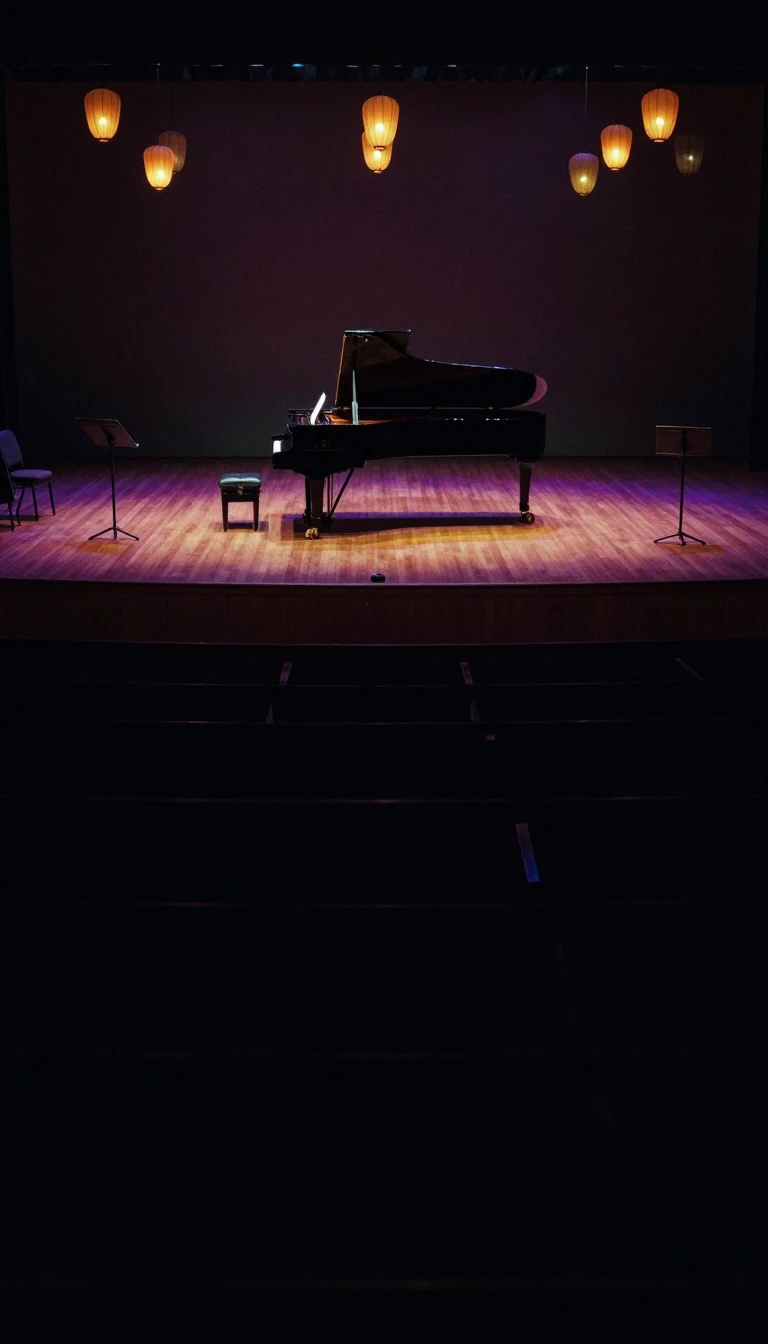 The ghostwriter behind the world's most famous operetta never met his co-authorRichard Genée was the engine of 19th-century operetta, yet his most celebrated work, Die Fledermaus, was born from a strange collaboration. He wrote the actual text while his top-…
- Robert E. Howard: The Texan Autodidact Who Invented the Sword and Sorcery GenreRaised in the boomtowns of Texas, Robert E. Howard became a prolific pulp writer who defined the sword and sorcery genre. Despite a life marked by financial instability and the Gr…
 The tragic life of Robert Fergusson, the poet who inspired Robert Burns to greatness.Robert Fergusson was a brilliant Scottish poet whose short life ended in a mental asylum at just 24. Though often overshadowed by his successor Robert Burns, Fergusson’s mastery o…
 Robert Henryson: The elusive Scottish poet who bridged the medieval and the renaissanceFlourishing in late 15th-century Scotland, Robert Henryson remains a figure of mystery. Though he left behind nearly 5,000 lines of masterful Middle Scots verse, historians know a…