 Intellect Plus
Cultures
14,790 cards. Each one is a 40-second story with a five-minute read behind it. Page 221 of 247.
Subtopics: African cultures · Ancient peoples · Anthropology · Arab & Persian culture · Asian folklore · Australian & Pacific cultures · Calendars & new year · Celtic mythology · Chinese culture · Clothing and fashion · Communication · Culture · Culture of Korea; Culture of South Korea · Education · Egyptian mythology · Endangered languages · Ethnology · Ethnology and anthropology · Etiquette & manners · Fairy tales & folk tales · Fashion through the ages · Festivals & celebrations · Folk dance · French & Italian culture · Hairstyles & jewellery · Handicrafts · Indian culture · Indigenous cultures of the Americas · Japanese culture · Journalism and mass media · Language · Language families · Language learning · Languages · Latin American culture · Legendary creatures · Nordic culture · Norse mythology · Peoples & civilisations · Pilgrimage & sacred journeys · Proverbs & idioms · Public holidays · Russian & Eastern European culture · Sign languages · Superstitions · Traditional dress · Traditional games · Traditions & customs · UK & Irish culture · US culture · Weddings · Writing systems
 The Corded Ware culture: A mysterious, continent-spanning network that reshaped ancient European society.Spanning from the Rhine to the Volga, the Corded Ware culture emerged around 2900 BC, leaving behind distinct pottery and stone battle axes. While once viewed as a singular, warli…
 Was Anglo-Saxon paganism a real religion or just a label for what it wasn't?Anglo-Saxon paganism was not a monolithic faith with formal rules, but a loose, diverse collection of local beliefs. Often defined by Christian missionaries as an empty concept, t…
 The Arawak were never a single people, but a label for many distinct groups.The name Arawak was never used by the people it described. Instead, it was an exonym applied by outsiders to diverse Indigenous populations across South America and the Caribbean.…
 Beyond the pips: The secret life of Britain's most influential radio stationBBC Radio 4 is a national institution, but its reach extends far beyond daily news. From serving as a potential signal for submarine commanders during a national catastrophe to ho…
 Breton is the only Celtic language still spoken on the European mainland today.Brought to France by migrating Britons during the Early Middle Ages, Breton has survived centuries of state-led suppression. Once spoken by over a million people, this unique lang…
 From theological publisher to global media giant: the complex evolution of BertelsmannFounded in 1835 as a small German publisher of religious texts, Bertelsmann transformed into a massive multinational conglomerate. Its history spans from supplying the Nazi Wehrma…
 How a wounded soldier’s question sparked the world’s most prolific automatic rifleBorn from a desire to match German firepower during World War II, the AK-47 became a global icon of reliability. Mikhail Kalashnikov’s design, finalized in 1947, prioritized simpl…
- The Abenaki people are the original inhabitants of the dawn-lit lands of North America.Known as the People of the Dawn Land, the Abenaki are an Algonquian-speaking Indigenous group whose history spans 12,000 years across modern New England and Canada. Far from a sin…
 Why the Hebrew word for immigration literally means an ascent to a higher place.Aliyah, the Hebrew term for Jewish immigration to Israel, translates to ascent. This concept bridges the physical and the metaphysical, rooted in both the geography of Jerusalem a…
 Is the ancient Tibetan script a royal invention or a gradual evolution?Traditional history credits a seventh-century minister with crafting the Tibetan writing system for a king. Yet, modern research suggests a more complex origin, pointing to earlie…
 Why a language born on plantations became a nation's primary voiceTok Pisin is not just a trade language, but a vibrant creole spoken by millions in Papua New Guinea. Emerging from colonial-era labor camps, it has evolved into a primary tongue f…
 A Caribbean territory with a complex history, three main islands, and official English status.The U.S. Virgin Islands are more than just a tropical getaway. Once a Danish colony fueled by sugar plantations and enslaved labor, this Caribbean territory now serves as a unique…
 Tolkien’s Elvish script is a masterclass in phonetic engineering and logical designJ.R.R. Tolkien did not just invent languages for Middle-earth; he engineered a sophisticated writing system where letter shapes physically mirror the sounds they represent. This a…
 Why did humanity build the Tower of Babel, and was it truly an act of hubris?The Tower of Babel is a brief, nine-verse biblical narrative that explains the origin of linguistic diversity. While traditionally viewed as a cautionary tale against human pride,…
 Is Tifinagh an ancient relic or a modern political tool for Berber identity?Tifinagh is a geometric script with roots in ancient Libya, long preserved by the Tuareg people. While once a functional tool for an oral society, it has been transformed into Neo…
 Can a crowdsourced slang dictionary actually hold weight in a court of law?Urban Dictionary began in 1999 as a student project to track California slang, but it has evolved into a massive, unfiltered archive of human expression. Today, it is cited by jud…
 Why Chinese is not a single language but a vast, complex dialect continuumChinese is not a single language, but a collection of hundreds of mutually unintelligible varieties. While Standard Chinese dominates public life, the reality on the ground is a d…
 How a 19th-century linguistic revolution simplified the Serbian alphabet for the common personVuk Karadžić transformed Serbian writing by stripping away archaic complexities and aligning letters with spoken sounds. His radical reform, finalized in 1818, created a one-to-on…
 Slovak is a West Slavic language defined by its unique rhythmic lawSpoken by roughly five million people, Slovak is a West Slavic language closely related to Czech. While it shares deep roots with its neighbors, it maintains a distinct identity t…
 Why the Scotch-Irish are an American invention, not a Scottish or Irish oneThe term Scotch-Irish is a uniquely American label for a group that rarely uses it back home. Descended from settlers in Ulster, these migrants forged a distinct identity in the A…
 The Thai script is not an alphabet but a complex, ancient abugida system.Thai script is often misidentified as an alphabet, but it is actually an abugida. This writing system uses 44 consonants and various vowel diacritics that shift position based on …
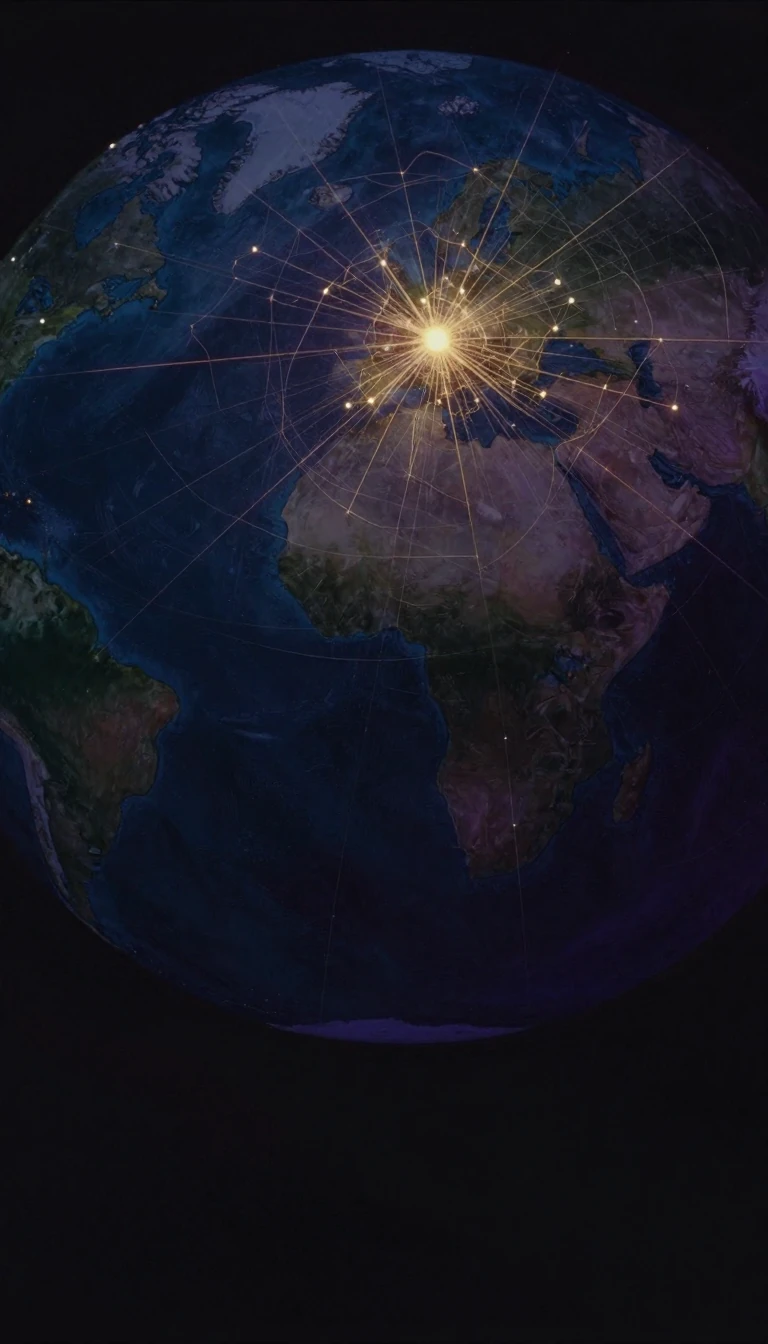 How a single ancient sound shift reshaped the world's most spoken languageFrom the heavy consonants of English to the rhythmic vowels of German, the Germanic language family shares a hidden blueprint. Tracing back to the Iron Age, these tongues were tra…
 Oban is the Gaelic heart of Scotland's coast and a gateway to the Isles.Known as the Gateway to the Isles, this Scottish seaport is more than a transit hub. From ancient cave dwellers to the Cold War's secret communication lines, Oban has served as a …
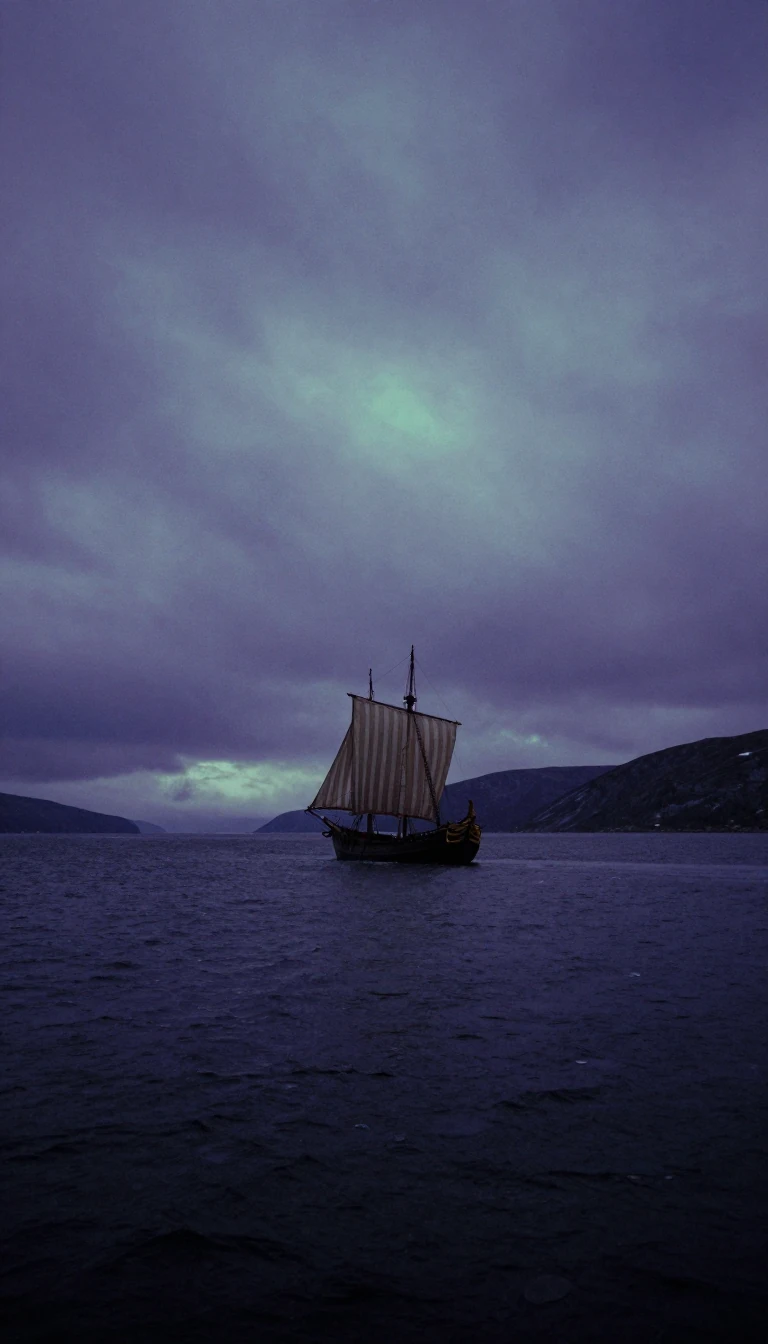 The Viking language that shaped modern English and spanned from Vinland to the VolgaOld Norse was the dominant language of the Viking Age, stretching across vast territories from North America to Russia. While it evolved into modern Scandinavian tongues, its infl…
 How the Kingdom of Ireland transformed from a Gaelic landscape to a colonial dependency.Established in 1542, the Kingdom of Ireland was theoretically a coequal partner to England. In practice, it functioned as a colonial dependency, defined by the Protestant Ascendan…
 Lower Saxony: A Modern State Built from Ancient Saxon Roots and Post-War MergersCreated in 1946 by the British military, Lower Saxony is a sprawling German state that defies simple categorization. It bridges maritime North Sea coasts and rugged southern mount…
 Why British bank holidays are not actually guaranteed days off for most workersPublic holidays in the United Kingdom are often misunderstood. Despite the name, there is no automatic legal right to paid time off on these days. Whether you get the day off or e…
- Leinster is a modern province built from the ruins of ancient Gaelic kingdomsLeinster is Ireland's most populous province, yet it holds no official local government function. Its name traces back to a powerful tribe, but its current borders are a patchwork…
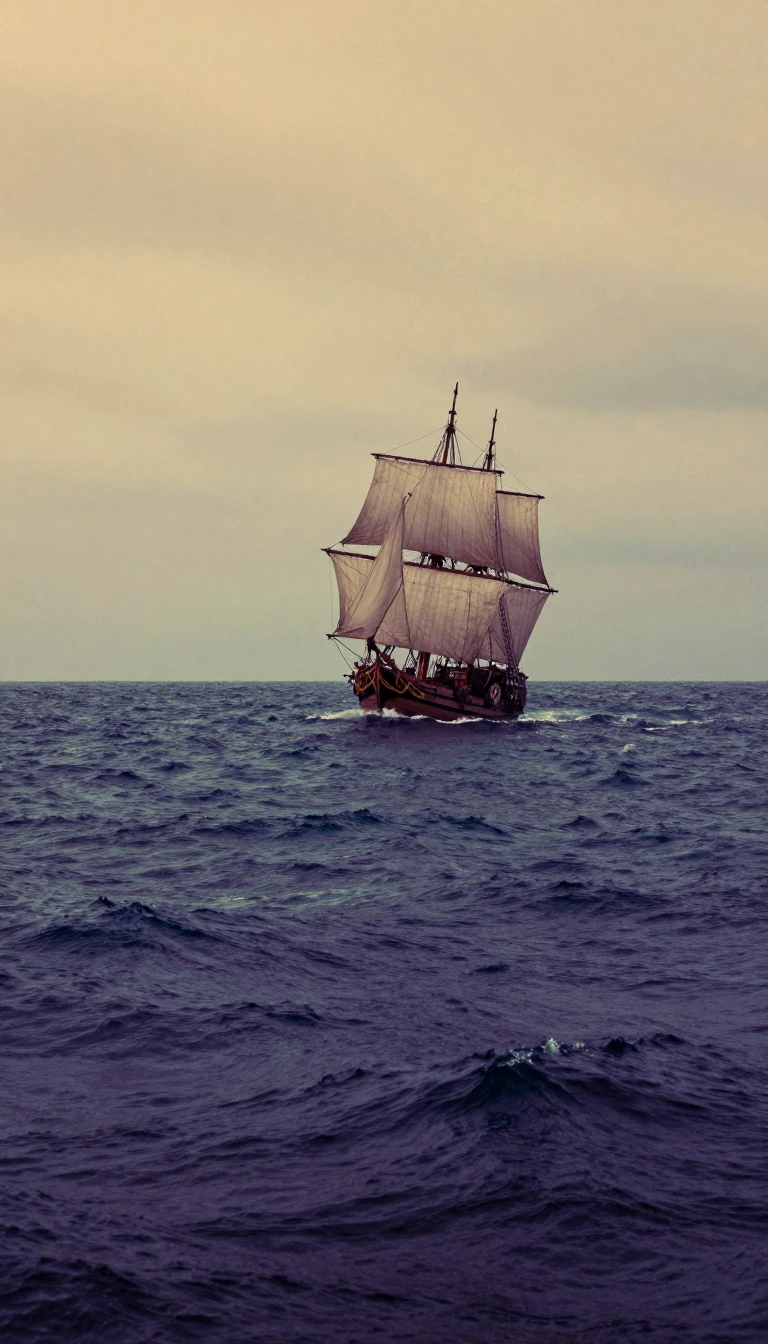 Why the Leeward Islands are not actually leeward in many languagesThe name Leeward Islands is a relic of the age of sail, describing a position relative to the trade winds. Yet, if you speak French, Spanish, or Dutch, the entire chain is called …
 Does the language you speak shape the way you perceive the world?Linguistic relativity suggests our native tongue influences how we categorize reality. While early theories claimed language strictly dictates thought, modern research finds more …
 Kanji are not just characters, but a complex system of meaning and sound.Kanji are logographic characters adapted from Chinese that have shaped Japanese language and culture for centuries. Far from a static alphabet, they function through dual reading …
 Did Koko the gorilla actually speak, or was she just a clever mimic?Koko the gorilla became a global icon for her supposed ability to communicate using sign language. While she captured the public imagination and transformed views on animal emotio…
 Can a permanent global court truly hold the world's most powerful leaders accountable?The International Criminal Court is the only permanent tribunal designed to prosecute genocide, war crimes, and crimes against humanity. Operating from The Hague, it acts as a cou…
 Did a single ancestral language give birth to the diverse tongues of ancient Italy?The Italic language family, which includes Latin and its extinct relatives like Oscan and Umbrian, remains a subject of intense academic debate. While many scholars argue these la…
 Why modern Icelanders can still read medieval sagas written eight centuries agoIcelandic is a linguistic time capsule. While other Germanic languages simplified their grammar, Icelandic preserved its complex, four-case synthetic structure and archaic vocabul…
- Once a Gaelic stronghold, the Isle of Skye faces a quiet linguistic shiftFor centuries, the Isle of Skye was a bastion of the Gaelic language, with parishes boasting over 75 percent fluency as recently as 1921. Today, that cultural bedrock is shifting.…
- The Goidelic languages are a resilient family of tongues with roots in ancient IrelandSpoken across Ireland, Scotland, and the Isle of Man, the Goidelic languages form a distinct branch of the Insular Celtic family. While often grouped under the umbrella of Gaelic,…
- Gothic is the only East Germanic language with a substantial surviving written record.Though it vanished centuries ago, Gothic remains a cornerstone of linguistic history. As the earliest Germanic language captured in extensive texts, it provides a rare, direct win…
 Why the closest living relative to English is a language you likely cannot readThough English and Frisian share a common ancestor, centuries of geographic drift and external influence have rendered them mutually unintelligible. Today, these West Germanic lan…
- Why Irish English is the oldest variety of the language outside of Great BritainWhile many assume Irish English is a recent evolution, it actually preserves linguistic roots from the 16th-century Elizabethan era. This makes it remarkably conservative compared…
 Are emoji the first truly global language, or just a digital mask for emotion?Emoji are more than just digital decorations; they function as a paralanguage that fills emotional gaps in text. While they originated in 1990s Japan, they have evolved into a com…
- Is Enochian a divine angelic tongue or merely a 16th-century linguistic parlor trick?In the 1580s, John Dee and Edward Kelley claimed to record a celestial language dictated by angels. While Dee believed he had rediscovered the primordial tongue of Adam, modern li…
- The Saltire: How a Medieval Battle Sign Became Scotland's Official National FlagThe Scottish flag, or Saltire, features a white diagonal cross on a blue field. While legend traces its origin to an 832 AD battle, its formal heraldic history began centuries lat…
 Runes were not just for magic; they were the everyday text of the Germanic world.Long viewed as mystical symbols of an elite, runes were actually a widespread writing system. From business letters and prayers to profane messages, these angular characters serve…
 Why is this rugged Atlantic county known as the Kingdom of Ireland?Beyond its dramatic cliffs and mountain ranges, County Kerry holds a unique place in Irish identity. Named after an ancient Gaelic tribe, the region has survived centuries of conf…
 Is Croatian a distinct language or a regional variation of a larger system?While linguists often group Croatian with Serbian, Bosnian, and Montenegrin as a single, mutually intelligible system, the debate over its status remains a cornerstone of national…
- Connacht: The rugged western province that once held the throne of all IrelandConnacht was once a powerhouse of Gaelic kingship, producing the last native ruler recognized as King of Ireland. Today, this western province remains the heartland of the Irish l…
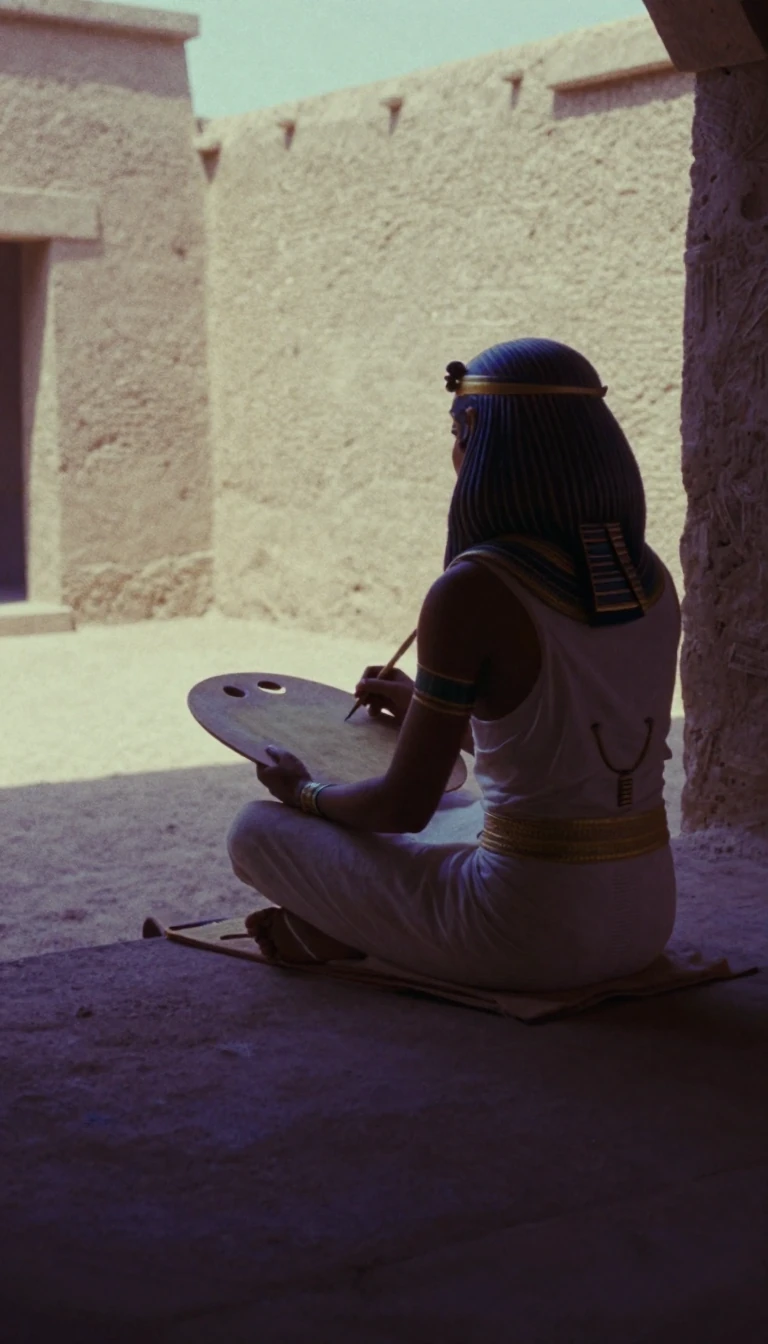 Demotic: The Ancient Egyptian Script That Powered Daily Life for Over a MillenniumWhile hieroglyphs adorned sacred monuments, Demotic was the workhorse of ancient Egypt. This cursive script, used for over a thousand years, managed everything from legal contract…
 Why Taiwan’s primary phonetic system is named after its first four charactersBopomofo is the essential phonetic script for learning Mandarin in Taiwan. Comprising 37 characters and five tone marks, it maps every possible sound in the language. Named for it…
 Why most of the ancient Celtic world's mythology remains a profound, unsolvable mysteryCeltic mythology was never a single, unified belief system. Because the Celts lacked a central authority and their continental records were largely erased by Roman conquest and Ch…
- Is the ancient Brahmi script a lost indigenous invention or a Semitic import?Brahmi is the ancestor of nearly 200 modern Asian scripts, yet its origins remain a historical mystery. While most scholars point to Semitic influences like Aramaic, others argue …
- Latin never died; it simply evolved into the languages of modern Europe and beyond.Often labeled a dead language, Latin is actually the ancestor of the Romance languages and the enduring foundation of Western scholarship. While it ceased to be a native tongue ce…
- Afroasiatic is the world's oldest language family, yet its origins remain a profound mystery.Spoken by over 500 million people, Afroasiatic is a massive linguistic phylum spanning North Africa, the Horn of Africa, and West Asia. While it includes ancient giants like Egypt…
- How a tiny Caribbean island’s eel-like shape defined its history and unique languageAnguilla, a low-lying coral territory, takes its name from the Italian word for eel. Beyond its striking geography, the island hosts a distinct English-lexifier Creole language, b…
 Why American and British English spellings diverge despite their shared linguistic rootsThe spelling differences between American and British English are not merely random choices. They emerged from the competing influence of two 18th and 19th-century dictionaries, r…
 Why do world leaders wear matching outfits at the Asia-Pacific Economic Cooperation summit?Every year, the heads of 21 Pacific Rim economies gather to discuss trade, but the most famous tradition is the group photo. Leaders often don national costumes of the host countr…
 Why a Christian Saint's Feast Day Became a Night for Witches and RevelryWalpurgis Night, celebrated on April 30, is a curious collision of history. Named for an 8th-century English missionary, the festival evolved into a vibrant, often chaotic celebra…
- Why Ireland’s leader is called the Taoiseach and not the Prime MinisterThe title Taoiseach, meaning chieftain or leader, was enshrined in the 1937 Irish Constitution. While it functions as the head of government, the term was controversial at its inc…
 Why did 19th-century recruiters call this Caribbean island the land of sugar?Trinidad is more than a Caribbean destination; it is a cultural crossroads where history, geology, and global migration collide. From its ancient Arawakan roots to its modern stat…
 Why the most common phrase in the Islamic world is also a global symbolThe takbir, or Allahu Akbar, is far more than a battle cry. It is a versatile linguistic tool used by Muslims for everything from birth and burial to football chants and political…